After a Year Back at DingTalk, WuZhao is More Like That Japanese Samurai
 03/30 2026
 676
676
PART01
The 'Madman' Returns This Year
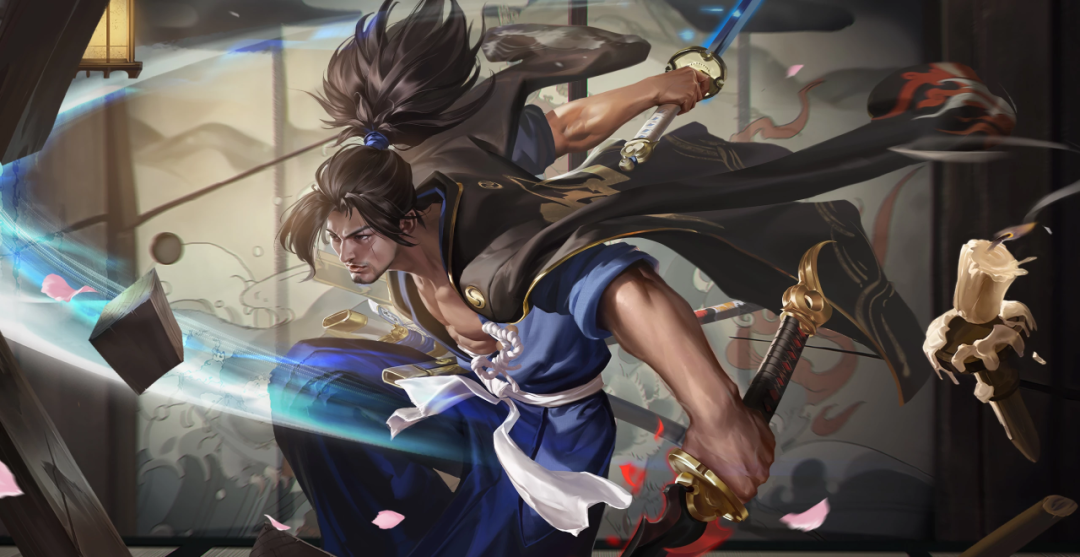
It is said that the avatar of DingTalk CEO Chen Hang in the system was once that of Miyamoto Musashi, a Japanese samurai.
He was the sword saint of Japan's Edo period, with an undefeated record throughout his life. His style was known for being fast and precise, and he excelled at not being bound by rules. In his later years, he wrote The Book of Five Rings, mentioning that the highest level of a warrior is the 'realm of emptiness,' meaning: a mind free of distractions, clear and undisturbed, unbound by techniques or emotions. Corresponding to The Smiling, Proud Wanderer, it would be Feng Qingyang's 'no-technique surpasses all techniques.'
Within Alibaba, Jack Ma's alias is Feng Qingyang, while Chen Hang's is WuZhao. Following workplace logic, this can be interpreted as a form of following and inheriting the highest will. However, with Chen Hang's return to DingTalk in the spring of 2025 and his taking charge of the Wukong Business Unit, rebuilt on the foundation of 'smashing' DingTalk a year later, people have found that he more wants to be the samurai defining swordsmanship in the wilderness.
Let's go back a year.
On March 31, 2025, Chen Hang, the founder, returned to DingTalk and resumed his role as CEO.
This was a return with traces to follow. In 2023, Wu Yongming took over as CEO of Alibaba Group, making AI one of its two core strategies. That same year, Chen Hang, who had been starting his own business outside, began to appear at DingTalk Ecosystem Conferences and Alibaba Cloud Computing Conferences.
Chen Hang and Wu Yongming have a deep connection. He first joined Alibaba as an intern in 1999, following Wu Yongming. Later, Chen Hang left Alibaba twice and returned twice at Wu Yongming's invitation. The Vision Capital, founded by Wu Yongming, also invested in the company Chen Hang founded. It can be said that this is a classic story of a 'berkley and a thoroughbred.'
Chen Hang is ambitious and proud. He was once Alibaba's most famous loser and madman: referring to the DingTalk team as the 'madhouse' in job postings, working Crazy overtime (insanely overtime), and never taking a day off all year.
This story came to an abrupt end in 2020: the outbreak of the pandemic made DingTalk an unexpected beneficiary, with its data soaring. That same year, Alibaba proposed 'Cloud-DingTalk Integration,' incorporating DingTalk into Alibaba Cloud to serve as a 'hook' for acquiring customers. This contradicted Chen Hang's original intention for founding DingTalk. Subsequently, he was transferred away from the CEO position at DingTalk and left Alibaba the following year—a similar plot would later befall Lin Junyang. When conflicts arise with a large company's will, individual idealists have few options.
Upon his return, Chen Hang had gained some complex wrinkles.
He has expressed similar sentiments on different occasions: DingTalk has always been Alibaba's, and only Alibaba's long-term investment has made DingTalk what it is. This is a fact, but it is hard not to feel a sense of irony when the once ambitious 'madman' founder repeatedly demonstrates a sense of the bigger picture. People realize that he is essentially a middle-aged man who has found work again.
Life outside the big factory was not smooth. Chen Hang was not short of money, but his entrepreneurial projects had not achieved much that was impressive. Many resources and conveniences disappeared after leaving Alibaba's organizational halo. Like most startup bosses, he learned to strictly control costs, such as stipulating that only one of the three elevators could be in operation and that air conditioning could only be turned on when the temperature was above 30 degrees or below 0 degrees—trivial matters that big company executives do not need to consider.
After DeepSeek sparked the large model craze, he might have felt even more anxious inside. This was a competition in which ordinary startups had no place.
Fortunately, the same AI anxiety allowed Wu Yongming and Chen Hang to reach a certain resonance. Wu Yongming, desperately in need of capable generals to fight for AI achievements, recalled Chen Hang.
Having experienced the hardships of entrepreneurship outside, Chen Hang seemed even crazier upon his return to Alibaba. Due to his high-pressure management after returning, he became a tyrant in the public eye who still checked in on work in the middle of the night, and DingTalk was jokingly referred to as 'Alibaba's Myanmar.' Data shows that within two or three months of his return, three to four hundred employees left.
He is still a workaholic. In one year, he held three product launches, introducing over 30 software and hardware products and industry solutions, including hardware products like DingTalk—compared to Feishu's collaboration with Anker to create AI recording beans, DingTalk's own production was more costly but also more indicative of its determination to embrace AI.
The product launch in March 2026 was a concentrated display of ambition and determination.
Chen Hang released the enterprise-level AI-native work platform Wukong. According to the official introduction, it was built by 'smashing' DingTalk. DingTalk lost its original form and became infrastructure in the form of CLI, along with the reconstruction of the RealDoc file system and the establishment of the Enterprise security system, providing businesses with a 24/7 online and secure 'lobster team.' The entire 'smashing' process took more than half a year.
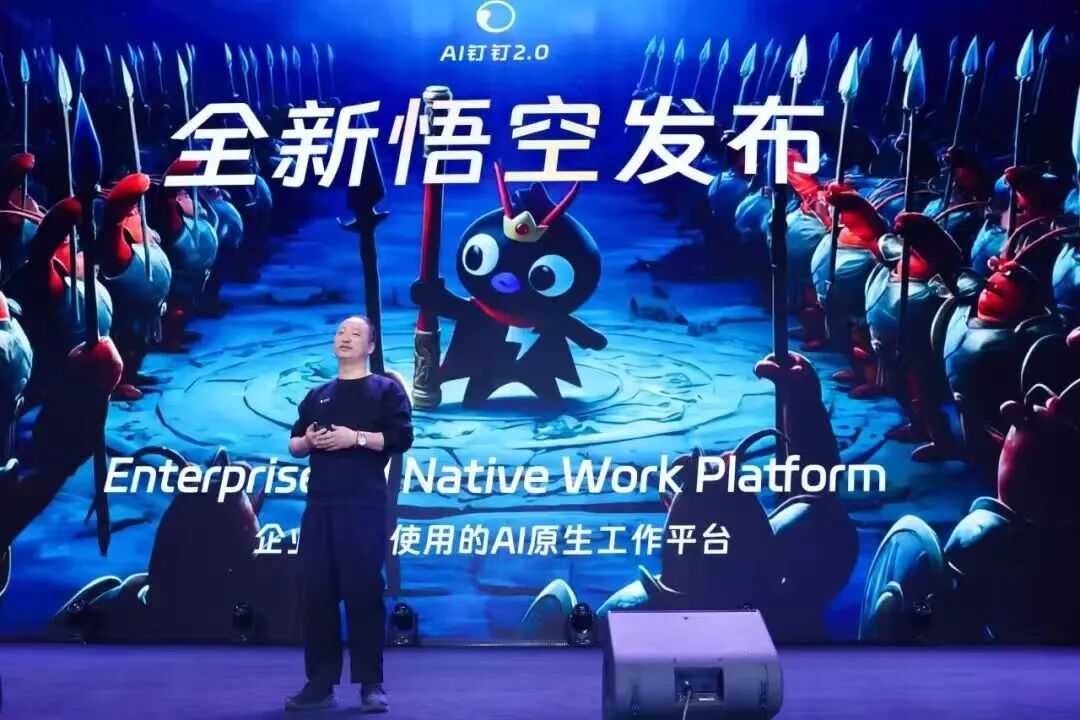
As an independent AI platform, Wukong will become Alibaba's unified AI export for the B-side. This also means it will become Alibaba's main battlefield for selling Tokens on the B-side.
Logically, this is very much like Miyamoto Musashi's approach: not replicating existing experiences, unifying all methods, and attempting to create a new AI ecosystem by rebuilding the foundation.
Of course, this is not something Chen Hang can accomplish alone. Before Wukong's debut, Alibaba newly established the ATH Business Group, explicitly focusing on the Token link (Token chain) with Wu Yongming personally leading it. Subsequently, the original DingTalk Business Unit was renamed the Wukong Business Unit, becoming one of the five core sectors of the ATH Business Group—after 27 years, Chen Hang's direct reporting line once again became Wu Yongming.
PART02
Fire and Water
During Chen Hang's absence, Ye Jun took charge of DingTalk for over four years.
This steady and peaceful veteran Alibaba employee has an excellent reputation in the industry and media circles. He once lived up to Alibaba's expectations, transforming DingTalk from a free tool into the most profitable enterprise collaboration SaaS in China, with subscription revenue exceeding 3 billion and ARR surpassing 200 million USD in FY2025. However, in the second half, facing dual pressures from ByteDance and AI, this mild leader seemed somewhat lacking in combat effectiveness.
A widely reported story is that in 2024, EIFINI, a top women's clothing brand on Tmall with 8,000 employees, planned to migrate from DingTalk to Feishu, largely because they liked the multi-dimensional tables. Despite Ye Jun's multiple visits to retain them, he failed. This laid the groundwork for Ye Jun's departure the following year.
Feishu has a large team, peaking at over 6,000 people. It would allocate a team of 10-20 people to a major client, and each time it secured an important new client, it would create a poster to hang in transportation hubs like airports to announce it to the world. Companies like NIO, Li Auto, and Genki Forest have all endorsed Feishu.
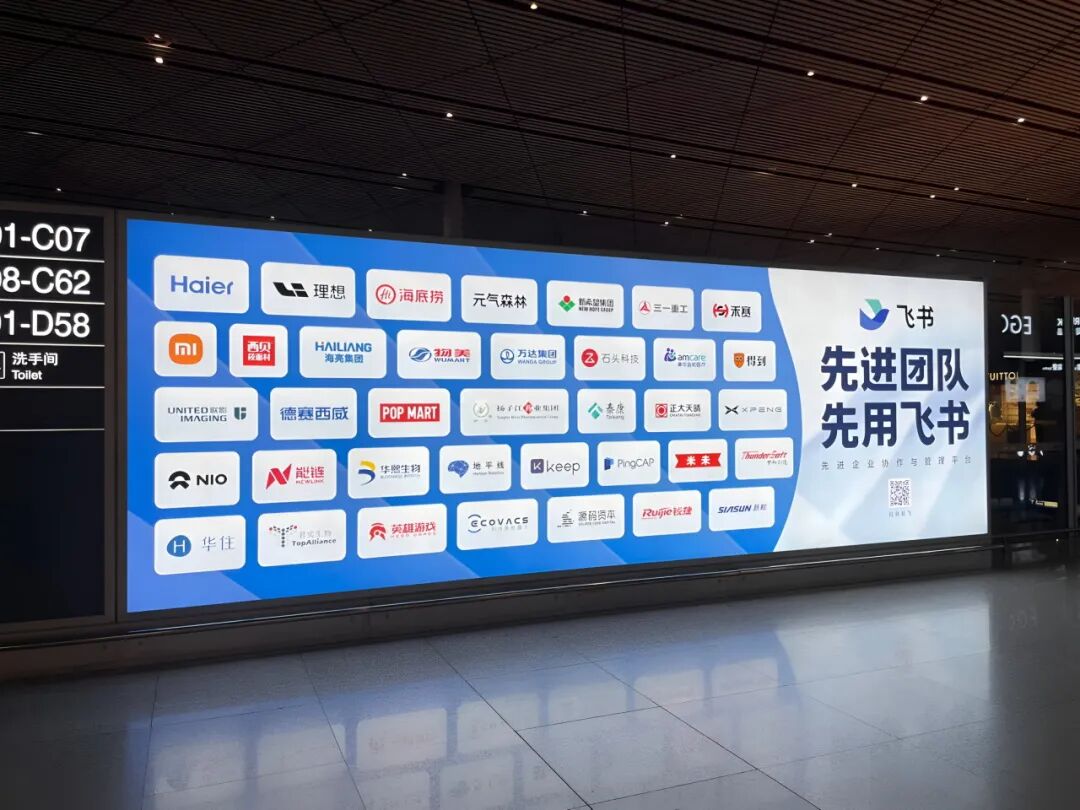
Feishu's advertisement on an airport screen Source: Social Media
This is a clever strategy. By leveraging these clients with established brand awareness, Feishu naturally conveys its own ethos. Accompanied by overwhelming advertisements proclaiming 'advanced companies use Feishu first,' Feishu differentiated itself from DingTalk and WeCom.
However, Feishu CEO Xie Xin has publicly admitted that he is not a good salesperson.
This is not false modesty.
This Peking University computer science graduate should be in his comfort zone with technology and products. He has worked in technical roles at Microsoft and Baidu, later becoming CTO of Kuxun and Zhang Yiming's old boss. He was recruited to the then 300-person Toutiao at the end of 2014, becoming its first HRVP—in Zhang Yiming's view, people from technical backgrounds better understand what a technology company needs.
Xie Xin built ByteDance's HR system for Zhang Yiming, oversaw multiple businesses, and luckily returned to his beloved field with Feishu. In 2016, when Feishu's predecessor, Lark, was launched, it was merely an internal office tool for ByteDance. The pandemic provided an unexpected growth opportunity, and after establishing a major client strategy in 2021, Feishu rapidly rose, with ARR surpassing 100 million USD in 2022.

Lark still operates as Feishu's international version Source: Lark Official Website
Unlike Chen Hang's samurai-like aggressiveness, Xie Xin gives the impression of being more like a scholarly general.
He can even seem a bit shy.
In conversations with different individuals such as Liu Run and Li Bin, he has an almost signature gesture: lightly clenching his fist and placing it on his chest. From a psychological perspective, this represents focus and is also a mildly defensive body language, subconsciously establishing psychological boundaries. Additionally, he is accustomed to using various gestures, a common logical expression aid among technical people—they are trying to make you understand.
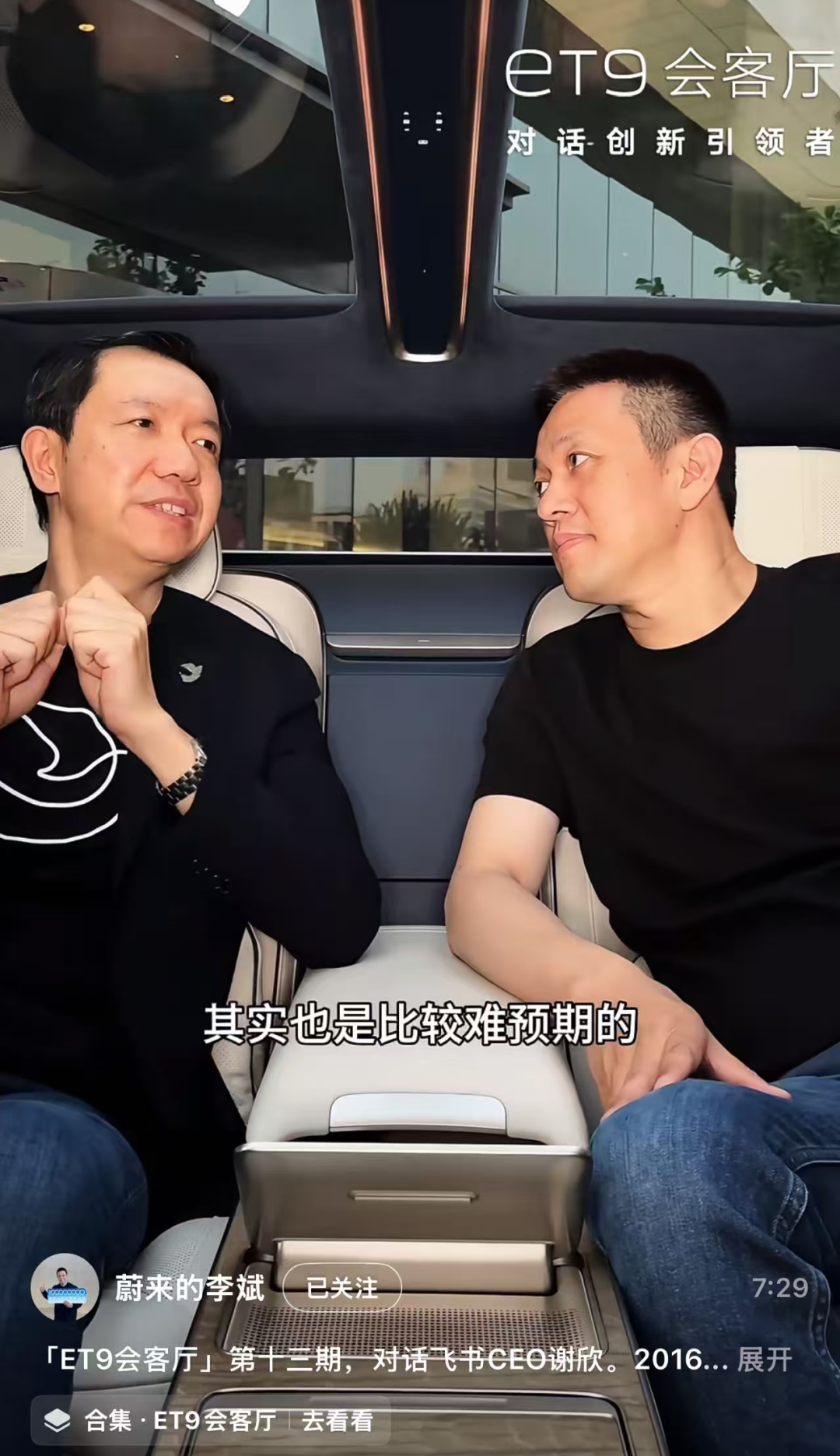
Xie Xin on the left Source: @Li Bin of NIO Social Media
Xie Xin and Chen Hang actually have many similarities: computer science majors, graduating one year apart, with experience in foreign and domestic big companies, and skilled at seizing opportunities within large organizations.
In terms of personality, Chen Hang is like fire, while Xie Xin is like water. Unfortunately, they did not have the opportunity to fight side by side like Nezha and Ao Bing.
They are rivals. Especially in the current AI battlefield.
As of now, DingTalk remains the leader in China's collaborative office market. Public data from 2025 shows that DingTalk, WeCom, and Feishu have market shares of 32.7%, 23.4%, and 18.9%, respectively. For DingTalk, WeCom's market share is closer, but perhaps Feishu is the more alert opponent: their target customers overlap more, and AI is bringing more variables.
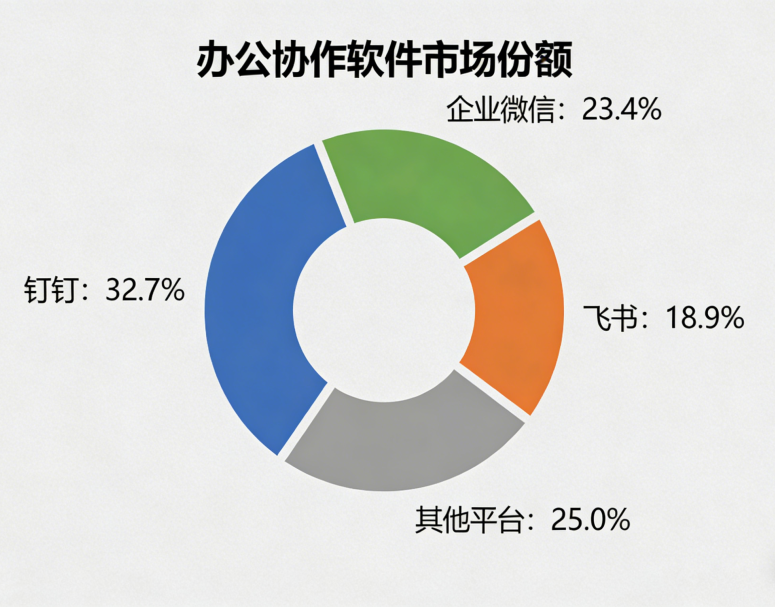
Compiled from public data in 2025 Chart: Shannong Xishan
In fact, Chen Hang's AI moves in the year since his return seem not defensive but rather an attempt to use AI to cut into Feishu's territory.
Feishu excels at launching attacks with specific products. For example, the multi-dimensional tables launched in 2020, Seemingly basic (seemingly basic), actually serve as an entry point for cross-departmental collaboration, project advancement, and process management. After several years of development, their MAU reached 10 million in July 2025, becoming Feishu's third enterprise application with over 10 million users, following documents and meetings. One important reason EIFINI chose Feishu was its collaboration tools, including multi-dimensional tables.
An industry insider deeply involved in the B-side market commented that although DingTalk and Feishu were launched around the same time, they have evolved into products from two different eras. DingTalk designs its products based on traditional enterprise process control, resembling a product from the previous era with clients in more traditional industries. In contrast, Feishu emphasizes collaboration over processes, more like a product of the new era.
As AI heats up, the smell of smoke between the two companies grows stronger.
Three days after DingTalk released Wukong, Feishu released an updated version of aily. It is both Feishu's version of 'lobster' and an Agent creation and management platform. Unlike Wukong's disruptive ambition, aily focuses on being low-threshold and easy to operate, appearing more lightweight and friendlier to OPCs (one person companies). Additionally, it still uses a subscription model instead of the currently popular Token-based billing.

aily is currently being activated one after another (gradually)
It seems that both companies are adapting to the Agent era, just in different postures. One is ambitiously trying to set new rules, while the other is subtly lowering the barrier to AI. The divergence behind this may be that Chen Hang believes a thorough violent revolution is the only way to truly achieve AI-native, while Xie Xin believes that human nature is lazy, and whoever can enable more people to use AI effortlessly to improve efficiency is more likely to become the winner.
However, on March 28, Feishu also followed up with CLI. Similar to DingTalk, Feishu's core business capabilities were broken down into commands callable by AI—clearly, both rivals recognize Huang Renkun's prediction at GTC 2026: Every SaaS company will become an AaaS company.
In fact, views like 'the first users of future products will no longer be humans but Agents' are gaining more supporters. DingTalk and Feishu's CLI-fication means that their internet products, centered around interfaces, are transforming into infrastructure for the AI era.
But amidst the hubbub, there are still many variables because AI paradigms are still rapidly iterating. The recently popular OpenClaw has just made Agent a consensus.
To some extent, the transition from Chatbot to Agent paradigms is the 'garbage time' in AI history.—This is an old trick before the debut of every new technology. In the early 1980s, it was believed that the interaction paradigm of PCs had reached its limit, and the only way forward was faster CPUs, stronger DOS commands, and more refined character interfaces until the Macintosh graphical user interface (GUI) launched in 1984 put an end to all of that.",
Xie Xin has experienced a cycle from frenzy to calmness.
After ChatGPT became a sensation, a “Hundred-Model War” broke out in China, with many companies hastily launching comparable products just to get a seat at the table. Feishu did not build its own large model but gradually rolled out many AI features. However, like most AI products at the time, they seemed more about showcasing a company’s determination to embrace AI than actually considering user needs.
In the spring of 2024, Feishu chose to cool down and stopped piling on AI features.
For example, at Feishu's new product launch event in September 2024, many noticed that its AI presence had diminished. Feishu did not introduce any holistic AI products but instead integrated AI into its existing offerings. Xie Xin also remarked that day that the industry's enthusiasm for AI in 2023 had become excessive.
From then until the eve of the “lobster craze,” Feishu maintained a relatively restrained approach to AI. It continued to update its AI products but graded their maturity and did not emphasize full-scenario availability. In public, Xie Xin rarely discussed large model parameters or computing power. He admired Apple, noting that it was one of the last companies to discuss AI during this wave yet remained competitive—a position Feishu also aspired to.
In contrast, DingTalk seems to suffer from greater AI anxiety, especially after Chen Hang's return.
Judging by the data, he has achieved results. For instance, the AI hardware DingTalk A1, released in August 2025, sold over a million units within six months, capturing the largest market share for AI voice recorders in China. However, to date, embracing AI has not yet brought about a true productivity revolution for DingTalk.

DingTalk A1 sold on e-commerce platforms
The ambitious Wukong is still in testing, and its effectiveness remains to be seen. Those inspired or panicked by the “lobster” craze are scrambling for invitation codes across major platforms. It is hard to distinguish trend-followers from true tech enthusiasts.
Nevertheless, for Chen Hang, such enthusiasm itself represents a commendable anniversary achievement. He should thank Peter Steinberger—the Austrian developer who created OpenClaw over a weekend and likely never imagined his product would spark a global frenzy, even becoming a “lever” for Chinese internet and AI companies.
Chen Hang has experienced both peaks and troughs at Alibaba.
After his previous return to Alibaba failed with “Etao,” he took on the infamous CEO project “Laiwang,” seen at the time as Alibaba’s ticket to the mobile internet. Public data shows Alibaba invested over 1 billion yuan in promotion. Jack Ma personally endorsed Laiwang multiple times, even speaking out twice in a single week, and mobilized a grassroots tactic, requiring every Alibaba employee to recruit 100 external users within a month. Additionally, celebrities like Liu Chuanzhi, Shi Yuzhu, and Jet Li were invited to join.
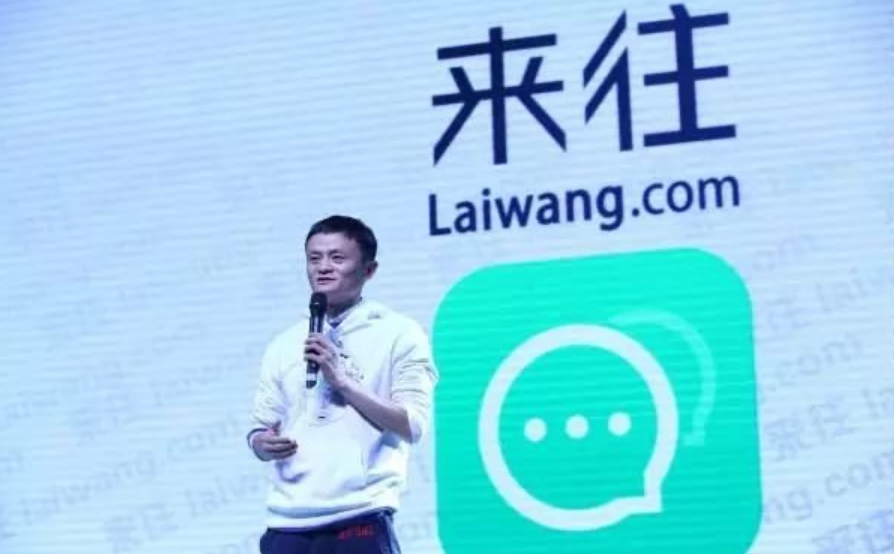
Jack Ma personally endorsed Laiwang multiple times
Despite such hype, Laiwang ultimately failed. The pressure Chen Hang faced at the time remains unknown to outsiders.
He later summarized the reason: A team without deep social networking expertise created an undifferentiated product. Subsequently, he led his team to Hupan Garden—Alibaba’s entrepreneurial holy ground, which had incubated stars like Alipay, Tmall, and Cainiao Logistics. Blessed with “good fortune,” DingTalk launched in 2015 and gradually became one of Alibaba’s most critical To B businesses.
Chen Hang has also tasted the bitterness of missed opportunities.
He interned at Alibaba in 1999 and left the following year to work in Japan. At the time, it was a logical and correct choice. As the new millennium approached and China prepared to join the WTO, young people were curious about the outside world, and foreign companies were seen as prestigious employers. However, in hindsight, his 11 years in Japan caused him to miss Alibaba’s first golden era. For comparison, Tong Wenhong, who joined Alibaba as a receptionist in 2000, held stock worth over 4 billion yuan when Alibaba went public on the NYSE in 2014.

Alibaba went public on the NYSE on September 19, 2014
With the AI wave arriving, Chen Hang naturally does not want to repeat such a missed opportunity. “I feel excited every day. People call me a workaholic, but the truth is, every time I think about AI, I feel like the world has changed.”
French behaviorist Irwin Berlin once observed: The greatest obstacle to success is achieving continuous success. The reason people struggle to replicate success is precisely because they have already succeeded once. Wang Huiwen and Wang Xiaochuan, who jumped into the AI startup wave with past glory, are trapped in this very fate.
Chen Hang’s luck lies in the fact that he only needs to keep DingTalk ahead in the AI era, not rebuild it from scratch.
But this is still no easy task.
In To B businesses, customer satisfaction and willingness to pay are the foundation of any story. Capital markets love flashy disruption narratives, like Wukong—logically cool and sufficiently AI—but for enterprise users, the sole reason to adopt or reject a tool is whether it truly improves efficiency and reduces costs.
After Wukong’s release, heavy DingTalk users complained on social media: Building Wukong on top of an already bloated and AI-unfriendly platform feels like a desperate move against competitors. Later, someone replied that at their former company using DingTalk, countless colleagues had asked how to exit AI mode.
DingTalk’s old product form may be gone, but user experience remains crucial in any era. This will determine Wukong’s success.
Chen Hang also faces internal challenges at Alibaba. As Wukong aims to become Alibaba’s unified AI To B gateway, his role shifts from building a tool to managing a platform—a task requiring far greater resource coordination. Moreover, Alibaba’s organizational structure undergoes regular adjustments, and the strategic importance of businesses often shifts accordingly. Take Alibaba’s C-end entry points: Quark was the focus a few years ago, but now Qianwen APP is the sole priority. Wukong’s fate remains uncertain.
To put it bluntly, if Wukong fails to deliver sufficient results for Alibaba’s AI To B business, it could become the next Laiwang.
Having joined Alibaba for the third time, Chen Hang should understand by now that in this vast power structure, one can gain fame and glory through battlefield achievements, but only by aligning with organizational will can one secure lasting survival. If Alibaba’s To B strategy demands a new AI narrative, he could dismantle DingTalk himself and fully commit to building a platform for Token consumption.
Nearing 50, Chen Hang may have let go of many obsessions. Repeatedly emphasizing that DingTalk belongs to Alibaba might be his way of cautioning his younger self.
In this spring when everyone talks about AI, part of his ambition has been reignited, while another part—the fierce entrepreneurial drive—has faded over the past few years. But this is not necessarily a bad thing—he inches closer to Miyamoto Musashi’s “Void State.”
-
![]()
The Allure of 'Acquisition Spree': Li Shufu's Left Turn, Xu Jiayin's Right
-
![]()
Strategic Transformation Yields Results: Phoenix Optics Reports 10.9% YoY Rise in Core Net Profit for H1 2026
-
![]()
Three Key Growth Trajectories Synergize! Crystal-Optech Reports 3.478 Billion Yuan in Revenue for H1 2026
-
![]()
Semi-Annual Report Sparks XPENG Motors Buzz
-
![]()
1.6 Billion Big Order Secured! SeeYA Technology's Revenue Soars by 287.87% in the First Half of the Year
-
![]()
Baidu's Profits Plunge by 68%: Unraveling the Mystery Behind the Numbers
-
![]()
Baidu’s Profits Tumble by 68%! Where Has All the Money Gone?
-
![]()
Hynix’s Taobao Store Shuts Down Abruptly: What Should Customers Do About Warranty Services for Memory Modules?