Will the Upcoming Kimi Replicate MiniMax's Trend?
 03/31 2026
 631
631
Currently, market pricing for AI companies revolves entirely around 'Token Economics.'
Not long ago, an exclusive report by Bloomberg once again stirred up the domestic AI large model sector and the Hong Kong stock capital market.
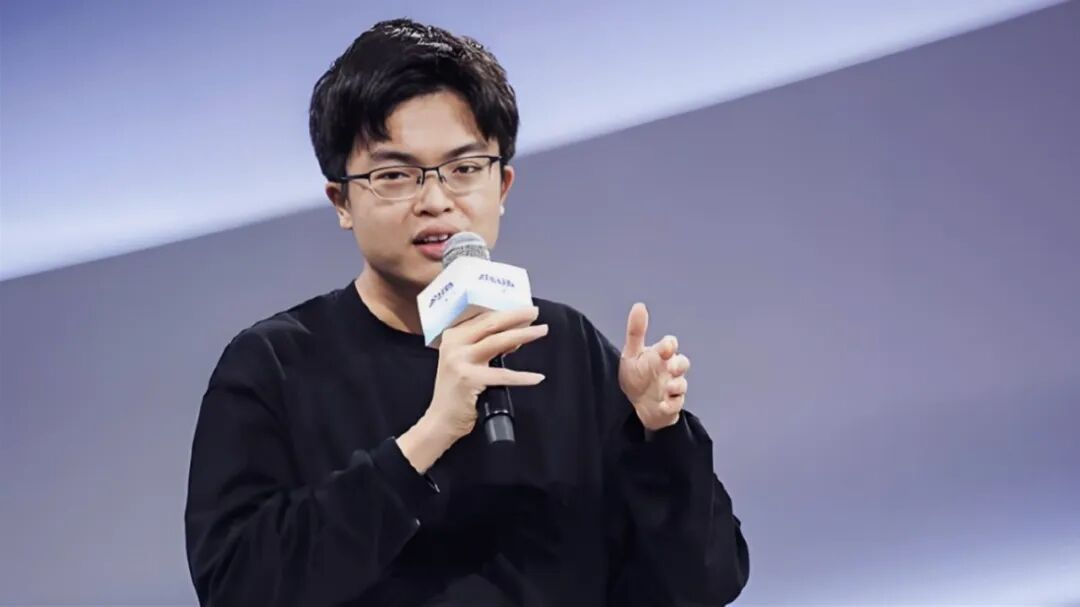
The report stated that Kimi's parent company, Moonshot AI, is in the early stages of considering a Hong Kong IPO and has initiated preliminary contact with CICC and Goldman Sachs regarding a potential listing. Simultaneously, it is advancing a new round of financing of up to $1 billion, which, if completed, would raise the company's valuation to $18 billion.
This news comes just a month after Moonshot AI's founder, Yang Zhilin, stated in an internal letter that there is 'no rush to go public in the short term.'
Just over two months earlier, MiniMax, another member of the 'Six Little Dragons of Large Models' alongside Moonshot AI, had just listed on the Hong Kong Stock Exchange, setting a record for the fastest IPO among global AI companies by going public just four years after its founding. After listing, its stock price surged, with a maximum increase of over 500% within two months, and its market value once exceeded HK$380 billion, briefly surpassing Baidu's Hong Kong-listed shares.
On one side is MiniMax, whose market value soared after listing, and on the other is Kimi, whose valuation quadrupled in three months and is now eyeing an IPO. The market's question arises: As AI-native startups that both gained market traction through product popularity and saw their valuations rise due to capital pursuit, will the upcoming Kimi replicate MiniMax's trend on the Hong Kong stock market?
01
How Did MiniMax's Capital Myth Come About?
To answer whether Kimi can replicate MiniMax's trend, we must first dissect: What is the core supporting logic behind MiniMax's surge on the Hong Kong stock market? What path does its 'trend' follow?
Earlier this year, MiniMax officially listed on the Main Board of the Hong Kong Stock Exchange with an issue price of HK$165. The public offering received 1,837 times oversubscription, setting a new subscription record for tech stocks in Hong Kong. On its debut day, its stock price surged at the opening, with its market value exceeding HK$105.4 billion, surpassing Zhipu AI, which had listed the previous day.
This was just the starting point for the rise. Within two months after listing, MiniMax's stock price continued to climb, reaching a high of HK$1,300, a more than 700% increase from the issue price. By late March, although there had been a pullback, it remained stable above HK$1,000, with a total market value Maintain in (maintained at) the HK$300 billion level, placing it among the top tier of tech stocks in Hong Kong.
The frenzy in the capital market is not without traces. Dissecting it, MiniMax's trend is built on three core supports, which are also the fundamental reasons for its high premium in the Hong Kong stock market.
The first is the precise match between Target scarcity (the scarcity of the target) and market window. Before MiniMax's listing, there was only one pure large model listed company in the Hong Kong stock market—Zhipu AI. Globally, leading large model companies such as OpenAI and Anthropic were not listed. For global capital wanting to allocate Chinese AI assets, MiniMax was an extremely scarce 'pure AI large model' investment target.
The rules of Chapter 18C of the Hong Kong Stock Exchange, which allow unprofitable tech companies to list, also provided an institutional foundation. The market did not need to pay for the slowdown in growth of its traditional business and could directly price the growth potential of its AI business.
The second is verifiable commercial growth, providing fundamental support for its valuation. MiniMax's first earnings report after listing showed that its full-year revenue in 2025 was $79.04 million, a nearly 160% year-on-year increase, with gross profit growing by over 400% year-on-year and gross margin doubling year-on-year.
Crucially, its revenue growth has shed its dependence on marketing spending. In 2025, marketing expenses decreased by 40.3% year-on-year, significantly improving growth efficiency.
Supporting revenue growth is its diverse commercialization path driven by a full-modality technical layout. Unlike most startups betting on a single text model, MiniMax chose a route of parallel development in four modalities—text, video, voice, and music—from its inception. It offers both consumer-facing products like Talkie for emotional companionship and Conch AI for video generation, as well as B2B-oriented open platform API services.
The M2.5 model released in February this year led to a more than sixfold increase in its daily Token consumption compared to December 2025, directly driving sustained revenue growth. By the first nine months of 2025, its AI-native products had an average of 27.622 million monthly active users, with overseas revenue accounting for 73%, forming a second growth curve through globalization.
More critically, MiniMax's forward-looking technical route aligned with the paradigm shift in the AI industry. In the second half of 2023, when the industry mainly focused on dense models, MiniMax allocated over 80% of its R&D resources to MOE (Mixture of Experts) hybrid models, anticipating the industry's technical shift half a year in advance.
Since the outbreak of the Agent wave this year, MiniMax's M2.5 model natively supports intelligent agent scenario development, becoming one of the core underlying models for popular Agent products like OpenClaw and capturing the first wave of scenario-driven growth. This has also been a core catalyst for its sustained stock price surge after listing.
In short, MiniMax's trend is the result of the combined effects of 'scarce target + verifiable commercial growth + aligning with industry technical nodes.' Its surge comes not only from the Hong Kong stock market's enthusiasm for the AI sector but also from the continuous delivery of its own fundamentals.
02
Does Kimi Have the Foundation to Replicate MiniMax?
Looking at Kimi, compared to MiniMax before its listing, there are indeed many similarities, which is why the market believes it has the opportunity to replicate MiniMax's success.
Both companies achieved user and commercial cold starts quickly through product breakthroughs. MiniMax gained popularity at home and abroad with Conch AI and Talkie, while Kimi became a favorite among professionals, students, and researchers with its ultra-long text understanding, differentiating itself with 200,000-character ultra-long text processing.
Once their products went viral, users and revenue surged. Kimi's subscription revenue skyrocketed, and its user base exceeded 100 million in a short time, with remarkable growth in overseas markets. This 'product breakthrough - user surge - revenue explosion' path is almost identical to MiniMax's.
Additionally, their financing rhythms and capital pursuit are strikingly similar. MiniMax received continuous financing before listing, with its valuation rising steadily, attracting investments from giants like Alibaba and Tencent. Kimi's valuation quadrupled in three months, with an even more impressive investor lineup including Alibaba, Tencent, Meituan, and Sequoia, providing sufficient funds to support subsequent R&D and competition.
Moreover, both companies have aligned with the AI industry's trends. MiniMax focused on MOE and Agents, while Kimi focused on long text and AI workflows, both validated in the developer market. Their Token consumption once ranked among the highest globally, making their capital stories compelling enough.
The Hong Kong stock market's enthusiasm for AI large models has not waned, with Zhipu and MiniMax already opening up valuation space. The market recognizes the 'Token Economics' logic, and Kimi's growth data seems to provide a foundation for replication.
However, similarities aside, fully following MiniMax's path is not easy—in fact, it is almost impossible. Some core differences have determined different outcomes from the start.
The most obvious is the disappearance of target scarcity and the change in market pricing logic. When MiniMax listed, there was only one pure large model listed company in the Hong Kong stock market—Zhipu AI. As the world's first full-modality large model listing target, its scarcity brought a high valuation premium.
When Kimi initiates its IPO, there are already two leading targets in the Hong Kong stock market—Zhipu and MiniMax. The market's novelty toward AI large model companies has faded, and pricing logic has shifted from 'concept-driven' to 'performance-driven.'
From current market performance, both Zhipu and MiniMax's stock prices have seen high-level pullbacks in March. The market now imposes stricter performance verification requirements on new AI targets rather than simply paying for stories. MiniMax's price-to-sales ratio at listing is unlikely to be replicated for Kimi, with the market focusing more on revenue sustainability and gross margin improvement potential.
Secondly, differences in technical routes and commercialization structures determine gaps in growth ceilings and risk resistance. MiniMax follows a full-modality route, covering text, video, voice, and music, with consumer products spanning emotional companionship, video generation, and office scenarios, as well as B2B API services for developers and enterprise clients, resulting in a diverse revenue structure.
Industry forecasts suggest its overseas revenue is expected to rise to around 70% this year, with low dependence on a single market. Its global layout also provides greater growth space.
In contrast, Kimi's core strength lies in long text processing within text models, with product scenarios mainly focused on vertical areas like office work and document analysis. Its revenue comes mainly from consumer subscriptions and API calls, with a relatively single scenario and revenue structure. Although its overseas revenue accounts for over 50%, its core API call volume is highly dependent on a few Agent products like OpenClaw, facing greater uncertainty in revenue stability and sustainability.
Similarweb data shows that after the Claw craze, visits to Kimi's overseas API platform have peaked and declined, with its Token call volume ranking on OpenRouter dropping from second in February to ninth in March.
Given the drastic changes in the competitive environment, it is no exaggeration to say that Kimi faces far greater competitive pressure from major players than MiniMax did before listing. Since 2026, domestic internet giants have accelerated their layout (layout) in large models, with industry competition shifting from a single model capability comparison to a comprehensive war of ecosystems and scenarios.
Since March, Tencent announced that WeChat will integrate the 'Lobster' intelligent agent, connecting millions of mini-programs within WeChat, allowing users to complete services like ride-hailing and shopping directly through natural conversations. Alibaba's QianWen launched an AI ride-hailing function, deeply integrating services like Taobao, Alipay, and Gaode. ByteDance's Doubao remains first in the domestic AI assistant market, while Baidu's ERNIE Bot deeply integrates search and intelligent agent capabilities, continuing to penetrate the enterprise market.
The collective efforts of these giants are rapidly squeezing the survival space for startups. Unlike when MiniMax listed, when major players' AI layouts were still focused on technical iteration, they have now completed full-link layouts from models to scenarios, with consumer mindshare, enterprise clients, and developer ecosystems concentrating toward leading giants.
QuestMobile data shows that after Kimi reduced advertising spending in 2025, its monthly active users fell from a peak of 36 million to just over 9 million, less than 5% of ByteDance's Doubao, dropping to the third tier in the domestic consumer market. In such a competitive environment, maintaining high user and revenue growth is far more challenging for Kimi than it was for MiniMax.
Additionally, in terms of underlying R&D investment, although Moonshot AI has sufficient cash on hand, it still lags significantly in scale compared to giants like Alibaba, Tencent, and Baidu, which invest tens of billions annually.
In the context of rapid iteration in general-purpose large model technology, maintaining a technological advantage in a single vertical scenario is difficult to sustain long-term, which is also one of the market's core concerns about Kimi's long-term growth potential.
03
How Much Dividend Does Kimi's Listing Window Offer?
For the upcoming Kimi, whether it can replicate MiniMax's trend hinges most on whether the valuation logic for AI large model targets in the Hong Kong stock market can still support a new round of market value surges.
From the current market environment, the valuation logic for AI targets in the Hong Kong stock market has undergone significant changes.
When Zhipu and MiniMax listed, the market's pricing core was 'sector scarcity + technical barriers + growth potential,' willing to pay a high premium for their high growth, even though both companies were still unprofitable.
However, by March, the market's pricing logic had shifted to 'sustainability of Token consumption + revenue delivery capability + gross margin improvement,' with funds concentrating on companies with sustained performance delivery capabilities rather than pure concept targets.
Securities Times reports that current market pricing for AI companies in the Hong Kong stock market now revolves entirely around 'Token Economics,' with Token consumption, paid conversion rates, and customer retention rates becoming core indicators for institutional pricing.
The reason Zhipu AI achieved a 5x stock price increase after listing was that its API prices cumulatively increased in the first quarter of 2026, while Token consumption continued to rise, achieving both volume and price growth, proving its technical scarcity and pricing power to the market.
MiniMax's stock price support also came from the multiple increases in its daily Token consumption after the M2.5 model release and the continuous improvement in gross margins.
For Kimi to achieve a high valuation after listing, it must prove to the market that its Token consumption growth is sustainable and not dependent on short-term bursts from a single Agent scenario. Its revenue growth must translate into sustained gross margin improvements rather than simply trading price for volume.
From current data, although Kimi's short-term revenue growth is impressive, its API market pricing is lower than industry leaders, and its enterprise client accumulation is weaker than Zhipu and MiniMax. Achieving both volume and price growth still poses significant challenges.
Looking at the global capital market, since the beginning of the year, benefiting from the technical catalysts of NVIDIA's GTC conference, the global AI sector has seen a round of general growth. However, in just a few months, the global AI sector has begun to differentiate, with funds shifting from pure application-layer targets to core areas like computing power and underlying models. The market's profit expectations for AI companies are becoming increasingly strict.
Returning to the original question: Will the upcoming Kimi replicate MiniMax's trend?
In fact, this does not matter. For Kimi, going public is not the endpoint but should be a new starting point.
MiniMax's capital myth is essentially the result of continuous technical iteration, commercialization delivery, and aligning with industry nodes. To gain long-term market recognition, Kimi needs not to replicate others' trends but to find its own sustainable growth path.
This article is original to Xinmou.
— END —
-
![]()
The Allure of 'Acquisition Spree': Li Shufu's Left Turn, Xu Jiayin's Right
-
![]()
Strategic Transformation Yields Results: Phoenix Optics Reports 10.9% YoY Rise in Core Net Profit for H1 2026
-
![]()
Three Key Growth Trajectories Synergize! Crystal-Optech Reports 3.478 Billion Yuan in Revenue for H1 2026
-
![]()
Semi-Annual Report Sparks XPENG Motors Buzz
-
![]()
1.6 Billion Big Order Secured! SeeYA Technology's Revenue Soars by 287.87% in the First Half of the Year
-
![]()
Baidu's Profits Plunge by 68%: Unraveling the Mystery Behind the Numbers
-
![]()
Baidu’s Profits Tumble by 68%! Where Has All the Money Gone?
-
![]()
Hynix’s Taobao Store Shuts Down Abruptly: What Should Customers Do About Warranty Services for Memory Modules?