Integrating Tokens into Services: Why Alibaba is Investing in the 'Agent Economy'
 04/14 2026
 591
591
In the first half of 2026, agents experienced their own pivotal moment. Ask any Chinese tech company, “What’s next?” and the answer is likely to include the word “agent.” Tech giants are on board, and startups of all sizes have integrated “agent” into every business plan. Valuation multiples from capital markets also suggest that agents represent the most compelling narrative for AI implementation.
However, when you actually use these products, you’ll notice an uncomfortable truth—most agents are still limited to “chatting.” They can summarize an article, draft an email, or discuss technical questions, but connecting to real-world needs remains challenging in most cases.
Much like in the internet era, when people’s needs quickly evolved beyond social interaction, information retrieval, and news aggregation. What truly fueled the internet economy was integrating daily necessities—food, clothing, shelter, and transportation—online. This made the internet economy’s narrative plausible and ensured its sustainability. In other words, meeting mass demand was the critical link.
And Alibaba is now establishing that certainty in the agent era.
At Alibaba’s first group strategy meeting of the new fiscal year, the company formally proposed fully advancing the intelligent agent economy, represented by Qwen. Alibaba believes the Agent Economy is not just a result of technological evolution but also a fusion of commercial infrastructure, ecosystem collaboration capabilities, and AI from Chinese internet technology companies. It will create new forms of employment, unlock immense commercial value, and elevate the quality of service industries.
With the “Agent Economy” concept finalized, the direction behind Alibaba AI’s rapid progress across multiple fronts over the past year has finally been clarified.
What Does “Agent Economy” Really Mean?
The term “Agent Economy” is often misunderstood as “we’re building an agent product.” But if it were just about products, there would be no need to announce it at a group strategy meeting. What Alibaba truly aims to define is a new mode of economic operation.
This is why, when Alibaba formally proposed “fully advancing the Agent Economy,” the statement deserves careful analysis. Not because it comes from Alibaba, but because it may reveal an underestimated endgame logic in the agent arena.
Breaking down “Agent Economy,” it comprises three layers of concepts:
Layer 1: This is an economic form, not a technological product.
This is similar to the logic of “Internet+” a decade ago—it’s not about whether an app is user-friendly but about how, when agents massively infiltrate the service industry, they will transform production methods on the supply side and consumption experiences on the demand side.
Alibaba’s judgment is that “a vast number of digital tasks will be supported by hundreds of billions of AI agents,” with these agents running on tokens. This is not a product story but a story about production relations.
The implication is that who makes the product matters less; what’s important is clarifying the supply-demand relationship in the agent era.
Layer 2: The dual wheels of “AI model + consumer ecosystem.”
An agent with only a model is a clever but empty shell—it can chat but can’t get things done. A platform with only an ecosystem but no model is traditional internet—it offers services but lacks intelligent scheduling capabilities. The Agent Economy requires both wheels to turn simultaneously.
This explains why Alibaba has been pursuing two seemingly unrelated goals over the past year: increasing investment in model capabilities while connecting the Qwen App to Taobao, Tmall, Fliggy, Gaode, and DingTalk—building the brain while attaching the limbs.
Layer 3: Tokens are the fundamental unit of this economy.
When Alibaba established the ATH Business Group in March, its core focus was “creating tokens, distributing tokens, and applying tokens.” Token has evolved far beyond a technical term; it now describes a business model. Like electricity to the industrial economy—whoever can produce electricity at scale, distribute it efficiently, and enable end-users to consume it conveniently becomes the infrastructure of the industrial economy. Tokens hold the same position in the Agent Economy. The ability to convert from tokens to currency determines the imaginative space of the Agent Economy.
Combining these three layers, the full meaning of “Agent Economy” becomes clear: it describes a new economic form measured in tokens, driven by AI agents, and relying on real commercial ecosystems to complete service delivery.
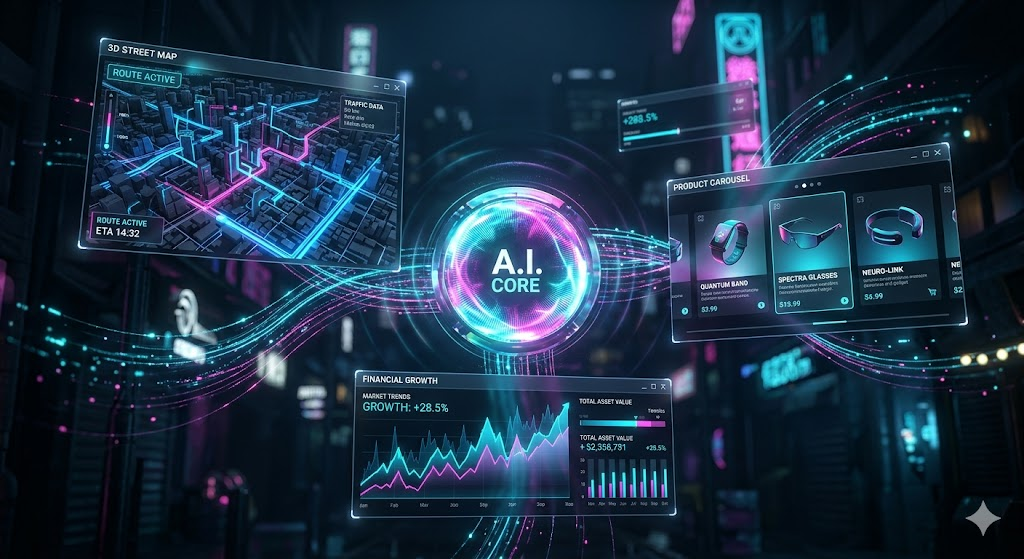
Thus, we see that the establishment of the ATH Business Group and the Alibaba Group Technology Committee aims to make this business model viable. In just a few short months, Alibaba has used a series of intensive, precisely targeted self-reforms to build a new commercial entity for the AI era.
Shift from Model Layer to Ecosystem Layer
An important prerequisite is that Alibaba’s infrastructure and model layer are robust enough to justify the pivot toward the Agent Economy.
Qwen 3.6 Plus processed 1.4 trillion tokens on OpenRouter on its launch day, breaking all-time platform records, and subsequently claimed the top spot for global large model weekly calls. HappyHorse-1.0, which anonymously topped the Artificial Analysis video leaderboard, was confirmed to be from Alibaba’s ATH—a business unit established less than a month ago that produced the world’s top multimodal model. The ceiling for model capabilities is still rising rapidly, but the gap between leading models is narrowing.
Understanding the concept, the more important question is: What does this mean for the industry’s competitive landscape?
Over the past two years, competition in the agent arena has largely revolved around one dimension—model capabilities. Who has stronger reasoning, longer context windows, or higher scores on SWE-bench. This dimension is certainly important, but the diminishing marginal returns of model capabilities are becoming evident.
This is not pessimism—from Sora’s shutdown to HappyHorse-1.0 surpassing Seedance 2.0, people’s perception of model capabilities has already dulled because no one can maintain “perpetual dominance.” Chasing leaderboards is like marking a boat’s position on a flowing river.
The key point is: When open-source models can reach this level, the value of “model capabilities” as a competitive barrier is rapidly diluting. The gap between top models has narrowed from “generational” to “a decimal place.”
This means the center of competition is shifting.
MaaS vendors do need to continually strengthen model and agent capabilities to enhance competitiveness, but this alone cannot break through the “dimensional wall.” The only ways to truly connect AI to services are: existing service providers procuring models and computing power downstream, or MaaS vendors providing services themselves. The former depends on upstream willingness, while the latter is impractical—it’s not a technical issue but one of time and scale.
And Alibaba happens to have a natural advantage—one built over years, of course.
For an agent to help a user order food delivery, it needs to connect to Taobao Instant Shopping’s product catalog, rider dispatch, and payment systems. To help a company complete cross-departmental collaboration, it needs access to CRM, ERP, OA, and approval workflows. These integration capabilities share a common feature: they are not obtained through model training but through years of accumulated commercial infrastructure and ecosystem connections.
And there’s no need to elaborate on the model layer—large language model Qwen 3.6 Plus, full-modality large model Qwen3.5-Omni, unified image generation and editing model Wan2.7-Image... Alibaba’s rapid-fire model releases, all reaching top domestic and international levels in their respective fields, point to its model capabilities.
In other words: The endgame of the agent competition is not about whose agent is smarter but about whose agent can access more “real-world services.”
If this judgment holds, it signifies a profound value migration—from the model layer to the ecosystem layer. The advantages of pure model companies will gradually dilute, while platform companies with large-scale consumer ecosystems will demonstrate structural advantages.
To some extent, this mirrors the logic of the mobile internet era: ultimately, the winners were not those who built operating systems but those who constructed super-ecosystems on top of them. In the agent era, models are the “operating system”—important but not the final act.
While the model layer is strong enough, perhaps years from now, when we look back at this economic transformation centered on agents, we might perceive it this way: Alibaba developed “AI capabilities” as the vinegar to season its dish of “better services.”
Industry Reshuffling Begins
If the “Agent Economy” judgment holds, the industry reshuffling will unfold along a clear line: Where does the value anchor for agents lie?
The biggest lesson from two decades of the internet is that social interaction and content can drive traffic, but services and transactions drive economies. WeChat has 1.2 billion daily active users, but what truly doubled Tencent’s market cap were payments and Mini Program ecosystems. Toutiao rose on content but had to expand into e-commerce and local services to break through its ceiling. Traffic is the starting point; services complete the loop.
The agent arena is replaying the same script. Today, most agents remain stuck at “content interaction”—summarizing, writing, answering questions, coding—which is still fundamentally about information. But users’ ultimate demand is not to chat happily with AI but to have AI handle specific tasks. The volume and commercial value of these demands far exceed “help me write an email.”
The value high ground lies not in “conversation” but in “services.” And services happen to be Alibaba’s battle-tested strength for two decades. This is not a new capability but an old foundation.
But an old foundation alone isn’t enough. The Agent Economy is reshuffling at breakneck speed, and the window of opportunity won’t wait. Whoever can most rapidly align strategy with organizational execution during this window will truly earn a seat at the table.
Alibaba holds a structural advantage here that’s not easily visible: the flexibility to reconfigure brought by its full-stack layout.
At the chip layer, it has T-Head, independent of external computing power supply rhythms; at the model layer, it has the Qwen series, not reliant on third-party model capability ceilings; at the MaaS layer, it has BaiLian, building its own token circulation pipelines; at the application layer, it has Qwen for consumers and Wukong for businesses, creating its own service outlets. Layouts at every layer mean adjustments can be made internally without external negotiations.
Behind this is Alibaba’s organizational guarantee. The establishment of the ATH Business Group and the Group Technology Committee both cut along the same main storyline: enabling smoother flow of tokens from the model side to the service side.
This “tactical flexibility under a unified strategy” also serves as a barrier. Pure model companies lack service ecosystems and cannot move downstream; vertical application companies lack infrastructure depth and cannot adjust upstream. Few players in the industry can freely reconfigure across both full-stack and ecosystem dimensions.
While everyone else is competing over how “smart” agents are, the real competition may have already shifted to another dimension.
When Alibaba proclaims the “Agent Economy,” it’s not saying “my model is the strongest” but redefining the table—agent value depends not on how smart it is but on how many things it can accomplish. Models are the entry ticket; services are the chips.
At this table, two decades of commercial infrastructure, full-stack capabilities from chips to applications, and organizational resilience that can restructure three times in a month without collapsing form Alibaba’s most difficult-to-replicate hand.
Of course, a good hand doesn’t guarantee victory. The Agent Economy has just begun, with far more variables than certainties. But one metric can serve as a test: A year from now, will your agent still be chatting with you, or will it already be helping you spend money and get things done?
The answer points to who has secured certainty in this era.
-
![]()
Wang Huiwen, Former Meituan Executive, Achieves 20-Fold ROI, Supports 24 AI Startups
-
![]()
Another AI Computing Power Unicorn Launches IPO! Founded by a Changjiang Scholar
-
![]()
OFILM Holdings Secures Zhongke Daojing, Marking a Significant Leap in the Optical Communication Industry!
-
What Will Be the Next Key Battleground for Large Models After AI Coding?
-
![]()
Leapmotor's Sales Soar, Yet Hidden Concerns Loom
-
![]()
China’s Action Camera Market Soars: 3.12 Million Units Sold in Six Months, DJI Secures 74% Dominance
-
![]()
Zhang Yiming: Strategic Retreat as a Path Forward
-
![]()
Exploring Charging for Some Features of QianWen App: Can It Follow the Path of Doubao?