The Contraction and Expansion of 'One Volkswagen'
 04/14 2026
 521
521
"Synergy Among Three Joint Ventures"
Author | Shen Tianxiang Editor | Li Guozheng Produced by | Bangning Studio (gbngzs)
In China, Volkswagen Group has initiated a new round of electrification campaign.
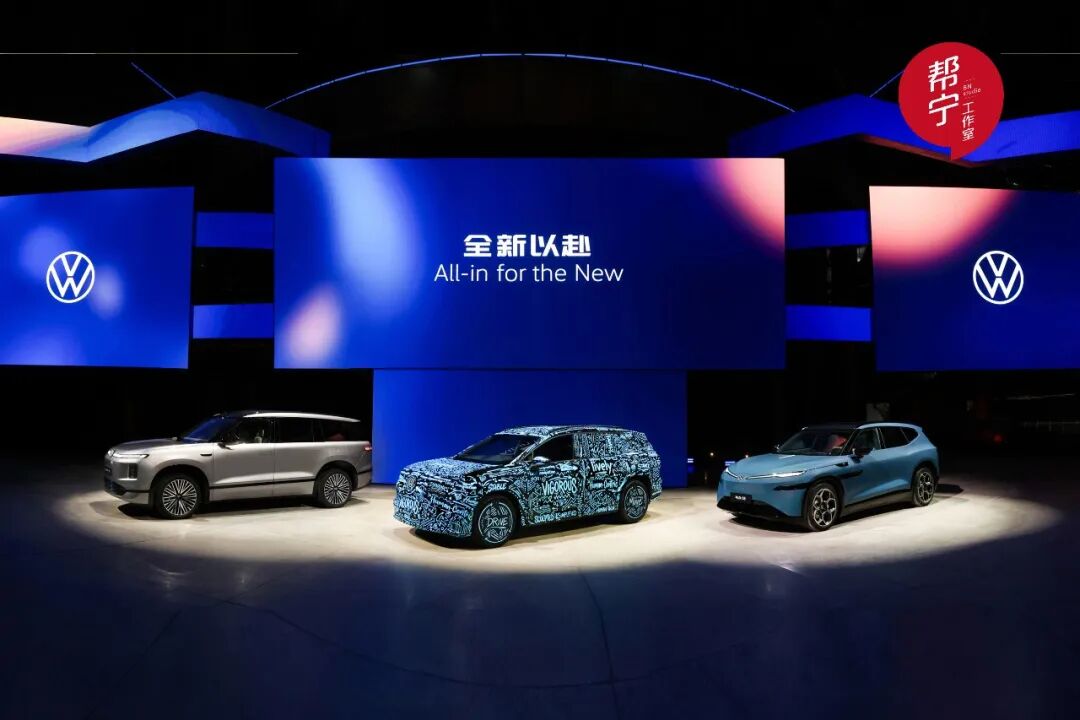
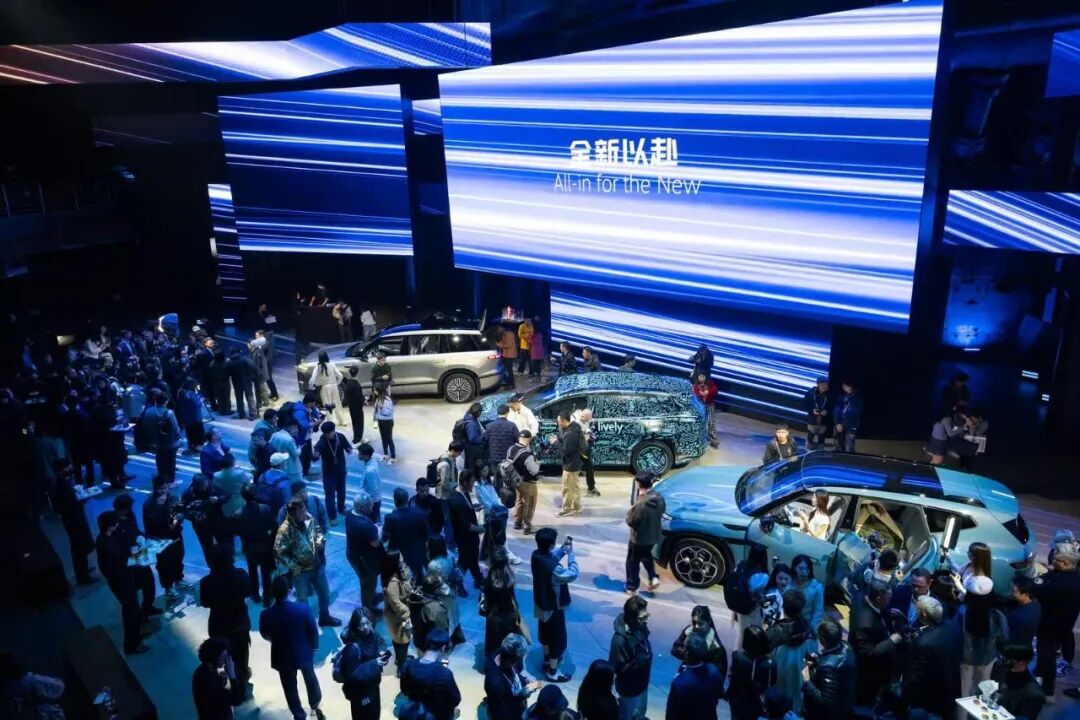
On April 8 this year, Volkswagen held its Brand Night event in Beijing. Three new energy models—Volkswagen Anhui's Zony 08, SAIC Volkswagen's ID.ERA 9X, and FAW-Volkswagen's ID.AURA T6—made their debut on the same stage, signaling the brand's large-scale new energy product offensive in the Chinese market.
This is the result of a profound strategic transformation for Volkswagen in China—aiming to consolidate its core business and optimize resource allocation through precise contraction, while simultaneously capturing market share in new energy and intelligent mobility through comprehensive expansion. Volkswagen hopes to achieve an electrification counteroffensive through this balanced approach of contraction and expansion.
After more than four decades in China, Volkswagen has amassed over 47 million users by deep cultivation (deep cultivation) in the fuel-powered vehicle (internal combustion engine vehicle) era. Its two long-established joint ventures—SAIC Volkswagen and FAW-Volkswagen—have consistently served as benchmarks in the automotive joint venture sector.
Financial reports show that in 2025, Volkswagen Group delivered over 8.98 million new vehicles globally, down slightly by 0.55% year-on-year. In China, the group delivered over 2.69 million new vehicles, an 8% year-on-year decline, with over 2.57 million being internal combustion engine vehicles. Globally, new energy vehicle (NEV) deliveries grew by 32% year-on-year, but in China, they fell by 44.3%.
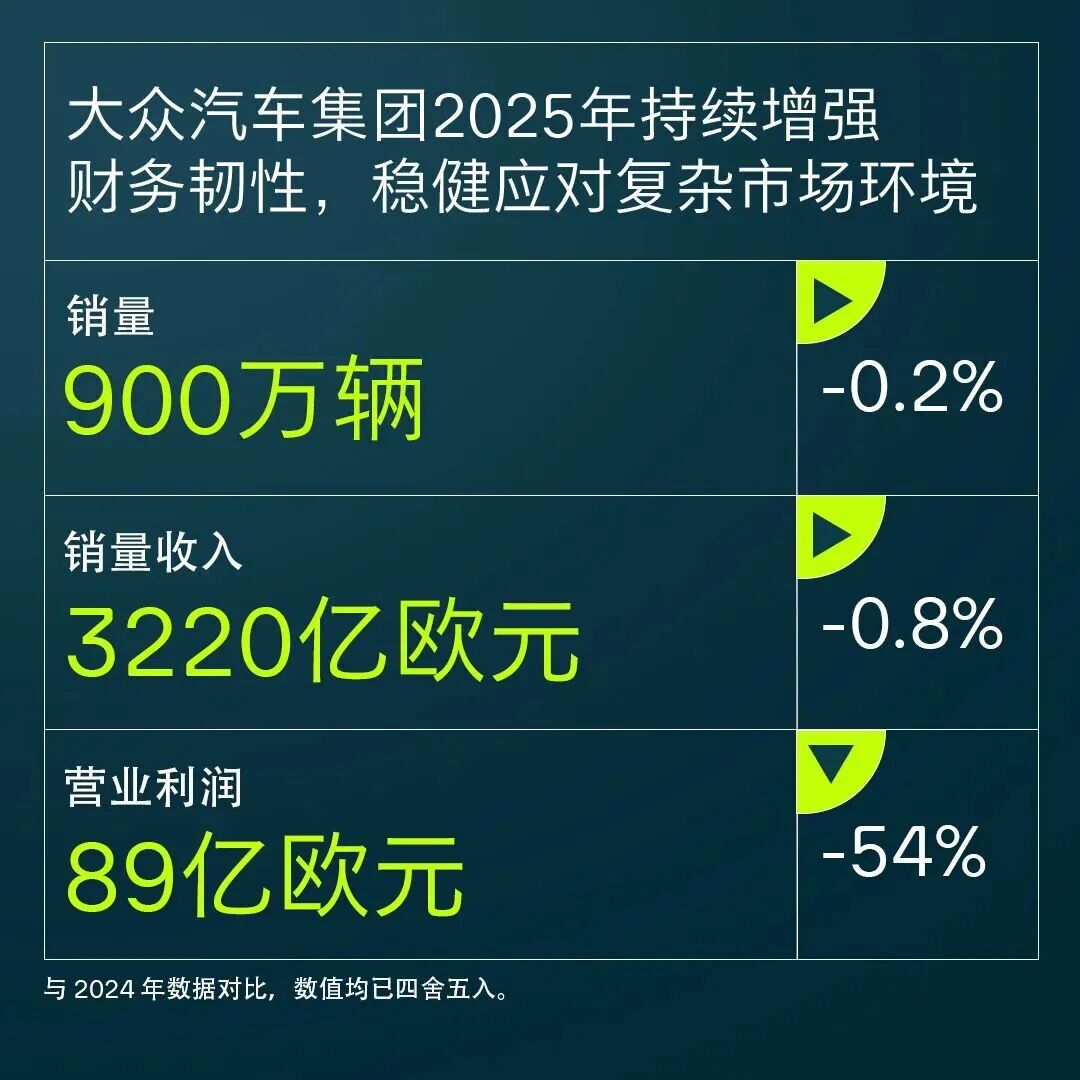 ● Volkswagen Group 2025 Financial Report
Last year, sales at both FAW-Volkswagen and SAIC Volkswagen declined to varying degrees. FAW-Volkswagen sold 1.587 million units, with the Volkswagen brand contributing 902,000 units, down 4.3% and 2.8% year-on-year, respectively. SAIC Volkswagen sold 1.024 million units, a 10.8% year-on-year decline, with the Volkswagen brand exceeding one million units.
Volkswagen Anhui, the third joint venture, did not disclose specific sales figures. Third-party data shows its sales were only around 10,000 units last year.
From an industry perspective, in 2025, new energy vehicles accounted for 47.9% of new car sales in the Chinese market, with monthly penetration rates exceeding 48% for several consecutive months, becoming the dominant force in China's automotive market. In 2026, this figure continued to rise, surpassing 52.9% in March.
Currently, the global wave of new energy vehicles is sweeping across markets, and Chinese brands are rising rapidly. Volkswagen faces multiple challenges in China, including pressure on its internal combustion engine vehicle market share, lagging new energy transition, and internal friction within its joint venture system. It urgently needs to abandon its traditional approach of broad-based expansion, focus on its core markets, streamline heavy assets, expand into new segments, and concentrate resources on high-value areas to drive its transformation strategy forward.
▍01
Contraction for the Sake of Expansion
In the Chinese market, Volkswagen's contraction is a proactive strategic streamlining and resource focus. By divesting inefficient businesses, integrating redundant resources, optimizing channel layouts, and reducing costs, it aims to build momentum for new energy expansion.
First, trimming redundant brands in China.
The Skoda brand will exit the Chinese market by mid-2026—a confirmation from Volkswagen Group on March 26 this year. This means Volkswagen is abandoning low-margin, low-growth marginal businesses to concentrate on building the core competitiveness of the Volkswagen brand.
Skoda entered China through SAIC Volkswagen over 20 years ago, with sales peaking at 340,000 units in 2018 before plummeting to 15,000 units in 2025, representing a negligible market share. Globally, however, it still sells over one million units annually, making it one of Volkswagen's most profitable subsidiaries. By exiting China, Skoda can focus on high-growth markets like India and ASEAN, a wise strategic move.
Second, implementing lightweight synergy.
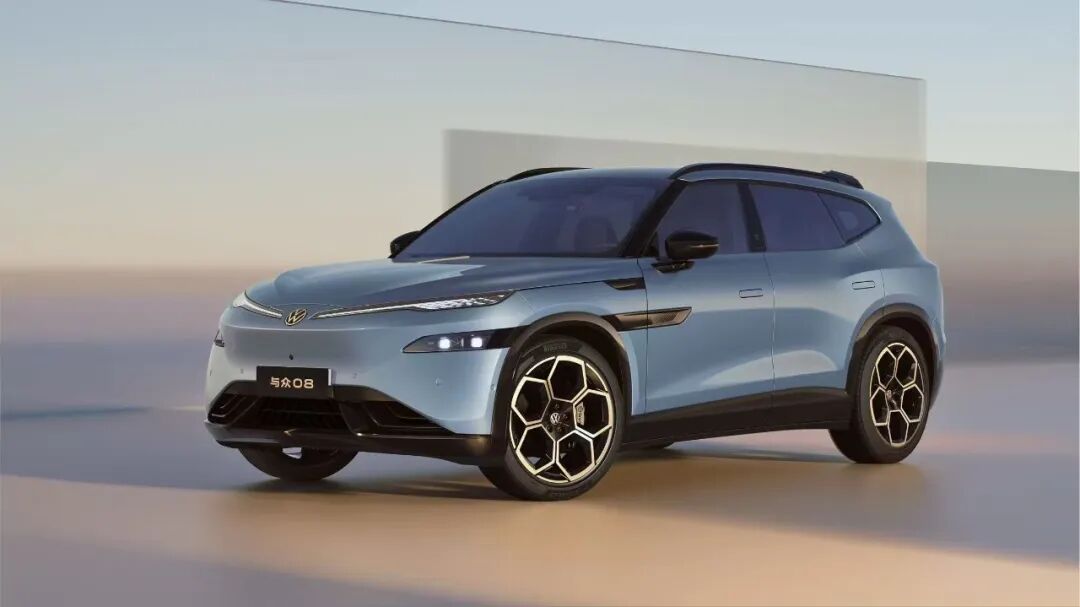
On April 2, Volkswagen (China), FAW-Volkswagen, and Volkswagen (Anhui) Digital Sales & Service Co., Ltd. signed a memorandum of understanding on dealer network strategic cooperation. They agreed to introduce a "store-within-a-store" model at select FAW-Volkswagen dealerships to display and sell Volkswagen Anhui's latest new energy models, starting with the Zony 08.
FAW-Volkswagen will select authorized dealers in about 30 cities not yet fully covered by Volkswagen Anhui to establish dedicated display and sales spaces for the Zony 08.
Another Zony model will launch in the second half of this year, with similar cooperation arrangements.
For Volkswagen Anhui, this approach is far faster than building a new retail network from scratch, enabling low-cost, high-efficiency channel expansion.
The "store-within-a-store" model is not new to China's automotive distribution channels. It is commonly used in two scenarios:
One is during the early stages of a new brand's establishment, leveraging the parent brand's channel network. Many Chinese autonomous brands have adopted this model when launching new brands. The other is when weaker brands seek shelter by either collaborating with or attaching themselves to stronger brands. For example, Dongfeng Citroën and Dongfeng Peugeot, as well as Infiniti, Venucia, and Nissan, share networks, while Skoda also operates within SAIC Volkswagen's channels using this model.
When BYD and Mercedes-Benz collaborated on the Denza brand, Denza vehicles were initially sold within Mercedes-Benz dealerships. However, after over a decade of rocky cooperation, Mercedes-Benz eventually withdrew its investment in Denza.
The innovation in the cooperation between Volkswagen Anhui and FAW-Volkswagen lies in its cross-joint-venture nature.
"This model aligns with the current trend of intensive store construction, reducing heavy asset investments in channels," said Lang Xuehong, Deputy Secretary-General of the China Automobile Dealers Association. "However, it may have some impact on establishing brand exclusivity in consumers' minds. When it reaches a certain scale, independence should be pursued as much as possible."
This may be the best option for Volkswagen Anhui at this stage. Currently, Volkswagen Anhui has a weak channel network and severe losses. Leveraging FAW-Volkswagen's channels is the only way to quickly scale up, validate the market, and survive—there seems to be no better alternative.
Currently, there is no product overlap between the two, but as their product lines expand, positioning and price band overlaps may lead to internal friction.
Third, streamlining structures to boost efficiency.
Volkswagen's most disruptive contraction strategy in China involves a comprehensive streamlining and restructuring of its management architecture, decision-making chains, and R&D system. It completely bid farewell (completely bids farewell to) the traditional joint venture 1.0 model, where the German headquarters had the final say and China passively executed, by placing decision-making, R&D, pricing, and iteration rights firmly in China's hands.
This is not merely about personnel streamlining but represents a top-level design focus, serving as the foundation for all of Volkswagen's subsequent expansions in the Chinese market.
Globally, Volkswagen has scaled back non-core R&D investments, shut down inefficient projects, cut spending on generalized platforms, and concentrated funds and manpower on technologies exclusive to the Chinese market. Volkswagen (China) Technology Co., Ltd. (VCTC) in Hefei has become the strategic core.
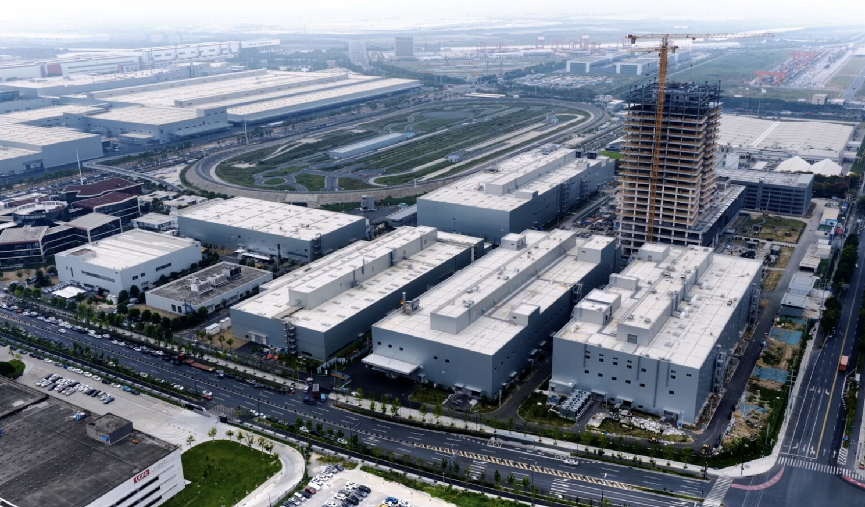
VCTC is positioned as the largest overseas R&D center outside Germany and the only one with vehicle platform-level definition capabilities. It focuses on developing key technologies such as local electronic electrical architecture, intelligent cockpits, and advanced intelligent driving systems. Combined with the R&D capabilities of Volkswagen's three joint ventures in China, it forms the densest innovation cluster globally outside Wolfsburg.
Leveraging this streamlined and efficient system, Volkswagen has shortened its product development cycle from 48 months to 24 months and concentrated resources on developing the CEA China-exclusive electronic electrical architecture, fully compatible with high-speed OTA, intelligent interactions, and localized functional iterations.
From decision-making to R&D and implementation, Volkswagen's organizational contraction through simplification has provided it with the confidence to keep pace with China's speed in its expansion efforts.
▍02
Three ID. Series Competing on the Same Stage
In stark contrast to its contraction, Volkswagen is pursuing a comprehensive, high-intensity expansion in China across four areas: new energy, localized R&D, product matrix, and joint venture synergy. Centered on its "In China, For China" strategy, it is launching its largest-ever product offensive to reshape its competitive edge in China.
2026 marks the breakthrough year for Volkswagen's new energy products in China, as it seeks to overcome previous limitations of a single new energy model and slow iteration cycles.
At the event aforementioned Brand Night, Thomas Schäfer, CEO of Volkswagen Passenger Cars, announced plans to launch 13 new new energy models within the year, covering three powertrain types: battery electric (BEV), plug-in hybrid (PHEV), and extended-range electric (EREV). By 2029, the total number of new energy models will exceed 30, with new energy vehicles accounting for over 50% of its lineup by 2027.
The biggest challenge for Volkswagen is ensuring synergy without internal friction among its three joint ventures, particularly in terms of product and technological differentiation.
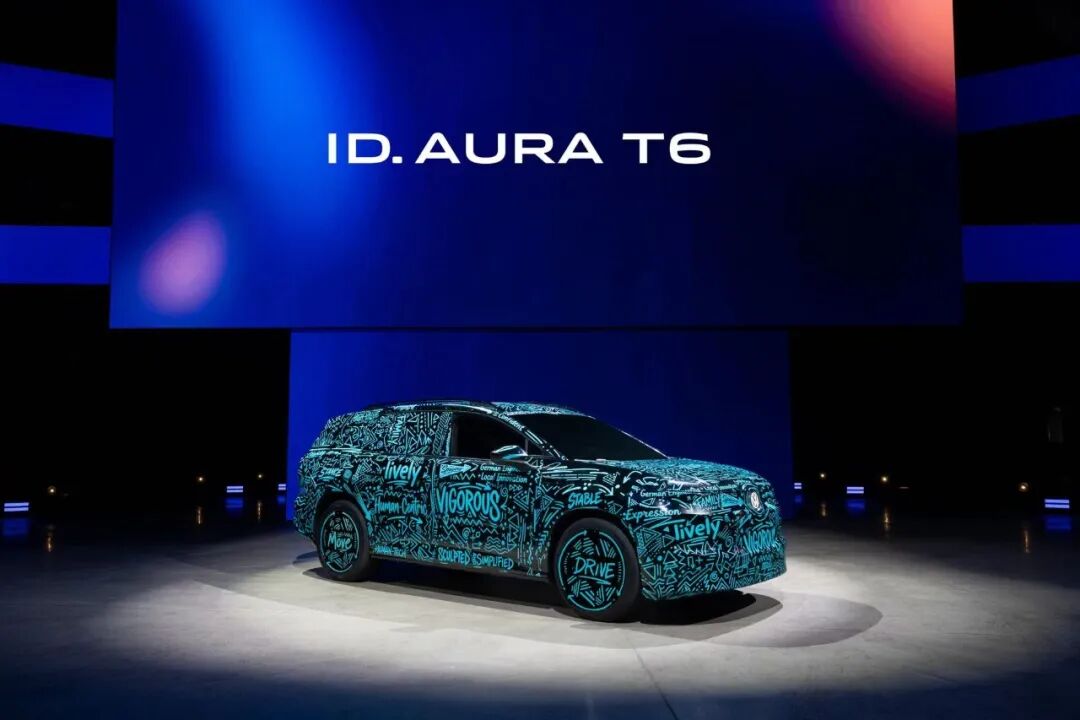
FAW-Volkswagen has named its new energy series ID.AURA, with its first model, the ID.AURA T6, being a pure electric mid-size SUV. It adopts the CEA electronic electrical architecture and an intelligent driving assistance system developed by Core Cheng (CorePilot), a joint venture between Volkswagen Group and Horizon Robotics. It debuted at the Beijing Auto Show on April 24.
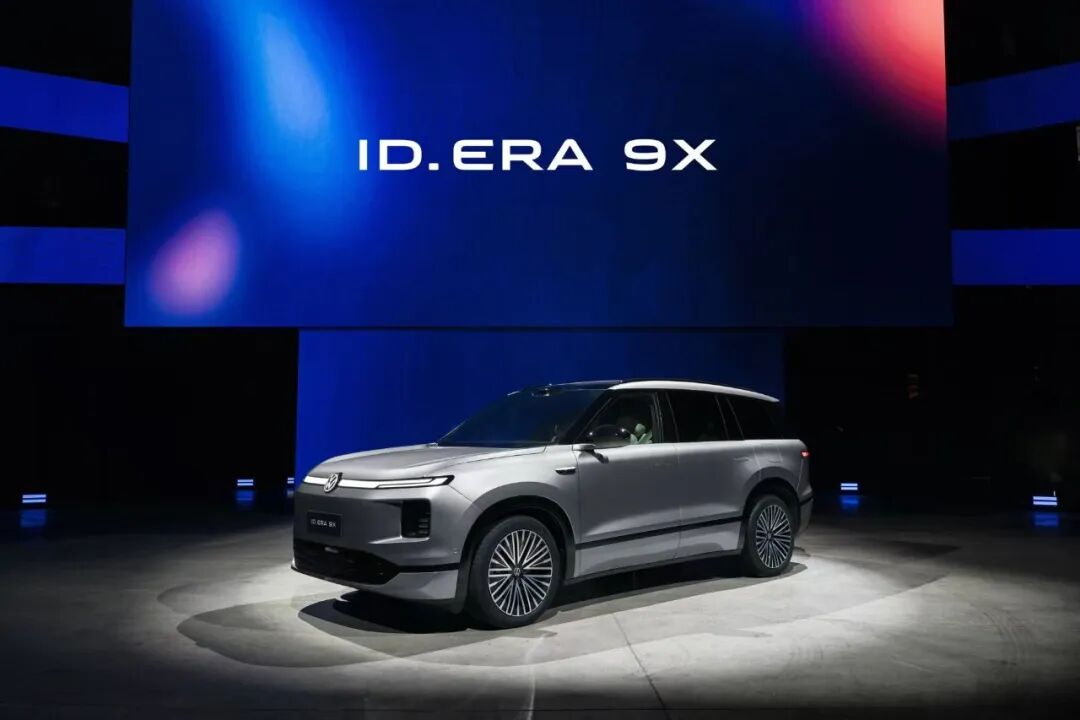
SAIC Volkswagen's new series is ID.ERA, with its first model, the ID.ERA 9X, being Volkswagen's first full-size extended-range electric SUV, offering over 400 kilometers of pure electric range. It is equipped with Volkswagen's proven EA211 engine and Momenta R7's reinforced learning world model for its intelligent driving system. Pre-sales began on March 30 this year, priced between RMB 329,800 and RMB 379,800, with a planned launch on April 25.
Volkswagen Anhui introduced the ID. unique (ID.Unique) category, with its new model, the Zony 08, being Volkswagen's first full-size pure electric intelligent SUV built on an 800-volt architecture, offering a range of 730 kilometers. Its super-fast charging can add 150 kilometers of range in just 5 minutes. Pre-sales began on March 26, priced between RMB 239,900 and RMB 299,900, with a planned launch on April 16.
Currently, the three models from the three joint ventures are positioned differently, catering to family utility, high-end flagship, and young individuality needs, respectively, filling gaps in Volkswagen's new energy segment in China.
According to Volkswagen China's plan, its three joint ventures in China will advance under a unified brand image, with the Volkswagen brand maintaining a consistent identity—all model names prefixed with "ID." to represent intelligent design, brand identity, and forward-looking technology, ensuring a clear and consistent brand essence.
The difference lies in their routes: SAIC Volkswagen adopts a multi-powertrain approach, including PHEV, EREV, and BEV; Volkswagen Anhui focuses on pure electric vehicles for young, progressive users; FAW-Volkswagen offers a diversified product matrix, empowering users with choices across internal combustion engine, PHEV, and intelligent BEV models.
In 2026, FAW-Volkswagen will lead with the launch of two AURA pure electric models, hitting the market within the year; SAIC Volkswagen will introduce four ID.ERA series models, covering various electrified powertrains; the ID.Unique category will bring three new models.
Thus, Volkswagen breaks down the silos among its three joint ventures, establishing a new system of unified branding, differentiated layouts, and collaborative efforts as the key pillar of its expansion strategy.
However, FAW-Volkswagen, SAIC Volkswagen, and Volkswagen Anhui have long operated independently, with significant differences in corporate culture, channel interests, and performance targets. While their product positioning can be distinguished in the short term, competition in terminal pricing, user acquisition, and resource allocation is inevitable in the long run. Achieving multi-party synergy under a unified brand remains one of Volkswagen's core challenges in China.
In recent years, facing the leading edge of Chinese brands in new energy and intelligent mobility, Volkswagen has set aside its German arrogance and fully embraced a localization strategy, adapting to Chinese user needs from product definition and technological R&D to channel services.
Now, through dense (intensive) product launches, localized technological innovation, and joint venture system synergy, Volkswagen is rapidly addressing shortcomings in intelligent connectivity, powertrain types, and channel coverage to re-establish connections with Chinese users.
With the synergy of three joint ventures, accelerated localized R&D, and an expanded product matrix, whether Volkswagen can achieve a comeback in China's new energy market is one of the biggest highlights in the global automotive industry.

-
![]()
Jitian Xingzhou: A Pioneer in Optical Payloads Secures Hundreds of Millions in Series B Funding!
-
![]()
Orders Secured Through to the Second Half of the Year! The Rationale Behind the 'Surge' in Demand for This Company’s Optical-Grade Base Films
-
![]()
Beyond Patents: The Retail Rivalry of Insta360 and DJI Unfolds
-
![]()
180 Billion Market Cap Vanished! How Did Seres Fall So Far?
-
![]()
Blockbuster! Domestic storage takes the global double crown for the first time, from an AI company
-
![]()
China Spearheads Formulation! World's Pioneering Global Technical Regulation for Automated Driving Systems Greenlit and Unveiled
-
![]()
Farewell to Pulsed Support Policies: Three Major Auto Policy Directions from Multiple Departments Take Effect on the Same Day
-
![]()
Embercore AI’s Accelerated Funding: The Robot Industry’s Shift Toward ‘Learning Systems’