Can L3 Be Skipped? Huawei Insists on the Essential Path, While XPENG Leads the Charge Towards L4
 04/14 2026
 477
477
Author | Zhang Lianyi
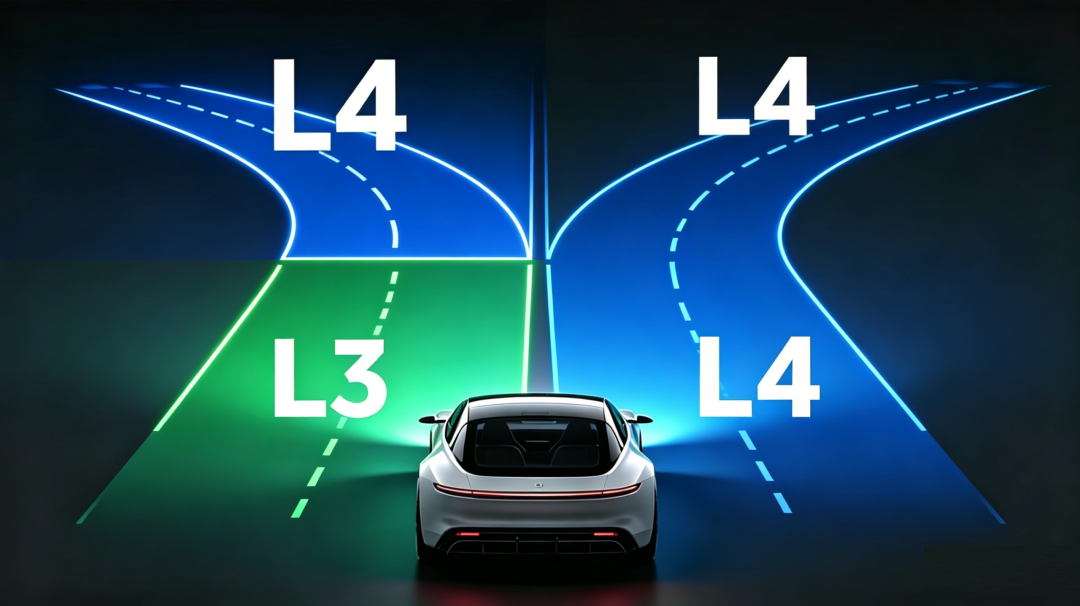
Should L3 Be Skipped to Directly Pursue L4?
A divergence in technical roadmaps has emerged among leading domestic intelligent driving companies. On one side is Huawei, which believes skipping L3-level autonomous driving is not feasible. On the other side, companies like XPENG, Yuanrong Qixing, and Zhuoyu argue for bypassing L3 and heading straight to L4.
The controversy was highlighted by a statement from Huawei's Senior Vice President, Jin Yuzhi.
On April 11, at the High-Level Forum on Intelligent Electric Vehicle Development (2026) held in Beijing, Jin Yuzhi stated in his speech, "L3 is an essential stage on the path to fully autonomous driving at L4 and L5. L3 cannot be skipped."
His viewpoint contradicts that of several companies. For instance, XPENG Motors Chairman He Xiaopeng, a delegate to the National People's Congress, formally proposed "jumping from L2 to L4" and "simplifying the intermediate L3 stage" during the "Two Sessions."
Similarly, at the same forum, Zhuoyu Technology CEO Shen Shaojie expressed agreement with skipping L3. Yuanrong Qixing CEO Zhou Guang has consistently viewed L3 as a temporary solution. In interviews, he stated that the development of large models will significantly accelerate the transition from L2 to Robotaxi (L4), effectively skipping L3.
This debate has also sparked discussions in academia. Chinese Academy of Sciences academician Ouyang Minggao has taken note of the L3 controversy and personally favors a direct transition from L2 to L4. Tongji University Professor Zhu Xichan has also previously stated that L3's requirement for drivers to temporarily take over control is akin to "adding chaos" and that it would be better to let machines handle it entirely to ensure safety.
The classification of autonomous driving levels like L3 was first proposed as a recommended industry standard by the Society of Automotive Engineers (SAE) in 2016 to coordinate global automotive industry R&D, supply, and application. However, after being adopted by governments, corresponding regulatory and management measures were implemented. Chinese authorities have also adopted similar classifications and provided corresponding policies.
Thus, the debate over the viability of L3 essentially revolves around policy benefits.
Nevertheless, even as L3 has just begun pilot testing, some practitioners advocate skipping it and heading straight to L4, reflecting a "leap of confidence." What have they seen that Huawei hasn't?
01
L3: A Long-Standing Controversy, Now More Heated
L3 has been somewhat awkward since its inception.
It falls between assisted driving and autonomous driving, often referred to as semi-autonomous driving. Under specific conditions, drivers can take their hands off the wheel and eyes off the road, allowing the vehicle to drive autonomously. However, when the autonomous driving system cannot handle a situation, the driver must take over control.
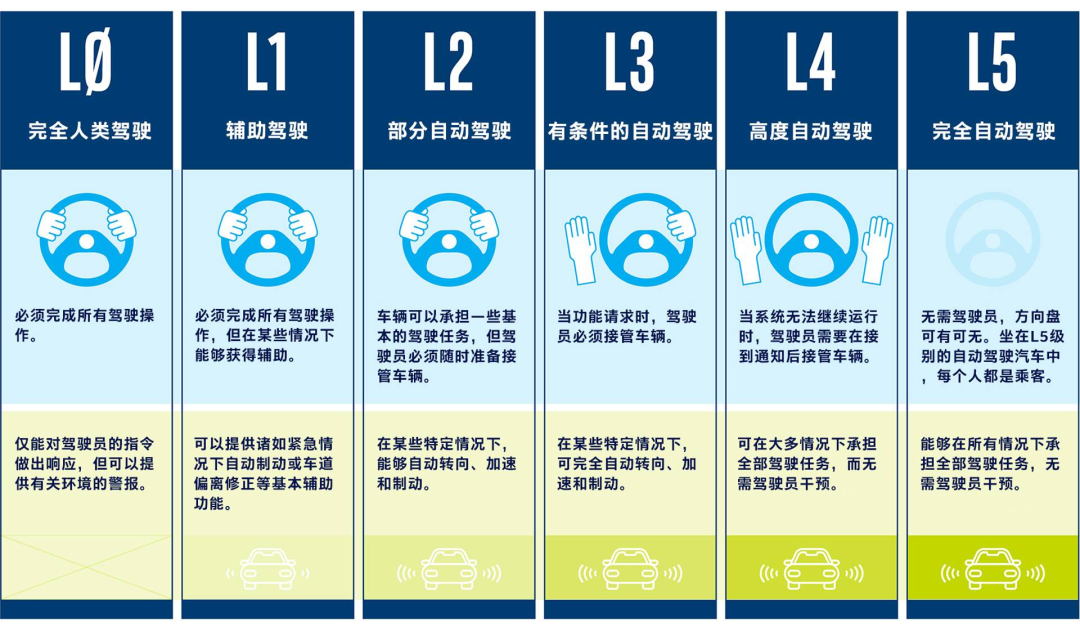
This means drivers must address problems that the autonomous driving system cannot resolve within a short time—a scenario that has not been validated in practice but is severely questioned by many experts and practitioners.
Zhu Xichan's remark, "adding chaos," refers to this dilemma.
Therefore, there have long been calls to skip L3 and develop L4-level autonomous driving directly. During the first wave of autonomous driving startups, many companies launched L4-level autonomous driving ventures, including Robotaxi companies.
However, most automakers believe a transition through the L3 stage is necessary. Companies like BMW, Mercedes-Benz, and Honda have all piloted L3.
Nevertheless, early attempts at L3 by automakers largely failed. Meanwhile, L2+ assisted driving emerged, with core contributions from two types of companies: intelligent driving suppliers, including Huawei, Momenta, Yuanrong Qixing, and recently prominent or noticed companies like Horizon Robotics, WeRide, and QCraft; and automakers developing intelligent driving in-house, including Tesla, XPENG, Li Auto, NIO, and Geely.
After developing relatively mature L2+ assisted systems, traditional global automakers began to "concede," not only adopting suppliers or collaborating with other automakers in China but also reshaping their R&D architectures for intelligent driving globally, such as partnering with NVIDIA to leverage AI for assisted driving development.
Meanwhile, companies that contributed L2+ solutions began to reassess the necessity of L3—unlike previous theoretical discussions, they had practical experience with L2+, giving them more authority to speak on the matter.
However, Huawei still advocates for L3.
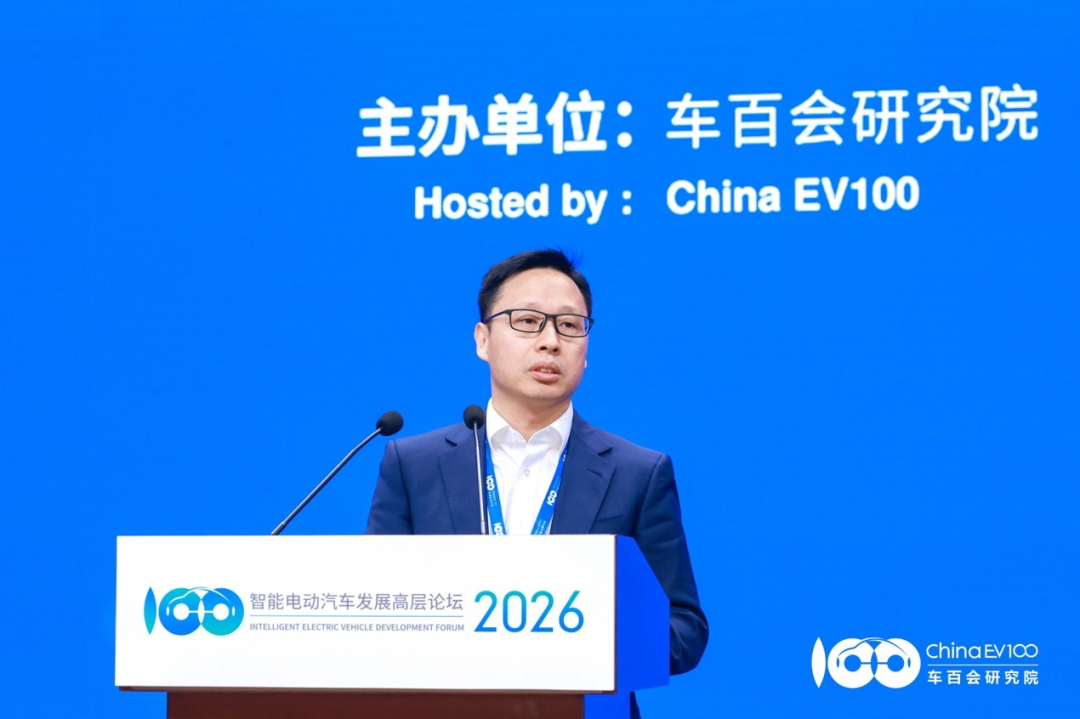
Huawei Senior Vice President Jin Yuzhi
Jin Yuzhi presented three reasons. From a safety perspective, he believes achieving L4, where humans are completely removed from the driving position and no steering wheel is needed, requires at least ten times the safety level of human driving, necessitating data accumulation.
From a user's perspective, he believes users need a cognitive process. "Even today's L2 assisted driving is not widely used by many users, let alone when humans are not in the driving position."
From a regulatory perspective, he notes that both regulations and insurance support systems require accumulated experience and data.
He also highlights the significant change autonomous driving represents compared to L2, where accident liability begins to shift to automakers and autonomous driving providers. "You are responsible for accidents, not the user." "L3 means humans are still in the driving position, giving you more time to take over. The L3 stage can be seen as an autonomous driving system under supervision, verified in such an environment first."
Jin Yuzhi suggests accelerating the L3 process, directly targeting end-users with full-scenario, all-domain openness to accumulate data and build user trust.
He Xiaopeng, on the other hand, believes L3 should be skipped.
Discussing L3 and L4 autonomous driving, He Xiaopeng stated in interviews that he has never been optimistic about L3 due to unclear liability and its status as a technical logic rather than an engineering implementation logic.
Regarding L4, he "always thought L4 was out of reach a few years ago," but based on the progress of AI physical world large models in the second half of 2025, his confidence has greatly increased. "Technological changes sometimes... accumulate gradually and then reach a new inflection point."
"I hope China can enter the fully autonomous driving stage, including driverless driving, earlier in 2026 or 2027," He Xiaopeng proposed in his Two Sessions proposal to simplify the intermediate L3 stage and promote a policy and regulatory leap from L2 to L4.
Specifically, he suggested clarifying the registration and traffic management system for L4 autonomous vehicles, gradually promoting compliant L4 vehicles nationwide, and accelerating the commercialization of L4 autonomous driving in more regions and complex scenarios, encouraging the promotion of local pilot experiences nationwide.
He also proposed granting local pilot management rights for L4 driverless C-end applications in specific scenarios, allowing some municipalities or sub-provincial cities with mature infrastructure to pioneer low-risk, end-user (toC) applications like nighttime driverless charging and car washing, as well as parking lot driverless parking and retrieval, gradually forming replicable and scalable experiences.
Other supporters of "skipping L3" share similar logic with He Xiaopeng: first, unclear liability in L3, and second, confidence in achieving L4 based on new AI technology architectures.
Shen Shaojie stated that liability in L3 operations is ambiguous, such as giving drivers 10 seconds to take over, with unclear responsibility if they fail to respond. "A system that truly requires no takeover for 10 seconds is effectively at L4 level."
Technologically, Shen Shaojie believes that with large models possessing native multimodal and emergent capabilities, the basic technology for L2 to L4 can be homologous. Moreover, L4 has already been achieved in scenarios like Robotaxi, with the key being scalable adoption. "As foundational model capabilities improve, adoption will accelerate."
Zhou Guang is also confident in the potential of new technologies. "Today, with the development of large models, end-to-end, and multimodal technologies, AI is progressing rapidly, especially in improving the cognitive abilities of foundational models. I believe large models will significantly accelerate the transition from L2 to Robotaxi."
Setting aside the L3 debate, intelligent driving development companies have seen a leap in capabilities brought by new-generation technology architectures at the L2+ level.
Although different companies describe this generation of technology architectures differently—some call it world models, others VLA, or a combination of both—leading players like Huawei, XPENG, Li Auto, and Momenta are iterating or even completely reshaping their technology architectures, introducing entirely new solutions that demonstrate faster evolution, further improved assisted driving capabilities, and greater potential.
Meanwhile, new players like Yuanrong Qixing, Horizon Robotics, and WeRide are also providing strong L2+ assisted driving solutions based on newer technology architectures.
Thus, most of them have called for skipping L3 and heading straight to L4.
02
L3 and L4: Both in Pilots, L3 Progressing Faster
Despite the debate, L3 has entered the public pilot phase on limited routes and for specific vehicle models in China, as per previous regulatory policies.
As early as 2021, authorities formulated policies and issued L3 autonomous driving test licenses to companies like BMW, Mercedes-Benz, Changan, GAC, and BYD, primarily for real-world road testing during product development to verify safety in actual traffic environments.
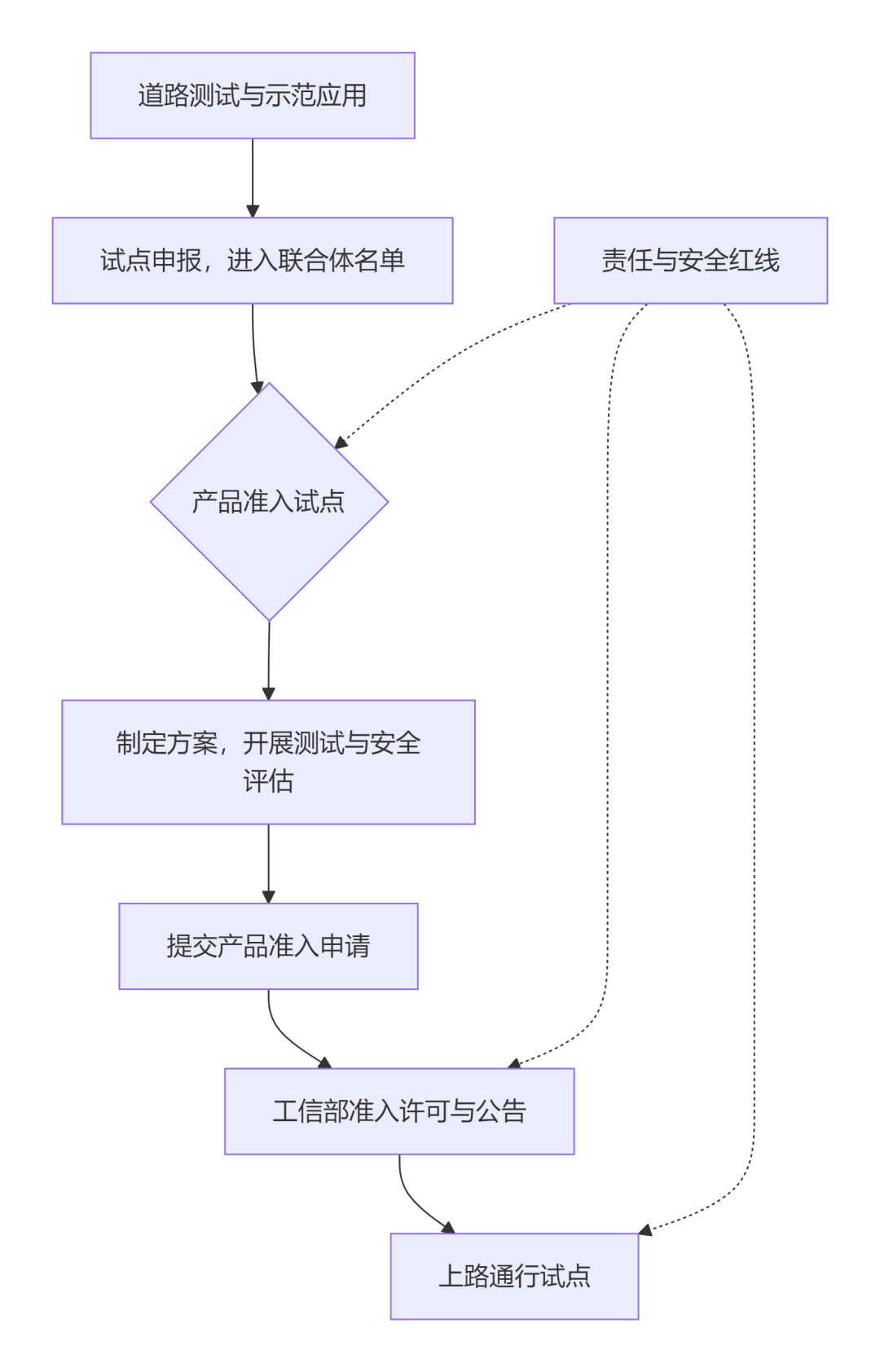
After testing and verification, authorities released policies granting product access and road pilot permits. Companies that completed the first round of testing could apply for announcement access and road testing.
L3 Autonomous Driving Access and Road Pilot Process
In December 2025, the Ministry of Industry and Information Technology (MIIT) conditionally approved product announcements for two L3 autonomous vehicles. Generally, obtaining a vehicle product announcement means it can be produced, sold, and thus commercially used.
However, this approval was conditional.
One model, the Changan Deepal SL03 L3 version, could only operate on Chongqing's inner ring expressway and new inner ring at a maximum speed of 50 km/h. The other, the ARCFOX Alpha S6 L3 version, could only operate on Beijing's Jingtai Expressway, Airport North Line, and Daxing Airport Expressway (specified sections) at a maximum speed of 80 km/h.
About a month after the announcement, local traffic management departments in Beijing and Chongqing issued L3 autonomous driving operation licenses to these two models, meaning they could begin road pilots.
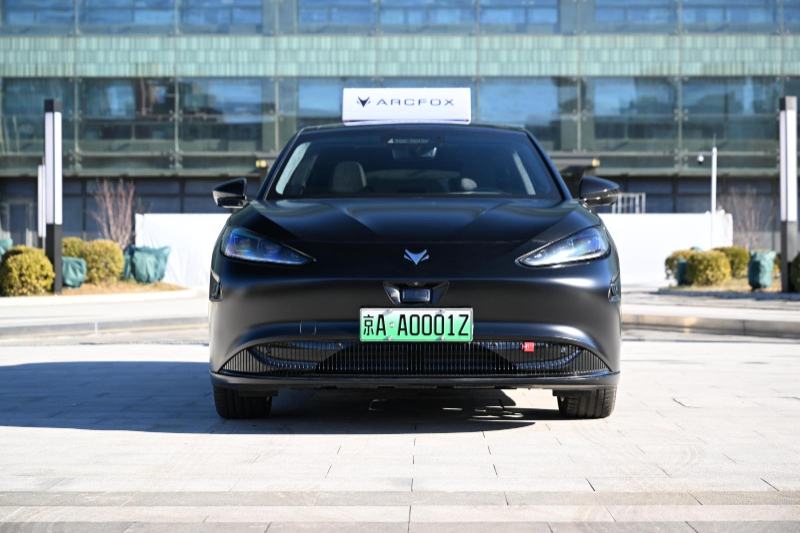
ARCFOX Obtains L3 Autonomous Driving License
However, these two models are not yet available for private sale and are primarily delivered to automakers and ride-hailing companies for pilot taxi services.
According to the automakers, pilot taxi services will be offered early this year, but no official announcements have been made yet.
Besides these two models, more are applying for MIIT announcements, with many automakers stating they have applied for L3 model access, including models like the Voyah Taishan Ultra, AITO M9 L3 version, and Yangwang U8.
According to regulatory plans, after sufficient pilot testing under limited conditions, L3 autonomous models that obtain announcement access may genuinely become available for private sale.
Many companies are vying for L3 announcements and pilots, hoping to gain an edge when L3 becomes available for private sale and to boost sales of their current L2++ assisted driving vehicles—if they can pilot L3, their assisted driving capabilities are theoretically strong.
Parallel to L3 are tests and pilots for L4 autonomous driving.
L4's progress is comparable to L3's early stages, primarily at the local level and mostly conducted by Robotaxi companies like Baidu's Apollo Go, Didi Autonomous Driving, Pony.ai, WeRide, and Cao Cao Mobility, with automaker collaboration from companies like GAC, Geely, Changan, ZEEKR, and Chery.
Some automakers developing intelligent driving in-house have also obtained approval for Robotaxi testing, such as XPENG Motors.
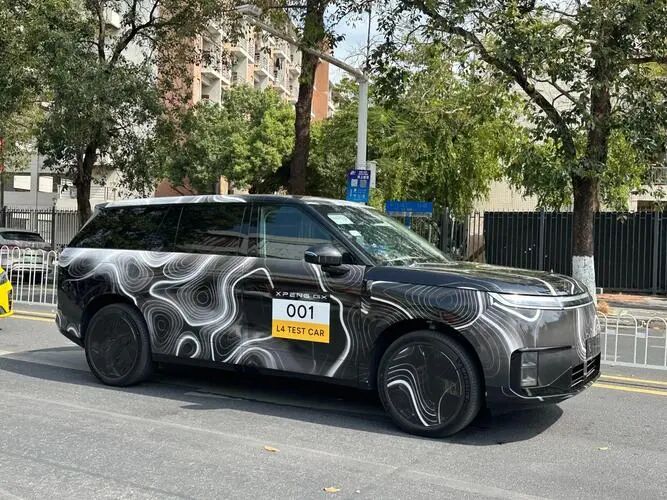
XPENG's L4 Test Vehicle
From the perspective of companies like XPENG Motors directly piloting L4, it is natural to hope for more proactive L4 policies.
03
Who Suffers Most from the L3 vs. L4 Debate?
Huawei's support for the L3 approach is understandable—as the largest and most premium assisted driving supplier, many of its clients are pursuing L3.
For instance, the ARCFOX Alpha S6, one of the first models to obtain L3 access, uses Huawei's Qiankun Intelligent Driving solution. Voyah is also collaborating with Huawei to develop L3 autonomous driving.
Huawei's closely cooperating "Five Realms" and "Three Realms" brands, as well as brands only collaborating on assisted driving, may all apply for L3. Huawei must defend the legitimacy of this route.
Regarding L4, Huawei has disclosed little information. Jin Yuzhi stated that Huawei is also a leader in L4 technology but will initially focus on B2B scenarios like Robotaxi verification and fully driverless autonomous driving systems in limited low-speed scenarios, such as 40 km/h on public roads and 20 km/h within parks.
Relatively, other L4 players, including XPENG, are more eager to promote L4 applications.
XPENG Motors plans to conduct regular public road tests in the first half of 2026, achieving driverless main seats; launch passenger demonstration operations (with safety officers) in Guangzhou in the second half of 2026; remove safety officers and achieve fully driverless operations in early 2027; and in the medium to long term, hopes to open SDKs, integrate with travel platforms like AutoNavi, achieve multi-city deployment in China, and expand globally.
Of course, Huawei has always demonstrated strong commercial flexibility. If the 'saline-alkali land' of L4 is cleared, Huawei will certainly ramp up its efforts and make rapid progress in the L4 field.
Whether it's Huawei, XPENG, or other intelligent driving companies, they are all proclaiming the arrival of an inflection point. Jin Yuzhi said that 2026 should mark the first year of global autonomous driving.
So, when the L3 and L4 factions argue, the most harmed may be companies without even L2+ technology. In the next phase of competition, for the most valuable autonomous driving functions, they can only pin their hopes on suppliers.
--END--
-
![]()
Jitian Xingzhou: A Pioneer in Optical Payloads Secures Hundreds of Millions in Series B Funding!
-
![]()
Orders Secured Through to the Second Half of the Year! The Rationale Behind the 'Surge' in Demand for This Company’s Optical-Grade Base Films
-
![]()
Beyond Patents: The Retail Rivalry of Insta360 and DJI Unfolds
-
![]()
180 Billion Market Cap Vanished! How Did Seres Fall So Far?
-
![]()
Blockbuster! Domestic storage takes the global double crown for the first time, from an AI company
-
![]()
China Spearheads Formulation! World's Pioneering Global Technical Regulation for Automated Driving Systems Greenlit and Unveiled
-
![]()
Farewell to Pulsed Support Policies: Three Major Auto Policy Directions from Multiple Departments Take Effect on the Same Day
-
![]()
Embercore AI’s Accelerated Funding: The Robot Industry’s Shift Toward ‘Learning Systems’