Over 300 robots compete in a 21-kilometer race—who will survive to cross the finish line?
 04/16 2026
 716
716
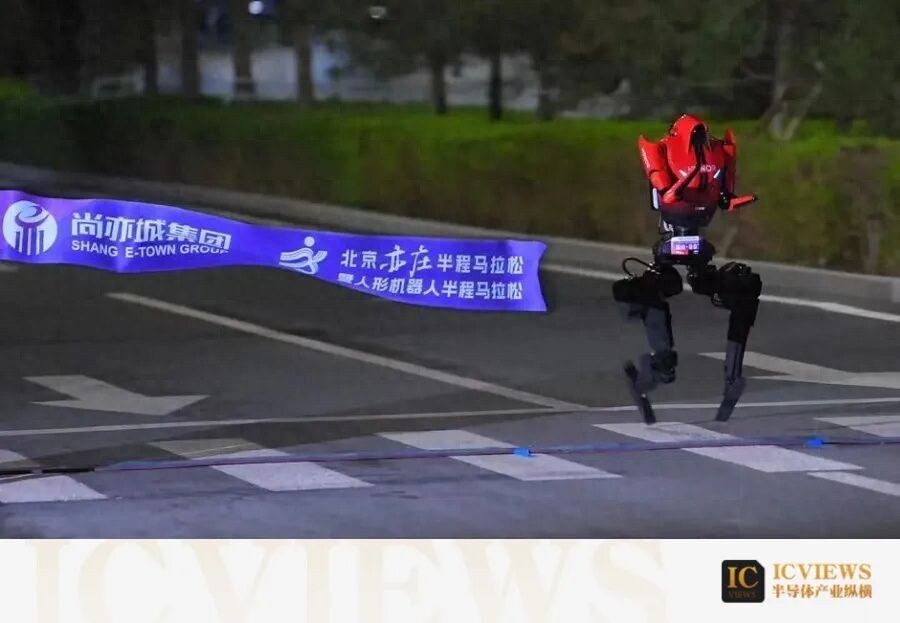
Preparing for a year—can they surpass humans?

On April 19, Beijing Yizhuang will witness the world's largest humanoid robot half marathon. Spanning over 21 kilometers, human runners will compete alongside humanoid robots.
When the starting gun fires, over 100 teams and 300+ robots will simultaneously embark on an ultimate test of endurance, balance, battery life, and algorithms across real urban roads.
Over 300 robots competing together
Last year's inaugural event saw only 20 teams participate, with 6 robots completing the race. This year, the scale has grown exponentially: 76 entities from 13 provinces, municipalities, and regions across China have registered, forming over 100 teams spanning corporations, universities, and other types, including 4 overseas teams. The number of participating robots has surged from 20 to over 300—five times last year's scale.
Autonomous navigation technology has become this year's biggest highlight. Last year, most teams relied on manual remote operation. This year, nearly 40% of teams use autonomous navigation, a significant increase. Over 100 teams aim to complete the 21 kilometers fully autonomously, marking a critical leap from "able to walk" to "able to run independently" for humanoid robots. Top contenders like Team Tiangong and Team Unitree will compete in fully autonomous mode, making it the event's top technical attraction.
From the evening of April 11 to the early morning of April 12, the Beijing Economic-Technological Development Area organized a full-scale, full-element test event for the 2026 Humanoid Robot Half Marathon. During the test, Unitree's H1 humanoid robot reached a peak speed of 10 meters per second, nearly matching Usain Bolt's peak instantaneous speed of 10.44 meters per second. Industry experts predict that the average robot speed in this year's event will rise from last year's 2 meters per second to 5-6 meters per second, with some top models approaching elite human runner levels.
Last year's champion, Tiangong, finished in 2 hours, 40 minutes, and 42 seconds. This year, multiple teams aim to complete the half marathon in under 1 hour, challenging human half marathon records. A telling detail: during last year's World Humanoid Robot Games 100-meter race, robots reached 6 meters per second (21.6 km/h)—so fast that human operators couldn't keep up with remote control. This year, autonomous navigation technology will be key to victory.
21 kilometers of hellish difficulty—event challenges escalate dramatically
While the exponential growth in participation scale represents a quantitative change, the upgrade in course design and event rules marks a qualitative leap. This year's event difficulty has risen dramatically, earning it the label of "hell mode" for humanoid robots.
The full course spans 21.0975 kilometers, introducing the Nanhaizi Park ecological section for the first time. The course combines over 10 terrain types, including flat ground, slopes, curves, and narrow paths, with 12 left turns and 10 right turns, including nearly 90-degree bends—a severe test of robots' path planning and dynamic balance capabilities. An industry insider noted: Nanhaizi Park features "the toughest curve"—a downhill 90-degree turn. "This is highly challenging for human marathon runners, let alone robots."
Event rules have become stricter and more scientific. A segmented cutoff and unified recovery system will be implemented, with a full-course cutoff time of 3 hours and 40 minutes. Cutoff points are set at 5 km, 10 km, 15 km, and 20 km. Teams failing to pass on time will be marked as DNF (Did Not Finish). This means robots must not only "be able to run" but also "run fast." Slower robots will be directly picked up by recovery vehicles.
Meanwhile, battery swap rules are more precise. Station-based battery swaps will occur under referee supervision, with a maximum of 2 robot replacements allowed. The first replacement incurs a 15-minute penalty, and the second a 20-minute penalty.
Timing will use RFID chip systems with 0.1-second precision, with fully automated data recording. Rules have been systematically upgraded in five areas: stricter human intervention rules, more scientific start and progression rules, clearer scoring and penalty rules, more standardized supply and equipment management, and tighter safety and emergency rules.
Who will be the first to cross the finish line?
Who will claim the top spot in the "Robot Marathon"?
Among this year's contenders, familiar faces remain prominent: Beijing Humanoid Robot Innovation Center, home to last year's champion Tiangong, and runner-up Songyan Dynamics are both competing. Highly anticipated Unitree Technology has also confirmed participation.
Technicians from Luobo Era shared a key teaser with onsite visitors: "We can reveal in advance that among humans and robots, this year's first finisher will likely be a robot."
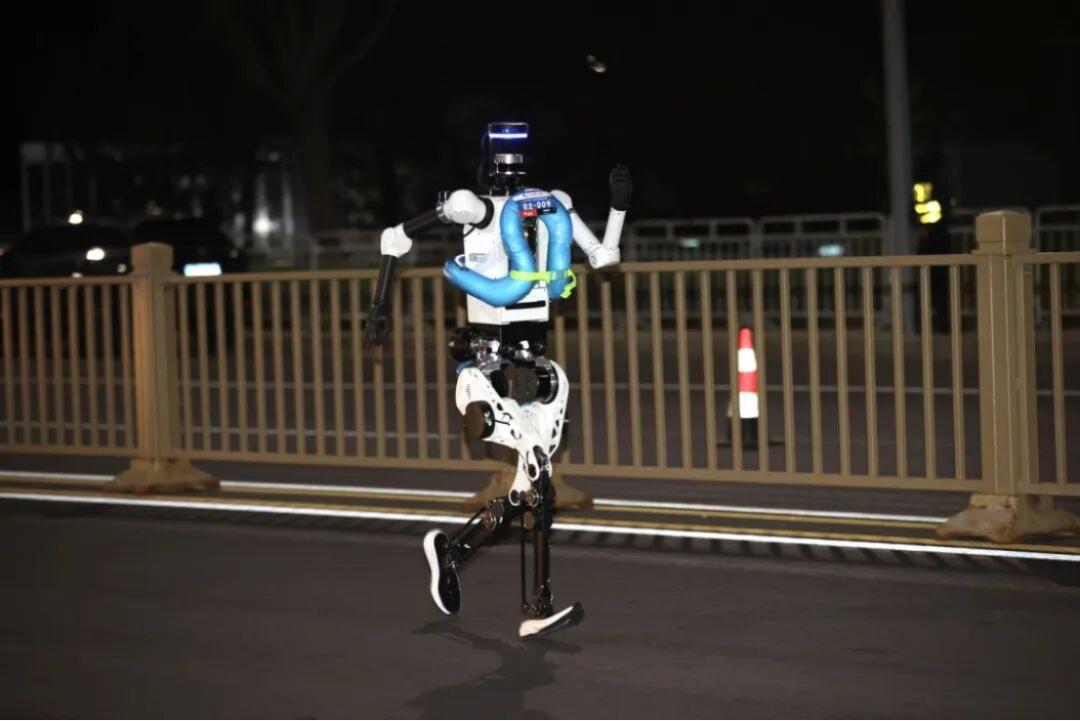
Tiangong Ultra
This year, the Innovation Center will again field Tiangong Ultra, standing 1.8 meters tall and weighing nearly as much as an adult male, but now in white instead of last year's black. Zhao Wen, a senior engineer at the Beijing Humanoid Robot Innovation Center, explained that Tiangong Ultra features 16 self-developed joints, significantly boosting its power and speed compared to last year's models. Its software also employs a fully autonomous approach, using multi-sensor fusion for independent decision-making and more precise terrain recognition and obstacle avoidance. Currently, Tiangong Ultra reaches a peak speed of 12 km/h and an average speed of 10 km/h.
Songyan Dynamics' Xiaowantong N2, last year's runner-up, features agile bionic gait and completed the course fully autonomously last year. This year, algorithm optimizations aim to shorten its finish time. N2's strength lies in its "human-like" design—its gait draws on human running biomechanics, balancing energy efficiency and stability.
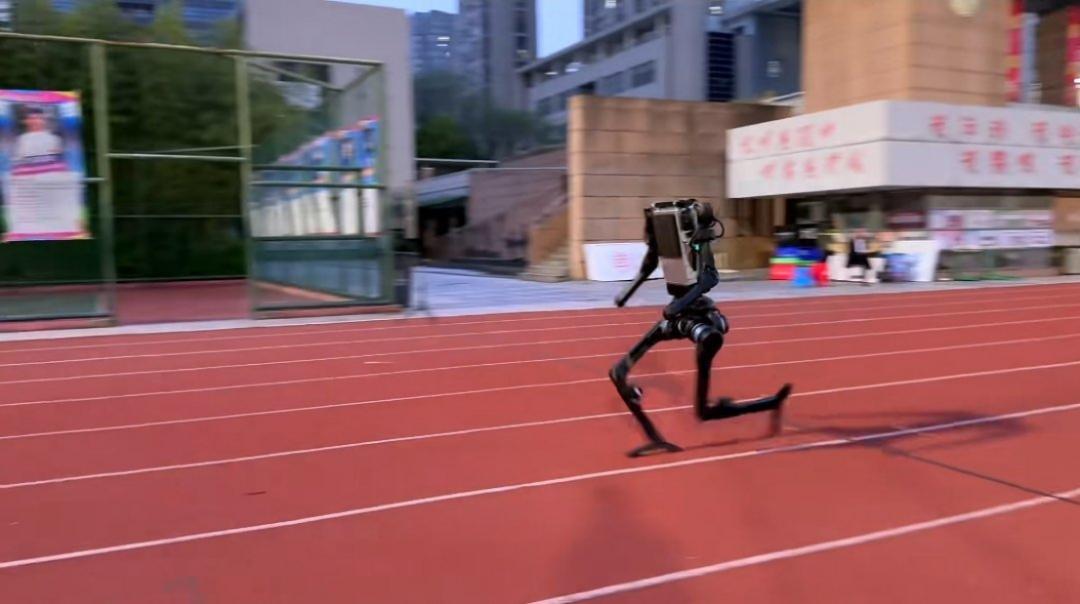
Unitree Technology H1
This marks Unitree Technology's first half marathon team entry, fielding its veteran H1 model. During half marathon testing, the black-clad H1 maintained strong momentum, at times overtaking multiple support vehicles. "We've adjusted its endurance to handle the marathon's length, slopes, and curves," said Chu Yang, Unitree's marketing manager. Unitree will use a 2023 H1 model (fine-tuned version), with an internal test best time of just over 50 minutes for the half marathon, described officially as "pushing a classic model to its limits."
Recently, Unitree released a video titled "Headless Robot Sprinting," showing the H1 humanoid robot (weighing 62 kg) reaching a peak running speed of 10 meters per second, setting a new global record for humanoid robot sprinting. This speed approaches that of "world champion" Usain Bolt, who clocked 9.58 seconds (10.44 m/s) in the 100-meter final.
Other participants include Zhishen Technology RX, Gaoqing Electromechanical Mini, Rongyao Lightning, Xingzhe No. 2 (Shanghai Zhuoyi), Fourier F1, and UBTECH Walker S2.
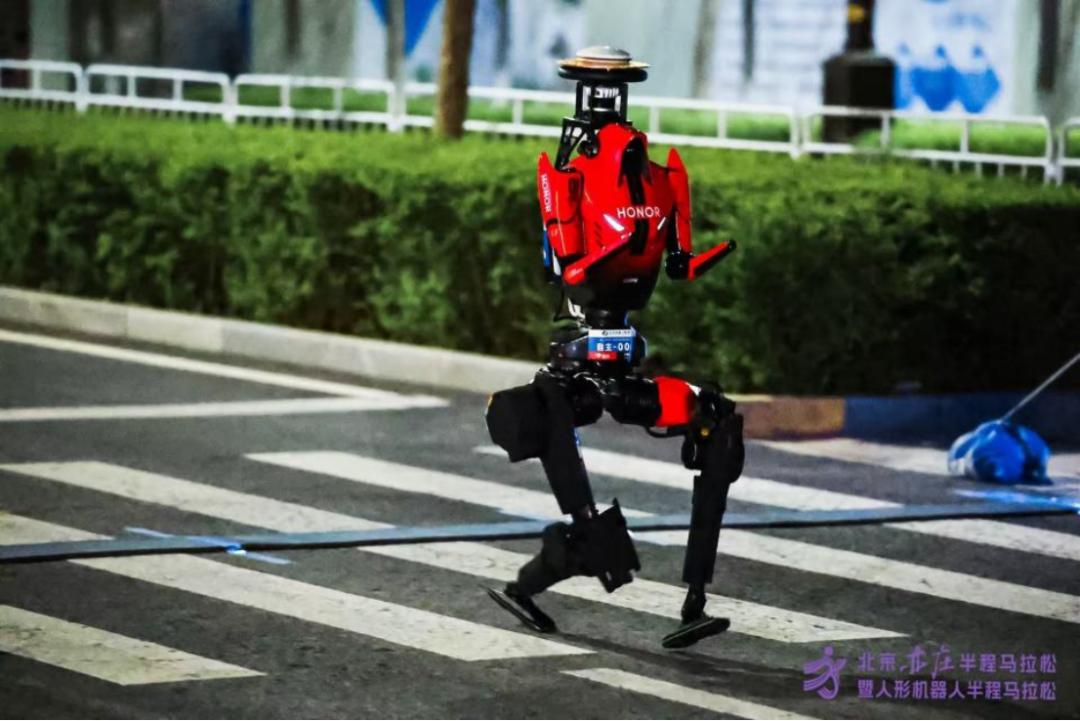
Rongyao Lightning
Rongyao Lightning is seen as a dark horse contender. Rongyao has fielded robots "Lightning" and "Yuanqizai." According to onsite reports and official statements, Lightning (remote-controlled group) finished the half marathon test in around 54 minutes. Rongyao's entry shatters the stereotype that traditional smartphone makers "can only do software," signaling that industry giants recognize the commercial potential of this track (translation: "sector" or "field").
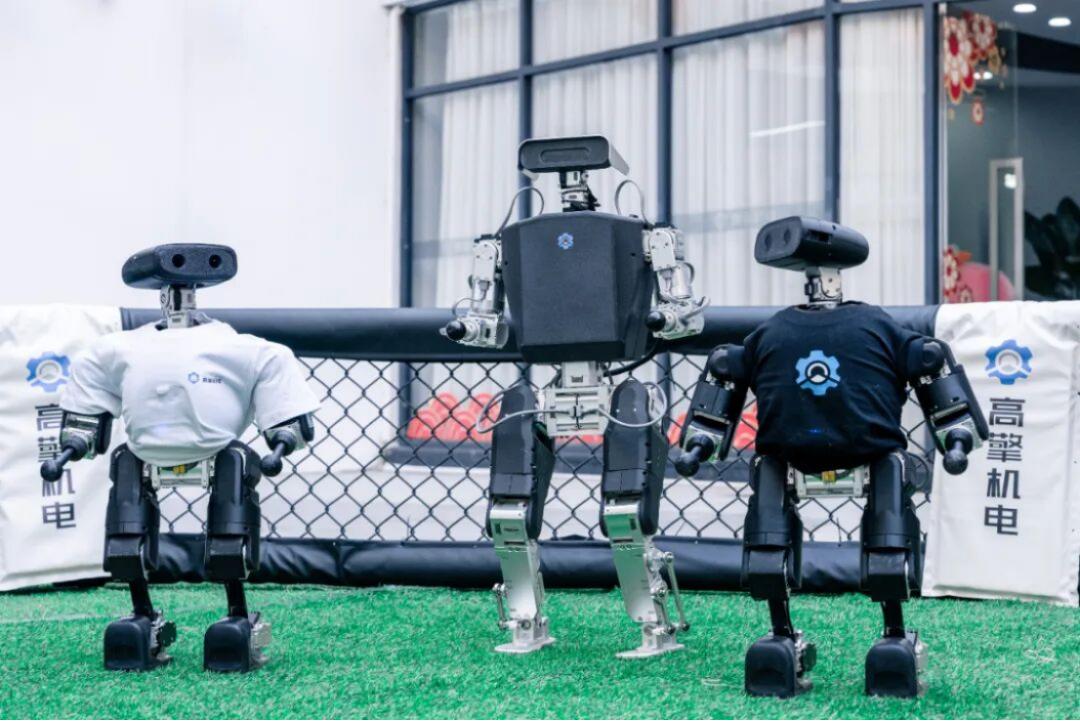
Gaoqing Electromechanical Mini
Gaoqing Electromechanical has sent the "Shanghai Trio"—three Mini models: the standard Mini Hi, Mini Pi Plus, and the marathon-optimized Mini Pi Plus humanoid robot. Standing up to 89 cm tall and weighing up to 20 kg, these adorable competitors feature a modular design accommodating 48V batteries and high-dynamic, high-power bionic horse-leg-inspired legs. They can run up to 15 km with a top speed of 1.5 m/s.
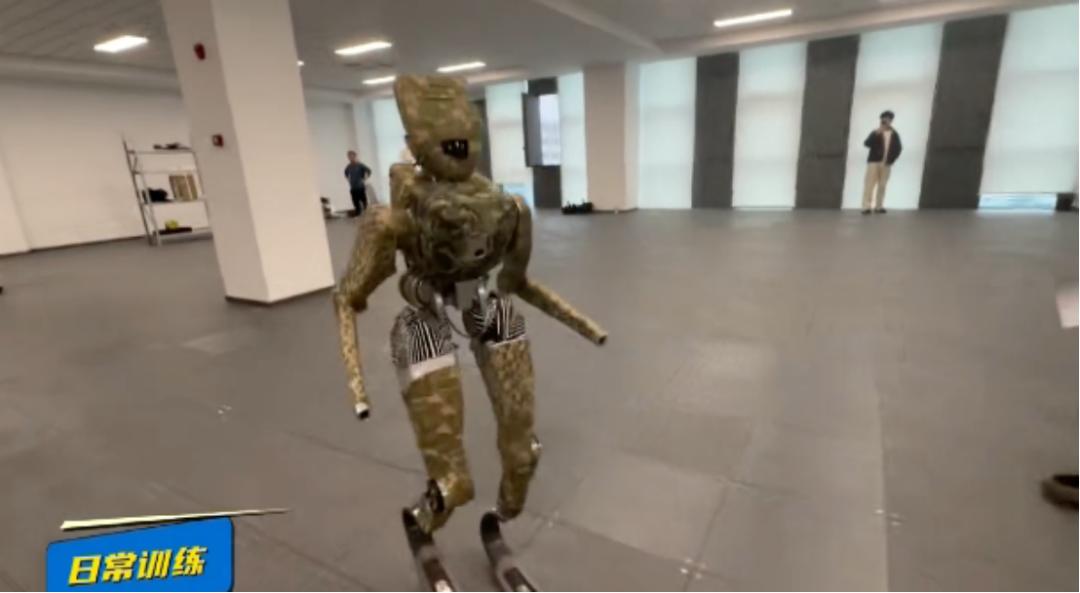
Zhishen Technology RX
Zhishen Technology's RX humanoid robot stands 135 cm tall and weighs 22 kg, featuring an ultra-lightweight design with integrated hand structures and fuselage (translation: "body") for flexible adaptation to running scenarios. It reuses the team's proven high-stability joint modules and controllers, ensuring reliable motion control. With a maximum range of 25 km and top speed of 1.39 m/s, it fully adapts to wet surfaces, balancing stability and efficiency with strong environmental adaptability.
Meanwhile, university teams have emerged as strong contenders, with around 20 universities participating—ten times last year's number. Teams from Tsinghua University, Beihang University, and others have achieved rapid breakthroughs using robot bodies and algorithm frameworks provided by enterprises.
While humans run and dogs handle logistics, the event serves as an extreme testing ground, with the surrounding area becoming a showcase for robotic capabilities. Over 50 service robots will support the event: robot dogs act as steady pacemakers ("Pace Bunnies"), cleaning robots handle water bottles on the course, food and beverage robots serve coffee and snacks, and cheerleader robots perform to boost morale.
*Disclaimer: This article is the original creation of the author. The views expressed are personal, and our republication is solely for sharing and discussion, not implying endorsement or agreement. For objections, please contact our backend team.
-
![]()
Wang Huiwen, Former Meituan Executive, Achieves 20-Fold ROI, Supports 24 AI Startups
-
![]()
Another AI Computing Power Unicorn Launches IPO! Founded by a Changjiang Scholar
-
![]()
OFILM Holdings Secures Zhongke Daojing, Marking a Significant Leap in the Optical Communication Industry!
-
What Will Be the Next Key Battleground for Large Models After AI Coding?
-
![]()
Leapmotor's Sales Soar, Yet Hidden Concerns Loom
-
![]()
China’s Action Camera Market Soars: 3.12 Million Units Sold in Six Months, DJI Secures 74% Dominance
-
![]()
Zhang Yiming: Strategic Retreat as a Path Forward
-
![]()
Exploring Charging for Some Features of QianWen App: Can It Follow the Path of Doubao?