Ali’s Major AI Counterattack: A Strategic Breakthrough
 04/21 2026
 517
517
Why Ali?
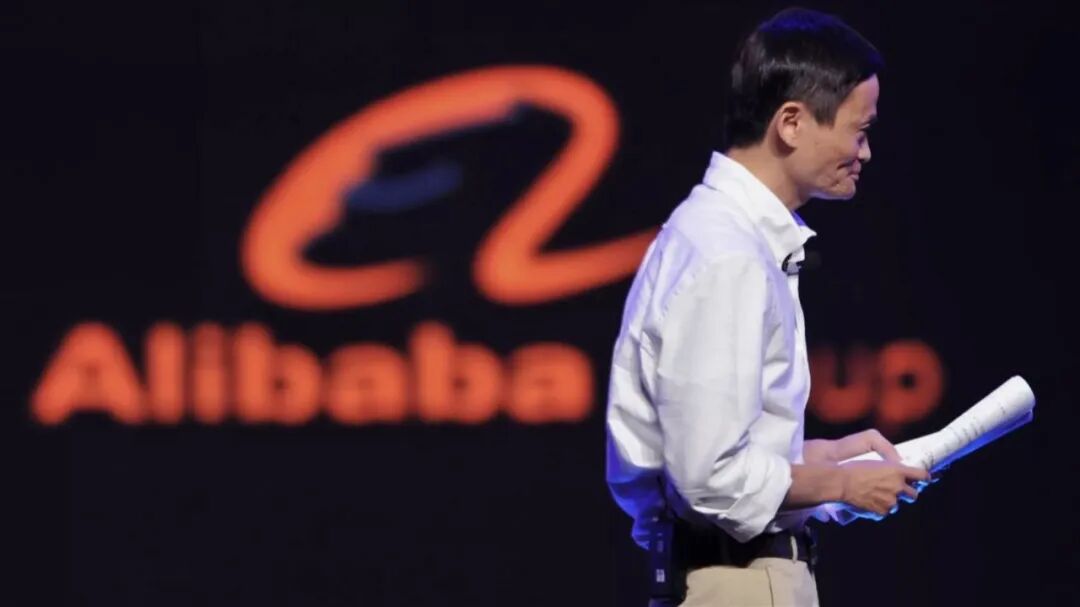
In just ten days, Ali has completely transformed external perceptions of its position in the AI field.
Previously, when Chinese AI was mentioned, ByteDance and Baidu immediately came to mind, followed by Tencent, and then Ali. Ali seemed to always lag behind, catching up only after others had already launched successful products. Although it had Tongyi Qianwen, Alibaba Cloud, and T-Head, collectively, these did not create the impression of being an "AI leader."
However, a series of moves in April this year changed everything. From HappyHorse anonymously topping global video blind test rankings to the release of the HappyOyster world model and achieving first place in international evaluations, Ali has demonstrated its strength to the entire industry with a series of solid technological achievements.
Many are surprised by Ali's sudden surge, viewing it as a temporary sprint. But if you understand Ali's approach, you'll realize it’s not a company that likes to launch surprise attacks. Every major breakthrough it makes is backed by years of investment and preparation. This AI counterattack is no exception.
01
ATH: Reconstructing the Foundation of Ali's AI
The all-staff memo released by Wu Yongming on March 16th was not fully understood by many at the time. People knew Ali had established a new business group called ATH, led by the CEO, but few realized this was the most thorough strategic transformation in Ali's history.
Previously, Ali's AI efforts were scattered across various businesses. Taobao used AI for recommendations, Alibaba Cloud for cloud services, and DingTalk for office collaboration. Each business unit had its own AI team, developing its own AI applications, but there was no unified strategy or technical foundation. Resource fragmentation, redundant development, and data silos were common issues.
The establishment of ATH completely broke this pattern. It integrated all core AI-related resources—from underlying chips and cloud computing to intermediate large models and MaaS platforms, and finally to upper-layer C-end and B-end applications—under a unified organizational framework. Wu Yongming redefined the organization's mission and division of labor with the three phrases: "create tokens, deliver tokens, and apply tokens."
It's no exaggeration to say this was not a simple departmental merger but a reconstruction of underlying logic. It transformed AI from a "feature" into a "resource," from a "tool" for individual business units into "infrastructure" for the entire group. From now on, all of Ali's businesses will operate on this AI infrastructure, and all business processes will be redesigned around the production and consumption of tokens.
This organizational approach is unique among global tech giants. Other companies either treat AI as an independent business unit or disperse AI capabilities across various business lines. Only Ali has transformed the entire company into an AI-centric organization, investing all resources into this single strategic direction.
The fact that Wu Yongming personally leads ATH cannot be overstated in significance. It means that within Ali, no business has higher priority than AI. Any departmental barriers that hinder AI strategy advancement or any interests inconsistent with the AI direction will be unhesitatingly broken down. This is Ali's execution style—once it commits to a direction, it goes all in without leaving any retreat.
02
Technology for Technology's Sake, Business for Business's Sake
The most commendable aspect of HappyHorse is not how many first places it has won but that it has chosen a distinct technological path.
When the entire industry is competing on who has larger parameters and more "comprehensive" models, Ali has gone against the grain, using a small model with 15 billion parameters to defeat competitors with parameters several times or even dozens of times larger. This demonstrates that parameter scale is not the sole criterion for measuring model capability; architectural innovation is equally important, if not more so. The last company to take a similar approach was DeepSeek.
The benefits of small-parameter models are evident: lower inference costs, faster generation speeds, and easier deployment and implementation. For any technology aiming for commercialization, these are decisive factors. No matter how powerful a model is, if it costs a fortune to run once and takes hours or even days to generate results, it will remain confined to the laboratory and never truly create value.
Ali is a company with a commercial background; it understands this principle better than anyone. It doesn't pursue technology for the sake of showing off but to solve real business problems. Therefore, it won't chase flashy technical metrics but will choose the technological path most suitable for commercialization.
The decision to open-source HappyHorse also reflects this business mindset. Many view open-sourcing as a sacrifice, giving away core technologies for free. But in Ali's view, open-sourcing is the fastest way to build an ecosystem. By allowing developers worldwide to use and contribute to your model, you can quickly establish a vast ecosystem that ultimately translates into commercial advantages.
Strictly speaking, the success of the Qwen series models has already proven this point. Now, Qwen has become the world's most popular open-source large model, used by over 10 million developers. Most of these developers are potential customers for Alibaba Cloud's Bailian platform. The more they use it, the higher Alibaba Cloud's MaaS revenue becomes. This forms a very clear business closed loop.
The same applies to world models. Ali developed HappyOyster not to compete with game companies or create film and television special effects. Its ultimate goal is to apply world model capabilities to Ali's core businesses like e-commerce, logistics, and local services. Using AI to simulate the real world, optimize business processes, and enhance user experience is what Ali truly wants.
03
No Final Outcome in Chinese AI
Ali's resurgence has made the competition in the Chinese AI market more balanced. Among the current internet giants—Ali, ByteDance, Tencent, and Baidu—each has its own strengths and domains, with no single company dominating.
ByteDance's strength lies in the C-end. It understands users best, excels at product development, and can transform complex technologies into simple, user-friendly products, allowing ordinary consumers to enjoy the benefits of AI. The nearly 400 million MAU of Doubao APP is the best proof. However, ByteDance's accumulation in the B-end and infrastructure is relatively weak.
Tencent's strength lies in its ecosystem. WeChat and QQ connect almost all internet users in China, an advantage unmatched by any other company. Tencent can easily integrate AI capabilities into the daily lives of hundreds of millions of users. Moreover, Tencent's accumulation in the gaming sector gives it a natural advantage in 3D content generation and world models.
Baidu's strength lies in technology. It was the first company in China to invest in large model research and development, with deep technological accumulation. Search itself is a natural AI application scenario, and Baidu's dominance in search provides it with a continuous stream of data and users for AI development. However, Baidu's pace in commercialization is relatively slow.
Ali's strength lies in its full-stack capabilities. From chips and cloud computing to large models and applications, Ali possesses the most complete AI industrial chain. Moreover, Ali has the world's richest commercial scenarios, providing the best testing ground and largest implementation space for AI technologies. These are conditions that no other company possesses.
The future competition will not be a solo performance by any single company but rather each company deepening its strengths in its respective domains while mutually penetrating and learning from one another. It's too early to say who will win. AI development has just begun, with too many unknowns and possibilities.
What we can see is that Chinese AI companies are no longer just followers of the United States. In many areas such as video generation, voice interaction, and world models, we have already taken the lead globally. This is the result of years of accumulation in the Chinese tech industry and the intense market competition.
To some extent, Ali’s major AI counterattack has injected new vitality into the entire industry. It tells us that as long as a company persists in long-term investment and dares to transform itself, it has the opportunity to find its place in the new AI arena. This healthy competition will ultimately drive the progress of the entire Chinese AI industry, enabling us to occupy a more favorable position in the global tech competition.
This article is an original piece from Xinmou.
— END —
-
![]()
Wang Huiwen, Former Meituan Executive, Achieves 20-Fold ROI, Supports 24 AI Startups
-
![]()
Another AI Computing Power Unicorn Launches IPO! Founded by a Changjiang Scholar
-
![]()
OFILM Holdings Secures Zhongke Daojing, Marking a Significant Leap in the Optical Communication Industry!
-
What Will Be the Next Key Battleground for Large Models After AI Coding?
-
![]()
Leapmotor's Sales Soar, Yet Hidden Concerns Loom
-
![]()
China’s Action Camera Market Soars: 3.12 Million Units Sold in Six Months, DJI Secures 74% Dominance
-
![]()
Zhang Yiming: Strategic Retreat as a Path Forward
-
![]()
Exploring Charging for Some Features of QianWen App: Can It Follow the Path of Doubao?