OpenAI Surprises Apple: Doubao Phone Emerges as the 'Trailblazer'
 05/09 2026
 578
578

Author|Lucky
OpenAI, boasting a valuation exceeding $800 billion, is not content with confining itself to the 'dialog box' realm.
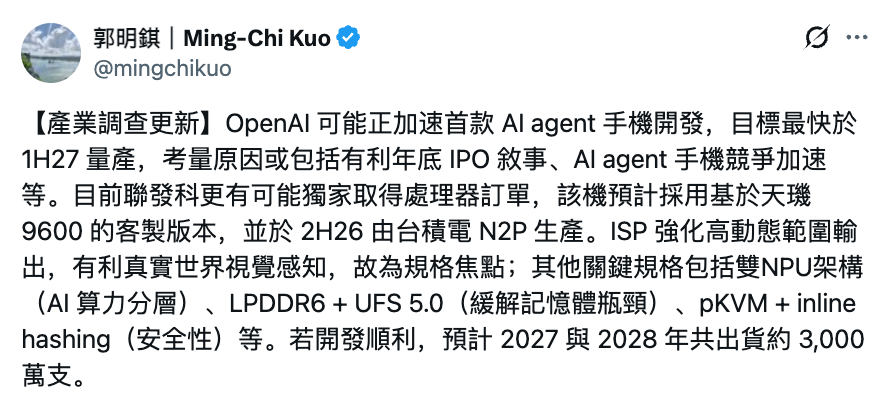
Image Source: Ming-Chi Kuo
On May 5, 2026, Ming-Chi Kuo, an analyst at TF International Securities, disclosed that OpenAI might be expediting the development of its inaugural AI Agent phone, with mass production anticipated as early as the first half of 2027. If development progresses smoothly, shipments of the product are projected to reach approximately 30 million units between 2027 and 2028.
Indeed, around 2023, as large-scale model technologies gradually matured, 'AI phones' emerged as a significant trend in the smartphone industry. However, to this day, most smartphones have merely integrated fragmented AI functionalities, failing to usher in the 'AiPhone' era.
Against this backdrop, OpenAI, as a leader in the AI sector, appears to be accelerating the development of an AI phone with the aim of leveraging its profound technical expertise and significant influence to establish a development model for smartphone manufacturers.
However, it is crucial to note that the smartphone industry's struggle to transcend the 'functional AI' stage is not solely attributable to outdated thinking among some manufacturers but also stems from the challenge of breaking through entrenched ecosystems. For OpenAI, creating innovative smartphone hardware is not arduous, but garnering support from a vast array of developers will pose a formidable challenge.
01
Why is OpenAI Focusing on Phones Before Releasing Its AI 'Companion'?
When launching the original iPhone in 2007, Apple co-founder Steve Jobs quoted Alan Kay, a pioneer of computer graphical interfaces, to elucidate Apple's product philosophy: 'People who are serious about software should make their own hardware.'
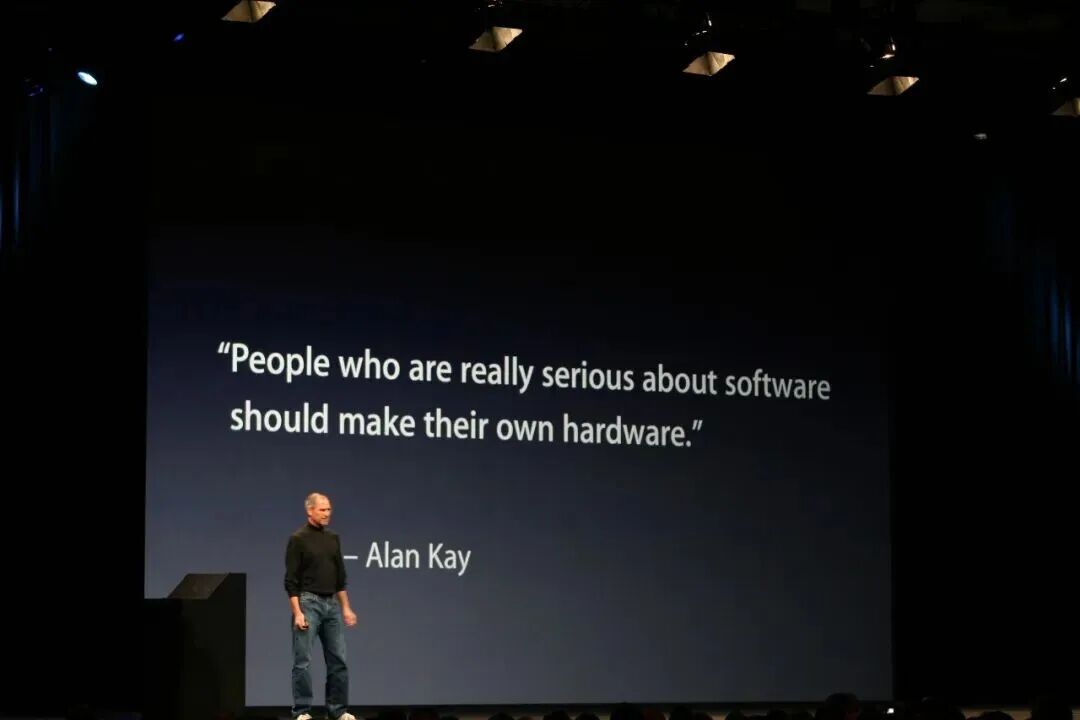
Image Source: Apple
OpenAI co-founder Sam Altman shares a similar perspective. In October 2025, during a conversation with Ben Horowitz, he stated that OpenAI's objective is not to create a 'super app' but to construct an AI super system that integrates cutting-edge research, ultra-large-scale infrastructure, and consumer-grade products.

Image Source: OpenAI
To fully unlock the potential of ChatGPT, OpenAI is intensively strategizing its hardware business. In May 2025, OpenAI acquired AI hardware company io, founded by former Apple chief designer Jony Ive, for $6.5 billion, with plans to launch an AI 'companion' device in 2026.
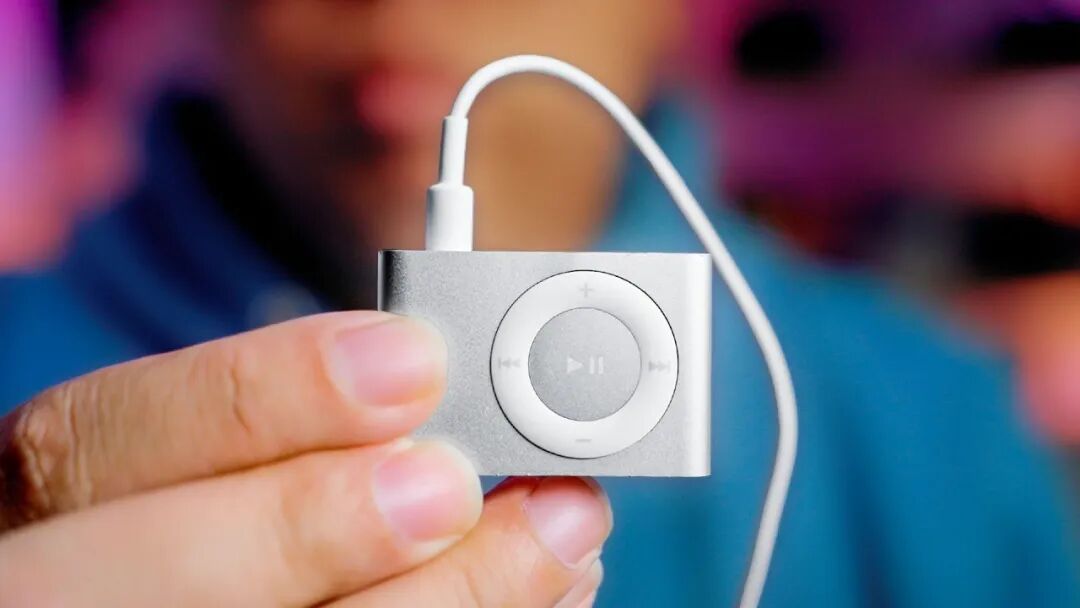
Image Source: Apple
According to Ming-Chi Kuo, OpenAI's AI 'companion' device will be as compact and stylish as an iPod Shuffle, featuring a neck-worn design equipped with a camera and microphone to monitor the external environment. It will lack a display and require connection to a smartphone or PC.
In response, Sam Altman stated that an omnipresent AI 'companion' is the ideal product form for ChatGPT. 'If this device can accompany you everywhere, equipped with various sensors to truly comprehend your surroundings, continuously track information, and enable you to effortlessly execute complex operations with a simple command—then you can envision a completely different device form.'
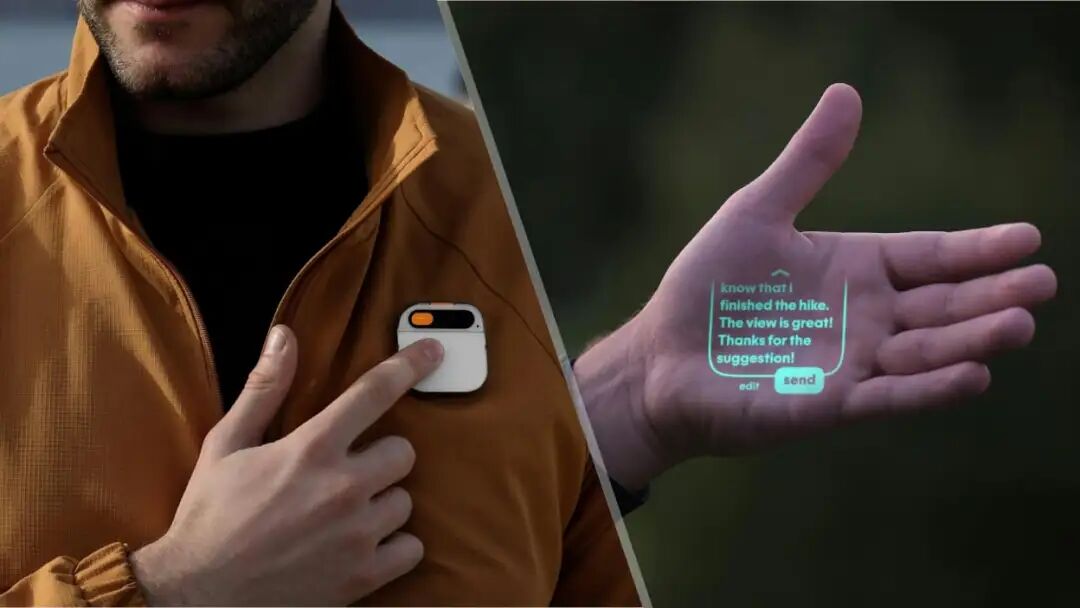
Image Source: Humane
In fact, Sam Altman had previously invested in AI hardware company Humane. In 2023, the company launched the world's first wearable AI smart hardware product, AI Pin, powered by the GPT-4 large model, supporting voice and gesture interactions, and displaying information via projection.
Unfortunately, due to subpar performance and heavy reliance on cloud-based large models, AI Pin suffered from frequent lagging, overheating, and disconnection issues, failing to captivate the market. Today, AI Pin has not only been discontinued but also ceased services, becoming obsolete.
From this perspective, OpenAI's alternative approach of focusing on 'AI phones' seems to stem from the realization that, given current limitations in computing power and battery life, a compact AI 'companion' is unlikely to become the computing hub of the AI era overnight.
In contrast, although the smartphone industry has long reached maturity, smartphones remain the core gateway to entertainment, social interaction, and life services. Therefore, compared to building entirely new hardware from scratch, leveraging the established smartphone ecosystem allows OpenAI to swiftly launch AI products and services for mass users with lower barriers.
02
On the Path to AI Phones, Doubao Becomes OpenAI's 'Mentor'
According to Ming-Chi Kuo, compared to traditional smartphones, OpenAI's phone will undergo three major transformations: Apps will evolve into Agents; entry points will evolve into goals; and static grids will evolve into dynamic task flows. The core interaction logic will shift from 'tool invocation' to 'goal-driven.'
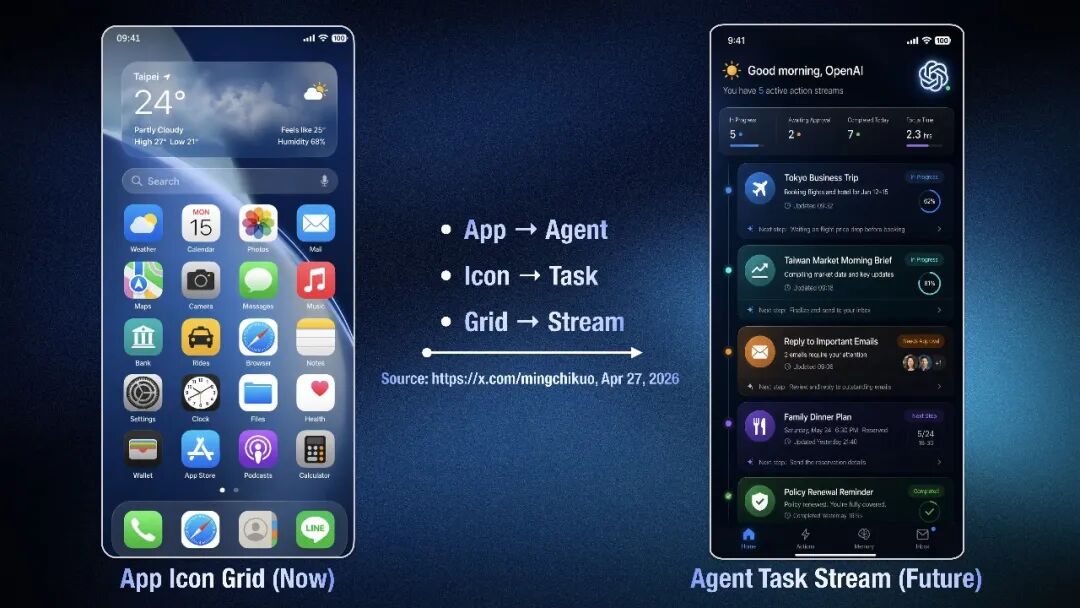
Image Source: Ming-Chi Kuo
In simpler terms, traditional phones are merely task-processing terminals where users must learn how to use each App and manually connect multiple tools to complete tasks. In OpenAI's vision, the phone will become a 'decision-maker' where users only need to propose a goal, and AI will automatically handle all tool invocations, process advancements, and detail management, ultimately delivering the corresponding results.
In fact, OpenAI's vision for AI phones is not a far-fetched sci-fi concept. Previously, ByteDance's Doubao team created an engineering prototype that fully validated the feasibility of evolving AI phones from 'functional assistants' to 'proactive decision-making hubs.'
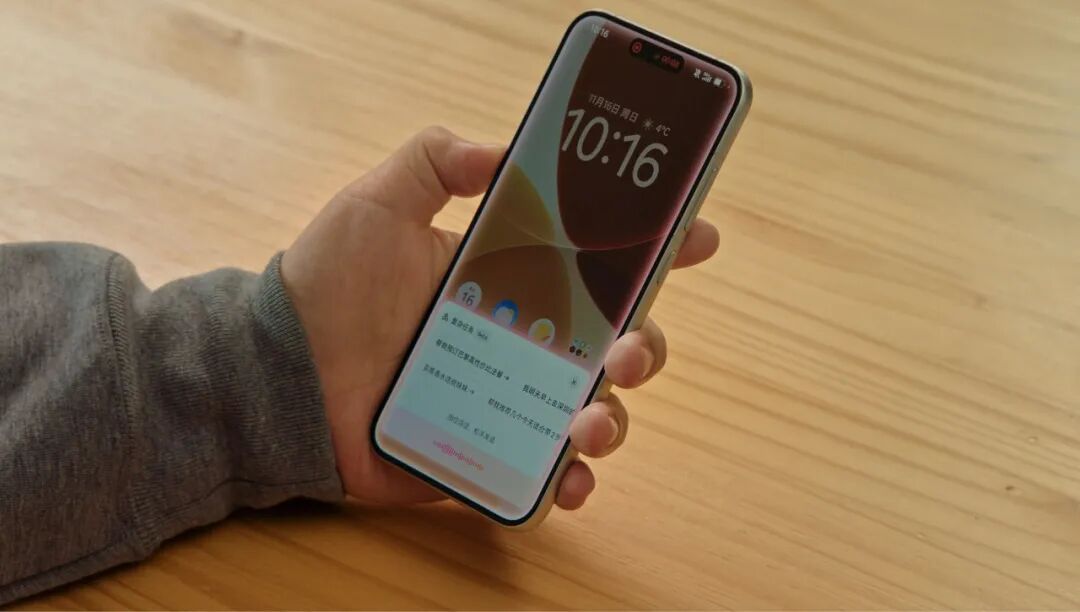
Image Source: Doubao
In December 2025, ByteDance partnered with ZTE to launch the 'Doubao Phone' nubia M153, capable of leveraging the Doubao large model's capabilities and using GUI simulation click technology to achieve cross-app automated operations, enabling 'one-sentence task execution.'
Due to its innovative concept, the Doubao Phone became a market sensation upon release, commanding a premium of thousands of yuan on secondhand platforms.
Regarding this product, Luo Yonghao commented, 'Whether the Doubao Phone succeeds or not, I don't know, but ByteDance's attempt to take this first step is remarkable and deserves praise. AI assistants will become ubiquitous, and our lives will be completely reliant on them. Future generations will remember this historic day.'
It is worth noting that, as a latecomer, OpenAI has not simply imitated the Doubao Phone but has introduced hardware innovations.
The nubia M153 is powered by the Snapdragon 8 Elite processor, manufactured using TSMC's N3E process, featuring an integrated Hexagon NPU with 80 TOPS of AI computing power, 16GB LPDDR5X + 512GB UFS4.0 storage, and a triple-camera rear setup.
Image Source: Ming-Chi Kuo
According to Ming-Chi Kuo, OpenAI's phone will be equipped with a MediaTek custom Dimensity 9600 processor, manufactured using TSMC's N2P process, featuring a dual-NPU architecture, LPDDR6 + UFS5.0 for improved data transfer efficiency, and pKVM + inline hashing for security. Additionally, OpenAI's phone ISP will emphasize high dynamic range output to better perceive the real world.
A horizontal comparison reveals that the Doubao Phone's underlying configuration is similar to traditional flagship smartphones, with its core competitiveness lying in system-level AI integration enabling cross-app operations.
In contrast, OpenAI's phone reconstructs its underlying configuration around AI technology, enhancing on-device computing power, security, and imaging capabilities. This suggests that OpenAI's phone may surpass the Doubao Phone in capabilities, allowing deeper intervention in users' daily lives and work.
03
AI Phone Hardware is Mature, but Developers Pose a 'Hurdle'
The successful mass production of the Doubao Phone largely indicates that the underlying technology for 'AI phones' is nearing maturity.
In response, Li Xiangdong, an AI product expert at Honor's MagicOS, stated in an April 2026 interview, 'The emergence of Doubao-like phones was not initially led by smartphone manufacturers, not due to a lack of capability but due to differing commercial logic and standards for user experience.'
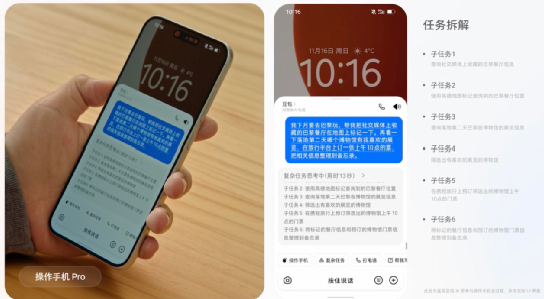
Image Source: Doubao
The primary reason smartphone manufacturers did not immediately create products similar to the Doubao Phone is that most national-level software has not opened API interfaces. Rashly applying GUI simulation click technology could easily trigger developer resistance, negatively impacting consumer experience.
Due to its impact on existing apps' traffic entry points, data sovereignty, and security risk control, the Doubao Phone was soon 'blacklisted' by national-level software such as WeChat, Meituan, and Alipay within days of launch.
In response, at Tencent's 2026 annual employee conference, CEO Pony Ma stated that Tencent has consistently opposed using black-market plugins to record and upload users' phone and computer screens to the cloud, 'as it is extremely insecure and irresponsible.'
Next, OpenAI's phone will also need to confront similar challenges. Although building its own hardware grants OpenAI system-level permissions, the lack of active developer adaptation to AI technology makes it difficult to connect the existing fragmented mobile internet ecosystem and create a 'goal-driven' AI phone.
However, unlike isolated smartphone manufacturers, OpenAI possesses powerful foundational models. Based on this, OpenAI hopes to bypass the mobile internet ecosystem and establish a new AI ecosystem.
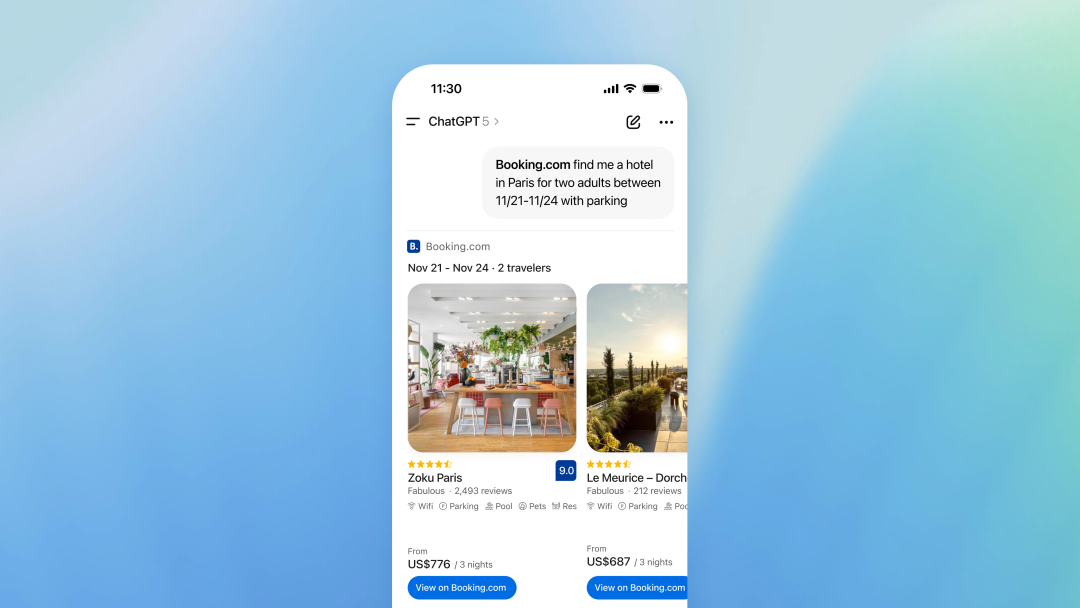
Image Source: OpenAI
In October 2025, OpenAI hosted a Developer Day event, launching the Apps SDK, which allows developers to integrate third-party apps into the ChatGPT interface. Subsequently, OpenAI introduced an app directory feature, enabling users to directly invoke external apps like Spotify, Adobe, and Apple Music on relevant pages.
In contrast, although ByteDance is planning the second-generation Doubao Phone, its lack of a native AI app ecosystem forces it to negotiate with smartphone app developers.
In early 2026, 36Kr's 'Smart Emergence' reported that to overcome the 'blacklisting' dilemma, the Doubao Phone team was negotiating with mainstream internet platforms and had already secured certain common permissions from companies in ride-hailing, food delivery, and ticketing.
Clearly, unlike most smartphone manufacturers, which view phones as the sole carrier for AI technology, OpenAI hopes to leverage ChatGPT's strong influence to attract developers to proactively integrate AI technology traits and develop native AI apps, which will then empower smartphone products.
As Li Xiangdong said, 'As AI develops, especially with the trend toward AI-driven automatic execution and proactive services centered on user intent, the original business models and traffic distribution will inevitably be reshaped. All parties will eventually reach a new equilibrium, a process requiring exploration and adjustment.'
Whether OpenAI's phone can usher in the 'AiPhone' era and disrupt traditional smartphone manufacturers like Apple remains uncertain. However, it is foreseeable that as more influential AI companies enter the smartphone industry, the mobile internet ecosystem will be transformed, and smartphones may downgrade from mass computing platforms to ordinary AI entry points.
Interactive Topic
Are you optimistic about OpenAI's phone? What are your expectations for AI phones?
This article is original content from Farsight and is prohibited from reproduction without authorization.
-
![]()
Tesla Restructures Its Balance Sheet
-
![]()
Accelerating the High-Speed Interconnection Upgrade of AI Computing Clusters! JONHON Releases ELSFP External Light Source Optical Connectors
-
![]()
Breaking the overseas blockade of volumetric holographic materials, this optical enterprise secures nearly 100 million yuan in financing!
-
![]()
Why Does Jensen Huang So Openly Praise China’s AI?
-
![]()
"Wudang" Unveiled: Arm China's Next-Gen AI VPU Redefines Video Encoding
-
![]()
From Energy Conservation and Carbon Reduction to AI Decision-Making: GECON East Intelligence and Chery Group Explore a New Green and Smart Paradigm for Automobile Manufacturing
-
![]()
WAIC 2026 Observation | AI Accelerates Towards the Core of Industries, Industrial AI Enters a Critical Phase
-
![]()
Volkswagen China Fires the First Shot in Foreign-Funded 'White Box Delivery'!