Why Does Jensen Huang So Openly Praise China’s AI?
 07/24 2026
 355
355
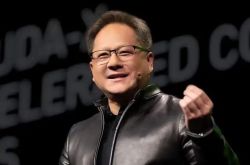
Jensen Huang has once again voiced his admiration for China’s AI sector.
On July 21, 2026, NVIDIA CEO Jensen Huang, in an interview with Axios, explicitly stated that China’s open-source AI models are “exceptionally excellent” and that U.S. companies “should leverage them.”
He specifically highlighted a range of Chinese open-source models, including DeepSeek, Kimi, Alibaba, Tencent, MiniMax, and Baidu, noting that China’s open-source AI ecosystem is “dynamic and globally competitive.” He also bluntly stated that the U.S. should not fear the growth of China’s open-source AI.
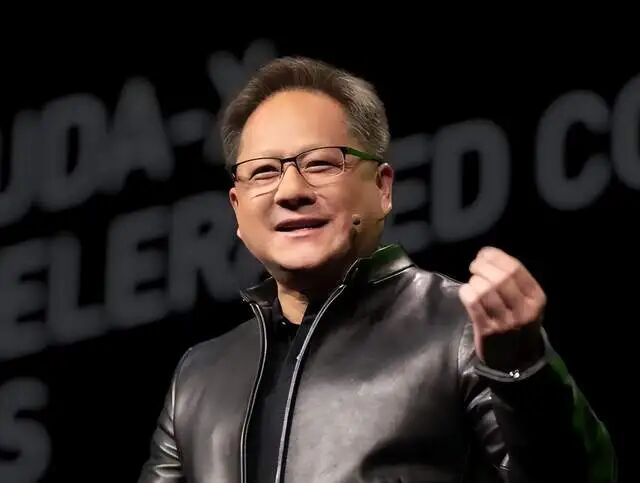
This is not the first time Jensen Huang has lavished praise on China’s AI.
In July 2025, at the Chain Expo, he described China’s open-source AI as a “catalyst for global progress.” In October of the same year, in an interview with CNBC, he stated that the gap between U.S. and Chinese AI development is “minimal,” with China leading in areas such as energy supply. In November, he even bluntly remarked that “it is foolish to underestimate China’s strength and competitiveness.”
In today’s U.S. tech industry, CEOs like Jensen Huang who so openly and frequently praise China’s AI are rare—another notable example being Elon Musk. But what is the true motive behind this “praise”?
First Motive: Business Interests—The Immediate Benefits of Praise
Jensen Huang’s praise is never without a purpose. Publicly praising China’s AI development directly benefits NVIDIA by helping secure procurement approvals in the Chinese market.
The importance of the Chinese market to NVIDIA is undeniable.
At its peak, NVIDIA held a staggering 95% share of China’s AI chip market. However, under escalating export controls, this figure has been rapidly declining.
According to data from IDC and Bernstein, in the first quarter of 2026, domestic chips accounted for over 52% of China’s AI accelerator card market for the first time, with NVIDIA’s market share in China plummeting from 95% three years ago to just 8%.
Jensen Huang himself admitted in a May 2026 interview with the U.S. think tank SCSP that NVIDIA’s share of China’s AI GPU market “has dropped to 0%”—a complete collapse from 95% in just three years.
NVIDIA is clearly losing its foothold in the world’s second-largest economy. Every “praise” from Jensen Huang is essentially an attempt to secure a last glimmer of hope for NVIDIA to re-enter the Chinese market.
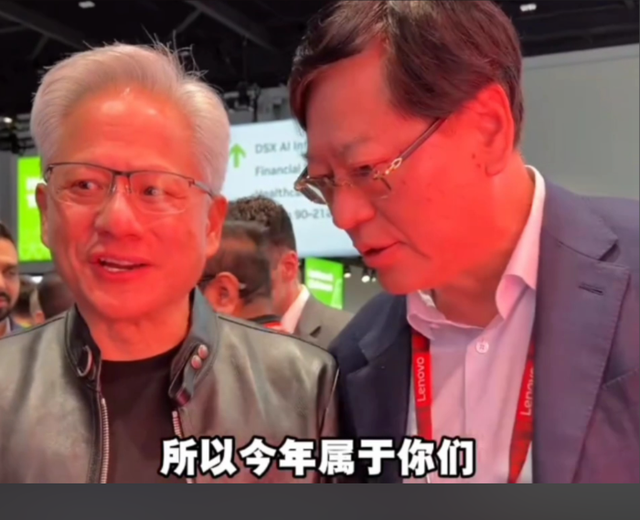
On May 14, 2026, Lenovo Group officially confirmed its role as NVIDIA’s authorized distributor for the H200 AI chip in China, marking a further escalation in cooperation and becoming a key node in the restructuring of the global AI computing supply chain amid U.S.-China tech rivalry.
Second Motive: Reverse Pressure—Using “Praise” to Counter Restrictions
If the first motive is to “win over” the Chinese market, the second motive is even more critical—to exert reverse pressure on the U.S. government and hawks.
Jensen Huang’s logic is clear: he praises China’s open-source AI not just out of admiration but because open-source lowers the barriers to AI adoption.
Jensen Huang bluntly stated, “Free AI should benefit hardware, benefit chips, and benefit data centers.” Cheaper, more open open-source models will encourage more businesses and individuals to use AI, which in turn will drive greater demand for chips, data centers, and computing power.
Models may be free, but the computing power to run them must be paid for.
The cheaper and more widespread China’s open-source AI becomes, the more businesses and individuals will use AI; the more AI users there are, the greater the demand for underlying computing power—and NVIDIA is the world’s largest supplier of computing power.
As Jensen Huang said, more cost-effective open-source models “will not squeeze existing commercial ecosystems but will effectively expand the overall market space.” UBS analysis supports this judgment: open models will not reduce GPU demand but will shift computing power toward more cost-effective inference tasks, with low-cost models expanding applications and benefiting GPUs and inference infrastructure.
Jensen Huang opposes not the rise of China’s AI but the U.S. government’s “one-size-fits-all” bans—because these bans not only fail to stop China’s progress but also cut off NVIDIA’s revenue streams.
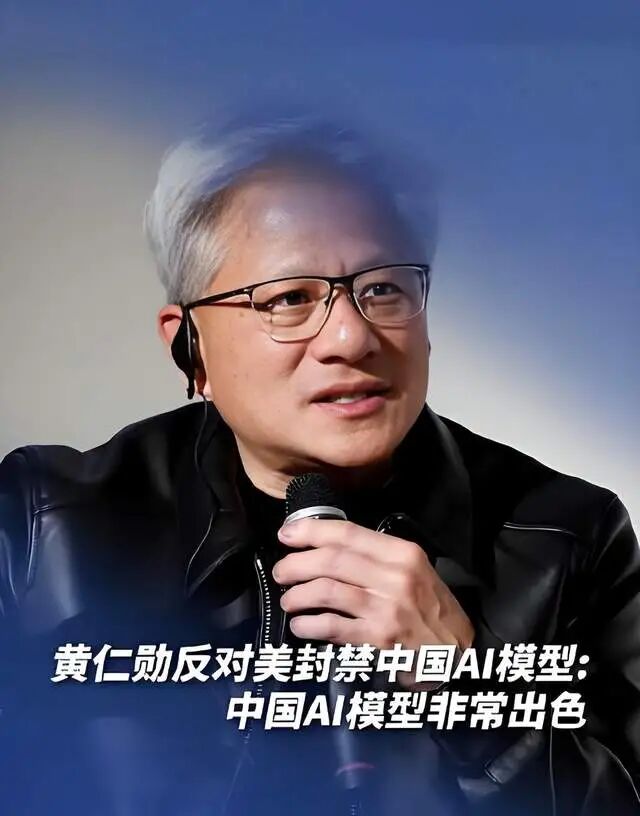
Jensen Huang has repeatedly warned the U.S. government that simply banning NVIDIA from exporting chips will not stop China’s technological rise but will instead drive China’s chip industry toward self-reliance.
He has stated that the U.S. policy assumption that “China cannot manufacture AI chips” is “clearly wrong.”
He even bluntly said that voluntarily abandoning the world’s second-largest market “will not stop China’s progress but will force China to build an independent technological ecosystem, damaging U.S. technological leadership in the long run.” In November 2025, he further warned that the U.S. underestimates China’s potential to accelerate its independent tech industry, stating, “China can now produce millions of AI chips, clearly showing they no longer rely on U.S. technology.”
In other words: The more you ban, the stronger China becomes! Once China truly becomes self-sufficient, U.S. chip companies will lose this market forever.
This is why Jensen Huang directly challenged Washington’s stance in a July 2026 interview—when some U.S. AI companies claimed China was acquiring U.S. model capabilities through “distillation,” Jensen Huang refuted that open-source models would not “drive U.S. companies out of the Chinese market,” calling such a scenario “impossible, zero chance.”
Third Motive: Personal Branding—Optimizing the Business Environment Through Individual IP
Beyond business interests and policy gaming, Jensen Huang has a more subtle consideration—to gain intangible PR advantages for NVIDIA in the Chinese market by cultivating a “pro-China” personal brand.
Jensen Huang understands the power of personal image.
His signature black leather jacket, perpetually youthful smile, and enthusiastic interactions with Chinese developers at product launches deliberately portray him as an “old friend” of China’s tech community. His frequent displays of Chinese language skills, night market visits, hotpot meals, and photos with local entrepreneurs may seem spontaneous but are, in essence, a carefully crafted “personal branding” strategy—to reduce official and public wariness of a U.S. semiconductor giant and secure a more favorable public opinion and policy environment for NVIDIA’s operations in China.
This strategy is not unique to Jensen Huang.
Kai-Fu Lee has long been active in China as a “mentor to Chinese entrepreneurs,” with his pro-China remarks and embrace of local innovation paving the way for Sinovation Ventures' development in China.
Elon Musk is a textbook example—his frequent praise of China, interactions with Chinese netizens on social media, and even declaring “China is the future” have largely contributed to the unprecedented policy support and market dividends enjoyed by Tesla's Shanghai Gigafactory, thanks in no small part to Musk's “localized” personal branding.
Jensen Huang is following the same playbook.
One could even say that Jensen Huang’s personal style has transcended business to become a cultural icon in the tech world.
Since Jensen Huang rose to prominence with the AI boom, his leather jacket has become almost synonymous with hardcore tech leaders—to the point where Lei Jun, China’s “most stylish tech CEO,” has even donned a black leather jacket.
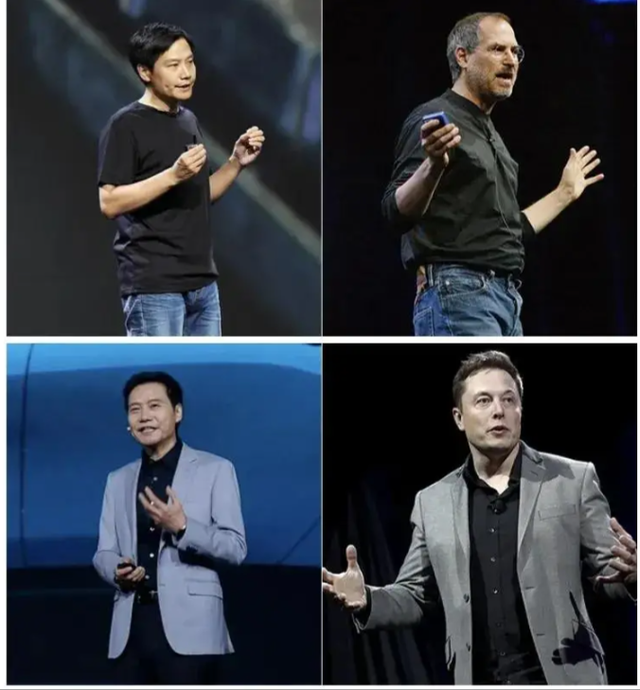
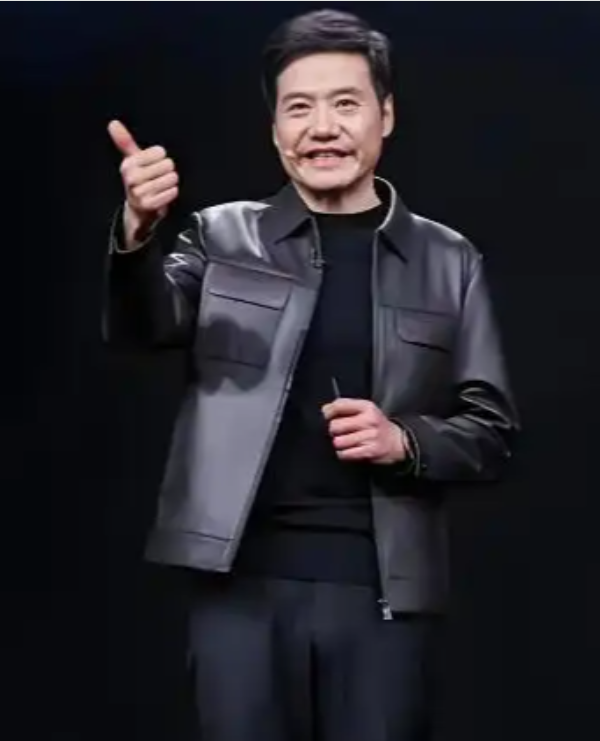
This is vivid proof of the success of his “personal branding” strategy.
Insight: Stay Sober Amid Praise—Strength is the Ultimate Foundation
Jensen Huang’s praise of China can be seen as a layered, interlocking strategy: short-term commercial gains to stabilize his Chinese foothold, mid-term policy gaming to prevent extreme U.S. sanctions, and long-term personal branding to optimize the business environment.
Throughout, his motives have nothing to do with his ethnic identity, personal preferences, or genuine affinity for China—all praise is rooted in business considerations for NVIDIA’s long-term development.
We must remain clear-eyed: China’s AI boom, the breakthroughs of domestic models, and the maturing of the computing power supply chain are the results of countless practitioners' hard work, visible to all and requiring no false modesty.
But we must not become complacent over a few words of praise from overseas entrepreneurs. Because all evaluations by multinational corporations are ultimately measured by their own self-interest.
What truly deserves pride is not others’ recognition or flattery but our relentless pursuit of breakthroughs, progress, and self-strengthening. Only by adhering to technological innovation and achieving an autonomous and controllable industrial chain can we firmly grasp our own voice in the global tech rivalry.
What are your thoughts? Welcome to leave a comment.
——————————
-
![]()
Why Does Jensen Huang So Openly Praise China’s AI?
-
![]()
"Wudang" Unveiled: Arm China's Next-Gen AI VPU Redefines Video Encoding
-
![]()
From Energy Conservation and Carbon Reduction to AI Decision-Making: GECON East Intelligence and Chery Group Explore a New Green and Smart Paradigm for Automobile Manufacturing
-
![]()
WAIC 2026 Observation | AI Accelerates Towards the Core of Industries, Industrial AI Enters a Critical Phase
-
![]()
Volkswagen China Fires the First Shot in Foreign-Funded 'White Box Delivery'!
-
![]()
AI Agent Smartphones: The Next Competitive Edge Transcends Large Models
-
![]()
Over 880 Million Yuan Worth of Orders Unveiled, Bidding Launched for Shenzhen Eastern Public Transport
-
![]()
Tesla's Robotaxi Hits the Road: A Monumental Gamble with an Uncertain Future