Qianwen Joins Forces with Taobao! E-commerce Landscape Faces Disruption from Doubao Competitors
 05/11 2026
 626
626
According to Reuters, sources "close to the decision-making process" have revealed that Alibaba is gearing up to officially announce a deep integration of its AI platform, Qianwen, with e-commerce giant Taobao. This move aims to replace traditional keyword searches with conversational shopping experiences. Consumers will be able to browse products, compare prices, and place orders directly by engaging in conversations with AI agents within the Tongyi Qianwen App, eliminating the need to manually scroll through endless product listings.
The tone of the announcement leaves no room for doubt—this is a significant strategic move.
On April 24, when reporting on Doubao's "Help You Choose" feature as a major online exclusive, I put forth this perspective:
"The Qianwen App already boasts over 100 million monthly active users. Theoretically, AI-driven direct purchasing or features like 'Help You Choose' should have been rolled out much earlier. Why prioritize scenarios like food delivery and ride-hailing first? Personally, I believe the answer lies in Taobao's pivotal role. If we're going to venture into this space, we must do it right. Unless it's a game-changer, it's better to hold off. The previous scenarios were merely explorations and foundations for what's to come."
"It's foreseeable that AI-powered shopping will ignite a new wave of subsidy campaigns, likely becoming the main theme of this year's 618 and 11.11 shopping festivals. This is standard practice for e-commerce platforms looking to gain an edge."
And indeed, it has.
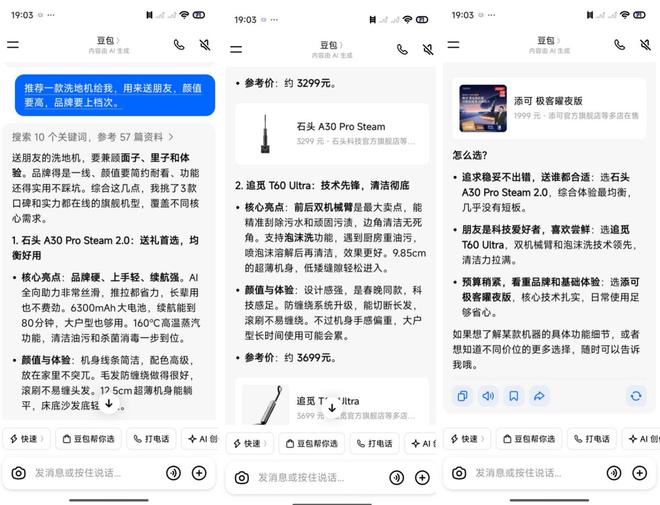
(Doubao's 'Help You Choose' feature, image courtesy of Leikeji)
In reality, this development is transparent for all to see, as Alibaba is playing its cards openly. In January of this year, the Qianwen App began gradually integrating with Taobao Flash Sales, Alipay, Taopiaopiao, Fliggy, and Gaode, first establishing AI's capability to handle tasks on behalf of users. By offering subsidies, Alibaba cultivated user habits, streamlined payment processes, and laid the groundwork before making the most critical move: directly connecting the Qianwen App, with nearly 200 million monthly active users, to Taobao's vast inventory of 400 million products. While Doubao's 'Help You Choose' focuses on providing precise user recommendations, Qianwen + Taobao further enhance the 'browsing' function, reflecting Taobao's extensive product range and support for 'window-shopping' behavior. Doubao helps you make informed choices; Taobao keeps you company throughout your shopping journey.
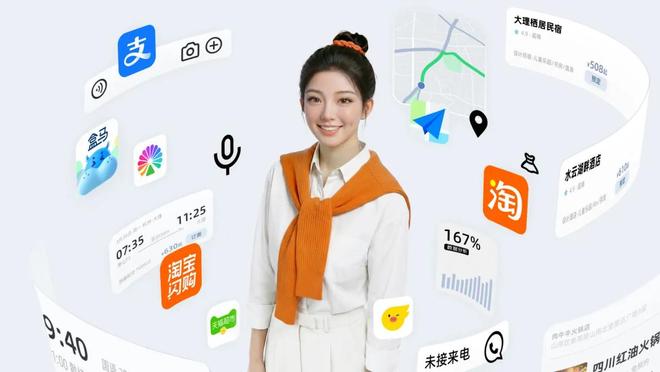
(Alibaba announces the integration of the Qianwen App into its ecosystem in January)
As of March 2026, Doubao, Qianwen, and DeepSeek had 345 million, 166 million, and 127 million monthly active users, respectively, dominating the top three AI-native apps and adding 130 million users in a single quarter.
AI assistants have emerged as new entry points, with users becoming accustomed to obtaining information, services, and products through AI dialog boxes. At the 2026 Shoptalk Summit, Goldman Sachs stated, "Consumers' shopping starting points are undergoing structural shifts, with AI platforms replacing search engines as new entry points for e-commerce traffic." This echoes a sentiment from the past when Ma Yun feared that Baidu might cut off search engine crawlers. History is now repeating itself, with Doubao and DeepSeek growing into formidable forces. The former has fully integrated into Douyin's e-commerce ecosystem, while DeepSeek has opened its doors to a flood of e-commerce platforms seeking integration.
The e-commerce landscape is set to divide into two camps: traditional e-commerce giants defending against Doubao competitors by "blocking" external AI and strengthening their own AI capabilities; and DeepSeek and others, who don't operate e-commerce platforms but open their traffic to retailers.
This trend has already emerged in the U.S. retail sector, with industry discussions focusing on agentic commerce. Last year, Amazon blocked two crawler programs from ChatGPT to limit its access to product data. However, in January this year, Google, Shopify, Walmart, Target, Visa, and Stripe jointly launched the Universal Commerce Protocol, an open standard enabling AI agents to autonomously compare prices, claim coupons, and place orders across platforms. Amazon was notably absent from this initiative, with CEO Andy Jassy stating, "Many customers will choose shopping agents offered by retailers because what consumers truly value are abundance, low prices, delivery, and trustworthy service." The underlying message being—even if users shop via AI, they should use our in-house solution.
Taobao's integration logic with Qianwen mirrors Amazon's approach.
Looking further ahead, the walled-garden strategy of e-commerce platforms blocking AI, which was effective in the App era, will likely fail in the AI era due to the increasing proliferation of AI hardware. True AI phones like Doubao Mobile, AI glasses, AI PCs, and even AI-enabled cars will all load shopping agents with "super privileges," allowing them to place orders across different e-commerce platforms and automatically compare prices. This year, Qianwen has continuously intensified its focus on AI hardware, with ongoing updates to AI glasses and a pipeline of new AI hardware products in the works.
In truth, Taobao and other e-commerce platforms aren't just now scrambling to "embrace AI"—they have been preparing for this day for years. The once-famous Amazon Go achieved cashier-less supermarkets using sensors and machine vision, replacing cashiers; Taobao uses AI to automatically generate product materials for merchants, with AI customer service and recommendations already widespread across its apps. Now that Qianwen's user base has grown and agent technology has matured, Taobao and Qianwen are converging. Moreover, Qianwen's integration into Taobao is just the first step—Taobao will soon join Qianwen, allowing users to shop not only via traditional methods like shelves, search, live streams, and videos in the Taobao/Tmall/Xianyu apps but also through Qianwen agents.
Will AI shopping completely replace traditional e-commerce apps? No. Humans are remarkably diverse in their shopping habits and preferences—some seek convenience, others savings, and still others entertainment. Online shopping hasn't replaced offline shopping, and food delivery and instant retail have only highlighted the value of physical stores. In the future, traditional online shopping will always exist, live commerce will remain lively, and AI will simply offer users a new choice.
But one thing is certain: shopping entry points are undergoing an irreversible shift. Even if AI dialog box shopping only captures 20% of the market, it will still cause significant disruption for Amazon, Taobao, and others.
The core advantages of Taobao, JD, and other e-commerce platforms still boil down to four words: "abundance, speed, quality, and savings."
Supply chain depth: Taobao and Tmall excel in footwear, apparel, bags, cosmetics, daily necessities, and long-tail categories, while JD has strong barriers in 3C digital appliances. Both serve as primary battlegrounds for brands. Fulfillment capabilities: Cainiao and JD Logistics. E-commerce service systems: Taobao's Alipay and Huabei installment plans, JD Finance's BaiTiao. Omnichannel presence: Hema and JD MALL...
Amazon's CEO said users prefer their own platform because of "abundance, low prices, delivery, and trustworthy service"—the logic is the same.
Theoretically, Doubao and DeepSeek can replicate every advantage Taobao and JD possess, just as Douyin quickly supplemented its supply chain when entering interest-based e-commerce from content. However, this will take time, giving e-commerce platforms an opportunity to accelerate their AI布局 (layout).
During its Q4 2025 earnings call, Amazon revealed that since the launch of its in-house shopping assistant Rufus, it served nearly 300 million customers in 2025, contributing nearly $12 billion in incremental annualized sales and achieving approximately $9 billion in incremental gross merchandise volume (GMV) in Q4 2025. Customers using Rufus were about 60% more likely to complete purchases.
These figures illustrate one point: once e-commerce platforms establish their supply chains, logistics, payments, and after-sales services, AI shopping enhances rather than disrupts their operations. The first-mover advantage remains effective.
Alibaba has Qianwen and is accelerating its integration with Taobao.
The day after Doubao launched "Help You Choose," on April 25, JD introduced the "Dongdong" App targeting "silver-haired youth" aged 55–64, featuring the JoyAI super assistant "Dr. Universal" that integrates JD Health, JD Delivery, and JD Retail. Users can order food delivery, shop, and seek medical consultations with a single voice command.
However, confining AI shopping to the silver-haired demographic is a limited vision. Today, AI shopping is a demand across all age groups—from toddlers to middle-aged adults to seniors—all using AI assistants, with users spontaneously recommending them to one another. JD won't sit idly as Doubao, Qianwen, and others expand their AI shopping presence and encroach on its GMV. On the 18th of this month, JD will hold its 618 launch event, and Luo Chao Pro (ID: luochaotmt) has been invited to attend, where new moves are expected to be announced.
Alibaba's ability to swiftly bring Qianwen to the table and fully integrate it with Taobao stems not only from its AI foundation built through Alibaba Cloud but also from strategic emphasis and substantial investment at the group level.
Ma Yun's enthusiasm for personally championing AI pales in comparison to his advocacy for "wireless transformation" in the past. Behind this narrative, AI isn't merely about managing BABA's market value or selling tokens for Alibaba Cloud—AI is Alibaba's new lifeblood.
In 2025, Alibaba announced a grand plan to invest over 380 billion yuan in AI over three years (2025–2027), purchasing GPUs, servers, and building data centers to create "AI Cloud," the next generation of computing. In the second half of 2025, Chinese enterprise-grade large models handled 37 trillion daily token calls, with Alibaba's Qianwen leading at 32.1% market share. Based solely on market share, Alibaba consumed approximately 11.87 trillion tokens daily (Frost & Sullivan). Amazon was even more aggressive, initially projecting $100 billion in capital expenditures for 2025 before raising it to $125 billion. In Q2 alone, its capital expenditures reached $31.4 billion, with about 75% dedicated to AWS's AI cloud computing infrastructure.
Now you understand the true scale of this battle.
-
![]()
Tesla Restructures Its Balance Sheet
-
![]()
Accelerating the High-Speed Interconnection Upgrade of AI Computing Clusters! JONHON Releases ELSFP External Light Source Optical Connectors
-
![]()
Breaking the overseas blockade of volumetric holographic materials, this optical enterprise secures nearly 100 million yuan in financing!
-
![]()
Why Does Jensen Huang So Openly Praise China’s AI?
-
![]()
"Wudang" Unveiled: Arm China's Next-Gen AI VPU Redefines Video Encoding
-
![]()
From Energy Conservation and Carbon Reduction to AI Decision-Making: GECON East Intelligence and Chery Group Explore a New Green and Smart Paradigm for Automobile Manufacturing
-
![]()
WAIC 2026 Observation | AI Accelerates Towards the Core of Industries, Industrial AI Enters a Critical Phase
-
![]()
Volkswagen China Fires the First Shot in Foreign-Funded 'White Box Delivery'!