China’s ‘Taiji Program’ Achieves Major Breakthrough: Fully Functional Interferometer Optical Platform Successfully Developed
 05/11 2026
 550
550
Kuaikeji, May 10 – Media reports indicate that the Institute of Mechanics at the Chinese Academy of Sciences (CAS) has achieved a significant milestone in developing the core measurement system for the space-based gravitational wave detection project known as the ‘Taiji Program.’
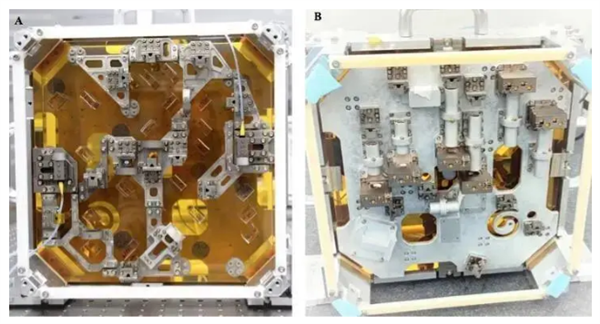
The research team at the institute has successfully built the first fully functional interferometer optical platform tailored for the ‘Taiji Program’ and completed comprehensive ground-based performance tests. All key indicators have fully met the mission requirements, marking the formal shift of the interferometer system in the ‘Taiji Program’ from the conceptual exploration phase to engineering development.
The ‘Taiji Program,’ proposed by the CAS, aims to launch three satellites into space to form a laser interferometer with arms stretching 3 million kilometers, enabling the detection of incredibly faint gravitational wave signals. Achieving this requires ranging accuracy at the picometer level—equivalent to one-hundred-thousandth of the diameter of a human hair—which presents immense technical challenges.
This breakthrough was accomplished by the Gravitational Wave Experiment Center team at the Institute of Mechanics. Their fully functional interferometer optical platform creatively employs a three-dimensional ‘positive-negative separation’ layout. This design effectively isolates heat sources from the optical path, significantly enhancing the system’s thermal stability in the harsh space environment. Additionally, the platform seamlessly integrates with core payloads such as telescopes and inertial sensors, ensuring full operational capability.
Utilizing the picometer-precision laser interferometer platform at the IMCAS Huairou Campus, the research team has also developed a suite of advanced data post-processing techniques to effectively suppress noise. As a result, the measurement sensitivity of the interferometer has been enhanced by an order of magnitude in key frequency bands, successfully meeting the stringent ranging accuracy demands of the ‘Taiji Program.’
-
AI's Richest Person Revealed: A Native of Zhanjiang!
-
No one dares to bet big on Seres' financial report
-
Standing at a Distance, Behind Xiaomi's Phone Slowdown and Layoffs", "Xiaomi Phone, Declining Sales, Offline Stores, Product Strategy, Comprehensive Ecosystem of People, Vehicles, and Homes", "Accordi
-
![]()
ByteDance Enters Physical AI, Igniting the Second Wave of 'Feast'?
-
![]()
Phoenix Optics Forecasts a Nearly 70% Drop in First-Half Net Profit, Yet Optical Business Profit Shows Growth!
-
![]()
A Staggering 50.16% Reduction in Losses Projected! COST's Interim Report Signals a Pivotal Moment
-
![]()
Nearly 19% of National Total! Guangdong Boasts 164 Registered Large Models as New AI Personification Regulations Take Effect
-
![]()
BYD’s Baosha, Sought After by Australians, Makes a Triumphant Return to China