The Second Half of Large Models: Yin Qi Turns Left, Yang Zhilin Turns Right
 05/11 2026
 512
512
One night, two financing deals, two vastly different paths.
During the second trading week of May 2026, the financing narrative in China's large model sector refreshed in a near-"serial" fashion.
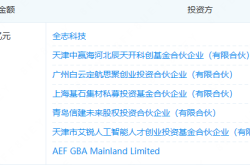
On May 7, China Renaissance Capital officially announced that Kimi completed a new round of financing of approximately $2 billion, with a post-investment valuation exceeding $20 billion. Meituan Dragonball led the round, with participation from Tsinghua Capital, China Mobile, CPE Source Peak, and others. Just one day later, sources revealed to multiple media outlets that StepFun was set to complete nearly $2.5 billion in financing, having dismantled its red-chip structure and accelerated its push for a Hong Kong IPO.
Within 24 hours, the large model sector secured nearly $4.5 billion. The capital market frenzy evoked memories of the 2023 venture capital euphoria sparked by ChatGPT. However, a closer look at the investment logic and corporate strategies behind these two financing rounds reveals that China's large model sector has reached a far more profound crossroads than mere valuation numbers suggest.
In StepFun's financing narrative, the protagonist is not a high-profile VC but a cohort of industrial chain capitals with strong Industrial attributes (industrial attributes). Names like Huaqin Technology, Longcheer Technology, OmniVision Group, and ZTE cover the entire spectrum from smartphone ODM manufacturing to upstream image sensors. Meanwhile, the "Hong Kong version of Temasek"—Hong Kong Investment Management Corporation, a government investment platform that had previously exclusively backed StepFun in the large model sector—also endorsed the deal by joining the shareholder register.
Shifting focus to Kimi. The most prominent label in its $2 billion financing round is Meituan Dragonball, a hard-tech investment matrix controlled by Meituan, which alone contributed over $200 million. Earlier shareholders, including Alibaba, Tencent, and Xiaohongshu, have already established a composite shareholder structure of "internet platform matrix + state-owned operators."
Industrial direct line (direct affiliates) taking the stage and internet platform capitals slapping high-valuation tags on the sector's first tier reflect a fundamental reality: StepFun, under Yin Qi's leadership, and Kimi, helmed by Yang Zhilin, stand at the most sharply divergent moment in the commercialization paths of China's AI startups.
01
Turning Left and Right: The Divergence of Two Strategic Routes
StepFun's current trajectory is inseparable from Yin Qi.
If one were to identify the most dramatic thread in China's 2026 AI entrepreneurship history, Yin Qi's appointment in January would likely make the cut. The 38-year-old Tsinghua Yao Ban (Yao Class) graduate and co-founder of AI 1.0-era "Four Little Dragons" startup Megvii officially debuted as StepFun's chairman early this year. On the same day, StepFun announced a B+ round financing exceeding RMB 5 billion.
Yin Qi's arrival triggered a sharp pivot in both capital and strategic direction.
His direction was crystal clear. At a media briefing after Qianli Technology's April product launch, Yin Qi stated that the global foundational large model landscape had largely solidified, making it extremely difficult for new head (leading) enterprises to emerge. The core way out (path forward) for existing players lies in "finding exclusive scenarios and achieving commercial closed loop deployment." His exact words: StepFun's foundational large model layout (strategy) must "land in real-world application scenarios" so that "R&D has clear iteration targets."
This statement precisely captures the core anxiety of model-layer startups over the past two years: even if they match GPT's capabilities, they struggle to answer "where the money will come from" by focusing solely on foundational models.
Yin Qi's solution is terminal binding. Huaqin and Longcheer are global leaders in smartphone ODM, controlling the design and manufacturing of hundreds of millions of phones annually. OmniVision supplies CIS image sensors, a critical component in smartphone imaging chains. ZTE has already deeply collaborated with StepFun to co-create AI phone functions.
The dense (concentrated) alignment of industrial capitals means StepFun is no longer just a software company supplying foundational models—it's forming a community of shared interests with supply chain players.
Indeed, this bundling now has commercial validation. Its Step-series multimodal models have secured partnerships with OPPO, Honor, Geely, and others, with phone pre-installations surpassing 42 million units, covering ~60% of China's top smartphone brands. In automotive, its AgentOS intelligent cockpit is deployed in mass-produced models.
Kimi has chosen a different path.
Yang Zhilin's judgment at the Zhongguancun Forum offers a striking contrast: the essence of large models is "converting energy into intelligence," with scalability as the core foundation. However, scalability does not mean brute-forcing compute power but prioritizing "upgrade efficiency." To this end, Kimi has set three strategic directions—"Token efficiency, long context, and Agent clusters"—with the core goal of maximizing intelligence within limited resources.
While Yin Qi turns left toward "industry bundling," with shareholders acting as a "hardware procurement committee" spanning ODM to chips and terminal applications to Hong Kong listing endorsements, Yang Zhilin turns right toward a dual cycle of technology and capital. By combining frequent financing with cutting-edge models, Kimi aims to gain global influence in commercial competition and use valuation advantages to feed back into technology.
02
Data Comparison and Entrepreneurial Logic: The Inner Workings of Two Approaches
In terms of commercialization, Wang Xinyu, a partner at Meituan Dragonball, disclosed that after the K2.5 model update, Kimi's annual recurring revenue (ARR) surpassed $100 million in early March and climbed to over $200 million in April, with accelerated growth in paid subscriptions and API calls. Considering the K2.5 model only launched in late January, this means Kimi achieved $100 million ARR cold start within a month and doubled it to $200 million in the second month.
From a commercial efficiency perspective, this growth curve has no equal in China's large model sector.
However, Kimi's "premium" valuation has also raised eyebrows. Before this financing round, its valuation soared from $4.3 billion in November 2025 to $18 billion in April, ultimately reaching $20 billion—a nearly 4x increase in under six months.
StepFun's valuation data is more conservative. Market estimates place its post-investment valuation at ~$10 billion. However, given its 42 million pre-installations and nearly 20 million daily active users, this reflects "industrial logic" pricing—investors care less about growth narratives and more about how many irreplaceable hardware distribution channels it locks in.
The valuation gap essence (fundamentally) reflects a clash between two pricing methodologies. Kimi uses ARR as its core metric, aligning with global SaaS logic, while StepFun uses installation penetration and channel partnerships, aligning with traditional TMT. Which methodology is more "correct" will not be found in quarterly financials but in next-stage model deployment capabilities and ecosystem resilience.
Yin Qi carries perhaps the heaviest historical weight in China's 2026 AI circle.
He co-founded Megvii in 2011 with Tang Wenbin and Yang Mu, entering the market with Face++ facial recognition and becoming the first of the previous generation's "AI Four Little Dragons." However, that wave of AI companies faced systemic capital market challenges: Megvii's 2019 Hong Kong IPO attempt lapsed, and its subsequent STAR Market bid encountered hurdles. While SenseTime managed to list, its stock price has languished below its issue price.
First-generation AI companies were generally constrained by the disconnect between technological maturity and commercial scenarios. Security firms competed with traditional integrators, while algorithm licensors struggled to break through AI open platforms operated by tech giants.
In 2024, Yin Qi took over Lifan Technology (later renamed Qianli Technology), using smart vehicles as a new entry point. This year, as he raises the StepFun banner, he now commands "Megvii + Qianli + StepFun" as his three strategic pillars. A quote of his circulates widely in the industry: "Our core subsequent intelligent agent capabilities must be refined through high-quality terminal application scenarios."
In other words, his playbook has completely evolved. At the base is StepFun's large model, in the middle is Qianli's automotive endgame, and at the front are supply chain giants like Huaqin, Longcheer, and ZTE providing distribution channels. This "base-middleware-terminal" architecture did not exist in the AI 1.0 era because large models did not then serve as the foundation.
The details of dismantling the red-chip structure are also noteworthy. StepFun completed its joint-stock transformation in April 2026, changing from a limited liability company to a joint-stock company and finalizing the red-chip dismantling. HKIC's entry sent a precise regulatory-friendly signal for a Hong Kong listing. This government investment platform of the Hong Kong SAR government has so far exclusively bet on StepFun in the large model sector.
Rhythm-wise, StepFun is using Zhipu and MiniMax as blueprints to sprint toward a "third listing window" in Hong Kong, with Yin Qi set to enter capital markets for the third time.
Compared to StepFun, Kimi's story is more "pure."
Yang Zhilin, a Tsinghua graduate who studied under Professor Tang Jie and later pursued a Ph.D. at CMU, is a top researcher in pre-trained models and text generation—a rare pure-tech founder in China's AI circle. Kimi secured angel-round financing from investors including Meituan Dragonball just two months after its founding, with backers placing bets before any mature commercial product existed.
In early 2026, as outsiders speculated whether Kimi would be squeezed by tech giants, Yang Zhilin responded with a systematic technical upgrade. Kimi K2.5 launched silently, featuring native visual support and Agent cluster capabilities that could coordinate 100 specialized "avatars" to handle 1,500 steps in parallel without predefined role assignments or task breakdowns.
This embodies Yang Zhilin's "turn right" logic: treating model technology as the sole fulcrum to move the entire system. After K2.5's launch, API supply TPM quotas quickly tightened, with clients offering multi-million-dollar consumption commitments and upfront guarantees to secure priority access. Kimi then swiftly released K2.6 and open-sourced it.
Frequent iterations have seamlessly accelerated subscription payments and API calls, with ARR surpassing $100 million within a month of K2.5's launch. After ARR exceeded $200 million and valuation broke $20 billion, Kimi's capital momentum further fueled talent acquisition and compute stockpiling.
This creates a dual-cycle positive feedback loop of "technical iteration → commercial data → capital heating," fundamentally different from StepFun's single cycle of "industry bundling → scenario closure → Hong Kong listing."
03
Which Path Will Withstand Time?
The valuation gap—Kimi at $20 billion vs. StepFun at ~$10 billion—essentially reflects competition between different pricing criteria.
When investors price Kimi using ARR, they view it through a Cloud 100 framework. Unlike the 2021 SaaS valuation wave, this ARR represents annualized API call revenue rather than software subscriptions. Its gross margin structure is far less clear than high-retention SaaS products, but its growth curve is far steeper.
StepFun cannot command such high valuations because smartphone pre-installations require continuous renewal as a moat. Its rivals are not MiniMax or Zhipu but tech giants vying to embed their models into the same phones.
ZTE had previously partnered with ByteDance's Doubao team to launch an engineering prototype featuring the Doubao phone assistant. This year, they announced R&D plans for a new generation of Doubao AI phones. OPPO, Honor, and Geely are StepFun's clients but could also become clients of ByteDance, Alibaba, or Tencent. In the terminal entry war, there are no permanent allies.
However, Kimi's "right turn" also faces structural risks. While K2.5 and K2.6 outperform most open-source competitors in Agent scores, global model-layer players like DeepSeek V4 and Alibaba's Qwen 3.6 show no signs of slowing iteration. In open-source ecosystems, community switching costs for models are extremely low. If a generational gap emerges in model technology, Kimi's API call commercial base could rapidly erode.
Zhu Xiaohu recently summarized a widely accepted market judgment: "AI investment logic is shifting from narrative-driven to fundamental-driven valuations, with investors now prioritizing measurable outcomes like ROI."
The core question is how to define "fundamentals" for China's large model industry. Should it be measured by ARR, terminal coverage, or wait for true net revenue retention and customer lifetime value metrics? Before answers emerge, both paths carry their own costs.
Extending the timeline, the night of May 8, 2026, serves as a cross-section of China's large model entrepreneurship over the past two years.
By then, Zhipu and MiniMax had solidified their positions in Hong Kong, with market caps exceeding HK$400 billion and HK$200 billion respectively, at times surpassing Baidu's Hong Kong valuation. DeepSeek was negotiating a financing round valued at $45 billion, with Alibaba and Tencent reportedly at the table. The capital market landscape had never been clearer: "two leaders, two challengers."
On the same track, Yin Qi and Yang Zhilin are running vastly different marathons. The former seeks to weld models into hardware using layered industrial capitals, while the latter aims to seize high-valuation ecological niches in the global ecosystem through technology-capital dual engines.
Neither path is absolutely right or wrong. Hardware binding offers deep moats but long establishment cycles, while API commerce grows rapidly but lacks defensibility. The two Tsinghua alumni have bet on opposite ends of the efficiency equation.
What is certain is that directions are not set in stone. The stronger K2.6's Agent cluster capabilities become, the deeper Kimi's reliance on terminal deployment grows, necessitating infrastructure for terminal integration. Conversely, after securing enough terminal markets, StepFun will face gradual replacement by third-party clients developing in-house models. Once technological parity is lost, terminal partnership loyalty will quickly dissipate.
The convergence point of the two routes flickers in the distance. Yin Qi and Yang Zhilin's ultimate rivals may not be each other. As one anonymous investor put it, "The protagonists in China's large model positioning war are no longer startups competing against startups. When their respective paths reach their endpoints, they will face Alibaba and Tencent standing there."
Until then, the market can only issue two passes with different pricing logics and let the two trains reveal their own logics at their destinations. For now, Yang Zhilin and Yin Qi have entered the most crowded tunnel before dawn.
This article is original to Xinmou.
— END —
-
![]()
Tesla Restructures Its Balance Sheet
-
![]()
Accelerating the High-Speed Interconnection Upgrade of AI Computing Clusters! JONHON Releases ELSFP External Light Source Optical Connectors
-
![]()
Breaking the overseas blockade of volumetric holographic materials, this optical enterprise secures nearly 100 million yuan in financing!
-
![]()
Why Does Jensen Huang So Openly Praise China’s AI?
-
![]()
"Wudang" Unveiled: Arm China's Next-Gen AI VPU Redefines Video Encoding
-
![]()
From Energy Conservation and Carbon Reduction to AI Decision-Making: GECON East Intelligence and Chery Group Explore a New Green and Smart Paradigm for Automobile Manufacturing
-
![]()
WAIC 2026 Observation | AI Accelerates Towards the Core of Industries, Industrial AI Enters a Critical Phase
-
![]()
Volkswagen China Fires the First Shot in Foreign-Funded 'White Box Delivery'!