Qianwen Revolutionizes Taobao: Alibaba's Bold Self-Transformation
 05/12 2026
 718
718
Author|Ma Duoduo
Editor|Hu Zhanjia
Operations|Chen Jiahui
Produced by|LingTai LT (ID: LingTai_LT)
Header Image|Sourced from the Public Domain
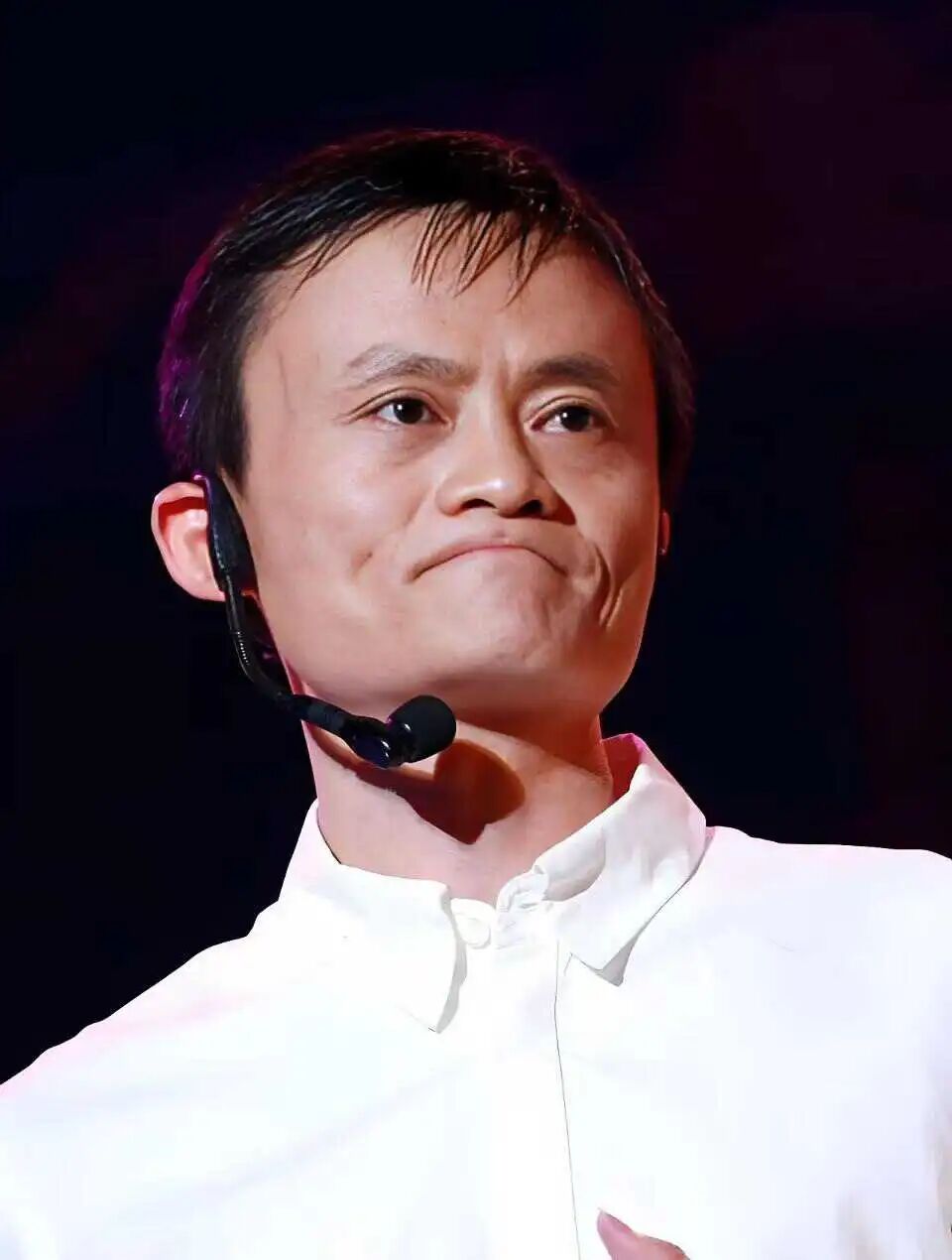
On May 10, 2026, during 'Alibaba Day', all eyes turned to Alibaba's campuses across the nation in search of one man—Jack Ma.
He did not visit the AI fitting rooms for instant outfit changes, nor did he utilize Meoo to transform casual snapshots into cinematic masterpieces, nor did he head to HappyHorse to watch 2D photos morph into 3D avatars. Instead, he was preoccupied with a grander endeavor.
Just the following day, on May 11, Alibaba officially declared that its AI platform, Qianwen, would achieve profound integration with Taobao and Tmall. This move was not merely another collaboration—it signified the dismantling and rebuilding of Alibaba’s core e-commerce infrastructure, constructed over two decades, transitioning from 'letting users search' to 'letting AI search for users'.
The challenge Jack Ma embraced was more formidable than any e-commerce battle.
 Return
Jack Ma's 2025 was a whirlwind of activity—he was seen nearly every month lurking in the corners of Alibaba’s campuses.
In April, at Cloud Valley Town in Hangzhou, at the Alibaba Cloud campus.
Ma, sporting his familiar 'Feng Qingyang' badge (a moniker he has used for over two decades), entered a conference room at Alibaba Cloud’s Feitian Building. That day, he conveyed to Alibaba Cloud’s tech leaders: 'AI is not merely a tool—it is a redefinition of productivity itself. If we do not act now, we will become obsolete tomorrow.'
Those present later recalled that Ma spoke calmly, without his usual dramatic flair. Yet, it was this calmness that underscored the urgency.
In May, at 'Lakeside Cottage'.
Alibaba recreated a 1:1 replica of its 1999 Lakeside Garden apartment (where the company was born) inside its headquarters. Ma sat there, engaging in conversation with young product managers. He remarked: 'Entrepreneurial spirit is not exclusive to startups—it is vital as your company matures. Otherwise, you will become a corporate zombie, mired in meetings, drowning in PowerPoint presentations, and obsessed with 'alignment'.' This quote quickly circulated within Alibaba, with many adopting it as their desktop wallpaper.
In June, Ma responded to a 10,000-word letter from an employee, then visited Ele.me’s office, spending an entire afternoon chatting with riders and operations staff.
In July, by West Lake. Someone spotted a familiar figure in a night-riding group—61-year-old Ma on a nearly 20,000-yuan Brompton folding bike, riding 13 kilometers from Broken Bridge along Yanggongdi without falling behind.
In November, Ant Group unveiled its AI assistant, 'Lingguang'. Ma stood quietly in the back row, observing without taking the stage. Employees noted that he smiled broadly that day.
In December, in Rwanda. Ma journeyed to Africa to promote digitalization in local cross-border trade.
These actions did not immediately boost profits but secured something more precious—morale. For a 25-year-old company with over 200,000 employees across numerous countries, the greatest threat is not competitors—it is internal inertia.
Ma’s frequent returns served a singular purpose: to convince everyone that Alibaba’s journey was far from over and that tougher battles lay ahead.
In March 2026, at Cloud Valley School. Ma personally led Alibaba and Ant Group’s core leadership in a closed-door seminar. The theme: the challenges and opportunities of AI. Zhang Yong, Joe Tsai, Eddie Wu—all key decision-makers attended. The meeting spanned two days: the first day focused on tech trends, the second on organizational reform.
Ma stated: 'We are fortunate to have witnessed the internet era. Even more fortunate to witness AI. The question is: Are you prepared?'
This marked Ma’s most critical public appearance of the year.
Not a spectacle.
A warning.
 The Bet
How significant is Alibaba’s AI gamble?
Begin with a figure: 380 billion yuan. This is the sum Alibaba pledged to invest in cloud and AI hardware infrastructure over three years—surpassing its total spending in the past decade. This is not mere tinkering—it is an all-in bet.
First, computing power.
The AI race is ultimately a computing power race. Alibaba plans to construct over 10 hyperscale smart computing centers in three years, with a total computing capacity of 100 EFLOPS—equivalent to the combined computing power of the top 20 supercomputers globally.
Next, chips.
T-Head Semiconductor, Alibaba’s core chip R&D division. In 2025, T-Head mass-produced 470,000 self-developed GPUs, with 60% sold to external companies—indicating that Alibaba’s chips now generate external revenue. These chips, named 'Hanguang' (after the 'invisible sword' in *Liezi*), symbolize stealthy strength. However, chip development is no easy feat. External pressures persist, compelling T-Head to pursue performance through architectural innovation and advanced packaging on mature processes.
The path is arduous, but Alibaba has no alternative. Without self-developed chips, it will always be at the mercy of others.
Now, models.
Qianwen, Alibaba’s flagship large model. Since its 2023 debut, it has undergone three iterations: the first generation focused on B2B, the second expanded to C-end, and the third achieved multimodal and multilingual breakthroughs.
The Qianwen App boasts over 300 million MAU—meaning one in five Chinese internet users relies on it. This is not inflated by subsidies; its popularity stems from genuine capabilities in text generation, coding, logical reasoning, and image understanding. Users remain engaged because the product delivers.
DingTalk introduced 'Wukong', touted as the world’s first enterprise-grade AI-native work platform. Corporate approvals, reimbursements, scheduling, and meeting minutes—now completed via voice commands.
Ant Group’s Lingguang App evolved from '30-second app generation' to 'world models on mobile' in five months. Users can say, 'Create a daily water intake tracker,' and Lingguang generates a functional app without coding.
Nearly every Alibaba business line is embracing AI: Xianyu utilizes AI for auto-generated product descriptions. Cainiao optimizes logistics routes with AI. Gaode achieves smarter navigation with AI. UC reconstructs content recommendations with AI.
Ma is not betting on a single model or chip—he is betting on AI as a structural trend.
And Zhejiang province is fully on board. 2026 marks the commencement of China’s 15th Five-Year Plan. Zhejiang has designated AI as its core competitive edge, targeting 1.2 trillion yuan in AI revenue by 2030. Tech loans exceed 4.2 trillion yuan, with subsidies of up to 5 million yuan for cutting-edge projects. Hangzhou aims to become the 'Capital of Computing Power', building a globally leading smart computing infrastructure cluster in five years.
Ma’s all-in AI bet is not merely visionary—it is impeccably timed. Policy support, tech breakthroughs, and user acceptance are perfectly aligned.
Such opportunities arise once a decade. Miss it, and there is no second chance.
 The Revolution
The May 11 announcement of Qianwen’s deep integration with Taobao marks the pinnacle of Alibaba’s AI offensive.
Why is this critical? Because it signifies self-revolution. Taobao and Tmall collectively host over 4 billion products, serve over 1 billion active users, and process billions of transactions annually.
For 25 years, Alibaba trained Chinese consumers to 'search for products'—open an app, type keywords, browse, compare prices, read reviews, and decide. This 'people finding goods' model was refined to perfection. Every search algorithm tweak, recommendation system upgrade, and marketing tool innovation adhered to the same framework.
But now, the playbook changes.
With Qianwen fully integrated into Taobao/Tmall’s inventory, users no longer need precise keywords. A chat-like request suffices: 'Recommend anti-aging skincare for sensitive skin under 1,500 yuan.' AI matches, compares prices (factoring in gifts, discounts, and membership deals), analyzes ingredient details, and generates a purchase-ready list in seconds.
What transpires behind the scenes?
Qianwen parses your natural language into structured demands, calls Taobao’s product knowledge graph for matches, performs multi-dimensional price comparisons (actual prices after discounts), and extracts high-frequency keywords from reviews to justify recommendations.
All in under 3 seconds.
But this is merely the surface. Deeper changes: Qianwen does not just find items—it handles complex tasks. Stuck in transit? It contacts logistics and updates you. Quality issues? It initiates returns, fills forms, and negotiates with sellers. Forgot to confirm receipt? It reminds you while summarizing order details. It remembers your preferences—brands, sizes, price ranges—anticipating needs before you speak.
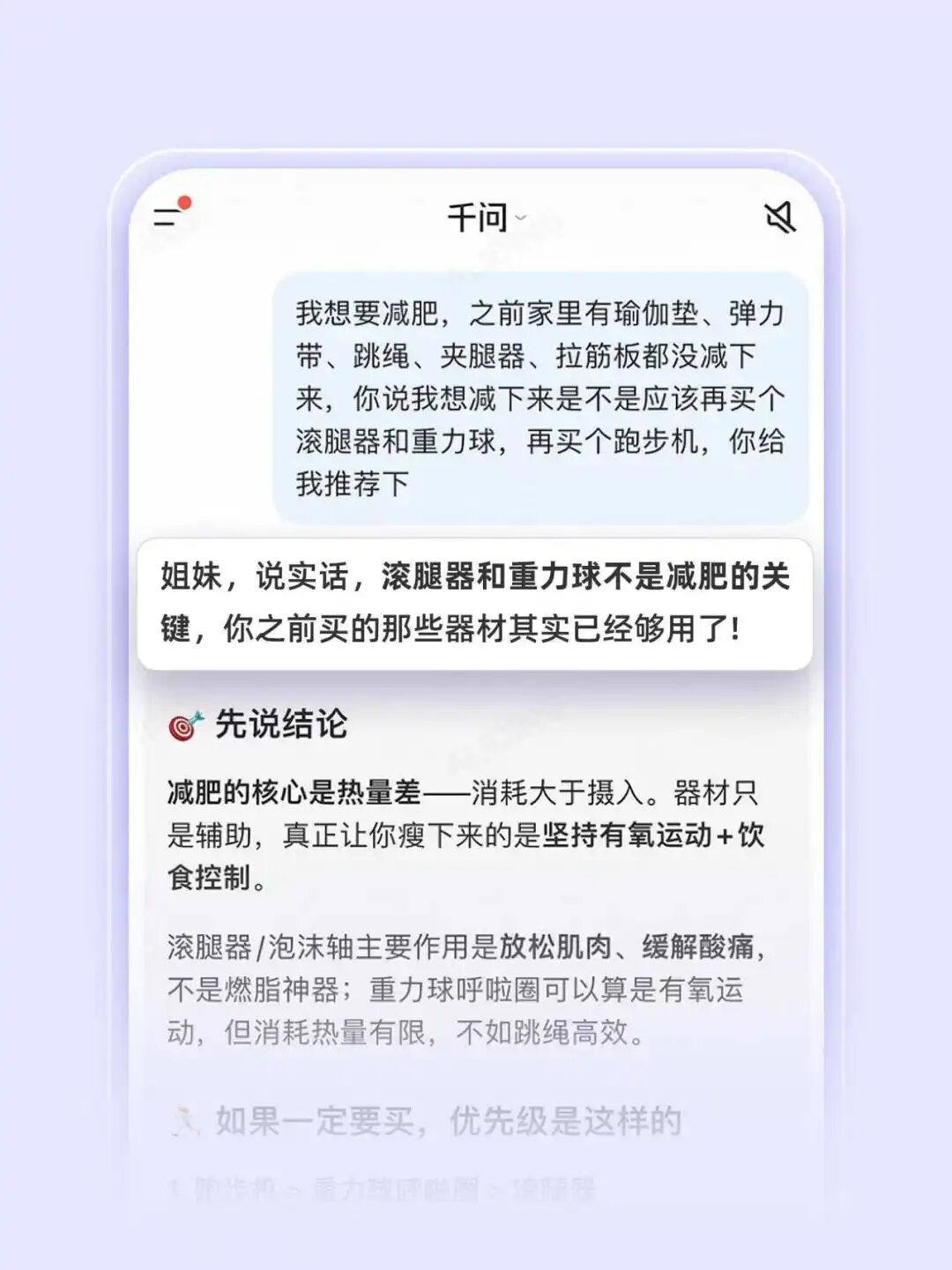
If you frequently purchase imported cat food, saying 'out of cat food' prompts Qianwen to recommend your usual brand/size, flag promotions, and remind you to restock flea medication.
This is not search—it is companionship.
Taobao’s app will also introduce a Qianwen-powered AI shopping assistant with virtual try-ons and 30-day price tracking. Virtual try-ons are not simple overlays—they utilize your body data and 3D garment modeling to render realistic fits under adjustable lighting and angles.
The 30-day price tracker employs AI to analyze historical data, advising whether to buy now or wait, and predicting weekly price fluctuations. These tools address two long-standing e-commerce pain points: 'try-on anxiety' and 'price comparison fatigue'.
But the real shift is redefining 'e-commerce'.
From static shelves to dynamic dialogue. From users searching to AI searching, comparing, and deciding.
Merchant logic changes as well. Previously, merchants bought traffic, bid on ads, and optimized for search—a 'pay-to-play' game. Future Qianwen recommendations will rely on semantic matching and user needs, favoring merchants with quality products and reputations over those who merely spend on ads.
The e-commerce scale tilts from 'traffic logic' to 'value logic'.
A personalized AI shopping partner replaces the cold search bar. This is not a feature upgrade—it is rewriting e-commerce’s DNA.
 The Charge
Alibaba is not the first to attempt this, but it may be the first to succeed.
During the Lunar New Year, Alibaba quietly tested 'one-sentence ordering'—with surprising results:
- Over 120 million orders placed.
- Over 4.1 billion function calls.
- User conversion rates up 37%.
What do these numbers signify? Users crave AI shopping—they just needed a usable solution. When experiences are seamless and results accurate, adoption surpasses predictions. Alibaba holds two unique advantages:
1. Qianwen’s tech edge.
300 million MAU provide real user data, refining the model’s capabilities in code generation, math reasoning, multi-turn dialogue, and long-text understanding—key for AI shopping assistants.
2. Taobao’s scale.
4 billion products, 1 billion users, 25 years of e-commerce expertise, and a nationwide logistics/post-sales network—infrastructure impossible to replicate overnight.
It possesses three key assets simultaneously: a 'super model + super platform + super supply chain'. Essentially, what Alibaba aims to do is to reinvigorate this infrastructure with AI.
But its rivals will not wait.
ByteDance, Alibaba's most direct and formidable competitor.
Just one day before Alibaba's official announcement, media information compiled by Tianyancha revealed that ByteDance announced a 25% increase in its AI infrastructure spending for the year, investing a staggering 200 billion yuan. Doubao Large Model has surpassed 200 million monthly active users, demonstrating rapid growth. ByteDance's strength lies in its content ecosystem—Douyin (TikTok's Chinese counterpart) has over 700 million daily active users, and its information feed is inherently the best AI application scenario.
JD.com adopts a different strategy. It focuses more on supply chain efficiency, utilizing AI to optimize warehousing, predict inventory, and coordinate logistics. JD.com aims to become a 'more efficient retail machine'.
Baidu's ERNIE Bot is also venturing into e-commerce, but its weakness lies in the lack of a closed transaction loop. Tencent is more restrained; Pony Ma stated that AI should be 'practical' and not rushed to consumers (C-end).
In the international market, Walmart is deploying conversational shopping, while Amazon's Alexa, despite an early start, has remained lukewarm in e-commerce AI.
This AI e-commerce race marks another head-on clash between Chinese and U.S. tech giants on a new track.
While QianWen's 300 million monthly active users is impressive, it is far from a guaranteed victory. The commercialization of AI involves a wide and deep gap between technology and revenue. Whether QianWen × Taobao
Since establishing Alibaba in 1999, he has been steadfastly committed to this endeavor for 27 years. Over these two and a half decades, he has borne witness to the bursting of the internet bubble, the e-commerce boom during the internet's ascent, the intense life-and-death struggle with eBay, and the transformation of Singles' Day from a mere promotional event into a nationwide celebration.
However, this time, the situation is markedly different.
All the previous battles were contests fought under the same set of rules—who could offer more products, who could provide lower prices, and who could ensure faster logistics. This time, the very rules of the game are being rewritten. AI is not merely optimizing e-commerce; it is fundamentally redefining the nature of consumption itself. Jack Ma is acutely aware that this battle will not be won in a year or two.
A staggering 380 billion yuan has been earmarked for expenditure over the next three years. What lies ahead after those three years? If the AI e-commerce business model fails to take off, if QianWen's growth reaches a bottleneck, or if competitors develop superior products, this substantial investment could amount to nothing more than money poured down the drain. Yet, if they refrain from investing, they are essentially awaiting their demise.
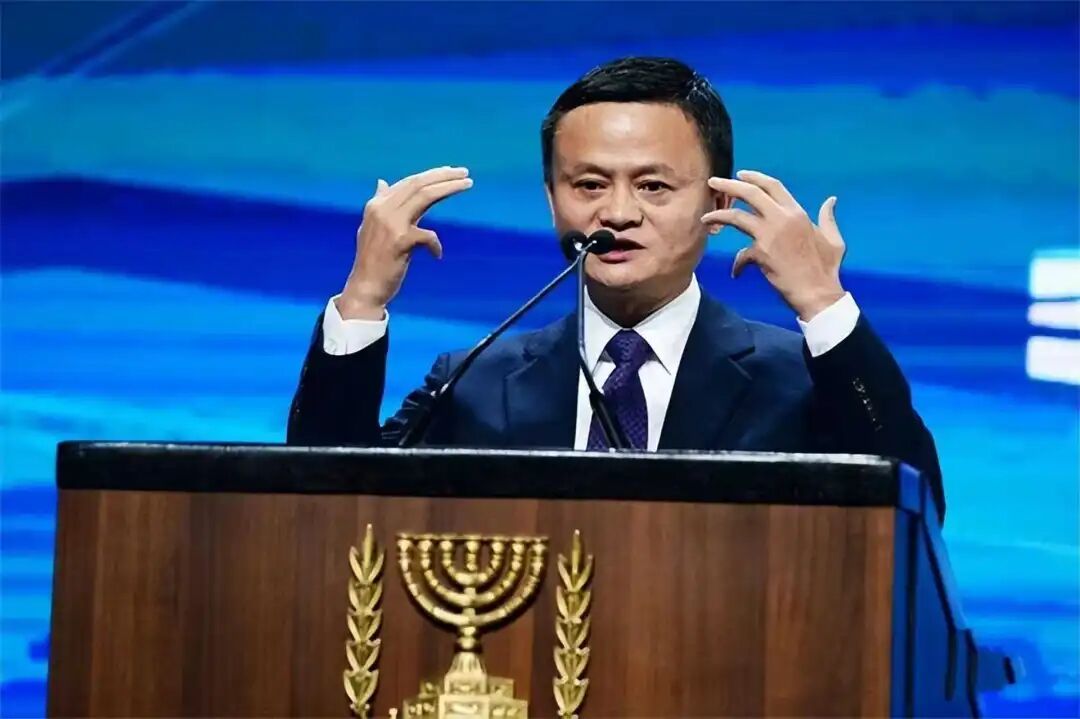
Jack Ma once remarked internally, "Alibaba's greatest risk is not making a mistake but doing nothing at all."
On May 10th, Alibaba's campus was ablaze with activity. In the Feitian Building at the Xixi Campus, QianWen's technical team was diligently fine-tuning model parameters. At Taobao City on Wenyi West Road, product managers were huddled around screens, meticulously testing the interaction details of the AI shopping assistant. At the T-Head Lab in Yunqi Town, chip engineers were intently observing the waveforms on oscilloscopes. Countless individuals worked overtime that very night.
They are not being coerced into transformation; they are actively participating in a genuine revolution—transitioning from a mere search box to an AI companion that truly understands you. From the traditional paradigm of "people finding goods" to the innovative concept of "goods finding people," this battle has only just commenced.
The night in Hangzhou is serene. In the distance, the lights of Alibaba Cloud's data center remain illuminated throughout the night, tirelessly training the next generation of the QianWen model. Tomorrow, the sun will rise as it always does. The QianWen App will once again handle tens of millions of conversations, and Taobao will process hundreds of millions of transactions.
And Alibaba's shopping cart is being fundamentally rewritten by AI.
-
![]()
Why Does Jensen Huang So Openly Praise China’s AI?
-
![]()
"Wudang" Unveiled: Arm China's Next-Gen AI VPU Redefines Video Encoding
-
![]()
From Energy Conservation and Carbon Reduction to AI Decision-Making: GECON East Intelligence and Chery Group Explore a New Green and Smart Paradigm for Automobile Manufacturing
-
![]()
WAIC 2026 Observation | AI Accelerates Towards the Core of Industries, Industrial AI Enters a Critical Phase
-
![]()
Volkswagen China Fires the First Shot in Foreign-Funded 'White Box Delivery'!
-
![]()
AI Agent Smartphones: The Next Competitive Edge Transcends Large Models
-
![]()
Over 880 Million Yuan Worth of Orders Unveiled, Bidding Launched for Shenzhen Eastern Public Transport
-
![]()
Tesla's Robotaxi Hits the Road: A Monumental Gamble with an Uncertain Future