What’s the Real Story? China Leads in 5G Patents but Pays More in Royalties!
 05/12 2026
 676
676
China's advancements in communication technology are widely acknowledged.
During the 2G era, we relied entirely on imported technologies. By the 3G era, we had developed our own TD-SCDMA technology, though, to be honest, it wasn't particularly outstanding. Nevertheless, it gave us some influence in the industry.
Subsequently, with the advent of 4G and 5G, we successfully moved into the spotlight. When it comes to 5G patents, China holds the top position globally.
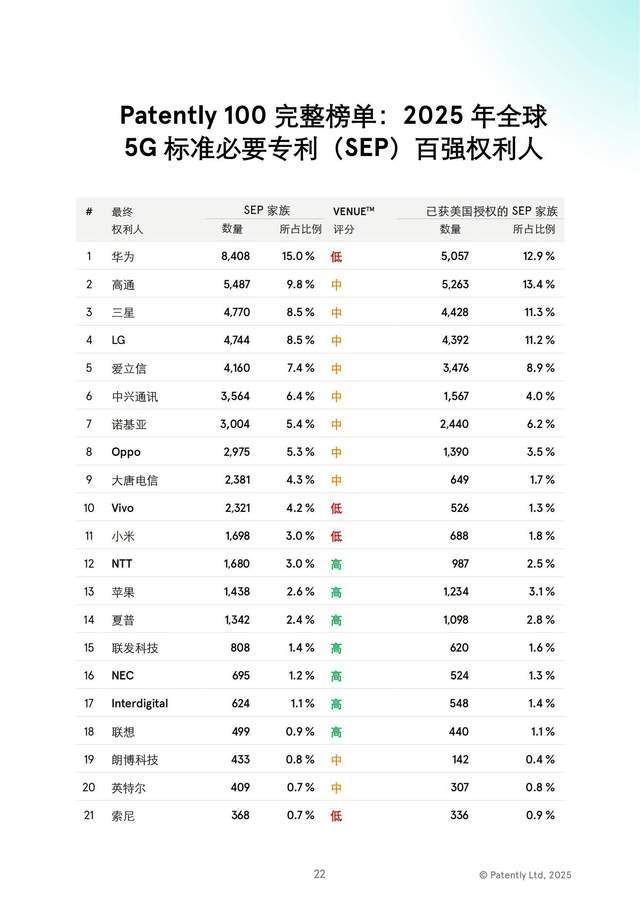
As illustrated in the chart below, among the top 10 entities in 5G patent rankings, China claims five spots, with Chinese companies collectively holding approximately 40% of all 5G patents worldwide, securing an undisputed first place. Notably, Huawei alone accounts for about 15%, surpassing all other vendors.
Logically, with such a substantial number of 5G patents, one would expect China to collect royalties on a global scale, right? China should leverage these 5G patents to generate revenue worldwide.
However, the reality is quite different. To date, China remains a significant net payer of 5G patent royalties!
What does net expenditure entail? You're all aware, aren't you? It means we collect royalties from others but also pay royalties to others, with the amount paid far exceeding the amount collected. This is what is known as net expenditure, and China ranks first globally in this regard.
In simpler terms, despite possessing numerous 5G patents, we haven't earned money from them; instead, we pay foreign vendors annually, with the amount paid ranking first globally.
So, what's the underlying reason? How did this situation arise?
Actually, the reasons are multifaceted and complex, involving various aspects; they cannot be simply gauged by the number of patents alone.
Firstly, the value of patents is not determined by their quantity. Some patents may hold little value, while others may be highly valuable. The licensing fee for 100 less useful patents may not match that of a single highly useful patent. You understand this, don't you?
Of course, I'm not implying that China's 5G patents are worthless. I'm merely pointing out that quantity is not the sole criterion; value is what truly matters.
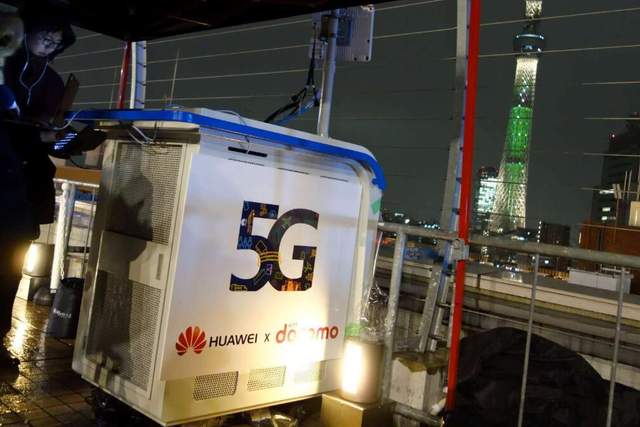
Secondly, China is a major global player in the mobile phone industry, manufacturing approximately 60%-70% of the world's 5G phones. These phones utilize a vast number of 5G patents, for which royalties must be paid. The more phones manufactured, the higher the royalties paid.
Foreign vendors manufacture fewer 5G phones, with almost only Apple and Samsung in the market, and their market shares are not as high as those of Chinese companies. Consequently, the amount they pay to China is naturally lower. This is inevitable; you understand this, don't you?
Therefore, in the mobile phone sector, China pays more to foreign vendors but collects less, resulting in a higher net expenditure.

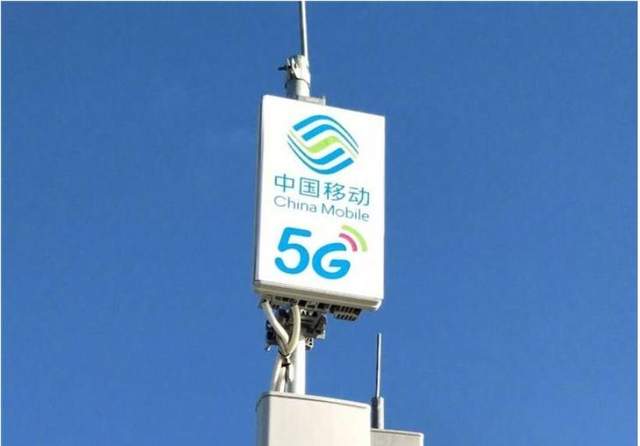
Another significant factor is that China has constructed over 500,000 5G base stations, forming the world's largest 5G network. These base stations utilize a substantial number of 5G patents. Additionally, China exports a large volume of 5G equipment overseas, all manufactured by Chinese companies within China, which naturally requires paying a significant amount of 5G patent royalties to overseas vendors.
Although companies like Nokia and Ericsson also pay 5G patent royalties to Chinese companies for their 5G base stations, the amount they pay to China is less than what Chinese companies pay overseas. Hence, the actual net expenditure remains high.
Therefore, China being the world's largest net payer of 5G patent royalties does not imply that China's 5G patents are of little value. Patent royalties are closely tied to the overall development of the 5G industry chain.
Data indicates that currently, China accounts for over 40% of 6G standard-essential patents. As China's communication patents continue to proliferate, revenues are bound to increase. I believe this situation will gradually improve in the future, and China may even become a net recipient of patent royalties.
-
![]()
Proposed to Raise 955 Million Yuan through Private Placement! Huicheng Vacuum Boosts Localization of Ultra-Precision Optical Coating Equipment
-
![]()
Cash Flow Soars 13-Fold! What Major Strategic Move is Wuhan Five Square Optoelectronics Planning?
-
![]()
Leaked Design of vivo X500: Reverts to Circular Camera Module in Top-Left Corner, Pays Homage to Classic X90 Aesthetic
-
![]()
DeepSeek Shows Signs of Foraying into Code Agents, Launches WeChat Official Account Focused on Harness
-
![]()
Auto Companies Deny Claims That ‘Cooperation with Huawei Is Non-Essential’, as Huawei Transforms into a ‘Public Platform’
-
![]()
Starship to Independently 'Return to the Launch Tower': SpaceX's Ambitions Extend Beyond Rocket Building to Dominating Space Transportation
-
![]()
Starship Set to Independently 'Return to the Launch Tower': SpaceX is Revolutionizing Space Transportation, Not Just Building Rockets
-
![]()
Anthropic and OpenAI Face Off Against Deepseek