Qianwen Teams Up with Taobao, Doubao Joins Forces with Douyin: Two Distinctive AI-Driven E-commerce Pathways Take Shape
 05/13 2026
 591
591
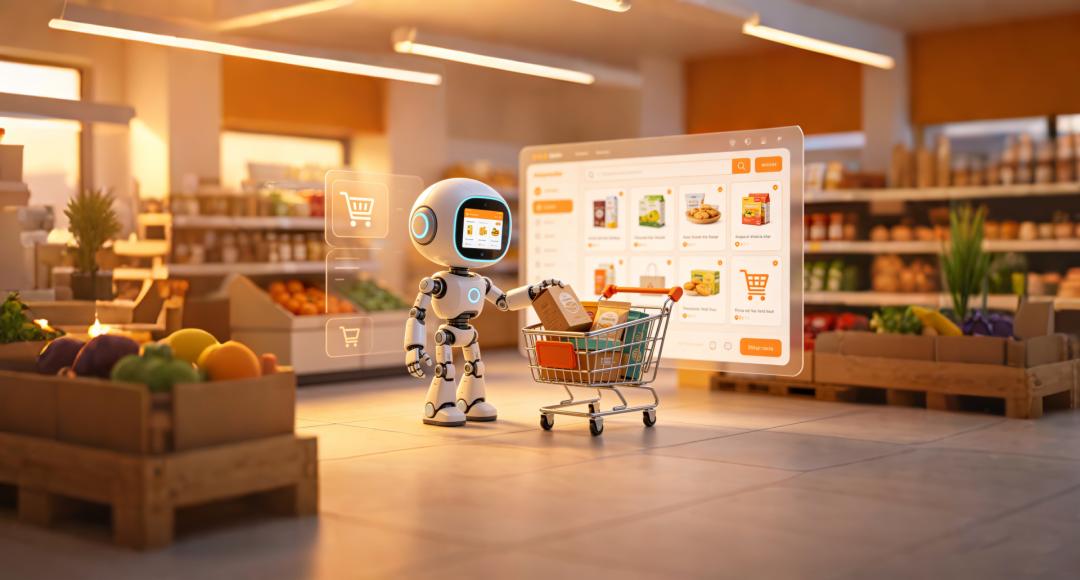
By 2026, the race for dominance in AI-powered e-commerce is accelerating at an unprecedented pace.
On May 11, Taobao and Qianwen achieved seamless integration, ushering in a novel AI-driven shopping experience. Shoppers can now access the Qianwen App, engage in AI-powered dialogues, and seamlessly select, compare, and purchase products on Taobao. Alternatively, by launching the Taobao App and tapping on the 'Qianwen AI Shopping Assistant,' users can indulge in AI-enhanced shopping, complete with features like virtual try-ons, AI-driven discount calculations, and AI-assisted low-price snapping.
Previously, Doubao had already forged ahead with a similar strategy. From its integration with Douyin Mall in October 2025 to the official rollout of the 'Help You Choose' AI shopping feature in May of the current year, Doubao has achieved comprehensive integration with Douyin E-commerce. Shoppers can now inquire about products, compare prices, and place orders directly within the Doubao App, eliminating the need to switch to the Douyin App.
Both Doubao and Qianwen are revolutionizing the way consumers access e-commerce. Gone are the days of manually opening a search bar, typing in keywords, and sifting through endless product listings. A single conversation now replaces over a dozen clicks.
However, the true test for AI e-commerce begins once the shopping loop is closed. Platforms must now grapple with questions such as: What factors influence AI decisions on behalf of users? Are recommendation results driven by user preferences or platform incentives?
I. Qianwen and Doubao: Divergent Philosophies in AI Shopping
On the cusp of the 618 shopping festival, Alibaba and ByteDance nearly simultaneously completed their AI shopping ecosystems.
Our hands-on experience reveals that while both have largely achieved closed-loop AI e-commerce, their approaches differ subtly.
After posing the query 'Recommend some summer toys suitable for a one-year-old baby' in the Qianwen App's conversation interface and clicking on a recommended 'baby water play toy,' users are directed to a page showcasing multiple similar toys, clearly within the Qianwen ecosystem, complete with a quick return button.
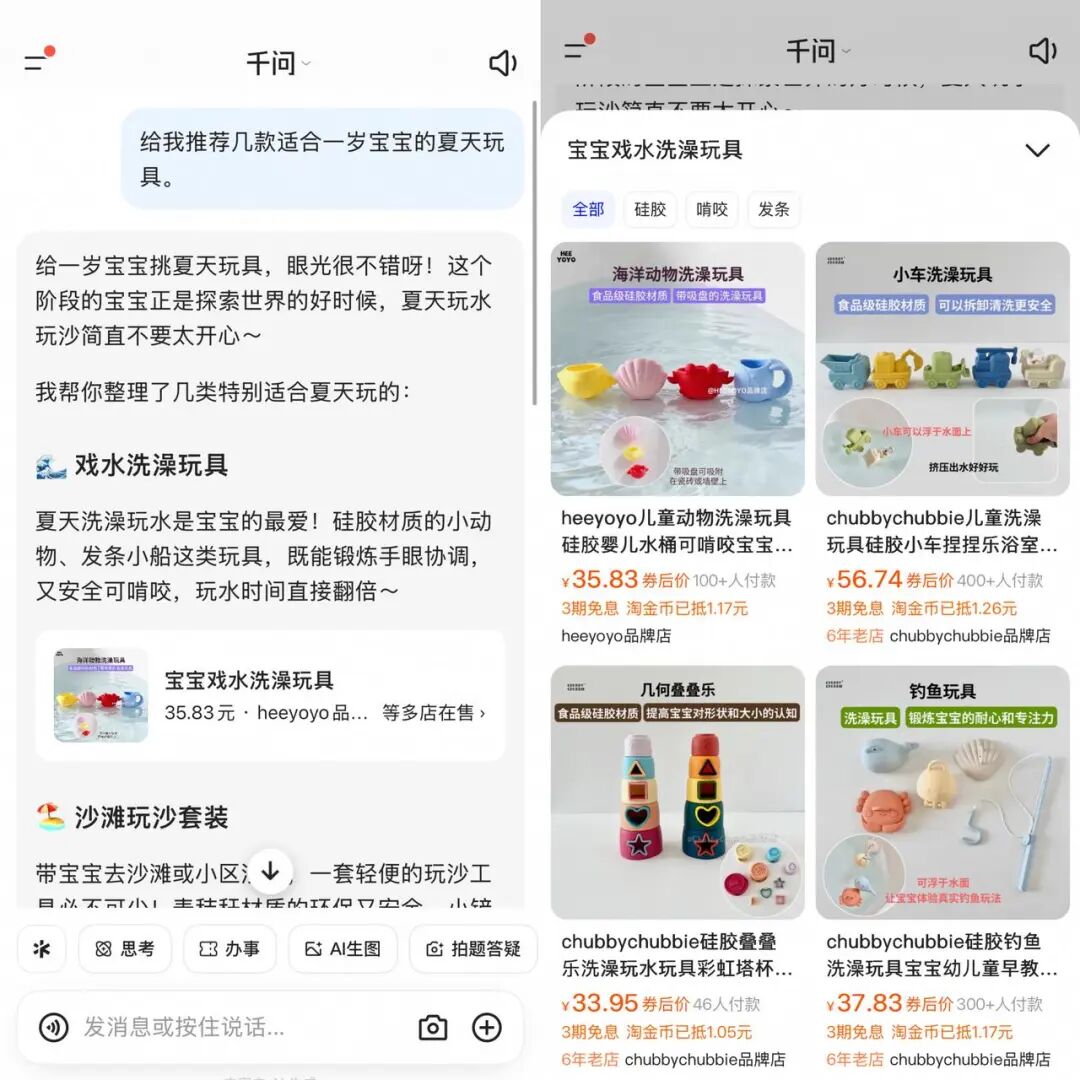
Conversely, after asking the same question in the Doubao conversation interface, Doubao directly recommends toys from specific brands, leading users straight to individual product purchase pages without any indication of leaving the Doubao environment, offering a more immersive shopping journey.
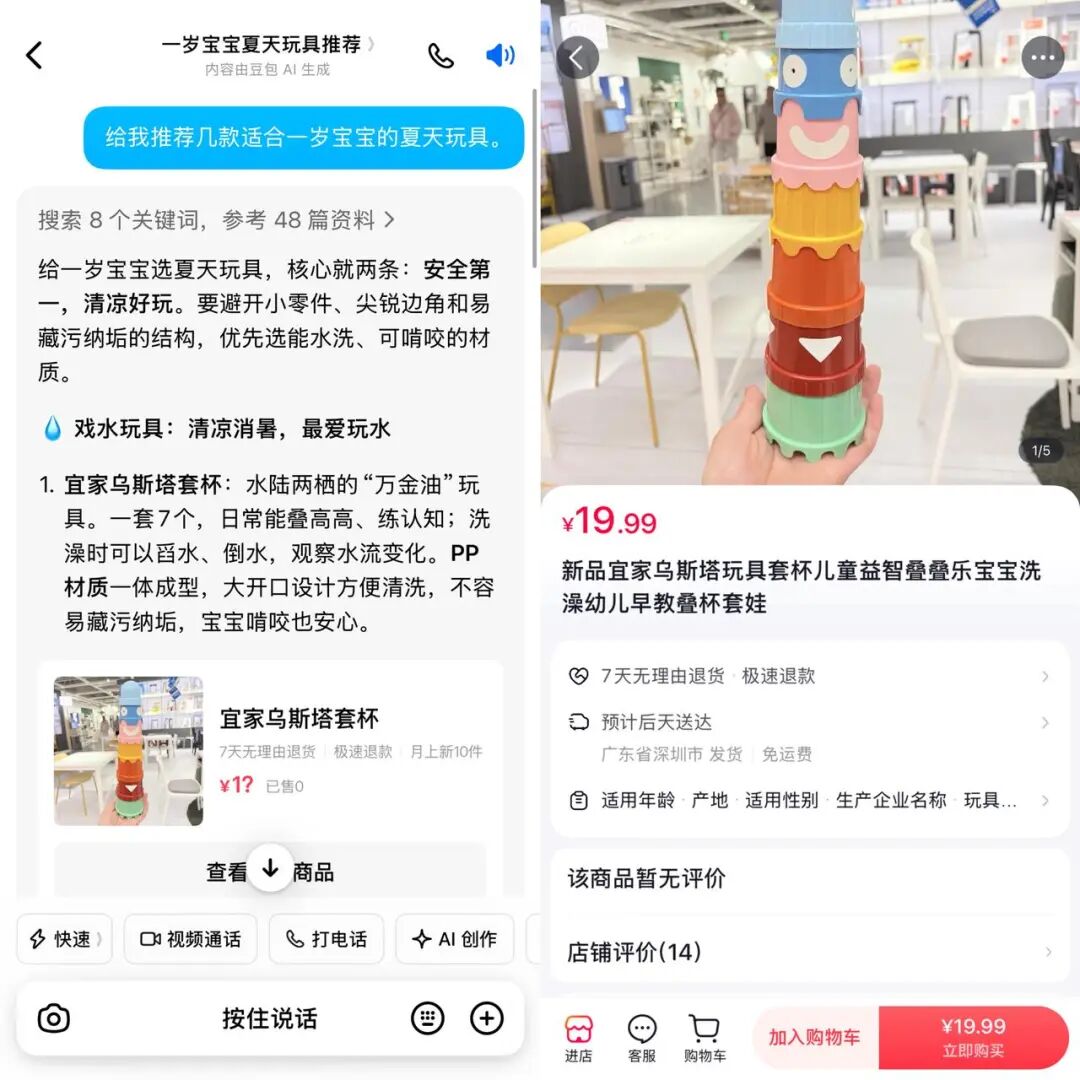
These product design disparities are thought-provoking.
Qianwen provides 'category recommendations,' suggesting a broad range of products and guiding users to a list page with multiple options, maintaining a sense of the Qianwen framework. Users are acutely aware that they remain within Qianwen's domain. Doubao, in contrast, offers 'product recommendations,' directly presenting specific brands and products, seamlessly transitioning users to individual purchase pages without them perceiving any App boundaries.
This seems to reflect the distinct positioning of AI shopping by the two companies.
Qianwen functions more like a shopping consultant, narrowing down choices while leaving the final decision-making to users. Its list page logic aligns more closely with traditional search, presenting users with a range of options to choose from. This may be a more cautious strategy in the early stages of trust-building but also suggests a reluctance to fully relinquish decision-making to AI.
Maintaining the interface framework is also a strategic choice. Qianwen's design logic seems to imply a belief that the future shopping entry point is the AI assistant itself. Users no longer need to 'browse' e-commerce platforms but can complete everything through conversation. Thus, Qianwen aims to establish its brand identity, ensuring users recognize its capabilities. Even when recommending Taobao products, it wants users to perceive them as Qianwen-filtered results.
Doubao, on the other hand, acts more like an agent, directly making most decisions for users and offering a smoother experience. However, users have a weaker awareness of the recommendation logic—why one brand is recommended over another remains a mystery.
Moreover, this product design logic suggests another judgment: AI is merely an efficient traffic-driving tool, with the true shopping entry point still on e-commerce shelves. Doubao doesn't mind disappearing from the transaction process, as its value lies in 'demand understanding' and 'product matching' at the frontend, leaving conversion, repurchase, and brand awareness to traditional e-commerce scenarios.
However, Doubao's immersive experience raises a critical question. Directly recommending specific brands means the algorithm completes a key judgment for users. Is this judgment based on user preferences, merchant bidding weight, or Douyin Mall's sales ranking? Users remain completely in the dark. The smoother the experience, the more opaque this decision-making process becomes.
This isn't merely a difference in experience design but reflects differing choices regarding AI's power boundaries. One chooses to let users see the selection process; the other chooses to complete selections for users. Which approach will win long-term trust remains to be seen.
II. When Algorithmic Neutrality Conflicts with Bidding Rankings
Whether Qianwen or Doubao, the purpose of AI shopping assistants is to find optimal solutions for consumers. However, this mission clashes with the foundation of platform commercialization: bidding rankings.
For a long time, advertising systems, exemplified by Alibaba's Direct Train, have been the core engine of e-commerce monetization. Their logic is straightforward and efficient: whoever pays more gets their products ranked higher.
The underlying logic of AI recommendations is truth-seeking—finding the optimal solution that best meets user needs. Traditional advertising logic is profit-seeking—displaying products with the highest willingness to pay.
When the Qianwen AI assistant begins helping users compare prices across the web and dissect complex discounts, it effectively aligns itself with the consumer's interest camp. This harbors an inherent commercial paradox.
If AI truly remains neutral, big brands accustomed to trading substantial advertising fees for exposure may find their recommendation probabilities decline. Conversely, if AI recommendation results can be commercially influenced, the smart assistant's trustworthiness among consumers will significantly diminish.
How much commercial value can an AI shopping assistant lose if it loses consumer trust?
For Alibaba and ByteDance, this is an exceptionally challenging balancing act. On one side is a lucrative advertising revenue stream; on the other is user trust, which is vital for survival in the AI shopping era. Currently, both companies signal that they won't prioritize advertised products in AI recommendations during the initial integration phase. However, this is clearly not the final commercial answer.
Consumers choose AI shopping primarily for efficiency and trust.
A study by Cognizant and Oxford Economics found that 75% of consumers feel frustrated with the traditional shopping process, prompting them to choose AI shopping. Among them, 22% cited time savings as their primary reason for using platform shopping, while only 12% believed AI could help them find the best deals.
'People expect to ask AI engines questions and get answers—and they don't want to pay for it. They just want to use an AI engine they trust to give honest, correct answers,' an AI industry insider pointed out.
As more purchases occur within AI chatbots, this means AI products will gain greater influence in deciding which products are displayed and how much commission or advertising fees to charge.
Currently, more covert AI advertising has begun to emerge. A new industry called Generative Engine Optimization (GEO) is on the rise. Its goal isn't to improve search rankings but to embed brands into large models' generated results.
Previous media reports revealed that a GEO service provider offers agency operations for merchants, embedding content into AI replies with annual fees ranging from 2,980 to 16,980 yuan. 'The higher the price, the stronger the computing power and the better the embedding effect,' the provider claimed.
The smoother the experience, the deeper the black box. Between the AI recommendations users see and the platform's true recommendation logic lies a black box that no one willingly opens. It's a question all players betting on AI shopping must eventually confront head-on.
-
![]()
Why Does Jensen Huang So Openly Praise China’s AI?
-
![]()
"Wudang" Unveiled: Arm China's Next-Gen AI VPU Redefines Video Encoding
-
![]()
From Energy Conservation and Carbon Reduction to AI Decision-Making: GECON East Intelligence and Chery Group Explore a New Green and Smart Paradigm for Automobile Manufacturing
-
![]()
WAIC 2026 Observation | AI Accelerates Towards the Core of Industries, Industrial AI Enters a Critical Phase
-
![]()
Volkswagen China Fires the First Shot in Foreign-Funded 'White Box Delivery'!
-
![]()
AI Agent Smartphones: The Next Competitive Edge Transcends Large Models
-
![]()
Over 880 Million Yuan Worth of Orders Unveiled, Bidding Launched for Shenzhen Eastern Public Transport
-
![]()
Tesla's Robotaxi Hits the Road: A Monumental Gamble with an Uncertain Future