Duxiaoman Unveils ClawPay to Capture AI Payment Market
 05/14 2026
 576
576
As AI Agents evolve from mere conversational tools to active executors, payment functionalities have emerged as a critical battleground for tech and financial institutions worldwide.
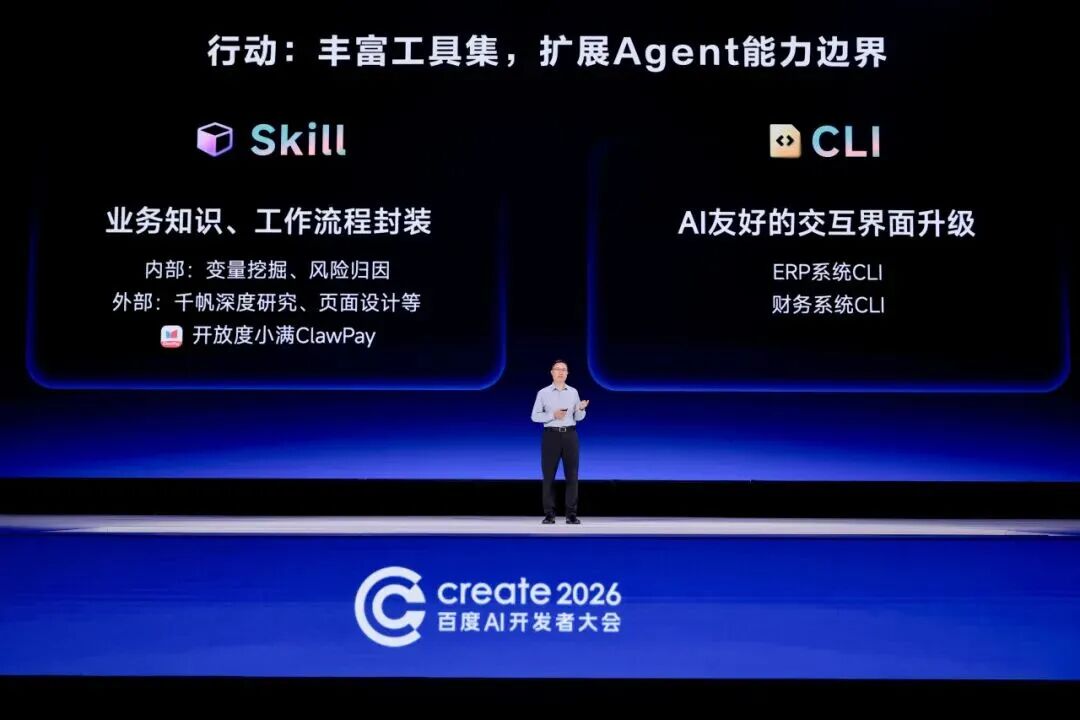
On May 13, at Baidu Create 2026 Developers Conference, Duxiaoman introduced ClawPay, a payment solution specifically designed for AI Skill developers.
This product integrates billing, order placement, payment initiation, and transaction management into standardized technical services, empowering developers to swiftly incorporate commercialization features into AI Skills without the need to build their own payment systems.
With the rapid expansion of open-source AI Agent ecosystems such as OpenClaw, the global AI payment sector has entered a fiercely competitive phase centered around protocols and standards. Internationally, companies like Google, Stripe, Coinbase, and Visa have launched AI payment protocols, while domestically, Ant Group, WeChat Pay, JD Technology, and China UnionPay are also making significant strides.
In this industrial shift from 'human-led payments' to 'machine-agent-based payments,' security, compliance, and trust systems have become essential barriers to entry.
01
ClawPay: Bridging the Transaction Gap for AI Agents
Based on publicly available information, ClawPay's primary goal extends beyond simply facilitating payments for developers; it aims to address a critical bottleneck in the current AI Agent economy: how to transition AI applications from capability demonstration to real-world transactions.
Over the past year, the global AI Agent ecosystem has witnessed rapid growth. Autonomous agent platforms like OpenClaw have gained traction, with many Agents now capable of invoking tools, accessing local files, executing tasks, and even independently operating internet services.
Public data indicates that OpenClaw has emerged as one of the most-watched open-source Agent projects in 2026, with its ecosystem beginning to incorporate high-permission services such as email, payments, and file systems.
However, as AI Agents venture into the commercial realm, a practical challenge arises: Agents can complete tasks but struggle to finalize transactions.
For numerous AI development teams, integrating payment capabilities has long been the most complex aspect of commercialization. Developers are required to not only write their own order placement logic, billing engines, and payment interfaces but also adapt to the technical specifications and compliance requirements of various channels like WeChat Pay and Alipay.
ClawPay seeks to streamline these capabilities.
According to Duxiaoman, ClawPay supports mainstream payment methods such as WeChat Pay, Alipay, and Duxiaoman Pay, while consolidating order management, billing engines, and payment components. Developers simply need to configure unit prices, packages, and other information, and the platform automatically generates complete billing logic for deployment in the OpenClaw Skill Store, enabling integration in as little as 10 minutes with 'zero coding, zero entry fees, and zero platform service fees.'
02
International Tech Titans Clash
Globally, internet and payment giants have already begun their rivalry.
Google has taken the most aggressive stance.
In fall 2025, Google partnered with over 60 institutions, including PayPal, Stripe, Ant International, Coinbase, and Mastercard, to launch the open-source Agent Payments Protocol (AP2). This protocol introduces tamper-proof cryptographic signatures for 'authorization letters' while maintaining compatibility with traditional credit cards and stablecoins.
In January 2026, Google unveiled the Universal Commerce Protocol (UCP), aiming to define the 'commerce protocol layer' for the AI Agent economy. Its ambition extends beyond payments to setting standards for the entire AI Agent commercial ecosystem.
Payment company Stripe collaborated with OpenAI to adopt the Agentic Commerce Protocol (ACP), enabling ChatGPT users to complete shopping and payments directly within the conversation interface.
In March 2026, Stripe teamed up with blockchain firm Tempo to launch the Machine Payments Protocol (MPP), supporting micropayments as low as 0.01 USDC to cater to AI's high-frequency, low-value invocation characteristics.
Crypto payment platforms also view the Agent economy as a strategic market.
In May 2025, Coinbase, the largest U.S. virtual asset exchange, partnered with Cloudflare, Google, and Visa to launch the x402 protocol, activating the HTTP 402 standard as an on-chain payment layer for AI agents. In February 2026, it introduced Agentic Wallets, enabling AI agents to independently hold funds and complete transactions, prioritizing AI agent payments.
Stablecoin giant Circle launched a USDC smart contract layer to explore stablecoin applications in AI Agent micropayments. Circle CEO Jeremy Allaire publicly stated in 2025 that the integration of AI and stablecoins will play a pivotal role in the machine economy.
International card networks like Visa and Mastercard have also intensified their research on 'Agentic Commerce' over the past year, hoping AI assistants will soon represent users in certain consumption decisions.
03
Domestic Players Make Strategic Moves
China's financial system is also making strategic moves.
In July 2025, Ant Group pioneered the opening of its MCP (Model Context Protocol) interface, allowing third-party agents to integrate Alipay's payment capabilities and complete the full process from 'agent invocation → service quoting → user confirmation → automatic payment.'
According to Alipay's February 2026 disclosure, its 'AI Pay' user base has surpassed 100 million, with over 120 million weekly transactions, making it the world's first AI-native payment product to exceed both 100 million users and transactions.
Around the same time, WeChat Pay announced its formal integration with Tencent's Yuanqi, leveraging WeChat's ecosystem of over 1.3 billion monthly active users to achieve the broadest user reach in AI payment scenarios.
From late March to early April 2026, both institutions launched 'Payment Skills,' marking an escalation in the AI payment standards war from the protocol level to the application level.
On March 31, 2026, JD Technology introduced ClawTip, an A2A micropayment infrastructure based on the x402 protocol, granting AI 'decision-based payment' capabilities. AI can now autonomously evaluate, inquire, and complete payments within preset sandbox limits, rather than merely 'processing payments on behalf of users for confirmation.'
ClawTip adopts a 'zero-fee' model for developers, offering completely free payment, collection, and withdrawal services to lower monetization barriers and compete for developer ecosystems.
On April 2, 2026, China UnionPay officially released the Agent Payment Open Protocol Framework (APOP Framework) in Shanghai, completing five live system verification transactions. Users purchased airline tickets via voice commands in the 'Trip.com AI Travel Assistant,' with the AI automatically associating user information and processing payments through Bank of Communications credit cards.
The APOP Framework establishes four core capabilities: agent identity management, intent management, user identity management, and payment authorization management. It initially attracted 19 domestic and international institutions, including commercial banks, agent vendors, and acquirers.
04
Competition for New Entry Points
These developments indicate that the payment industry is transitioning from 'internet payments' to 'machine-agent-based payments.'
Traditional internet payments have always centered on 'humans'; in the Agent era, users may only need to express intent, with subsequent price comparisons, order placement, payments, and after-sales handled automatically by AI. Payment systems are thus evolving from simple clearing tools into 'permission control systems' within AI ecosystems.
Consequently, security and compliance have become core competitive points.
Duxiaoman emphasizes that ClawPay retains traditional payment habits like password verification and fingerprint recognition while generating full-chain audit snapshots for each invocation to meet post-event traceability and technical audit requirements.
This is not a coincidence. Recent studies have highlighted significant security risks in high-permission Agents.
Multiple studies on OpenClaw reveal that after integrating payments, email, and file systems, Agents may face risks such as prompt injection attacks, privilege escalation, and identity spoofing. Some studies even argue that current Agent system vulnerabilities represent 'architectural-level risks.'
Thus, establishing a 'trustworthy AI agent payment system' has become a new frontier for global tech firms, payment institutions, and financial networks.
-
![]()
Why Does Jensen Huang So Openly Praise China’s AI?
-
![]()
"Wudang" Unveiled: Arm China's Next-Gen AI VPU Redefines Video Encoding
-
![]()
From Energy Conservation and Carbon Reduction to AI Decision-Making: GECON East Intelligence and Chery Group Explore a New Green and Smart Paradigm for Automobile Manufacturing
-
![]()
WAIC 2026 Observation | AI Accelerates Towards the Core of Industries, Industrial AI Enters a Critical Phase
-
![]()
Volkswagen China Fires the First Shot in Foreign-Funded 'White Box Delivery'!
-
![]()
AI Agent Smartphones: The Next Competitive Edge Transcends Large Models
-
![]()
Over 880 Million Yuan Worth of Orders Unveiled, Bidding Launched for Shenzhen Eastern Public Transport
-
![]()
Tesla's Robotaxi Hits the Road: A Monumental Gamble with an Uncertain Future