Has xAI Disbanded and Tesla Stalled? Is Musk Falling from Grace?
 05/14 2026
 561
561
Layout | Xiaoxi
'I'm not going to Mars; I'm building Earth.'
When Yu Hao, CEO of Dreame Technology, initiated a 'bragging contest' on social media in early 2026 and used this provocative statement to tease Musk, he probably didn't anticipate that the 'Silicon Valley Iron Man' he had long measured himself against would soon find himself in a perilous situation.
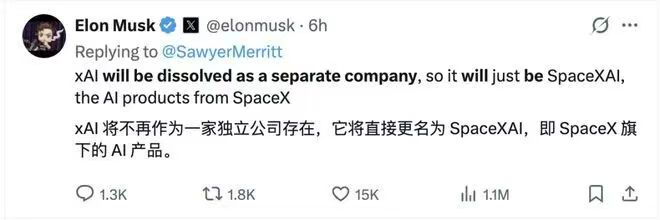
On May 6, Musk announced the disbandment of xAI, officially revoking its independent operational status, sparking global heated discussions. Before shutting down xAI, he had already been pushed to the forefront due to a series of setbacks in his core businesses, delays in his Mars dream, and a high-profile lawsuit with Altman.
 ▲ Note: Image sourced from X
The aura of the 'tech genius' is being constantly eroded in the harsh reality of commercial competition. Has Musk, once invincible and revered as a 'deity' by countless followers, truly 'fallen from grace'?
| Compromises and Retreats: The Inevitable End of xAI |
If modern tech history is a ruthless tale of burning money and elimination, then the downfall of xAI is undoubtedly its most expensive and dramatic chapter.
An AI star company, established for less than three years and once valued at a soaring $250 billion, was unexpectedly merged into SpaceX in its entirety, downgraded to an internal product line named 'SpaceX AI.'
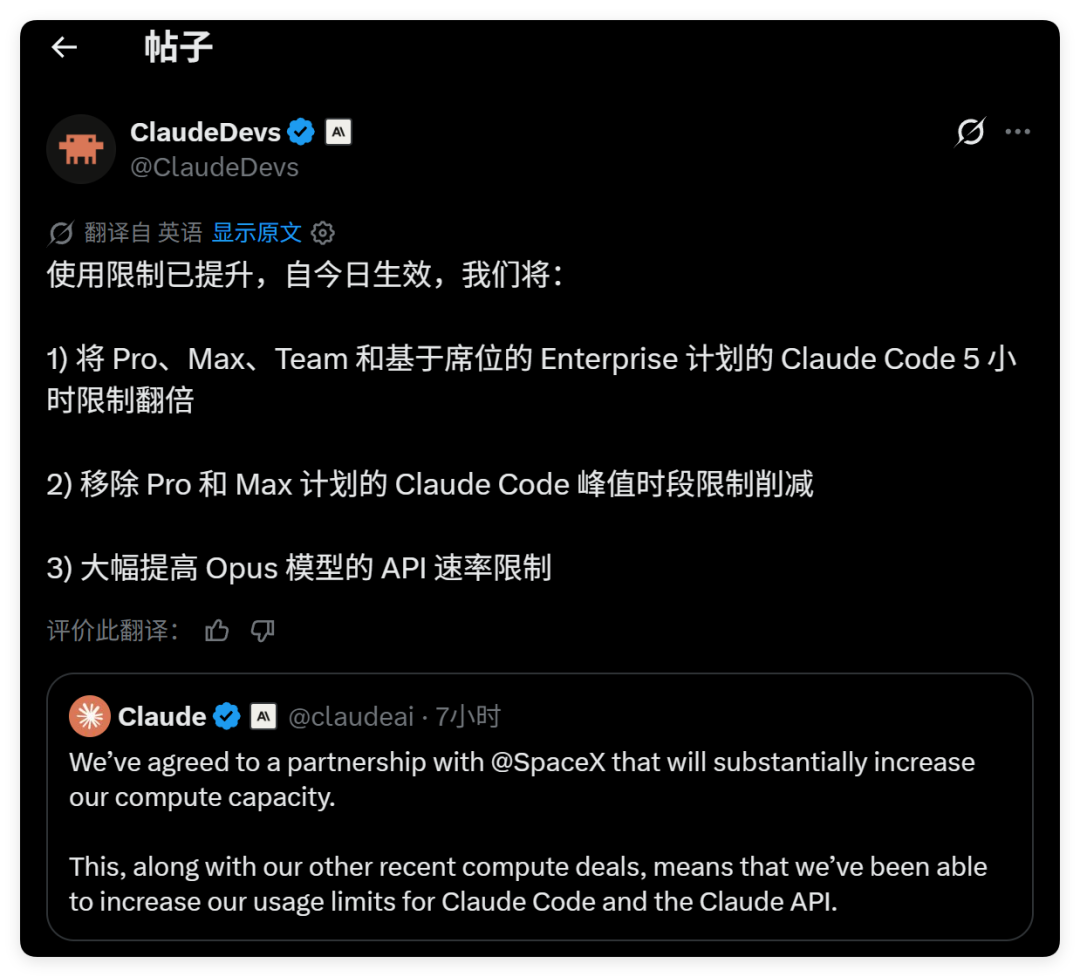
Even more surreal is that on the same day of the disbandment announcement, Musk leased Colossus 1, the supercomputing cluster originally allocated to xAI and built in Memphis at a cost of billions of dollars—featuring 220,000 NVIDIA GPUs—exclusively to Anthropic, currently OpenAI's fiercest rival.
Why would an AI giant valued at hundreds of billions 'self-dismantle' in just a few months? What hidden frustrations and calculations lie behind this seemingly 'self-defeating' move by Musk?
In fact, xAI had become a 'money pit' before its disbandment. Public financial projections show that xAI's monthly burn rate reached $1 billion in 2025, consuming $8 billion in cash in the first nine months and projected to incur a loss of about $13 billion for the year.
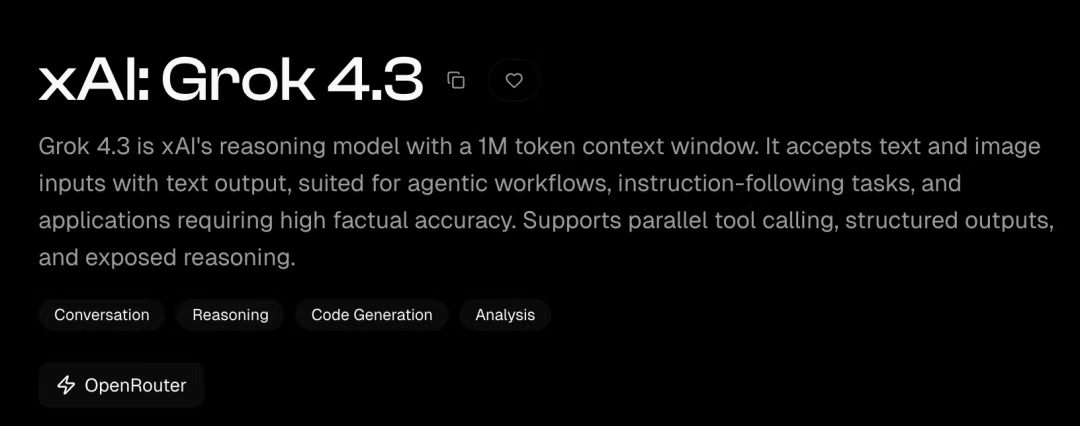
Such massive investments did not translate into core competitiveness in product offerings. Its flagship large language model, Grok, although touted as 'rebellious' and 'pursuing absolute truth,' has consistently lacked a strong presence in the real developer ecosystem and enterprise-level markets.
 ▲ Note: Image sourced from X
Despite stockpiling approximately 550,000 GPUs, xAI's actual floating-point operation utilization rate was a mere 11%. In contrast, similar clusters at Meta and Google boasted utilization rates exceeding 40%. Vast computational power was thus wasted on ineffective scheduling and standby.
Even more fatal was the mass exodus of talent. By the end of March 2026, all 11 of xAI's original co-founders had departed, and the core R&D team underwent a 'complete overhaul.' Without top architects and algorithm scientists, even the abundance of GPUs became nothing more than giant power-consuming heaters.
Under attack from all sides, merging xAI into SpaceX, valued at $1.25 trillion, to secure stronger group financing endorsements became the only viable option for survival.
Leasing 220,000 GPUs to Anthropic was a shrewd move of 'using an enemy's enemy to eliminate the enemy.'
Amid the heated legal battle with Altman, since Grok could not defeat ChatGPT in consumer and business markets in the short term, why not directly arm OpenAI's biggest competitor? After all, the enemy of my enemy is my friend.
Upon receiving this 'timely' computational power boost, Anthropic immediately lifted peak-time restrictions on Claude Code and doubled its usage quota, directly threatening OpenAI's market share.
 ▲ Note: Image sourced from X
At the same time, this marked Musk's strategic shift from being a 'gold prospector' to a 'water seller.'
The main GPUs delivered to Anthropic were from the previous-generation Hopper architecture. In 2026, with NVIDIA's Blackwell architecture fully rolled out, these older cards faced imminent significant depreciation risks. Rather than letting them gather dust in warehouses and incur hefty electricity bills, repackaging them as computational leasing services made sense.
According to Wall Street analysts, this deal could generate $3-4 billion in annual stable revenue and $2.5 billion in cash profit for SpaceX.
Moreover, Musk did not abandon the AI race but shifted the computational power for training the next-generation Grok to a full Blackwell architecture-based Colossus 2. Furthermore, rumors surfaced that SpaceX planned to acquire Cursor, a top AI programming tool, for $60 billion and had even allowed some Cursor employees to work in xAI's offices for transition.
Abandoning direct confrontation in the quagmire of general-purpose large models, Musk instead focused on building underlying computational infrastructure while directly purchasing developer application layers with absolute stickiness and profitability. In the AI battle, Musk may seem to retreat but has not exited the game.
| Core Business Stalls: Dual Setbacks for Tesla and Mars Dream |
The contraction in the xAI battlefield is just one corner of the crisis. The stall in Musk's core businesses and their cascading effects have left him even more beleaguered.
For a long time, Tesla has been the cornerstone for Musk to generate cash flow, leverage capital, and sustain his vast tech ecosystem.
However, in 2025, Tesla's total revenue was $94.827 billion, down 3% year-on-year. This marked Tesla's first annual revenue decline since its inception and scaling delivery records. Net profit plummeted by 46% to just $3.794 billion, a quarter of its peak in 2023.
In the global new energy vehicle market, especially the fiercely competitive Chinese market, the counterattacks of traditional automakers and the rapid rise of new players have eroded Tesla's once-proud first-mover advantage. Flagship models Model 3 and Model Y are nearing the end of their product life cycles, with no groundbreaking replacements in sight. The highly anticipated Cybertruck, constrained by production ramp-up and high manufacturing costs, failed to become a new profit pillar.
 ▲ Note: Image sourced from Tesla
To maintain market share, Tesla launched wave after wave of global price wars. The 'price-for-volume' strategy not only failed to halt slowing sales growth but also severely eroded profitability.
Tesla has never been just an automaker; it is also the 'cash machine' for Musk's grand Mars dream. When Tesla's profitability contracts, Musk's cherished 'Mars colonization plan' also suffers setbacks.
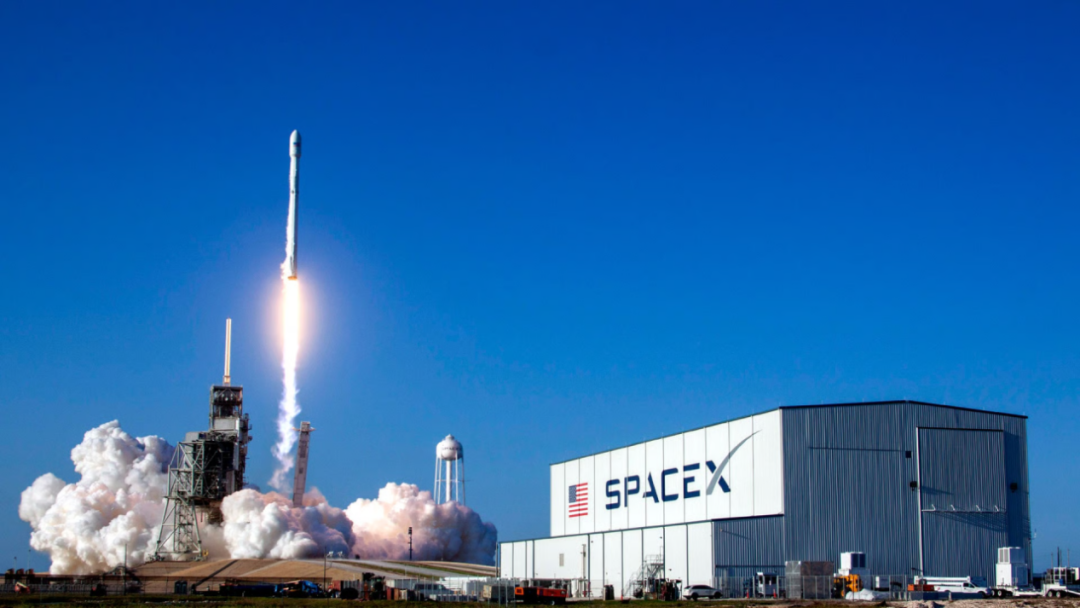
Musk has repeatedly painted a grand interstellar blueprint in public: transporting 1 million humans to Mars by 2050 to establish a self-sustaining permanent human settlement.
This crazy immigration goal imposes extremely stringent engineering requirements. To sustain the material consumption of a million people, at least 1,000 Starships must be built, with three high-frequency launches per day and millions of tons of materials sent into orbit annually. The financial cost behind this is an astronomical figure beyond estimation.
 ▲ Note: Image sourced from X
According to aerospace industry estimates, the Starship project has accumulated over $15 billion in R&D funding to date. Each iteration of the Raptor engine and every test flight explosion at Boca Chica's Starbase burns through hundreds of millions of dollars.
Previously, Musk could finance these cutting-edge projects by pledging Tesla shares at high valuations or relying on Premium valuation . However, with Tesla's core business wavering and net profit halved, financial strain has substantively spread throughout the group.
The gravity of reality is pulling Musk's the starry sea . Constrained by funding pressures, technical bottlenecks like Starship's orbital recovery reliability, and stringent environmental approvals from the U.S. Federal Aviation Administration, the Mars plan's timeline has been repeatedly postponed. The originally promised 2026 unmanned Mars mission has become unattainable.
According to reports, SpaceX is planning the largest IPO in human history in mid-2026, targeting a valuation of $1.75-2 trillion. To support this staggering valuation, Musk's recent plans aim to package a grand narrative of 'rocket launches + Starlink broadband + space AI data centers.'
However, when the underlying economic foundation shows signs of collapse, investors are less willing to unconditionally fund distant and expensive sci-fi visions. The delay of the Mars dream is not just an objective law of technological development but also a reflection of Musk's commercial empire's strained finances.
| Reputation Reversal: From Geek Leader to Power Player |
Commercial setbacks, product line contractions, and performance declines can be gradually mitigated through strategic adjustments. However, the collapse of public image, reputation reversal, and loss of trust are the deepest and most irreversible crises Musk faces today.
Once, Musk was a spiritual totem for global tech enthusiasts, environmentalists, and futurists. In the media's deification campaign, he was portrayed as a pure 'geek leader' fighting against worldly conventions for humanity's fate.
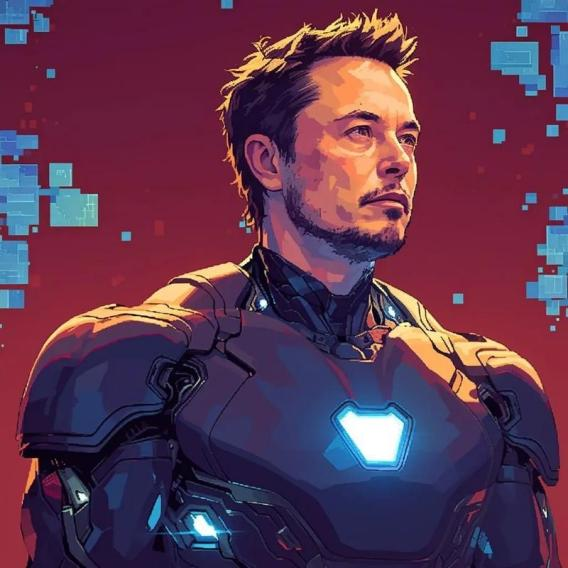
Building electric vehicles at all costs was to free humanity from fossil fuel dependence and save the Earth's environment; launching rockets at the risk of bankruptcy was to prevent Earth's annihilation and make humanity a multi-planetary species. In this mythic narrative, he was the real-life prototype of Marvel's 'Iron Man,' an idealist forever gazing at the stars.
 ▲ Note: Image sourced from Musk Says
However, in recent years, this 'dragon-slaying youth' has become mired in worldly quagmires.
He abandoned his earlier geek image of maintaining a cautious distance from politics and began to high-profilely and deeply intervene American political landscapes. From spending heavily to acquire Twitter and positioning himself as a 'free speech absolutist' to unblocking numerous controversial far-right accounts, to forming complex Interest binding and frequent interactions with political figures like Trump, Musk has pushed himself to the forefront of global cultural conflicts.
He seems to have forgotten that Tesla's early establishment of a high-end, environmentally friendly brand image relied heavily on the strong support of liberal elites, middle-class consumers, and environmentalists in California, New York, and elsewhere. When Musk frequently posted controversial political remarks on social media and attacked diversity and inclusivity policies, these initial supporters felt anger and betrayal.
When every statement by an entrepreneur is labeled with partisan tags, his products inevitably become casualties of political polarization. Many potential consumers began rejecting Tesla out of disgust for Musk himself, causing brand favorability to plummet in multiple independent surveys.
Political maneuvering did not provide a stronger moat for his commercial empire but instead became a catalyst for tearing apart his audience and eroding core brand assets.
His legal battle with Sam Altman, OpenAI's current CEO and former close ally, over OpenAI's non-profit origins similarly revealed Musk's controlling and 'power-playing' side.
During the trial in Oakland Federal Court, the public saw not the prophet who had once raised his arms to prevent AI from destroying humanity but rather a shrewd businessman unwilling to accept of missing out on OpenAI's astonishing wealth feast and watching his former protégé grow powerful.
As evidence disclosure proceeded, numerous internal emails from earlier years were made public, stripping away Musk's noble disguise of 'benefiting all humanity' and exposing the naked power struggles, contend for for absolute control, and financial calculations within OpenAI's founding.
Excessive political entanglements and frequent legal battles have drastically drained Musk's energy and credibility as a cross-border entrepreneur. When the public sees daily news not of him announcing revolutionary battery technologies or rocket engines but of his political spats on social media, his aggressiveness in court, and his ruthless purges of employees, the 'geek leader' aura gradually shatters.
All signs indicate that by 2026, Musk has fallen from the clouds of idealism into the commercial deep waters of worldly interests and power struggles. Of course, amid the crisis, he still possesses the globally irreplaceable Starlink network, the world's most advanced heavy-lift rocket technology, and his brain-computer interface company continues to push the boundaries of medical technology.",
-
![]()
Why Does Jensen Huang So Openly Praise China’s AI?
-
![]()
"Wudang" Unveiled: Arm China's Next-Gen AI VPU Redefines Video Encoding
-
![]()
From Energy Conservation and Carbon Reduction to AI Decision-Making: GECON East Intelligence and Chery Group Explore a New Green and Smart Paradigm for Automobile Manufacturing
-
![]()
WAIC 2026 Observation | AI Accelerates Towards the Core of Industries, Industrial AI Enters a Critical Phase
-
![]()
Volkswagen China Fires the First Shot in Foreign-Funded 'White Box Delivery'!
-
![]()
AI Agent Smartphones: The Next Competitive Edge Transcends Large Models
-
![]()
Over 880 Million Yuan Worth of Orders Unveiled, Bidding Launched for Shenzhen Eastern Public Transport
-
![]()
Tesla's Robotaxi Hits the Road: A Monumental Gamble with an Uncertain Future