Kuaishou’s Kling Emerges as Tencent’s Strategic Asset
 05/15 2026
 495
495
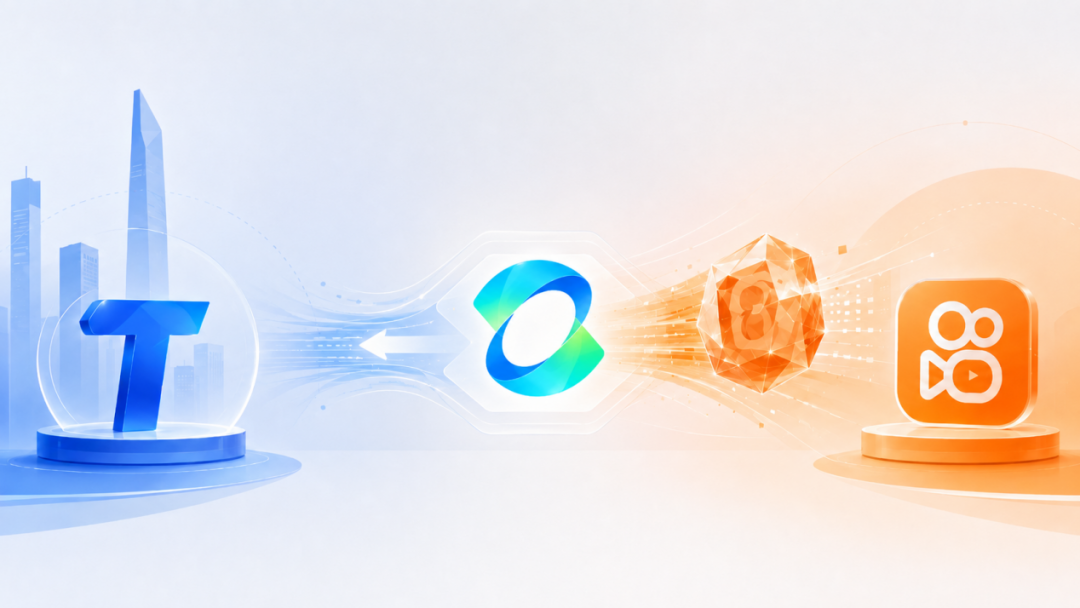
ByteDance and Alibaba Show No Urgency, So Why Are Kuaishou and Tencent Acting Now?
Author | Ai Ti Editor | Gu Nian
Kuaishou’s decision to spin off Kling seems to reevaluate its market worth. However, beneath the surface, it appears that Tencent has finally found a valuable asset to bolster its AI arsenal.
On May 11, market reports revealed that Kuaishou plans to spin off its video generation large model business, Kling AI, with a valuation of $20 billion, aiming to raise approximately $2 billion in funding and push for an independent listing. Additional details from LatePost indicated that Tencent is among the potential investors.
On May 12, Kuaishou announced in a Hong Kong Stock Exchange filing that its board is assessing a restructuring plan for Kling AI’s assets and business, which may involve external financing. However, the plan is still in its preliminary stages, and no final agreement has been reached.
The announcement was cautious, but the capital markets responded with clarity. Kuaishou is isolating its most promising AI asset from the parent company to assign it a distinct valuation, secure financing, and create a compelling narrative.
However, this development cannot be viewed solely from Kuaishou’s perspective.
From Kuaishou’s standpoint, it is unlocking the valuation potential of Kling. From Tencent’s perspective, it may be filling a crucial gap in its AI capabilities.
Tencent may not be the primary driver of this spin-off, but it could emerge as the most eager potential beneficiary.

Who Is Driving Kling’s Spin-off?
Within Kuaishou, Kling operates as an AI business. If spun off, it could become an AI video unicorn. The former is valued as a short-video platform, while the latter is priced as an AI asset.
Kuaishou is well aware of this dynamic.
In 2025, Kuaishou reported annual revenue of RMB 142.78 billion, adjusted net profit of RMB 20.6 billion, an average of 724.6 million monthly active users, and e-commerce GMV nearing RMB 1.6 trillion. It is already a mature platform company with strong cash flow, improved profits, and a solid foundation.
However, mature platforms face their own set of challenges.
The growth narratives for Kuaishou’s main site and e-commerce business are no longer novel. But Kling is different—it has already started generating revenue.
Kuaishou CEO Cheng Yixiao previously disclosed that based on January revenue, Kling’s annualized revenue run rate had exceeded $300 million. Subsequently, multiple media outlets cited insiders stating that by May, Kling’s ARR had grown from $150 million in December of the previous year to around $500 million.
This is what makes Kling valuable, but it also presents a problem.
Kling is Kuaishou’s most innovative asset. Spinning it off allows for financing, team incentives, and a compelling AI unicorn story for the market.
But after the spin-off, will Kling still prioritize serving Kuaishou?
This is the risk Kuaishou faces. Internally, Kling is Kuaishou’s weapon; externally, it must first answer to its investors. Once the weapon is handed over, it may not solely follow its original owner’s commands.
This is a familiar investment strategy for Tencent: waging proxy wars.
When Tencent struggled in e-commerce, it eventually integrated assets like QQ Online Shopping, Paipai, and Yixun Logistics into JD.com, also providing JD.com with access to WeChat and Mobile QQ. Tencent did not personally overthrow Alibaba but elevated JD.com as Alibaba’s long-term rival.
A similar logic applies to Pinduoduo.
Tencent did not need to create another social e-commerce platform; instead, it leveraged the WeChat ecosystem and Tencent’s capital to foster Pinduoduo’s growth. Meituan, Kuaishou, Bilibili, and Zhihu have all served as “external weapons” in different positions within Tencent’s investment portfolio.
This is Tencent’s expertise: if it can’t compete directly, it invests in someone who can. If it doesn’t want to enter the fray itself, it supports a proxy to do so.
The hallmark of Tencent’s investment strategy is not just financial returns but its ability to transform investments into strategic positions. JD.com is the e-commerce weapon against Alibaba, Kuaishou is the short-video weapon against Douyin, and Meituan is a key ally in local services and payment ecosystems.
Now, as the AI war reaches video generation, Tencent lacks a weapon.
Hunyuan is Tencent’s self-developed large model, but it leans more toward text, code, and intelligent agent foundations. Hy3 preview achieved 3.66 trillion Token weekly calls on OpenRouter, ranking first overall and in programming and tool-calling scenarios, demonstrating that Tencent’s text model finally has a winning point worth discussing.
However, the AI application battlefield is shifting from text to visuals.
According to a recent report by app data analytics firm Appfigures, AI mobile app download increments driven by image and video model updates are 6.5 times higher than those from traditional model updates. Gemini’s image model launch resulted in over 22 million new downloads in 28 days, while ChatGPT’s image capabilities brought over 12 million incremental installations.
Average users may not understand large model parameters, but they can appreciate an image, a video, or a dynamic meme.
This is Tencent’s dilemma.
Over the past year, Tencent has been active in models, product entry points, and ecological scenarios. Yuanbao needs stronger content expression capabilities, Hunyuan requires multimodal enhancements, the WeChat ecosystem needs lower-barrier content generation tools, Tencent Advertising needs reduced creative production costs, and gaming, animation, film, and IP businesses all require video generation capabilities.
However, in the video model space, Tencent has not established strong external recognition.
In contrast, ByteDance has Seedance, Alibaba has Happy Horse, and Kuaishou has Kling. At least in the high-visibility scene of video generation, they have secured positions that users can discuss, experience, and share.
Tencent is not lacking in entry points, but in these scenarios, it still lacks a visual generation capability perceivable by ordinary users—which is where Kling holds value for Tencent.
It is not just a pure technological concept but a mature, revenue-generating, overseas market-penetrating weapon with video generation capabilities, perfectly handed to Tencent.

Potential Beneficiaries of Kling’s Spin-off
If Kling remains within Kuaishou, it primarily serves Kuaishou’s main site, e-commerce, advertising, and creator ecosystem. For Tencent to deeply utilize Kling, it would need to negotiate within Kuaishou’s broader framework.
However, once Kling is spun off, things change.
An independent company’s top priorities are financing, growth, commercialization, and valuation. It needs more external clients and larger application scenarios. If Tencent invests, it will not just indirectly benefit as a Kuaishou shareholder but directly position itself within Kling’s capital and business chain.
This is highly advantageous for Tencent.
First, Tencent can address its visual model gaps.
Yuanbao needs to catch up with Doubao and Qianwen, and it cannot rely solely on chat. An AI assistant with powerful video generation capabilities is less likely to become a “responsive but unexciting” tool. Kling can provide Yuanbao with a more intuitive growth hook.
Second, Tencent can integrate Kling into its content ecosystem.
Official accounts, WeChat Channels, Tencent Docs, Tencent Meeting, Enterprise WeChat, advertising platforms, and game promotions are all major consumers of visual content. For Tencent, Kling is not an isolated model but a content production infrastructure.
Third, Tencent can continue leveraging external companies to counter ByteDance.
ByteDance’s video generation capabilities are already formidable. After integrating Seedance 2.0 into Jimeng and CapCut, ByteDance has a complete closed loop in creator toolchains: generation, editing, distribution, and monetization.
For Tencent to develop these capabilities internally would be too slow. Investing in Kling to facilitate its spin-off is much faster.
This is Tencent’s pragmatism: do what it can itself, and invest in what it cannot quickly achieve. In the large model war, Hunyuan is Tencent’s shield, and Kling can become its weapon.
For Kuaishou, spinning off Kling also has benefits.
It can release valuation potential, secure external funding, provide better team incentives, and prompt the market to reassess Kuaishou’s AI value. Kuaishou has long been pigeonholed by labels like “country folks,” “lower-tier markets,” and “live-streaming.” Kling offers a story of an AI unicorn emerging from the soil.
However, spin-offs are not cost-free.
First, once independent, Kling will have its own growth targets.
It will pursue higher revenue, greater valuation, and broader clientele rather than solely serving as a tool for Kuaishou’s ecosystem. In the short term, this allows Kling to grow faster; in the long term, it may weaken Kuaishou’s control over Kling.
Second, Kuaishou may prematurely separate its most promising future asset.
Kuaishou’s main site is a mature business, while Kling is a growth business. Mature businesses provide profits, while growth businesses offer imagination. After the spin-off, Kuaishou’s parent company may resemble a traditional content e-commerce platform.
Investors might ask: What imagination remains in the parent company after Kling’s spin-off?
Third, if Tencent becomes a significant investor in Kling, its strategic focus may shift.
Kuaishou naturally hopes Kling will serve its creators, e-commerce, advertising, and overseas businesses. However, Tencent’s ecosystem is vast—Yuanbao, WeChat, Channels, advertising, gaming, and docs—each capable of consuming substantial Kling resources.
This is the delicacy of the situation.
Kuaishou spins off Kling to let it grow, but once grown, it may not solely fight for Kuaishou. If Tencent deeply enters, Kling could transition from “Kuaishou’s AI video business” to “Tencent’s AI visual infrastructure.”
This is good for Tencent but not necessarily entirely so for Kuaishou.
-
![]()
From Energy Conservation and Carbon Reduction to AI Decision-Making: GECON East Intelligence and Chery Group Explore a New Green and Smart Paradigm for Automobile Manufacturing
-
![]()
WAIC 2026 Observation | AI Accelerates Towards the Core of Industries, Industrial AI Enters a Critical Phase
-
![]()
Volkswagen China Fires the First Shot in Foreign-Funded 'White Box Delivery'!
-
![]()
AI Agent Smartphones: The Next Competitive Edge Transcends Large Models
-
![]()
Over 880 Million Yuan Worth of Orders Unveiled, Bidding Launched for Shenzhen Eastern Public Transport
-
![]()
Tesla's Robotaxi Hits the Road: A Monumental Gamble with an Uncertain Future
-
![]()
Ford and Geely Forge New Joint Venture in Spain, Sidestepping Changan and JMC
-
![]()
199 RMB! Godox's First Camera Review: Subpar Photography, Transparent Viewfinder Frame is the Highlight