ByteDance Bets 177.8 Billion Yuan on Southeast Asia's Computing Power Hub? Electricity Replaces GPUs, Reshaping the Computing Power War! Trillion-Dollar Race: Who Controls Electricity, Rules the World
 05/15 2026
 598
598
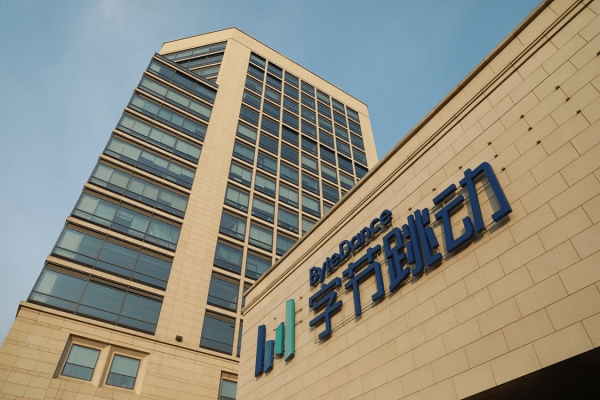
The computing power competition shifts to electricity, with liquid cooling, green power, and self-generated power becoming critical.
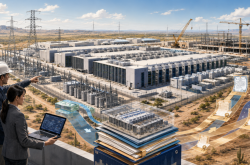
Foresee Energy has learned that on May 7, ByteDance's TikTok System Thailand secured approval for an 842 billion baht (approximately 177.8 billion yuan) data center investment, spanning Bangkok, Samut Prakan, and Chachoengsao provinces to expand server clusters and data processing facilities. On the same day, a shareholder, Sungrow, announced that a subsidiary established just one month prior had signed a framework contract for computing power services worth up to 19 billion yuan, with market speculation pointing to ByteDance as the client.
In the first quarter of this year, Xiechuang Data's computing power business revenue surged by over 1,700% year-on-year, while Runze Technology's AIDC revenue grew by more than 70%, solidifying the industry's high growth trajectory. However, behind these two major contracts, a deeper trend is emerging: as single-chip power consumption reaches 1,400W, single-rack power exceeds 50kW, and electricity costs account for over 60% of operational expenses, the key to winning the computing power race is no longer GPUs but electricity—securing low-cost green power, mastering liquid cooling, and possessing self-generated power capabilities are now prerequisites for staying in the game.

Liquid Cooling: From Cost-Saving to Survival
Material Suppliers Accidentally Secure a Spot in the Computing Power Race
The power consumption of GB300 single chips has soared from 700W in the H100 to 1,400W, transforming liquid cooling from a "cost-saving option" into a "delivery necessity." Without liquid cooling solutions, servers simply cannot operate.
This has brought a group of material-side enterprises to the forefront. Dongyangguang's fluorinated coolant research, initiated in 2016, capitalized on the third-generation refrigerant quota bonanza, driving a over 50% year-on-year revenue increase in chemical new materials by 2025 and extending directly into liquid cooling systems. After acquiring Suzhou Datu Thermal Control, the company now has an annual production capacity of 300,000 cold plate modules and 4,200 CDUs. Combined with the 28 billion yuan acquisition of Chinhui Data's 799MW operational capacity in China in 2025, a complete chain from fluorochemical materials to liquid cooling systems, data center operations, and finally, computing power leasing delivery has been established.
This is not a crossover but a vertical integration of the industrial chain. By 2026, AI chip liquid cooling penetration will exceed 50%, with new AI cabinets surpassing 70%. Guohai Securities estimates that the global AIDC liquid cooling market will exceed 100 billion yuan this year.
Delta Electronics, a leader in AI data center power supplies and liquid cooling, achieved record quarterly revenue of 161.6 billion New Taiwan dollars in the fourth quarter of 2025. By 2026, data center business will account for over 50% of its revenue, with its expanded liquid cooling component production capacity in Thailand directly catering to the tidal wave of Southeast Asian data center construction.
While liquid cooling addresses heat, 60% of data center operational costs remain electricity expenses. This presents the second critical window.

Data Centers No Longer Compete for Land
They Compete for Green Power Quotas
The 2026 government work report included "computing-electricity synergy" as a national-level new infrastructure initiative for the first time. The 15th Five-Year Plan simultaneously set mandatory targets: new data centers in national hub nodes must achieve over 80% green power usage, with western intelligent computing centers maintaining a PUE (Power Usage Effectiveness) ≤1.20. Data center site selection is shifting from "where land is available" to "where green power is accessible."
On May 2, China's first large-scale computing-electricity synergy green power direct supply project—the Zhongwei Cloud Base 500MW photovoltaic power station—officially commenced operations. On May 8, Gansu Energy's stock price surged to the daily limit within four minutes of trading, driven by the first batch of units from the Qingyang "East Data West Computing" industrial park's 1,000MW new energy project going online. Datang Power's three consecutive trading day limits followed the same logic: companies controlling green power assets are no longer just "power sellers" but essential for computing power delivery.
Green power operators like CSG Storage and GCL-Poly Energy continue to strengthen in the A-share market, reflecting a unified market expectation: under the dual pressures of tightening PUE limits and carbon constraints, those offering green power direct supply, green certificate bundling, or wind-solar-storage integrated solutions will directly secure entry tickets to computing power infrastructure.
However, green power direct supply faces real-world grid capacity bottlenecks, with Thailand facing a "megawatt gap"—planned data center capacity of approximately 2.87GW, with the issue lying not in generation but transmission. Thailand's Electricity Generating Authority had to invest 31 billion baht to expand transmission lines in the Eastern Economic Corridor. Domestically, Qinghai Power Grid recently conducted its first cross-provincial medium- to long-term green power trading with Fujian, attempting to alleviate local grid congestion through cross-regional dispatch.
This points to the next direction: bypassing grid bottlenecks by building self-generated power capabilities.

The Grid Is Unreliable
Tech Giants Start Generating Their Own Power
In September 2025, ByteDance's procurement department issued a request for proposals for data center wind-solar-storage microgrids, directly procuring over 200MWh of large-scale lithium-ion energy storage and matching (matching) wind-solar equipment to reduce reliance on traditional power grids and explore autonomous, controllable campus energy systems.
This is the true essence of the 177.8 billion yuan Thai investment—ByteDance is not just building data centers but betting on an integrated "wind-solar-storage-computing power" generation and consumption model.
Tracing this logic further reveals a group of seemingly unrelated companies being connected by the same underlying principle.
Inno-Light, a leader in optical modules, is "leveraging light to save power." Its CPO all-optical switches, expected to enter mass production in the third quarter of 2026, offer an all-optical interconnection solution that significantly reduces the largest hidden electricity cost in data centers—power loss from inter-cabinet connections. In the first quarter of 2026, Inno-Light's revenue reached 19.496 billion yuan, up 191% year-on-year, driven by explosive growth in 800G and 1.6T high-end optical module shipments. The underlying energy-saving and emission-reduction essence is about reducing clients' electricity bills.
Dongyangguang, in collaboration with Chinhui Data and Delta Electronics, is advancing the SST solid-state transformer solution, with laminated foil capacitors already in supply. The goal is clear: minimize power distribution losses in data centers to extract more usable power from grid interfaces.
China Merchants Securities notes that energy storage for data centers has shifted from an "optional configuration" to a " rigid demand " (rigid demand). U.S. data center energy storage demand on the consumption side is expected to reach 116GWh by 2030, with a compound annual growth rate of 62% from 2025 to 2030.
Companies involved in energy storage, transformers, and optical modules are being tightened by the same logical chain: when electricity becomes the ultimate bottleneck for computing power, all technologies that save, generate, or dispatch power will become valuation anchors in this industrial chain.
-
![]()
AI Giants Start Borrowing to Fuel Computing Power Race
-
ByteDance Initiates Largest B2B Structural Adjustment, This Time It's Truly Different
-
![]()
Let's Talk About Kingsoft Office's Mid-Year Outlook and the True Strength of Its AI-Powered Office Solutions
-
Despite 150 Million Users, Struggles Persist: AIShige Faces Tough Competition from Seedance and Kling in AI Video Monetization
-
![]()
Ensuring Safe Gear Shifting in the Automotive Industry: Transitioning from 'Product Oversight' to 'Full-Chain Governance'
-
![]()
Net Profit Soars to $133.7 Billion! Azure Revenue Tops $100 Billion, with AI Fueling Microsoft's Growth
-
![]()
Before 6G Hits the Market, the U.S. Forges a 'Rules Alliance': What Challenges Await Chinese IoT Enterprises?
-
![]()
Intelligent Driving's 'Little Blue Light' Faces Ban: Night Glare and Cut-in Risks Prompt Official Action