NVIDIA’s Trillion-Dollar Backlog: It’s No Longer Just About Chips
 05/15 2026
 554
554
Source | Home Appliance Pie (jiadpai)
Author | Xiaoxiao
Future job interviews might start with: “What’s your annual Token allocation?”
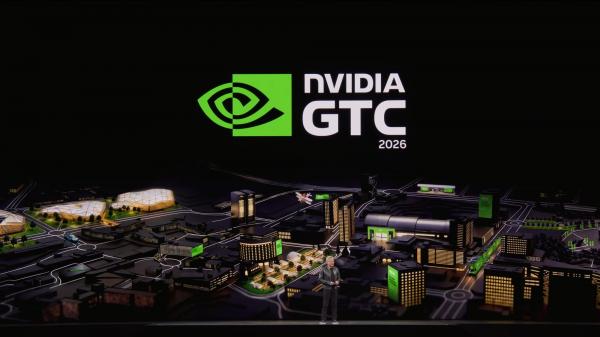
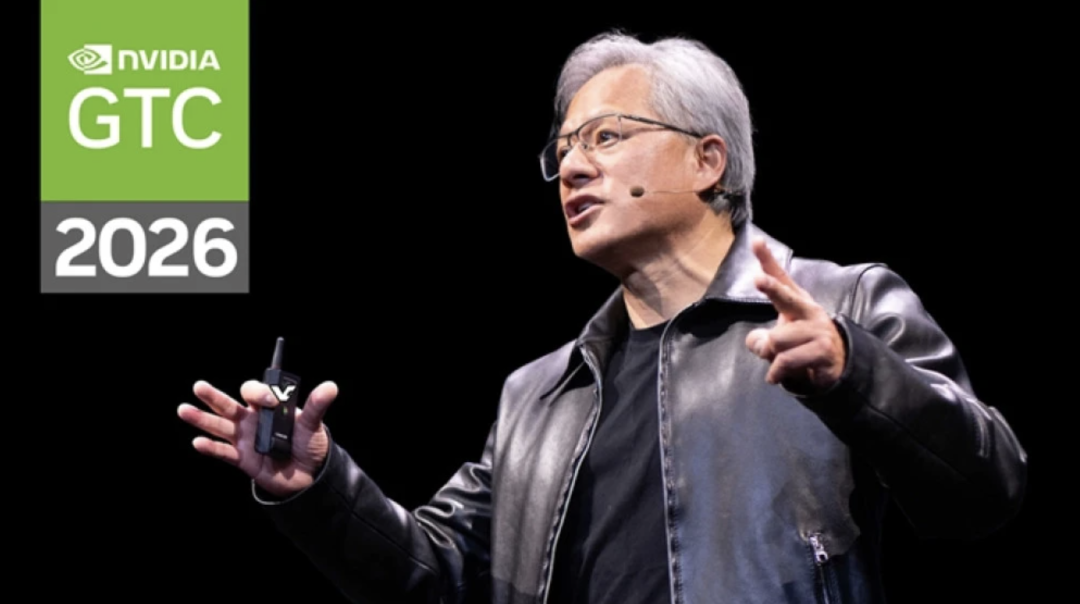
If you missed the seismic shift at the 2026 GTC Conference, here’s the essence: Jensen Huang (Huang Renxun) transformed AI from “alchemy” into “money printing.”
For the past two years, AI debates centered on model parameters and training cluster sizes. At this year’s GTC, Huang flipped the script: “Let’s stop obsessing over chip specs and talk about Token Economics instead.”
Yes, you read that correctly—NVIDIA is now discussing economics.

Trillion-Dollar Backlog: Not Just Hype—Real Shortages Exist
Let’s cut to the most explosive revelation. At GTC, Huang dropped a bombshell: By the end of 2027, orders for NVIDIA’s Blackwell and Vera Rubin architectures alone are projected to hit $1 trillion. To put this in context, the entire global semiconductor market in 2025 was just over $700 billion. NVIDIA’s two product lines are set to surpass that figure within two years.
Even more staggering? When analysts pressed Huang about supply chain constraints, he shrugged: “We still owe customers a lot of GPUs.” The H100 remains priced above its original MSRP, the H200 is fully booked until Q2 2027, and the Blackwell sold out instantly post-launch. This isn’t artificial scarcity—it’s genuine production bottlenecks.
Why? Because NVIDIA has secured 70% of the world’s advanced CoWoS packaging capacity. TSMC’s production lines are plastered with NVIDIA’s order labels. In simpler terms, half of NVIDIA’s current market valuation hinges on TSMC’s packaging machines.

Token Economics: The ‘Petrodollar’ of AI Compute
But Huang’s real masterstroke isn’t selling GPUs—it’s redefining the value of compute. He introduced a groundbreaking concept: Token Economics. Confused? Let’s break it down.
A Token is the smallest unit of AI language understanding and generation. When you ask ChatGPT a question and it responds with a paragraph, that response is composed of countless Tokens. Every inference, interaction, or AI agent task consumes Tokens.
Traditionally, compute power was sold by the “GPU.” NVIDIA now argues: Stop buying by the GPU—buy by the Token. Why? Because future data centers won’t be warehouses—they’ll be AI factories. Their raw materials are electricity and chips, and their output is Tokens. Whoever maximizes “Tokens per watt” can produce the most “digital goods” at the lowest cost.
Huang even predicted: Future job offers will include “annual Token budgets.” Imagine starting a new role and hearing HR say: “Your Token quota this year is 10 billion. Visit the CTO for more when you run out.”
Absurd? Think again. Engineers already rely on Copilot. Soon, every employee might have an AI agent writing code, generating reports, and replying to emails—all consuming Tokens.
NVIDIA has ingeniously rebranded GPUs—a “means of production”—into a tradable, subscribable “currency.”
Just as the oil era had “per barrel,” the internet era had “per thousand impressions,” the AI era’s hard currency is “per million Tokens.”

‘Lobster’ Arrives: AI Can Finally Use Computers Like Humans
Another GTC bombshell was OpenClaw, nicknamed “Lobster.” Why the hype? Because it lets AI operate computers like humans.
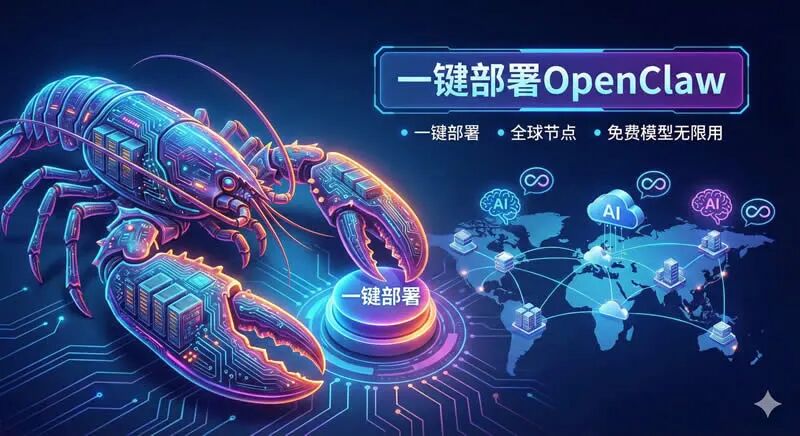
Previously, AI was powerful but limited to “conversation.” To get it to perform tasks, users had to copy-paste, tweak APIs, or write scripts. OpenClaw eliminates that layer. Tell it, “Book me a flight,” and it opens a browser, logs into Ctrip, selects dates, checks out, and pays—all autonomously.
When Huang demoed this on stage, the audience erupted. Why? Because it marks AI’s evolution from “chatbot” to “digital employee.” This employee never sleeps, doesn’t require benefits, and operates 24/7.
This explains NVIDIA’s trillion-dollar confidence. One “digital employee” consumes hundreds of times more Tokens than an average user. When OpenClaw-like agents go mainstream, Token consumption will explode exponentially.

Supply Chain Chaos: Everyone’s Short on Stock Except Huang
But it’s not all smooth sailing. The trillion-dollar backlog exposes a severely imbalanced supply chain.
First, production capacity is concentrated at TSMC. NVIDIA, AMD, and even companies developing in-house chips all compete for TSMC’s CoWoS lines. Geopolitical tensions send shivers through the industry.
Second, cooling has become a new bottleneck. The Vera Rubin system is already 100% liquid-cooled—using 45°C hot water (yes, hot water). Why? Because air cooling can’t handle the density.
Third, optical modules are in short supply. NVIDIA is pushing CPO (co-packaged optics), but scaling production takes time. For now, cabinets rely on copper cables as a temporary solution.
The result? Demand-side euphoria meets supply-side nightmares. Customers can’t buy GPUs, NVIDIA can’t secure enough production capacity, and TSMC works overtime but can’t keep up.
The only one smiling? Huang.

NVIDIA is Reenacting the Industrial Revolution
The 2026 GTC Conference told a compelling story: NVIDIA is no longer a chip company—it’s a Token production equipment manufacturer. Like steam engine makers during the Industrial Revolution, it doesn’t sell iron clunks—it sells “horsepower.” Except this time, “horsepower” is Tokens.
Huang said something memorable: “Every company will become an AI company, and every AI company is essentially a Token factory.”
If this prediction holds, NVIDIA’s trillion-dollar backlog might just be the appetizer.
Of course, risks remain. Google’s TPU, AMD’s MI400, and even Anthropic’s shift to in-house chips loom large. If AI architectures evolve beyond Transformers, how long will NVIDIA’s moat last? No one knows.
But today, Huang stands on the GTC stage, holding TSMC’s production capacity, pocketing trillion-dollar orders, and preaching “Token Economics.”
The scene feels like Bill Gates pitching “a computer on every desk” 20 years ago.
Will history repeat? I don’t know. But I do know this: If you haven’t heard of Token Economics, start studying. Because next time you interview, HR might just ask—“What’s your expected Token budget?”
-
![]()
AI Agent Smartphones: The Next Competitive Edge Transcends Large Models
-
![]()
Over 880 Million Yuan Worth of Orders Unveiled, Bidding Launched for Shenzhen Eastern Public Transport
-
![]()
Tesla's Robotaxi Hits the Road: A Monumental Gamble with an Uncertain Future
-
![]()
Ford and Geely Forge New Joint Venture in Spain, Sidestepping Changan and JMC
-
![]()
199 RMB! Godox's First Camera Review: Subpar Photography, Transparent Viewfinder Frame is the Highlight
-
![]()
AI Smartphones: A Modern-Day 'Emperor's New Clothes'?
-
![]()
Yonyou Network: A Company Selling 'Transformation' but Struggling in Its Own Transition
-
![]()
Focus | CCCC’s Takeover of Greentown Comes to Fruition: Why Did the 11-Year ‘Control Without Authority’ Era End?