Twelve Years On, Can Cheng Yixiao Steer Kling to Another Victory?
 05/15 2026
 564
564

Author|Lin Yang
Editor|Hu Zhanjia
Operations|Chen Jiahui
Produced by|LingTai LT (ID: LingTai_LT)
Header Image|Publicly available online
On Monday, May 12, less than ten minutes after the opening of the Hong Kong stock market, Kuaishou-W's stock price soared, opening nearly 10% higher and reaching a new peak since March 19.
The news had already circulated in the market the previous night.
Kuaishou is set to spin off Kling with a valuation of $2 billion and plans to raise $200 million in funding, with Tencent already in discussions. What do these figures signify? Kuaishou's overall market capitalization stands at just under $29 billion. An AI business launched less than two years ago is already valued at nearly half of its parent company. The capital markets are not naive—they sense something significant is afoot: Kuaishou's value is undergoing a fundamental reassessment.
In the U.S. stock market, Kuaishou ADRs had already surged nearly 10% overnight. The next day, after the Hong Kong stock market opened, AI concept stocks collectively surged. Nobikam rose nearly 20%, while HaiZhi Technology surged over 8%. This was not just good news for one company—the entire sector was being revalued.
What Kuaishou is doing is not merely raising funds; it is drawing a new valuation curve in the capital markets.
By noon the next day, Kuaishou issued an announcement. The wording was formal: The board is evaluating a proposed restructuring of Kling AI-related assets and businesses, which may involve introducing external financing. However, it added: This is still at a preliminary stage, and no final agreements have been signed.
Leaving the door ajar.
But the market was not convinced—by the day's close, Kuaishou was up 1.94%, with significantly higher trading volume. Investors voted with their feet: What is valuable about Kuaishou may no longer be just short videos.
 A Twelve-Year Cycle
To comprehend Kling's move, one must first understand Cheng Yixiao.
In 2013, Kuaishou was still known as "GIF Kuaishou"—a modest tool for creating animated GIFs that would barely garner a second glance in today's App Store. Cheng Yixiao led the team in transitioning from a GIF community to short videos, timing it perfectly—just before the mobile internet boom.
With its inclusive distribution, "Laotie" culture, and decentralized operations, Kuaishou carved out a niche in the short video sector. It went public in 2021, setting a record for the largest IPO in Hong Kong. At the time, everyone believed Kuaishou's potential was boundless.
And then it began to decline.
In early 2023, Cheng Yixiao decided to focus on AI.
When GPT-4 was just released, most Chinese internet companies were still adopting a wait-and-see approach. Large models were prohibitively expensive, and the commercialization path was unclear. The investment might not yield any returns. But Cheng Yixiao was different—he had witnessed the mobile internet take off and understood how fleeting the window for technological revolutions could be.

Missing out once could mean missing out on an entire era.
At an internal meeting, he declared, "We need to focus on recommendation and video generation."
Many did not grasp the significance at the time. Recommendations made sense, but what was video generation? An AI capable of shooting videos? Was it worth the investment?
Twelve years ago, Cheng Yixiao led GIF Kuaishou's transition to short videos, securing the last ticket to the mobile internet era. Twelve years later, he stood at another crossroads. This time, he held Kuaishou's future in his hands.
Kuaishou's financials were laid bare: Full-year revenue for 2025 was 142.8 billion yuan, with adjusted net profit of 20.6 billion yuan. In the same period, ByteDance's revenue exceeded 1 trillion yuan, with net profit exceeding 350 billion yuan. Alibaba was also in the trillion-yuan range. Cheng Yixiao knew exactly where he stood—living in the shadows of giants, he needed a ticket to the next era.
Kling was that ticket.
The question was, how much was this ticket worth?
 The Speed of Kling
Kling's beta launch was on June 10, 2024. It was a video generation large model where users could input a sentence to generate a video up to 2 minutes long, 1080P, 30 frames per second.
Forty-five days later, the paid subscription system went live. There were three tiers: Gold, Platinum, and Diamond, with monthly fees ranging from 66 yuan to 666 yuan. Forty-five days. From free to paid, without even waiting for a quarterly financial report. While most AI companies were still refining their model capabilities, Kling had already transformed video generation quotas into clearly priced commodities. This speed was no accident—it was deliberate.
Kuaishou's Senior Vice President Gai Kun had an internal insight: Consumer-grade content platforms held more potential but required substantial resource investment, and the technology was not yet mature. Before that, Kling should focus on being a tool. Forget about being a platform—first, create something people are willing to pay for. So Kling did not start with the slogan of "letting everyone make movies." It targeted short video creators, advertising professionals, and enterprise clients. Nearly 70% of its revenue came from professional user subscriptions, with the remaining 30% from regular users—exactly the opposite of most AI products' user structures.
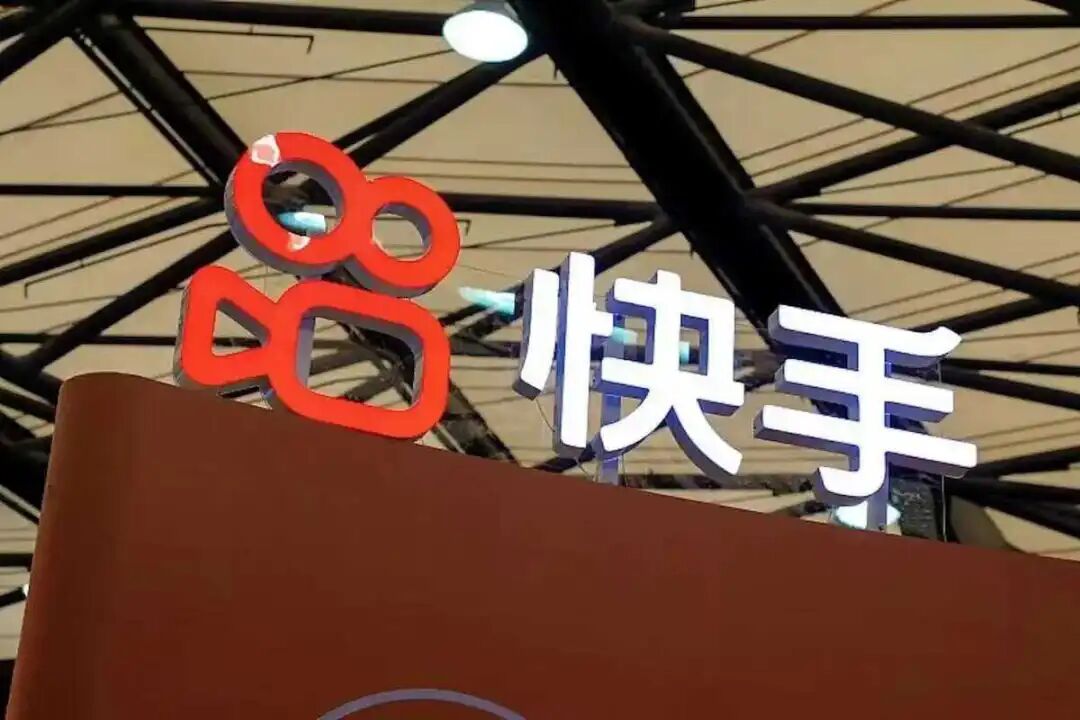
Revenue figures skyrocketed.
According to Tianyancha's consolidated financial reports and media information, in Q4 2025, single-quarter revenue reached 340 million yuan. By December, ARR hit $240 million. Achieving this in 18 months was rare in the AI industry.
But the story did not end there.
In January 2026, ARR surpassed $300 million. By late April, it had surged to $500 million—nearly doubling since before the Lunar New Year.
What does $500 million signify? MiniMax's full-year AI product revenue was just $53.1 million—Kling was nearly ten times that. Aisitech's PixVerse had an ARR of just $40 million—Kling was over six times larger. Sensor Tower data confirmed this: Kling's mobile revenue grew by double digits for two consecutive months, with MAU remaining above 7 million. It ranked first in the iOS Graphics & Design category in nearly 40 countries and regions, including Brazil, Russia, and Singapore, and was the top-grossing graphics and design app on iPhones in South Korea and Russia.
 Why Kling Makes Money
The best way to explain why Kling makes money is to compare it to Sora.
The "girl on a Tokyo street" video stunned the world, and Sora was once seen as the ultimate answer to AI video. But it faded away after 27 months. No farewell, no final words—the website simply became "unqueryable." OpenAI spent an average of $2,500 on Sora for every $1 in revenue. Training costs were astronomical, but users were unwilling to pay. If a Plus member generated more than 16 videos a month, OpenAI incurred losses.
Sora's problem was not that its technology was not strong enough—it was that its technological direction was flawed. It pursued cinematic-quality visuals and world simulation capabilities—how clothes flow, how lighting hits, how atmosphere is created. It rendered 30 images per second, discarding unqualified ones, wasting massive computational power. Overall usability was just 5% to 10%. In short, Sora was providing everyone with a money-burning, hard-to-use camera. But most people just needed a smartphone snapshot.
Kling took a different path. It did not aim for cinematic quality—it aimed for usability. The visuals might not be as stunning, but the motion logic was controllable, and the output could be directly used for editing short videos, making comics, or running ads.

One was "making movies," the other was "doing business." Different directions, different outcomes.
Kling also introduced MVL—Multimodal Visual Language. Users could supplement text descriptions with images and videos, like "the person in Image 1 is the protagonist," and the system would automatically convert it into instructions the model could understand. This lowered the creative barrier and improved generation efficiency.
The deeper layer was the commercial ecosystem.
According to Tianyancha's consolidated media information, in Q4 2025, online marketing services driven by AIGC marketing materials reached 4 billion yuan in spending. Kling was not just a creator tool—it was already integrated into Kuaishou's advertising and e-commerce systems.
What about the competitors?
Jìmèng had 1.7 times Kling's MAU, but ByteDance did not disclose revenue figures. Alibaba's HappyHorse had just launched, with the world's top-ranked technology but still in the early stages of commercialization. Shengshu Vidu, Zhipu Qingying, and MiniMax Conch had products and paid tiers, but none matched Kling's revenue scale.
In the AI race, model capability is just the entry ticket. Turning a model into a business is the real competitive edge.
 The War of Video Large Models
A senior executive at a domestic video model company put it bluntly: "The terminal price hasn't changed, but technology keeps iterating. Competition is getting fiercer, and there's less and less room for premiums."
In simpler terms: Everyone is racing, but no one can raise prices.
Video large models are becoming an arms race. According to Tianyancha's consolidated media information, ByteDance's 2026 capital expenditure plan rose to 200 billion yuan, with a significant portion going to AI computing power. Kuaishou's 2026 Capex was expected to reach 26 billion yuan, up 11 billion yuan from the previous year. Alibaba was also building out AI infrastructure, though the exact figures were not disclosed—but the scale was substantial.
When Seedance 2.0 launched, even ByteDance, with the largest AI infrastructure investment, could not handle the computing demand—90,000 people were queued at peak times, waiting up to 10 hours.
Money was just the entry ticket—talent was the deciding factor.
ByteDance set up a special "Doubao Stock" incentive plan for the Seed team. Core technical employees received options worth 90,000 to 130,000 yuan per month for 18 months, reaching up to a million yuan. Tencent's "Qingyun Plan" expanded recruitment by over 50%, with selected candidates directly participating in Hunyuan large model development.

Maimai's 2025 data was even more staggering. The top salary for a user growth algorithm engineer at Qianwen APP was 1.28 million yuan annually. Doubao AI application engineers earned nearly 1 million yuan. Yuanbao's user operations and event operations roles exceeded 750,000 yuan.
Why was DeepSeek rushing to raise funds? Not for R&D expenses—but to price options for technical staff. Otherwise, they could not resist offers from big companies worth tens of millions annually.
Kling's team was not spared either. Its core R&D personnel became targets for major companies and headhunters. Kuaishou was forced to launch a special incentive plan for Kling AI in late 2025, setting up a separate option pool for the team for the first time. This year, Kuaishou's recruitment strategy shifted to focus on tech talent with 1-3 years of experience. These individuals had gone through one or two performance cycles, making their abilities easier to judge, and their salaries at previous companies were often below market rates, making them more cost-effective.
The bigger problem was the price war.
Founders of multiple AI short drama companies agreed on one judgment: Model costs were falling, but terminal prices could not rise. In short, the sector was shifting from a blue ocean to a red ocean. Being first had advantages, but how long they would last was anyone's guess.
 The Truth Behind Kling's Spin-Off
A $20 billion valuation. Many people's first reaction was: Why?
It relies on two valuation systems.
Kuaishou's 2025 revenue was 142.8 billion yuan, with adjusted net profit of 20.6 billion yuan. The valuation logic for traditional internet platforms is simple: How much do you earn, how fast are you growing, and how stable is your cash flow? It's a mature formula.
AI companies use a different one.
ARR, user growth, model capability, sector ceiling—these are the metrics investors look at. For every yuan earned, AI companies can command a much higher valuation than traditional internet firms.
Zhang Yi, CEO of iiMedia Research, put it bluntly: "Spinning off avoids the drag of low
For Cheng Yixiao, the decision to spin off Kuaishou AI Video Generator (Kling) represents a high-risk gamble. If successful, Kuaishou will secure a ticket for an independent listing in the fiercely competitive AI video arena. However, failure would mean that the core business must continue to subsidize this resource-intensive venture.
Jin Bing spoke with caution during the earnings call, stating that despite a substantial increase in capital expenditures, the company remains dedicated to maintaining a healthy and stable free cash flow at the group level throughout the year. While this is what he declared, executing it is far more challenging. On one hand, he must invest heavily to keep pace with ByteDance and Alibaba. On the other, he must preserve cash flow—a delicate balancing act that is no small feat for anyone.

The Front-Runner on the Treadmill
AI video generation suffers from a critical flaw: the absence of a competitive moat.
Technical parameters are nearly transparent, with all companies employing the DiT architecture. If one company has a particular technology, others can easily adopt it, making secrecy impossible. No one can establish a genuine technological barrier akin to TSMC's monopoly on 2nm chip processes. Theoretically, vertical databases could serve as a competitive edge. Kling, supported by Kuaishou, and JIMENG, backed by Douyin, have data advantages over Sora. However, short-video footage is only suitable for training vertical short dramas. Truly high-quality film and television content is controlled by Hollywood, remaining out of reach for generation platforms.
As a result, the "treadmill effect" comes into play.
In early 2026, Kling gained global attention with its motion control feature, topping download charts in over 40 countries and regions. Just a month later, ByteDance's Seedance 2.0 stole the limelight. Shortly after, HappyHorse surged to the top of the technical rankings.
The top spot holds little lasting value, as companies take turns claiming it on a weekly basis.
ByteDance's Seedance 2.0 can generate videos up to 15 seconds long, complete with sound and camera cuts. The U.S. Screen Actors Guild and film associations publicly criticized it for threatening the rights of real actors—but from another perspective, this marks the first time Chinese technology has made Hollywood feel threatened.
Even more ironic is that the HappyHorse team originated from Kling. In other words, Kling's own talent went on to create a superior product at Alibaba. The irony is palpable.

Computational costs do not decrease with user growth—each additional user incurs more expenses. Moreover, users exhibit no loyalty—tools are largely interchangeable, with switching costs nearly negligible.
AI is the "strong medicine" Cheng Yixiao has chosen, but it comes with a high-stakes gamble.
Running on a treadmill, one expends tremendous energy yet makes no real progress. This is the reality for every participant in the AI video race.
 A Three-Way Standoff
Three key players now dominate China's video generation landscape:
ByteDance's Seedance 2.0, Alibaba's HappyHorse, and Kuaishou's Kling AI.
Zhang Yi's analysis for National Business Daily is spot-on: Alibaba's HappyHorse competes on technological barriers, ByteDance's Seedance on content ecosystems, and Kuaishou's Kling on commercialization capabilities. All three paths show promise.
In Artificial Analysis' blind test rankings, Chinese models swept the top three global positions: HappyHorse-1.0 first, Seedance 2.0 second, and Kling 3.0 third. The technical gaps are minor—all are on par with each other. In the short term, the landscape remains relatively stable, with each player holding its ground. However, in the long run, uncertainties abound—technical routes are unsettled, product forms are rapidly evolving, and the ceilings for application scenarios remain unclear.
Grand View Research forecasts the market size to reach $4.55 billion in 2025, soaring to $42.29 billion by 2030, with a compound annual growth rate (CAGR) of 32.2%. The market is growing rapidly, but the question remains: how many players will survive to claim a slice of the pie?
Kling's performance metrics appear promising. Mobile revenue is growing at double digits, monthly active users (MAU) remain above 7 million, and it tops download charts in over 40 countries globally.
Sensor Tower's data does not lie. However, strong numbers do not guarantee future success. Unresolved technical routes, products in need of refinement, and limited imagination for application scenarios—these three challenges weigh heavily on every player.
If Kuaishou can spin off Kling as an independent entity, its valuation would become clearer, and it could secure more funding for greater investment. Like its pioneering move into short videos a decade ago, it could scale first in a specific tech domain.
The problem? This time, the competitors are far stronger.
 A Gamble They Can't Afford to Lose
Sora faded away quietly, without a farewell or final words.
Its technical legacy was absorbed by other large models, continuing to push AI video technology forward. In a way, Sora's existence became nourishment for the industry—except OpenAI did not profit much from it.
Kling survives. But Cheng Yixiao is well aware of his situation. In today's capital markets, telling the AI story effectively matters more than anything else.
Spinning off Kling is essentially a bet on the capital markets. Whether the $20 billion valuation holds depends on whether revenue can double again—from $500 million in annual recurring revenue (ARR) to $1 billion ARR—amid relentless pursuit from ByteDance and Alibaba, technical uncertainties, and industry-wide price wars.
Twelve years ago, Cheng Yixiao pivoted GIF Kuaishou to short videos. Few believed this small GIF team could succeed. He proved them wrong.
Twelve years later, he finds himself in a similar position. Holding Kuaishou's future in his hands, he faces the AI video gambling table.
This time, the stakes are far higher. Last time, the worst outcome was losing a short-video platform. This time, what is at risk?
Can Kling finish this endurance race? The answer remains unknown. Cheng Yixiao himself might not know.
But he must run. There's no turning back.
-
![]()
AI Agent Smartphones: The Next Competitive Edge Transcends Large Models
-
![]()
Over 880 Million Yuan Worth of Orders Unveiled, Bidding Launched for Shenzhen Eastern Public Transport
-
![]()
Tesla's Robotaxi Hits the Road: A Monumental Gamble with an Uncertain Future
-
![]()
Ford and Geely Forge New Joint Venture in Spain, Sidestepping Changan and JMC
-
![]()
199 RMB! Godox's First Camera Review: Subpar Photography, Transparent Viewfinder Frame is the Highlight
-
![]()
AI Smartphones: A Modern-Day 'Emperor's New Clothes'?
-
![]()
Yonyou Network: A Company Selling 'Transformation' but Struggling in Its Own Transition
-
![]()
Focus | CCCC’s Takeover of Greentown Comes to Fruition: Why Did the 11-Year ‘Control Without Authority’ Era End?