Five Emerging Golden Entrepreneurial Pathways in the Agent Ecosystem: A Deep Dive into the Report (Part 2)
 05/15 2026
 594
594
Analysis: OpenClaw has catalyzed the birth of entirely novel ecological niches within the AI industry chain. These emerging pathways—Agent Infrastructure, Skill Economy, AI-Native Hardware, One-Person Companies (OPCs), and Vertical Industry Agent-Driven Transformation—center around the pivotal proposition of 'transitioning AI from conceptual thinking to practical action,' offering unprecedented structural opportunities for entrepreneurs and investors alike.
Before the advent of OpenClaw, AI entrepreneurship primarily focused on enhancing efficiency within established links, such as model optimization, application development, or computational power provision. However, OpenClaw's innovative paradigm of 'local-first, continuous operation, and high-privilege execution' has propelled AI into the 'era of action.' This fundamental shift has spawned a series of entirely new demands.
Analysys' 'Reconstruction and Rise: China's Agent Industry Ecosystem Report in the OpenClaw Era' explicitly states that OpenClaw's most profound impact lies not in 'altering old links' but in 'catalyzing entirely new ecological niches.' These niches form a stratified, value-progressive new value chain, clearly delineating the competitive landscape for discerning entrepreneurs. This article will explore the internal logic, market status, and entrepreneurial opportunities within these five golden pathways.
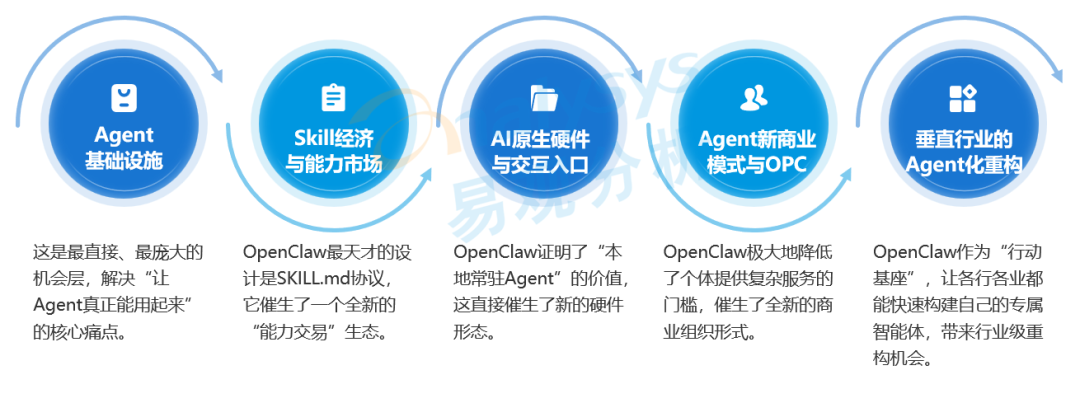
Figure 1: New Entrepreneurial and Investment Directions in the Agent Action Era
This represents the most direct and expansive opportunity layer, with the core mission of addressing full-link pain points to 'make Agents truly usable.' It transcends mere technical connectivity, integrating value delivery, security control, and operational assurance to 'transform powerful general AI capabilities into secure, reliable, and usable productivity within enterprise or personal environments.' This pathway can be subdivided into five key levels, each harboring distinct competitive landscapes and entrepreneurial opportunities:
1. Deployment and Hosting: The goal is to lower the barrier to owning a functional Agent. The current market is characterized by 'application-driven, giant-led' dynamics. Cloud providers like Alibaba Cloud, Tencent Cloud, and Volcano Engine leverage their infrastructure and ecological advantages to swiftly launch cloud hosting solutions, preempting (seizing) the core position of 'infrastructure for the Agent era.' For entrepreneurs, directly competing with giants' general-purpose PaaS platforms is highly challenging. Innovation opportunities lie in hardware integration, enhancing open-source tools, and offering deeply customized deployment services for overseas markets or specific vertical scenarios to achieve differentiated competition.
2. Security and Privilege Governance: This is the most critical concern for Chinese enterprise clients, focusing on 'how to enable a high-privilege AI employee to work securely and controllably within an organization.' This field is dominated by cloud providers, professional security companies (such as Qingteng Cloud), and large internet platforms due to their deep moats of enterprise service experience, technological integration capabilities, and customer trust. They build barriers around 'zero-trust architecture,' 'dynamic privilege chains,' 'sandbox isolation,' and 'full-link auditing.' Entrepreneurial opportunities for startups lie in 'componentization' and 'verticalization,' excelling in specific technical areas (such as more advanced sandbox isolation technologies or industry-specific compliance auditing modules) to become preferred partners within giants' full-stack solutions.
3. Environmental Perception and Interaction Adaptation: This addresses the 'hands and eyes' of Agents, enabling them to 'understand' and 'operate' within the existing digital world. Paths diverge between China and the US: the US emphasizes protocol standardization (such as MCP) and development tools; China focuses more on platform ecosystem self-transformation (such as Feishu exposing its thousands of capabilities as CLI) and solving specific business environment issues. Entrepreneurial opportunities include automated interface generation tools, computer vision-driven GUI interaction Agents (such as Ant Group's UI-Venus), and deeply adapted plugins for specific industry software (such as finance, industrial design).
4. Observability, Operability, and Cost Control: This poses the most practical operational challenge after Agent scaling. Currently, cloud providers dominate the infrastructure layer (such as Volcano Engine's AgentKit observability solution), while the application layer is filled with community and startup solutions addressing specific pain points. Professional AgentOps entrepreneurship in China is still in its early stages, with opportunities in providing in-depth, independent observability debugging tools, intelligent cost optimization and computational power scheduling platforms (such as Inference's TokenHub), and enterprise-grade memory management systems (such as MemOS).
5. Value Exchange and Settlement Infrastructure: This underpins the operation of the Agent economic system, addressing value measurement, exchange, and settlement. It is currently in the early exploration stage. International markets feature frontier experiments like Worldcoin and EvoMap; the Chinese market adopts a more pragmatic approach, prioritizing enterprise-level value measurement (such as performance appraisal and cost allocation for digital employees) while cautiously exploring decentralized native economic systems based on Tokens. This leaves room for imaginative products that bridge enterprise needs with cutting-edge mechanisms.
The core of the 'Skill Economy and Capability Market' lies in 'experiential assetization' and 'capability commoditization.' This ecosystem evolves along a path from 'components' (skills/Skills) to 'complete machines' (Agent applications) and then to 'socialized production and exchange' (transactional collaboration). This ecosystem follows an evolutionary trajectory from 'components' to 'complete machines' and then to 'socialized production,' spawning three types of markets:
Skill and Tool Market (Component Market): Community-driven and highly active, often referred to as the 'aquatic market' or 'skill black market.' Currently, it predominantly features free sharing, but paid subscriptions and tipping models are emerging. Entrepreneurial opportunities lie in building more standardized platforms with quality ratings, intellectual property protection, and fair trading mechanisms, upgrading from chaotic 'black markets' to trustworthy 'asset exchanges.'
Agent App Store (Complete Machine Market): Dominated by giants vying for the 'first touchpoint' in users' digital lives. Platforms like ByteDance's 'Coze,' Baidu's 'Qianfan,' Alibaba Cloud's 'Bailian,' and Tencent Cloud have all launched their offerings. Their future direction is to evolve from 'application aggregation' to 'capability scheduling,' becoming 'Agent operating systems.' Startups find it difficult to directly challenge these platforms but can excel as 'complete vehicle manufacturers' within giant ecosystems, developing hit vertical applications; or focus on providing development tools, testing services, and data analysis for these platforms.
Agent Transaction and Collaboration Market (Socialized Market): This represents the most revolutionary frontier, enabling Agents to be traded as 'digital labor.' It includes commodity markets, task-based markets, and service-based markets. This field is still in the conceptual verification phase, representing a blue ocean for entrepreneurship. Whoever designs effective task discovery, reputation evaluation, automatic settlement, and dispute resolution mechanisms will likely define the rules of the future intelligent agent economy.
OpenClaw has proven the value of 'local resident Agents,' directly spurring the creation or redesign of physical carriers specifically for AI Agents. Their core characteristics include AI-driven operation, serving as perception and execution gateways, and collaborating with the cloud. China is highly active in this pathway, even leading globally in certain niches. Categories include perception and recording devices, interaction and display devices, and dedicated Agent operation carriers: such as all-in-one machines/development boards providing out-of-the-box dedicated operation environments, addressing deployment complexity; and new interaction paradigm hardware: such as voice-first devices, stealth interaction controllers (rings, prototypes of brain-computer interfaces), exploring next-generation interaction methods.
OpenClaw has significantly lowered the barrier for individuals to provide complex services, giving rise to the 'one-person company' (OPC) as a novel commercial organization form. Driven by strong local policy support and vast application scenarios in China, OPCs are rapidly and diversely materializing:
1. AI-Native Content and IP Creation: Leveraging Agent matrices for bulk production of short videos/mini-dramas, virtual idol operations, and knowledge-based paid course creation. Low barriers and quick monetization, relying on China's mature traffic ecosystem.
2. AI-Driven E-commerce and Local Life Services: An individual utilizes Agents for product selection, listing, customer service, and marketing to operate cross-border e-commerce or local life services. Fully leveraging China's supply chain and operational strengths.
3. Digital Transformation of Traditional Industries: Individuals or small teams develop dedicated Agents to address quality inspection, scheduling, and traceability issues in manufacturing, agriculture, and other sectors, encouraged by policy support.
4. Agent Deployment Service Providers (FDE Model): Currently the clearest and fastest cash-generating model. Providing Agent deployment, training, custom development, and daily operational services for SMEs, addressing the 'last-mile' problem, perfectly aligning with the strong demand for implementation services in the Chinese market.
5. OPC Ecosystem Enablers: Serving the vast OPC entrepreneurial community by providing community incubation, tool platforms, supply chain connections, and legal, financial, and tax services. In the OPC boom, 'selling shovels' is equally a lucrative business.
This represents the pathway with the highest value and barriers. It uses OpenClaw as its technological foundation to systematically reengineer business processes, knowledge systems, and collaboration models in industries such as finance, healthcare, law, and manufacturing. Its value lies in addressing fundamental pain points of 'long processes, multiple systems, strict compliance, and tacit knowledge.' Main directions include:
Industry-Specific Agent OS/Platforms: Such as WiseClaw in the financial sector, providing assemblable and governable intelligent agent infrastructure for the industry.
Core Business Process Agentization: Delegating high-value processes like report generation, compliance reviews, and intelligent quality inspections to Agents.
Industry Knowledge and Evidence System Agentization: Encapsulating expert experience to form reusable digital assets.
Vertical Scenario 'AI + Hardware' Fusion: Such as industrial quality inspection Agents paired with high-definition cameras to achieve physical closure.
China's core advantages in this pathway lie in its strong industrial foundation, policy impetus, and extreme productization and integration capabilities. Development is characterized by broad scenario coverage, rapid implementation, and a preference for integrated 'platform + industry template' solutions. For entrepreneurs, success hinges on deeply understanding specific industries, possessing profound domain knowledge (Know-How) and genuine customer resources, and transforming obscure industry processes into reliable Agent workflows. Forming ecological alliances with industry leaders or large cloud providers is often an effective way to quickly gain traction.
The industrial earthquake triggered by OpenClaw is shaping a new continent brimming with opportunities. The five golden pathways are not isolated but interweave and empower each other. The refinement of infrastructure nurtures the prosperity of the Skill economy, which in turn empowers OPCs and industry applications, while hardware provides the actionable bodies for all Agents.
For entrepreneurs, the current priority is to clearly identify their ecological niche coordinates within this reconstructed value chain. Should they choose to be 'water sellers' (infrastructure) or 'gold prospectors' (OPCs, industry applications)? Should they engage in 'component trading' (Skill markets) or focus on 'complete vehicle manufacturing' (vertical solutions)? The answer depends on the team's technological DNA, industry resources, and risk appetite.
-
![]()
Ford and Geely Forge New Joint Venture in Spain, Sidestepping Changan and JMC
-
![]()
199 RMB! Godox's First Camera Review: Subpar Photography, Transparent Viewfinder Frame is the Highlight
-
![]()
AI Smartphones: A Modern-Day 'Emperor's New Clothes'?
-
![]()
Yonyou Network: A Company Selling 'Transformation' but Struggling in Its Own Transition
-
![]()
Focus | CCCC’s Takeover of Greentown Comes to Fruition: Why Did the 11-Year ‘Control Without Authority’ Era End?
-
![]()
Final Verdict: The 2026 China Auto Forum Shines with Unique Characteristics at a Pivotal Moment
-
![]()
Tencent Maintains Matrix Approach, Alibaba Merges Entry Points: Tech Titans Initiate AI Agent Consolidation
-
![]()
Geely Secures Portion of Ford’s Spanish Production Capacity