WeChat Sets Up the Agent Gaming Table, JD.com and Meituan Take New Seats
 06/10 2026
 546
546
As AI begins to take over the connection between people and services, the focus of competition will no longer be on who has more users, but on who can become an indispensable capability node in the Agent network.
Editor | Meng Wen
Twelve years ago, Tencent and JD.com first joined hands by integrating JD.com into WeChat's "grid of nine," where Tencent provided the most scarce resource in the mobile internet era—user traffic—while JD.com contributed Tencent's most lacking e-commerce fulfillment capabilities: supply chain, logistics, and a mindset for genuine products.
It was a classic "traffic + supply chain" complementary marriage. Tencent didn't need to dive into the asset-heavy e-commerce business itself, while JD.com gained access to top-tier traffic within the WeChat ecosystem.
Twelve years later, the two sides are "marrying" again. It is reported that JD.com and Tencent have recently reached a cooperation agreement on AI Agent. JD.com's commodity supply chain and fulfillment service system will be connected with Tencent's access resources.
The two sides adopt the A2A (Agent to Agent) cooperation model, where users can directly propose shopping needs and obtain product information within JD.com's AI Agent in native intelligent agents on various terminals. Relying on JD.com's fulfillment and service system, a complete experience closed loop (closed loop) from intent recognition to service assurance is formed.
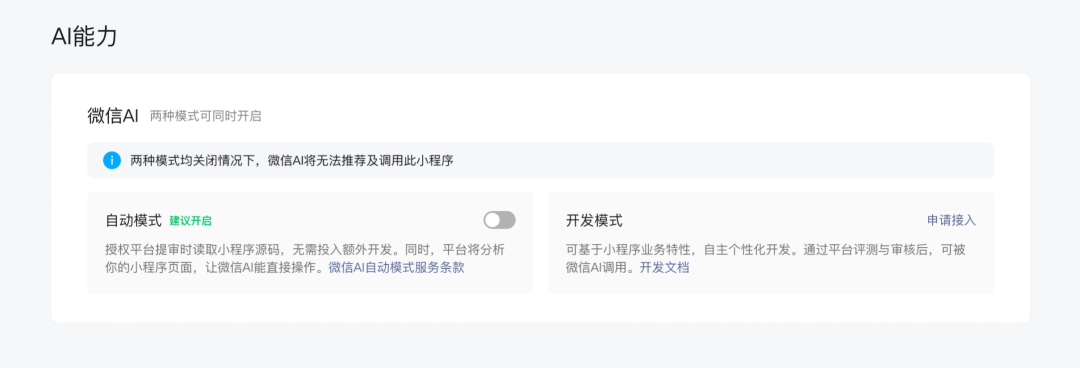
Yesterday, WeChat officially provided developers with access to its AI ecosystem. In addition to JD.com, the first batch of partners includes Didi, Meituan, Ctrip, and others, covering multiple scenarios such as e-commerce, local life, travel, and tourism.
WeChat is "reopening its doors" in the AI era, with giants lining up to join.

From a "Marriage" to Collective "Recruitment"
In the spring of 2014, a red icon appeared in WeChat's "Discover" page grid: JD.com. That was the first strategic handshake between Tencent and JD.com, and one of the most classic "traffic + supply chain" marriages in Chinese internet history.
Tencent held the most scarce access resources in the mobile internet era but was bogged down by the asset-heavy nature of e-commerce fulfillment. JD.com possessed supply chain, logistics, and a mindset for genuine products but could never compete head-on with Alibaba in terms of traffic.
So, one provided traffic, and the other provided shelves. Tencent didn't need to dive into e-commerce itself, while JD.com gained access to top-tier traffic within the WeChat ecosystem.
Twelve years later, as the wave of AI Agents sweeps in, the two companies are joining hands again. This time, the bargaining chips are the bidirectional nesting of their respective core capabilities: Tencent needs JD.com's supply chain to enrich its Agent access, while JD.com needs Tencent's access to expand its fulfillment boundaries.
Tencent is attempting to upgrade WeChat from a "super App" to a "super Agent access." With over 1.3 billion monthly active users, WeChat's moat has been its strongest defense over the past decade.
But in the AI Agent era, this moat is facing unprecedented challenges: Users can directly invoke services through system-level voice assistants on their phones. Independent AI applications like Kimi are attempting to become new "universal accesses." Apple's Apple Intelligence and Huawei's Xiaoyi are trying to intercept traffic at the operating system level. Users may no longer need to "open WeChat."
The definition of access is shifting from "App icons" to "intent response," and Tencent is clearly aware of the crisis. Recently, it has been making dense (intensive) moves in the AI Agent space: collaborating with phone manufacturers like Huawei, Xiaomi, OPPO, and Vivo on system-level intelligent agents; nearing the launch of development and testing for a WeChat AI assistant... Unlike independent AI applications like Yuanbao, the WeChat AI assistant is directly embedded in social scenarios, offering greater coverage and user stickiness.
But access alone is not enough. An Agent that can understand needs must also have the capability to fulfill them. Behind transaction scenarios lie commodity libraries, supply chains, warehousing and distribution systems, and after-sales service networks. Behind travel lies transportation scheduling. Behind local life lie merchant networks and instant fulfillment systems.
These capabilities are not Tencent's strengths but are precisely the core assets of JD.com, Meituan, and Didi. Meanwhile, JD.com is undergoing a silent transformation. Unlike most internet companies that cut into (dive into) AI from the algorithm layer, JD.com's AI Agent has a distinct characteristic: It doesn't aim to be a "smarter chatbot" but rather a "fulfillment Agent that can be embedded in any scenario."
Currently, JD.com's AI Agent has been connected with multiple mainstream terminal manufacturers, including Huawei, OPPO, and Honor. Users can directly propose shopping needs and obtain product information within native intelligent agents on various terminals, relying on JD.com's fulfillment and service system.
It's clear that as e-commerce competition shifts from price to efficiency, JD.com is decoupling its core capabilities from "an App" into "a set of interface-able fulfillment services."
In the past, users had to open the JD.com App to shop. In the future, users will be able to directly invoke JD.com's supply chain capabilities through any AI access: phone voice assistants, in-car systems, smart home devices, or even WeChat chats.
JD.com is no longer just an e-commerce platform but has become the "commodity and fulfillment infrastructure" of the AI era.
The first handshake was essentially a complementarity of traffic and supply chain: Tencent provided access, and JD.com provided transaction capabilities. The second handshake is a synergy of intent and fulfillment: Tencent is responsible for understanding needs, and JD.com is responsible for fulfilling them.
The former solved the problem of "how to bring users to services," while the latter solves "how to let services actively find needs."
But this time, JD.com is just the beginning. Yesterday, WeChat officially opened up access to its AI ecosystem for developers. In addition to JD.com, the first batch of partners includes players like Meituan, Didi, Ctrip, and Tongcheng, covering multiple high-frequency scenarios such as e-commerce, local life, travel, and tourism.
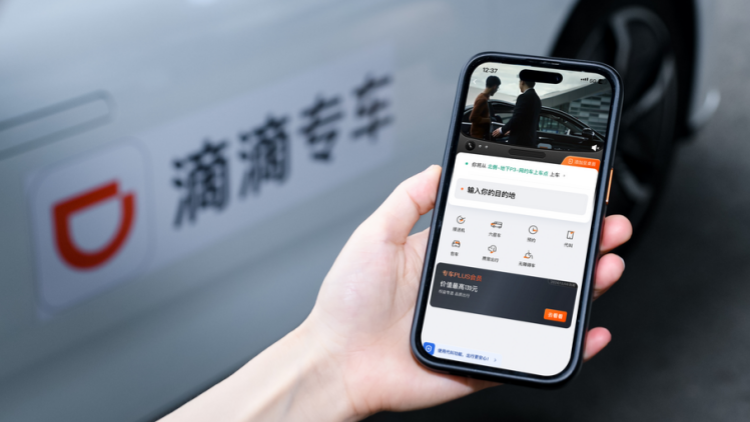
Meituan officially announced its access as part of the first batch of beta testers, allowing users to invoke food delivery and local services through the WeChat Agent. Didi's fast rides, private cars, and discounted rides are connected, with carpooling and chauffeur services following suit. Ctrip and Tongcheng Travel have completed adaptations, covering flight bookings, hotel reservations, and itinerary planning.
This no longer resembles a "strategic marriage" between companies but rather a "ecosystem recruitment."
On the surface, these are the highest-frequency daily scenarios for ordinary people, covering clothing, food, housing, and transportation. However, high frequency is a necessary but not sufficient condition. Healthcare, education, and finance are also high-frequency but did not appear in the first batch.
What determines who gets priority access to the WeChat Agent ecosystem is the parsability of intent, standardizability of fulfillment, and low decision-making risk.
"Help me call a car to the airport," "Book a flight to Shanghai tomorrow," or "Order the highest-rated takeout nearby"—these demands have almost no ambiguity and can be directly parsed by an Agent.
Sufficiently standardized fulfillment means that the entire service chain, from order placement to delivery or from ticket booking to check-in, is highly digitized and can be stably taken over by an Agent.
Sufficiently low decision-making risk means that users are willing to let the Agent complete these decisions without bearing excessive trial-and-error costs.
In contrast, demands like "What should I do about my recent headache?" or "Help me configure a family financial plan" involve professional judgment, liability boundaries, and risk-taking, making it difficult to achieve Agent-based closed loop (closed loops) in the short term.
In other words, WeChat is not choosing industries but capabilities. Whoever is best suited to be invoked by an Agent will be the first to gain entry into the new ecosystem.

A2A is Dissolving Platform Boundaries
To understand the "disruptive" nature of this cooperation, one must first understand what A2A (Agent to Agent) means.
The rapid expansion of WeChat's Agent ecosystem is inseparable from Tencent's efforts to catch up in AI infrastructure. In December last year, Tencent announced an upgrade to its large model R&D architecture, establishing new AI Infra, AI Data, and Data Computing Platform departments. Yao Shunyu, a former OpenAI researcher, was appointed as the chief AI scientist in the "CEO/President's Office" and concurrently heads the AI Infra and Large Language Model departments. The AI Infra department will be responsible for building technical capabilities for large model training and inference platforms, focusing on core technologies such as distributed training and high-performance inference services.
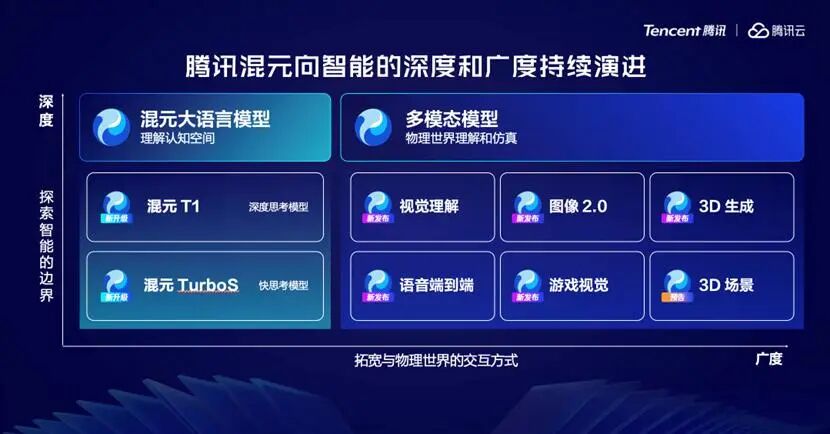
On May 7, Tencent Hunyuan released its latest data: The Token call volume for Hy3preview continues to increase, surpassing the previous generation model Hy2 by more than 10 times in total. Token call volumes for code and intelligent agent scenarios, in particular, have seen significant increases, with total growth exceeding 16.5 times in applications like WorkBuddy/CodeBuddy and Qclaw.
These figures indicate that Tencent's AI capabilities are moving from "catching up" to "being usable." However, Pony Ma's statement reveals a deeper mindset: Tencent does not aim to lead in every segmentation (niche) area of AI but rather hopes to "progress steadily by leveraging its unique strengths," which are WeChat's 1.4 billion monthly active users and its social relationship chains.
"We can't just casually step over and grab others' territory just because they're doing something"—this statement is both self-reflection and a strategic declaration. Tencent is not building its own ride-hailing, food delivery, or e-commerce services but instead letting Didi, Meituan, and JD.com integrate into the WeChat ecosystem as Agents. This is a "platform as access" mindset: WeChat doesn't need to own all services; it just needs to own the "scheduling rights" for all services.
Traditional APIs are "programs calling programs"—rigid, preset, and rule-based, like the JD.com icon in WeChat's grid, where users click, jump to a page, and complete the remaining actions in another App.
There has always been a "jump" threshold between platforms.
A2A is "intelligent agents conversing with intelligent agents"—flexible, dynamic, and based on intent understanding.
Imagine this scenario: On a Friday evening, you say to your phone, "I'm going hiking tomorrow. Help me buy a windbreaker for under 500 yuan, preferably delivered by tomorrow morning."
Your terminal Agent understands the intent—not just keyword matching but truly understanding the meaning of "hiking" and that it requires windproof and waterproof features. "Delivered by tomorrow morning" means it must be shipped from a local warehouse.
Then, it directly converses with JD.com's shopping Agent. JD.com's Agent returns several options, including inventory status, delivery times, and even size recommendations based on your past purchase history. After you confirm, JD.com's Agent directly schedules warehousing and logistics for fulfillment.
Throughout this process, you may never have "opened" the JD.com App or even known that the purchase was completed by JD.com.
This is the magic of A2A: It begins to dissolve the boundaries between platforms. In the AI Agent era, users no longer jump between "App islands" but receive services in a continuous intelligent flow completed by multiple collaborating Agents.
A2A is the "commercial agreement" between Agents, defining how Agents in different ecological niches exchange information, allocate benefits, and jointly take responsibility for users. If this model succeeds, it will define not just a shopping experience but a new way of organizing businesses in the Agent era.
As Tencent and JD.com begin to "huddle for warmth" using A2A, the chessboards of other players are being disrupted.
Alibaba likely feels the most complex mix of emotions. It also possesses access (Taobao, Alipay, DingTalk), cloud (Alibaba Cloud), models (Tongyi Qianwen), and supply chains (Cainiao, Taobao commodity library).
However, Alibaba's access is "transactional"—users open Taobao specifically to shop, making the mindset overly vertical. WeChat, on the other hand, is "social"—users don't come for shopping, but AI Agents can naturally implant transactional intent in any chat scenario.
We must recognize that the potential of "purposeless consumption" far exceeds that of "purposeful consumption." When a user casually mentions to the WeChat AI assistant, "I've been thinking about getting new running shoes," JD.com's Agent can seamlessly take over. Alibaba's dilemma and pressure lie in whether its commodities and supply chain capabilities can be standardized, service-oriented, and directly invoked by more external Agents when users no longer actively enter Taobao but express needs through various Agents.
ByteDance's situation is not a "lack of transactional capabilities"—quite the opposite. Doubao may be one of the earliest players in China to achieve a closed-loop AI e-commerce experience.
In October last year, Doubao integrated with Douyin Mall, allowing users to jump to purchase by clicking on AI-generated product links. In March this year, Doubao began beta testing a "shopping and ordering" feature, enabling users to browse, compare prices, and pay entirely within Doubao without jumping to the Douyin App. In April, it officially launched the "Help You Choose" feature, achieving a full-linkage closed loop from product recommendation to order placement and payment. Backed by 226 million monthly active users and Douyin E-commerce's supply chain with nearly 4 trillion GMV, Doubao's "chat-and-shop" experience is already up and running.
However, Doubao's transactional closed loop has a distinct characteristic: It is an "internal circulation" serving the Douyin E-commerce ecosystem. Its AI shopping capabilities essentially create new traffic accesses for Douyin E-commerce rather than serving as a "neutral fulfillment Agent" that can be invoked by the entire industry.
An agent that serves only its own e-commerce platform and a fulfillment agent willing to open up to all entry points occupy entirely different ecological niches and offer vastly different potential for growth.
In this transformation, there is another crucial yet often overlooked player: smartphone manufacturers.
Huawei, Xiaomi, OPPO, and vivo are partners with Tencent (integrating system-level agents into the WeChat ecosystem) as well as with JD.com (integrating terminal-native agents into JD's agent framework).
Smartphone manufacturers have a core aspiration in the AI era: to become 'system-level entry points' and intercept app traffic. The collaboration between Tencent and JD has also shown smartphone manufacturers another possibility. System-level agents do not need to build their own product libraries, logistics systems, or payment networks; instead, they can connect external capabilities through A2A protocols.
Smartphone manufacturers handle the intent entry points, Tencent provides social scenarios, and JD offers fulfillment services, with all parties jointly completing a transaction.
This is advantageous for smartphone manufacturers but poses a threat to all independent apps. When agents become the new interaction layer, apps may be reduced to back-end 'service providers.' The party that controls agent scheduling will truly hold the users; those called by the most agents are poised to become the infrastructure of the next-generation internet.

Data, Interests, and User Experience
All collaborations involve hidden struggles. Taking Tencent and JD as an example, three undercurrents are constantly at play.
The first undercurrent is data sovereignty. When a user completes a purchase on JD through WeChat's AI assistant, who owns the user personas, consumption preferences, and conversation data?
Tencent possesses users' most valuable social data: who you chat with, what you discuss, and in what contexts you mention 'wanting to buy something.' JD holds users' most valuable consumption data: what you've purchased, your return rates, and your price sensitivity.
In the AI era, the combination of these two types of data will create tremendous synergy. An agent that understands both your social context and consumption habits will offer far more accurate recommendations than any single platform.
But data is the oil of the AI era, and no one is willing to share it freely. Both sides must find a balance between data collaboration and data isolation. Whether this balance can be achieved will directly determine whether the A2A collaboration remains at a superficial level of 'product queries' or progresses to a deeper integration of 'joint modeling.'
The second undercurrent is profit distribution. Under the A2A model, transactions occur between agents, rendering the traditional 'traffic-based pricing' logic obsolete.
In the past, when users clicked on the JD icon, Tencent charged based on CPC or CPA, or shared revenue through equity. However, in the A2A era, users may never 'click' on anything; they might simply speak a command into their phone, and the transaction is complete.
If users never open the JD app, how should JD pay Tencent for 'entry fees'? Should it be based on GMV commission, agent call frequency, or a share of fulfillment service fees?
This requires both sides to establish a new set of commercial agreements. Negotiating these agreements may be even more challenging than technical integration. Because in the AI agent era, the value of 'entry points' is being reevaluated—it is no longer a one-time traffic distribution but a continuous intent interception.
So the question arises: Should Tencent, with its accumulated social data, deserve a higher share, or should JD, which bears all the heavy costs of fulfillment, take a larger piece of the pie?
The third undercurrent is the consistency of user experience. When JD's fulfillment capabilities are encapsulated within WeChat's agent, users may become unclear about 'who is responsible for after-sales service.'
If a product issue arises, should users contact WeChat or JD? If delivery is delayed, where does the responsibility lie? The tight coupling of A2A brings convenience but may also lead to confusion over accountability.
During the mobile internet era, users clearly knew, 'I bought it on Taobao, so I contact Taobao; I bought it on JD, so I contact JD.' But in the agent era, services are fragmented, with entry-point providers and fulfillment providers jointly completing a transaction. Where should users place their trust?
This is a core issue affecting long-term user experience. If not handled properly, a single poor after-sales experience could damage the trust assets of both brands.
Twelve years ago, WeChat's grid layout defined the 'traffic distribution' paradigm of the mobile internet era; twelve years later, A2A defines the 'service assembly' paradigm of the AI agent era.
The WeChat agent ecosystem is attempting to define another set of rules: users express their needs, agents understand their intent, different service capabilities are dynamically assembled, and delivery is jointly completed.
In this system, JD, Didi, Meituan, and others gain unprecedented access to entry points but also face the risk of having their roles redefined by the platform. Meanwhile, Tencent gains imaginative potential in scheduling but must also confront long-term challenges in data, interests, and ecological balance.
The key competition in the agent era may no longer be 'who has the most users' but 'who can become the core node connecting the most capabilities.'
In this paradigm, users may be the biggest winners. After all, they no longer need to remember which app sells what or which platform has faster logistics. They can simply tell their AI assistant what they need, and let the agents collaborate to get it done.

Editor: Muren Proofreader: Zhang Wenxin Producer: Rui Zong
-
![]()
Revenue Surges 50-Fold: Q1 Earnings Match Annual Profit, This Year's Hottest Business Revealed
-
![]()
Cook’s Gourd Holds No Magic Cure for Apple’s AI Woes
-
![]()
Stellantis Presents a Catalyst, Propelling Chinese Automobiles Towards Global Supremacy
-
![]()
The First AI Car! Seres + ByteDance, AIVA Targets the 200,000+ Market with Its First Vehicle Launching This Year | Mirror Pro
-
![]()
Most People Don't Understand Kimi's World Cup Prediction
-
![]()
Behind Saido: The Strategy of a Company Backed by CATL and ByteDance
-
![]()
Market Disparity: Domestic OLED TVs Hold Less Than 10% Share, with Two Korean Giants Leading the Pack
-
![]()
Seres Faces Six Months of Declining Sales: Challenges Coexist with Opportunities