Siri Makes Strides, Yet Apple’s AI Journey Demands a Monumental Leap
 06/10 2026
 570
570
Author|Haotian
After a two-year hiatus, AI once again stole the limelight at Apple’s WWDC conference.
Image Source: Apple
At 1 a.m. Beijing Time on June 9, 2026, Apple hosted its WWDC26 developer conference. Unlike previous events that methodically showcased operating systems such as iOS, iPadOS, and macOS, this year’s focus was squarely on AI technology, with in-depth presentations on AI features like Apple Intelligence and Siri AI.
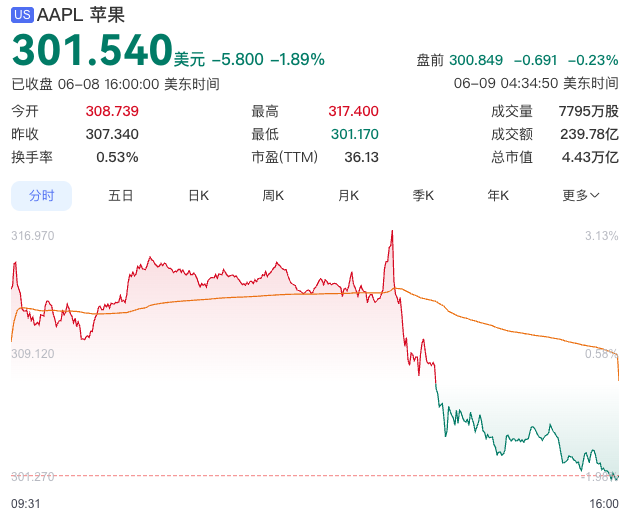
Image Source: Baidu
Although Apple made significant strides in addressing its AI shortcomings, the capital market responded with a collective yawn. On the day of WWDC26, Apple’s stock price dipped by 1.89%, wiping out approximately $85 billion (around RMB 576.6 billion) in market value, with an additional 0.23% decline in after-hours trading.
At present, the tech industry is hurtling towards the Agent era. In contrast, Apple’s operating systems, bolstered only by basic large model capabilities through Google’s assistance, naturally struggle to instill investor confidence. Looking ahead, Apple can only cement its position in the AI era by fully integrating AI technology traits and constructing a formidable commercial moat around its closed ecosystem.
01 Partnering with Google, Apple AI Finally Fills the Gaps
As early as WWDC 2024, Apple capitalized on the AI wave to unveil its generative AI suite, Apple Intelligence, promising features like text proofreading, image generation, and natural language search for devices such as the iPhone, iPad, and Mac.
However, due to the absence of a robust foundational model, many of the Apple Intelligence features showcased at WWDC24 remained unrealized. In May 2026, Apple faced a class-action lawsuit for overstating Apple Intelligence’s capabilities, resulting in a $250 million settlement.
To swiftly deliver AI services to users, Apple forged a partnership with Google in early 2026, leveraging Google’s Gemini model and cloud technology to construct its next-generation foundational model. At WWDC26, Apple formally unveiled the phased outcomes of its collaboration with Google.
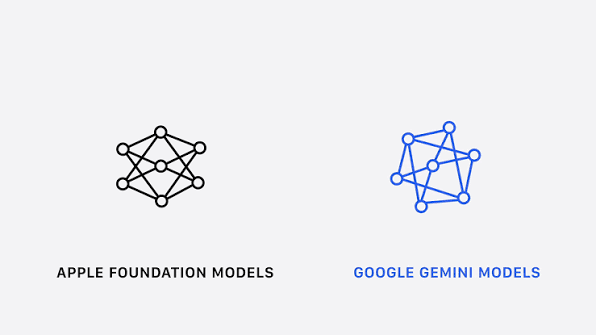
Image Source: Apple
It is reported that Apple developed new Apple Foundation Models based on Google’s Gemini large model, capable of operating both on-device and in the cloud, supporting services like Siri AI and Apple Intelligence.
The pinnacle of Apple’s AI capability “leap” is undoubtedly Siri AI. Built on Apple Intelligence, Siri now boasts a standalone app and a revamped interface, enabling natural language conversations, screen content reading, internet information retrieval, and complex task execution.

Image Source: Apple
For instance, when a user inquires about the World Cup schedule, Siri AI seamlessly integrates internet information to display the specific schedule. Users can swipe down on the answer page for more details.
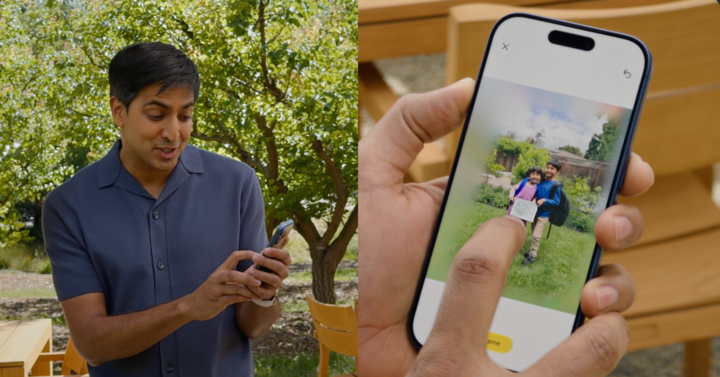
Image Source: Apple
Beyond substantial upgrades to Siri’s capabilities, Apple’s operating systems, powered by Apple Intelligence, also support features like image generation, AI photo editing, and visual intelligence. The photo reconstruction feature is particularly noteworthy, as Apple Intelligence can transform flat photos into spatial ones, allowing users to adjust the shooting angle freely.
Overall, while WWDC26 did not introduce groundbreaking UIs or hardware, through its partnership with Google, Apple finally delivered on the “AI promises” it made two years ago. This marks a new beginning for Apple’s operating systems. With AI at the forefront, Apple is poised to craft differentiated user experiences beyond its closed ecosystem in the future.
02 Leveraging Ecosystem Synergies, Siri Emerges as the Core Gateway
As is widely acknowledged, in the mobile internet era, Apple’s core competitiveness stems from its closed ecosystem, forged through the synergistic development of multi-device operating systems. Entering the AI era, Apple’s system advantages remain highly pronounced.
At WWDC26, Apple eschewed separate system introductions, instead using AI as the unifying thread to horizontally connect various systems. The rationale is that after years of ecological integration, the boundaries between Apple’s devices are gradually blurring.
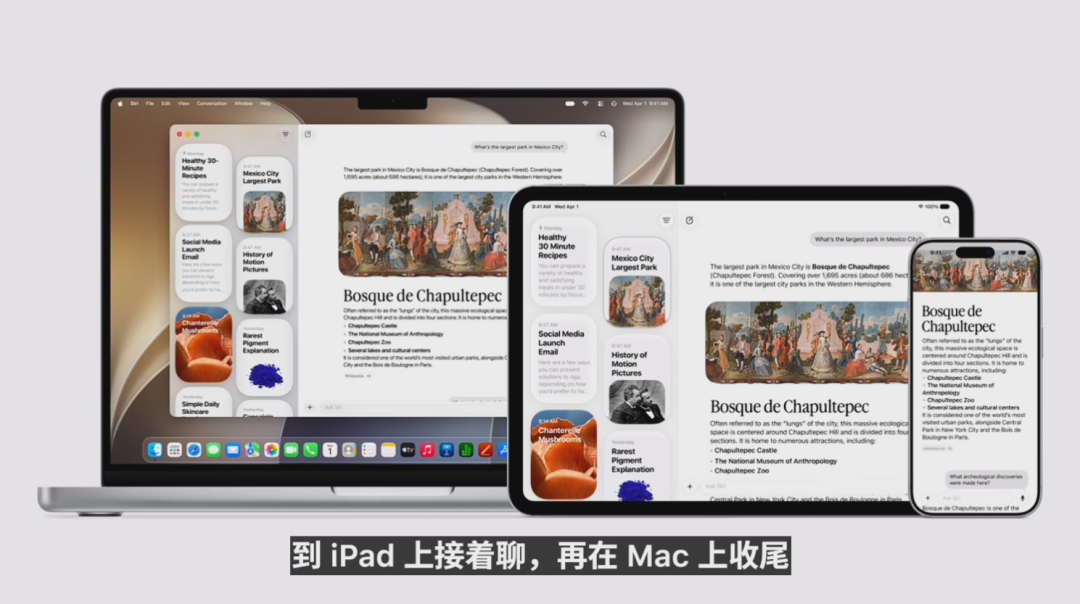
Image Source: Apple
Take Siri as an example; it not only integrates with Apple Intelligence but also syncs chat records to iCloud. This enables users to engage in seamless cross-device conversations with Siri when switching between devices like the iPhone, iPad, and Mac.
In home scenarios, Apple’s Home app can automatically identify and organize smart home device dynamics through AI. Leveraging monitoring devices, the Home app comprehends the scene, allowing users to simply speak naturally to Siri to search for specific scenarios.
In essence, Apple is committed to positioning Siri as the core gateway of the AI era. With multimodal large models, Siri transcends traditional terminals like phones, tablets, and computers, understanding and responding to users’ diverse and fragmented needs.
As users’ engagement with Siri increases, it continuously accumulates data on personal preferences and behavior habits, forming a virtuous cycle through more precise services. This, in turn, elevates user switching costs and further fortifies the stickiness of Apple’s ecosystem.
More intriguingly, many of the AI features showcased by Apple will not be freely and unlimitedly accessible to users. Official data reveals that features like “Photo Wonderland” and photo AI editing in iOS 27 have daily limits. Users can gain higher access quotas through iCloud+ subscriptions.
It is worth noting that over the past few years, as Apple’s terminal shipments have surged, the penetration rates of software like Apple Music, Apple Pay, and iCloud have gradually climbed, making the services business a vital revenue pillar for Apple.
In the AI era, with the escalating demand for personal computing power, users are increasingly subscribing to iCloud+, and Apple’s services business performance is poised to reach new heights.
03 As the Agent Era Looms, Apple Must Still “Play Catch-Up”
Compared to previous operating system iterations, the array of AI features showcased by Apple at WWDC26 indeed signify a leap forward. However, from a broader perspective, many Android smartphone manufacturers have already implemented similar features, and beyond multi-device collaboration, Apple has yet to craft a truly unique user experience.
At present, as AI technology matures, many tech companies are shifting their focus from creating Chatbot-like products to investing heavily in Agents.
For instance, in the smartphone industry, products like “Doubao Phone” are striving to achieve “one-sentence task execution” by deeply integrating large models into the mobile internet ecosystem.
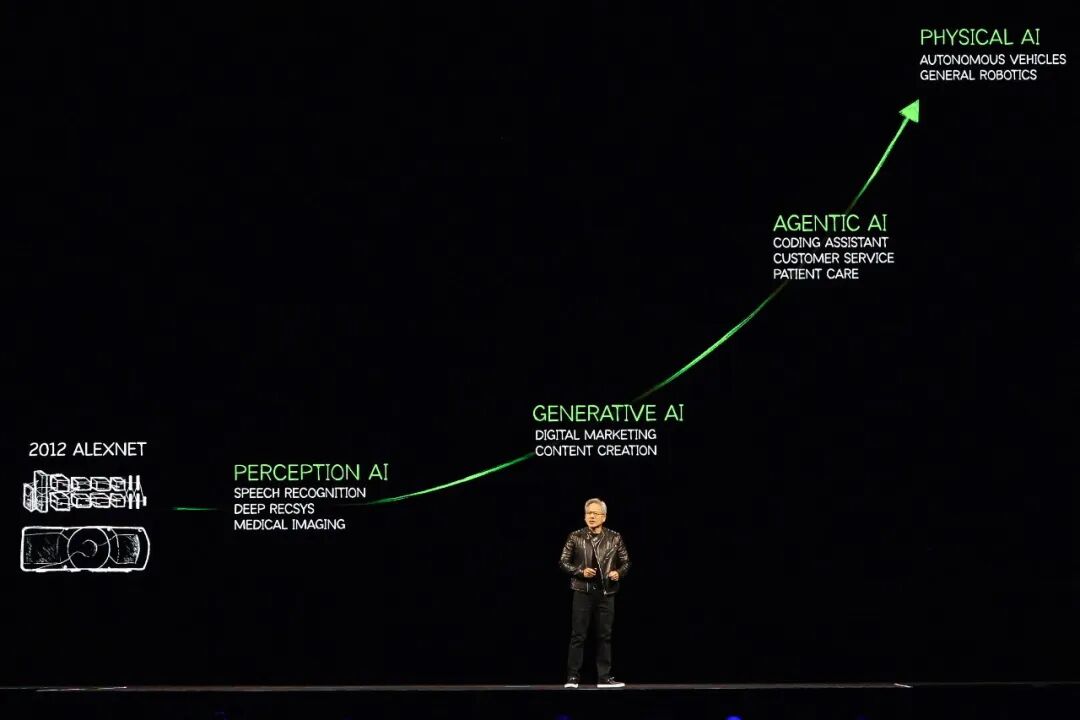
Image Source: NVIDIA
In response, at GTC Taipei 2026, NVIDIA founder and CEO Jensen Huang unequivocally stated, “Agentic AI has arrived. Computers no longer run applications; they run AI Agents.”
In contrast, although many of Apple’s latest AI features support “one-sentence operations,” they can only integrate information from within the system and the internet, making it challenging to directly control third-party apps and complete specific tasks.
As Tianfeng International Securities analyst Ming-Chi Kuo observed, the crux of WWDC26 lies in whether “Apple can leverage the same Gemini technology to offer superior AI applications, agent workflows, and hybrid device-cloud experiences compared to Google.”
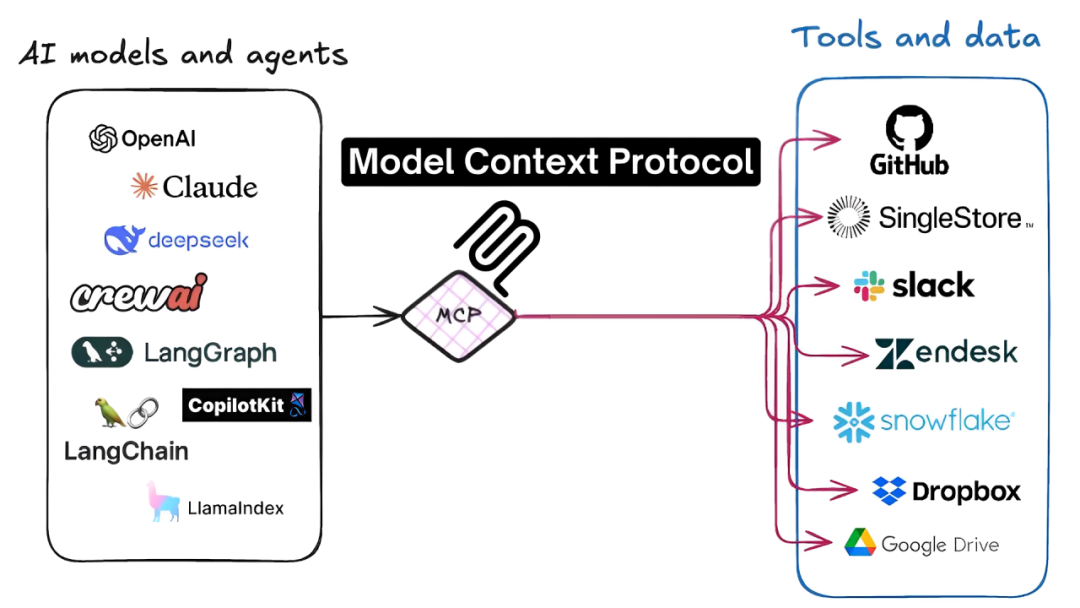
Image Source: Instructa
Due to the absence of hardware gateways, tech companies like OpenAI, Google, and Anthropic are developing tools such as MCP, Agent SDK, and Skills to bypass the mobile internet ecosystem and establish a new control paradigm.
Although Apple has introduced App Intents to facilitate third-party app integration with Siri, the lingering issue is its lack of a powerful foundational model. As the AI ecosystem evolves, the core competitiveness of smart assistants is shifting from hardware and operating systems to AI capabilities themselves.
If AI assistants from other tech companies can deliver more efficient and natural interaction experiences, users have little incentive to opt for Apple devices. At that juncture, Apple’s integrated hardware-software commercial moat will face erosion.
Ultimately, just as smartphones spawned a thriving mobile internet ecosystem, revolutionary AI technology may give rise to new interaction gateways and ecological systems.
The distinction is that platform competition in the mobile internet era revolved around vying for distribution gateways; in the AI era, it is about directly responding to user needs.
Against this backdrop, Apple’s continued reliance on the successful path of the mobile internet era, fortifying system gateways and ecological control while awaiting developer adaptation, seems akin to marking time while searching for a lost sword.
In the short term, Apple still boasts one of the world’s most mature and sticky hardware-software ecosystems, with a leading position that is hard to dislodge. However, history has repeatedly shown that during each computing platform transition, the true deciding factor is often not the ecological scale of the old era but who can first define the interaction paradigm of the new era.
Can Apple continue to shape the next era? The question has been posed to John Ternus.
Interactive Topic
Which Apple AI feature left the deepest impression on you? Why?
This article is original content from Farsight, and unauthorized reproduction is prohibited.
-
![]()
Revenue Surges 50-Fold: Q1 Earnings Match Annual Profit, This Year's Hottest Business Revealed
-
![]()
Cook’s Gourd Holds No Magic Cure for Apple’s AI Woes
-
![]()
Stellantis Presents a Catalyst, Propelling Chinese Automobiles Towards Global Supremacy
-
![]()
The First AI Car! Seres + ByteDance, AIVA Targets the 200,000+ Market with Its First Vehicle Launching This Year | Mirror Pro
-
![]()
Most People Don't Understand Kimi's World Cup Prediction
-
![]()
Behind Saido: The Strategy of a Company Backed by CATL and ByteDance
-
![]()
Market Disparity: Domestic OLED TVs Hold Less Than 10% Share, with Two Korean Giants Leading the Pack
-
![]()
Seres Faces Six Months of Declining Sales: Challenges Coexist with Opportunities