"Shaking Hands" with WeChat's AI Ecosystem: Didi Paints a New Vision for AI
 06/10 2026
 337
337
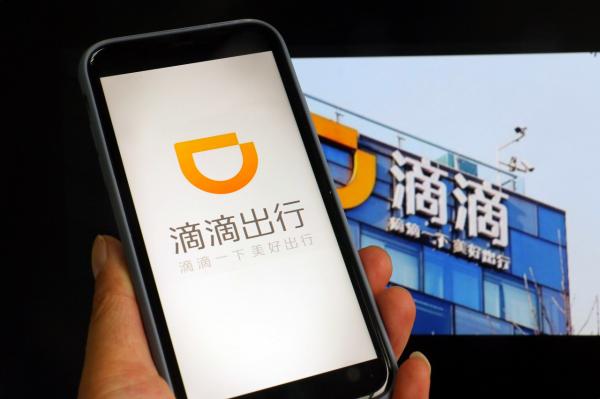
Tencent has taken another milestone step in building its AI ecosystem. Leading players such as JD.com and Meituan have begun to fully integrate into WeChat's AI ecosystem. Tapping into WeChat's 1.3 billion monthly active users has become an inevitable choice for every player seeking new growth in an era of stagnation. Shortly after JD.com and Meituan announced their integration, Didi also declared its full embrace of WeChat's AI ecosystem, a move that quickly sent shockwaves through the industry. According to related reports, Didi has deeply integrated its core ride-hailing services into WeChat's intelligent agent. Leveraging the powerful capabilities of Tencent's Hunyuan large model, combined with Didi's years of accumulated big data and real-time fleet dispatch technology, users can now issue travel commands in natural language within WeChat. The system automatically recognizes intentions, matches vehicle types, and completes one-click ordering—all without the need to switch applications, ensuring a seamless and smooth experience. In the future, services such as ride-sharing, chauffeur, and freight will also be gradually integrated, forming an intelligent service system that covers diverse mobility scenarios.
From its early layout (layout) of AI-powered ride-hailing to its current full integration into WeChat's AI ecosystem, Didi is rapidly reshaping the ways, paths, and underlying logic of its connection with users. If the earlier introduction of AI-powered ride-hailing represented Didi's internal transformation to enhance service capabilities and optimize transaction efficiency through AI, then this integration into WeChat's AI ecosystem signifies an external shift—rebuilding user touchpoints with AI by leveraging Tencent's ecological strength. After completing these internal and external transformations, Didi's connection with users will no longer rely solely on traditional internet technology architectures but will officially enter a new stage with AI as the foundational link. In essence, Didi is evolving from a mere mobility tool into an intelligent mobility service layer embedded within a national-level social ecosystem.
In my view, Didi's integration into WeChat's AI ecosystem is not merely a simple act of "adding AI" or "connecting an interface." Instead, it represents a future-oriented collaboration between Tencent—a platform with AI infrastructure and massive traffic—and Didi—an industry player with deep professional service capabilities. Through this collaboration, the resulting synergy, in terms of depth, breadth, and industry impact, may far exceed the scope of merely "adding AI." This is not just a channel expansion for Didi but a profound reconstruction of the business logic in the entire mobility industry during the AI era.
I
As we all know, the current booming AI wave is penetrating every industry and scenario with unstoppable momentum. For players, riding the AI wave is equivalent to finding a new growth engine in the post-internet era—a strategic opportunity to break through growth ceilings. However, this process also faces challenges such as the high difficulty of commercializing technology, increasingly scarce traffic entry points, and rising user acquisition costs. Reality tells us that relying solely on independent operations and closed self-research is becoming increasingly inadequate, making it difficult to fully capitalize on the opportunities of the AI era. Leveraging ecological strength, harnessing core strengths, and finding one's niche through open collaboration are becoming new choices—or even necessary options—for more and more players.
Tencent has precisely identified this major trend in industry development. Therefore, when it comes to embracing AI, Tencent does not view AI merely as an independent technological module or a single product but as a foundational approach and methodology for establishing a new ecosystem. Whether through the continuous refinement of its Hunyuan large model as the underlying infrastructure or the batch incubation and openness of AI-native applications, Tencent maintains an open and shared strategic posture. This is why we have seen Tencent fully integrate DeepSeek and undertake a series of ecological layout (layout) actions amid the "shrimp farming craze." Ultimately, Tencent aims to maximize the release of AI capabilities by building a grand and open AI ecosystem, allowing technology to truly permeate specific services across industries.
The opening of WeChat's AI ecosystem can be seen as a continuation and implementation of Tencent's consistent open and shared AI philosophy. For Tencent, it possesses a powerful underlying large model infrastructure, a massive traffic pool of 1.3 billion monthly active users, and diverse and rich application scenarios. However, these alone are not enough. The key lies in incorporating more specialized players, especially those with deep industry barriers and years of experience in various vertical scenarios, to truly maximize the advantages of technology and traffic, forming a complete value loop. This is why we have seen the opening of WeChat's AI ecosystem and the participation of leading players in specific scenarios, such as JD.com, Meituan, and Didi. Through this approach, Tencent is building a new ecosystem linked by AI. In this system, each player can continue to leverage their core strengths in professional scenarios, ultimately achieving a synergistic effect where "1+1 is far greater than 2" and jointly expanding the market.
II
As "comprehensive players" like Tencent, which encompass technological, traffic, and industrial advantages, begin to achieve new development by building a large AI ecosystem, "professional players" like Didi, which specialize in vertical fields, are also facing a new transformation and upgrade for the future. Faced with the dilemma that traditional supply models built on internet mechanisms are increasingly unable to activate existing users and drive new growth, the question of how to re-establish deep connections with users through embracing new technologies and transforming traditional models has become an unavoidable necessity rather than an optional addition.
In fact, Didi has already made dense (intensive) and in-depth layout (layouts) in the AI field. Whether through the launch of its AI travel assistant "Xiaodi," the development of its own AI safety model to ensure travel safety, or the opening of its AI ecological capabilities and frontier explorations in autonomous driving, Didi is undergoing a systematic transformation and upgrade from the inside out by fully embracing AI. Ultimately, through this transformation and upgrade, Didi aims to create a new, intelligent supply method to establish more efficient, precise, and natural connections with users, ultimately finding tangible new growth in seemingly saturated markets.
Thanks to Didi's continuous deep cultivation (deep cultivation) and strategic investment in AI, we have seen Didi deliver impressive results in the first quarter of 2026 that caught the market's attention. In these results, AI's performance stood out as a core growth engine. Financial reports show that young users have become the primary group for AI-powered ride-hailing, with those born after 2000 accounting for over 40%. This generational data reflects the natural preference of AI-native groups for intelligent interaction methods. Deterministic services and high-quality experiences together form Didi's core competitiveness in the AI era. Additionally, drivers participating in high-quality premium order services can increase their hourly income by 5%–20%. This mechanism has a significant incentive effect: higher earnings motivate drivers to provide better services, which leads to better reputation, more orders, and further income growth, creating a virtuous cycle of "good service—good income—good experience" that injects sustainable internal momentum into business growth.
Didi's integration into WeChat's AI ecosystem can be seen as a forward-looking choice that aligns with users' strong demand for AI interactions and their consumption habits of completing life services within national-level applications. Through this approach, Didi can seamlessly integrate its professional, deeply refined mobility service capabilities into WeChat's powerful traffic ecosystem in the form of intelligent agents. This not only makes the connection between services and users more efficient and natural but also places Didi's mobility services within WeChat's vast ocean connecting 1.3 billion users. When it continuously generates synergistic effects and forms collaborative relationships with leading players like JD.com and Meituan within the same ecosystem, the resulting multiplier effect will inevitably bring incremental space and commercial possibilities far beyond imagination.
III
The "handshake" between Didi and WeChat's AI ecosystem may appear to be an ordinary commercial integration and channel expansion on the surface, but at a deeper level, it represents a paradigm shift in industrial division and ecological collaboration in the AI era.
On one hand, Tencent firmly positions itself as the underlying infrastructure and connector, opening up its core user touchpoint scenarios and abundant social traffic pool to serve as the foundation for the ecosystem. On the other hand, vertical giants like Didi no longer focus on building super traffic entry points but instead concentrate on condensing their fleet dispatch capabilities, safety algorithms, and service standard systems into AI-powered modules that can be intelligently deployed. Both sides assume their respective roles and leverage their strengths, forming an ideal collaborative relationship between the foundation and verticals.
It is foreseeable that future mobility will no longer be a single action of "opening an app to hail a ride" but will truly integrate into users' rich life scenarios—naturally planning itineraries during chats, intelligently recommending travel options after payments, and automatically triggering ride services during social media gathering invitations.
Didi is evolving from a functional mobility tool into an ubiquitous, easily accessible intelligent mobility service layer. Meanwhile, WeChat is upgrading from a social ecosystem platform to a super service gateway and life operating system in the AI era. When technology and scenarios deeply interlock and when ecosystems and industries move toward each other, a truly AI-based new frontier for mobility is just beginning to unfold.
Epilogue
When Didi's steering wheel connects with WeChat's intelligent engine, it is not just a strategic handshake between two giants but a microcosm of the entire internet ecosystem's shift from "app silos" to "intelligent fusion." Under the catalysis of AI, traffic is no longer static water but dynamic rivers; services are no longer isolated islands but connected nodes.
Didi and WeChat's collaboration sends a clear signal to the industry: the era of solo efforts is ending, and the era of ecological symbiosis has arrived. Those who can find their ecological niche earlier and maximize their professional value through open collaboration will gain an edge in this AI-driven industrial transformation.
From a broader perspective, this may just be the beginning.
As core services such as mobility, e-commerce, and local life increasingly integrate into a single intelligent ecosystem, a smart life vision of "what you see is what you get, what you say is what you do" is accelerating into reality. In this vision, users no longer need to repeatedly switch between different apps; they can simply express their needs through natural interactions, and AI will orchestrate the underlying ecological capabilities to fulfill everything. This represents not just an efficiency improvement but a revolutionary experience.
And Didi, with its deep industry accumulation and forward-looking strategic vision, is taking the lead in sailing into this imaginative new frontier.
-
![]()
"Shaking Hands" with WeChat's AI Ecosystem: Didi Paints a New Vision for AI
-
![]()
The Battle of Instant Retail: Does Huawei Want Meituan to Win?
-
![]()
The Success of AITO Underscores Seres' Need for Saido AIVA
-
![]()
Apple's Cook Takes Final Bow: Siri Reimagined, Gemini Steps In, But Capital Markets Remain Unconvinced
-
![]()
Apple’s Cook Bids Adieu: Siri Reinvented, Gemini Joins the Fray, But Are Capital Markets Unimpressed?
-
![]()
Breaking into the AI Computing Power and Low-Altitude Economy Sectors! Tongya Technology Heads for Hong Kong IPO: Tripling Revenue in Three Years, Third in Global Market Share, with Matrix Partners Ch
-
![]()
Will ByteDance’s Collaboration with Saido Follow Huawei’s Footsteps?
-
![]()
Revenue Surges 50-Fold: Q1 Earnings Match Annual Profit, This Year's Hottest Business Revealed