The Success of AITO Underscores Seres' Need for Saido AIVA
 06/10 2026
 385
385
Will Consumers Pay a Premium for an 'AI Vehicle'?
Seres Aims to Replicate the Triumph of AITO with a New Endeavor
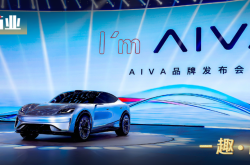
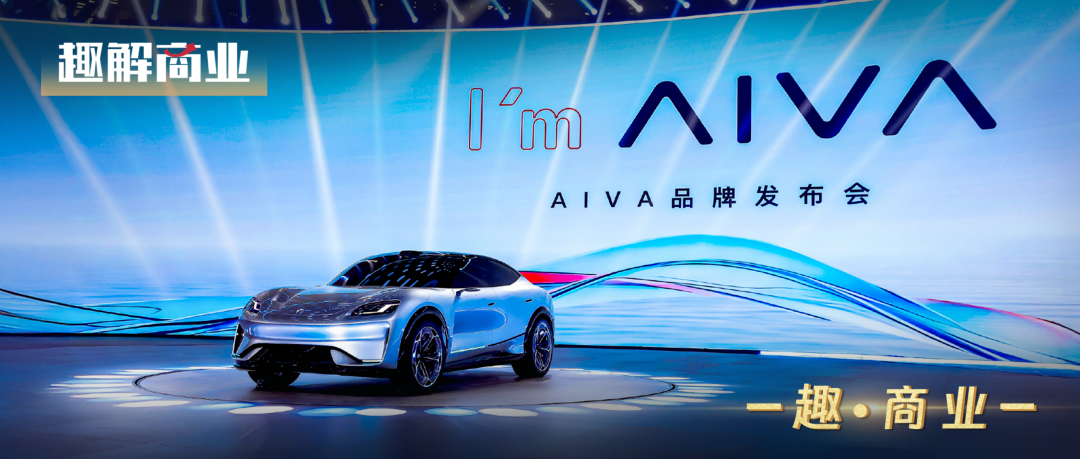
On the evening of June 9, Saido Technology unveiled its latest innovation in the automotive sector—the AIVA, a new AI-powered vehicle brand. The event marked the debut of the AIVA Origin Concept and confirmed the launch of the inaugural production model, the AIVA ME7, set for release in the latter half of this year.
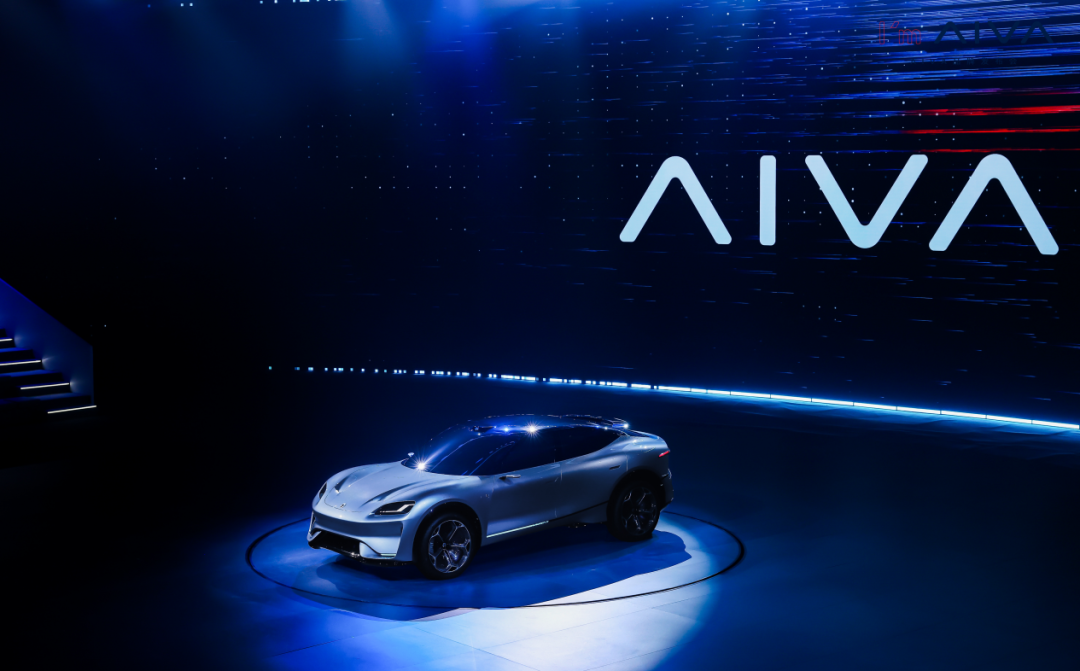
Image Source: Saido Technology
Positioned as a crossover coupe SUV, the AIVA ME7 offers both pure electric and extended-range powertrain options. Targeting the mainstream market segment priced between RMB 100,000 and 200,000, it comes equipped with an intelligent cockpit powered by the Doubao Large Model and incorporates Yuanrong Qixing's cutting-edge driver-assistance system.
Notably, the unveiling of AIVA was marred by controversy within the industry, primarily due to similarities in its logo design.
Avatr took to social media, stating, "Chinese automakers must resist the temptation of a 'Ctrl+C, Ctrl+V' approach or revert to outdated reverse engineering practices." This sentiment was echoed by Avatr's legal department, which asserted its right to pursue further legal action. Although Avatr refrained from naming names directly, numerous netizens pointed fingers at the newly introduced AIVA.
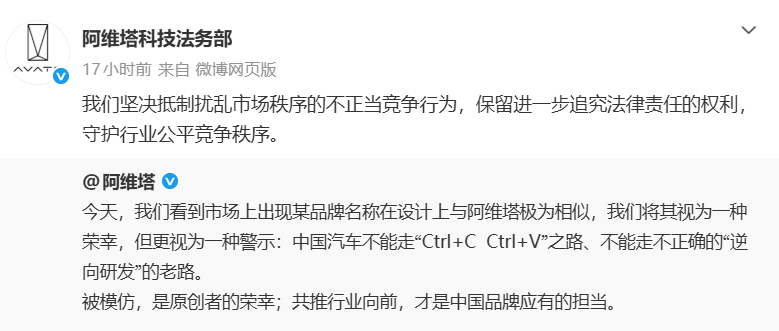
Image Source: Weibo Screenshot
For a new brand that emphasizes AI-native technology, love, freedom, and a novel lifestyle, being accused of plagiarism right from the outset is far from ideal. However, focusing solely on the brand controversy would undermine the true significance of AIVA.
Over the past few years, 'AITO' has been instrumental in Seres' remarkable turnaround, propelling it into the high-end new energy vehicle market. Yet, this success has also raised questions: the more AITO thrives, the more the external world attributes Seres' achievements to Huawei.
Thus, AIVA's significance extends beyond being just another new brand for Seres. It represents an attempt to forge a new growth trajectory outside Huawei's ecosystem.
For AIVA, Avatr's doubts are merely a sideshow, but they inadvertently highlight the real challenges faced by new brands. In the fiercely competitive new energy vehicle market, the greatest hurdle for new entrants is no longer technological prowess but establishing a distinct brand identity.
This may also explain why Seres felt compelled to launch AIVA. Over the past few years, AITO has undoubtedly been one of China's most successful collaborations in the new energy vehicle industry. By leveraging Huawei's brand, distribution network, and intelligent capabilities, Seres achieved a remarkable transformation.
However, AITO's success has also cast a shadow. In consumers' minds, AITO is primarily associated with Huawei, not Seres. When people think of Harmony Intelligent Mobility, they recall Huawei ADS, the Harmony Cockpit, and Richard Yu, while Seres is merely seen as the manufacturing and execution partner.
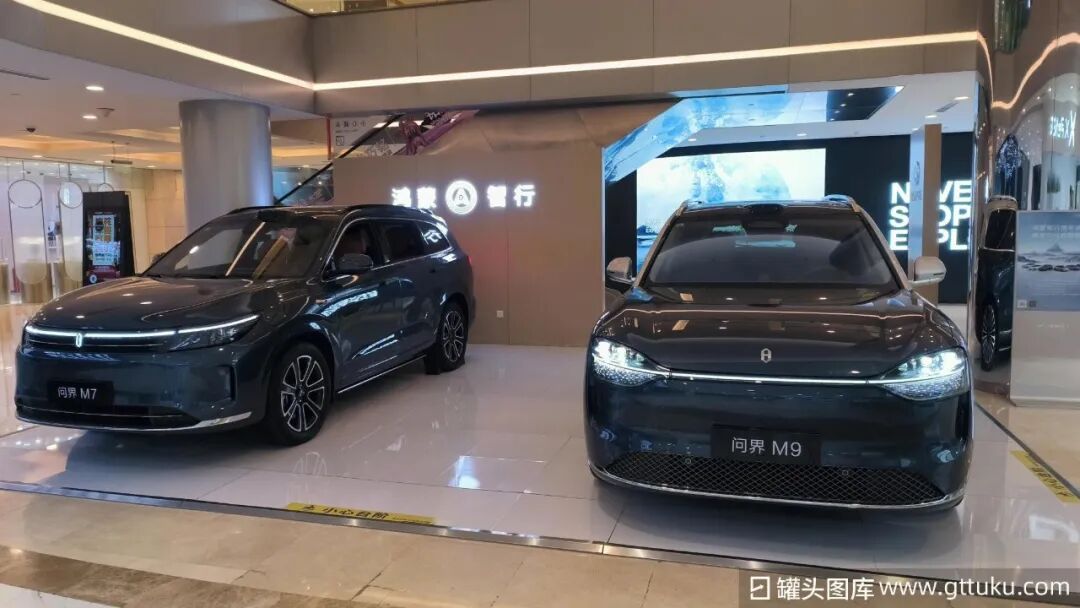
Image Source: Canned Food Library
This perception isn't necessarily negative, but it poses an unavoidable question for Seres: Can it independently create hit products without relying on Huawei?
Moreover, as Huawei's Harmony Intelligent Mobility ecosystem expands, partners like Chery, BAIC, and JAC have joined, making Seres no longer the sole protagonist in Huawei's automotive ecosystem. For an automaker aiming to remain competitive in the long run, relying solely on one brand and one partnership model is inherently risky.
Simultaneously, Seres has lacked a truly successful second product line beyond the high-end market.
Its previous attempt with the mass-market brand Landian, positioned in the RMB 100,000 home market, yielded lackluster sales and failed to shoulder new growth responsibilities. This time, Seres is clearly unwilling to bear the risk alone.
Following Saido Technology's restructuring, it introduced a strategic capital increase totaling RMB 6.671 billion. Chongqing's local state-owned platform, Shaci Zhiyuan, invested RMB 3.433 billion, becoming the largest shareholder with a 34.5% stake. Seres stepped back to become the second-largest shareholder with 32.96%, while CATL holds approximately 9.89% through Wending Investment. Industry chain players like Bojun Technology and Xingyu shares also joined the fray.
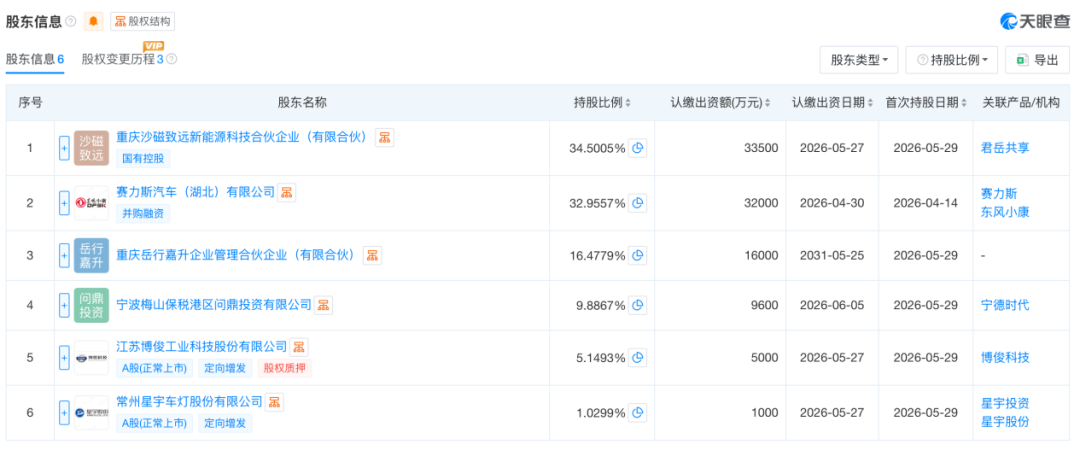
Image Source: Tianyancha Screenshot
In a sense, AIVA represents Seres' 'second venture.' It aims not only to penetrate the RMB 100,000-200,000 mass market but also to test Seres' systemic capabilities.
While AITO demonstrated Seres' ability to leverage and amplify Huawei's capabilities, AIVA seeks to answer a different question: When Huawei is no longer in the spotlight, does Seres possess the ability to continuously create popular brands, integrate industrial resources, and define products? This may be the most noteworthy aspect behind AIVA's inception.
Looking back, AITO's success lay in Seres' brand leapfrogging with Huawei's assistance—a proven model. However, replicating it isn't straightforward.
With AIVA, Seres has opted for a different strategy. Compared to AITO, AIVA resembles more of an 'industry alliance.'
Chongqing's local state-owned entities provide financial support and resource guarantees; Seres continues to leverage its strengths in vehicle R&D and manufacturing; CATL secures battery supply; Yuanrong Qixing handles driver-assistance systems; and ByteDance's Volcano Engine becomes AIVA's most distinct intelligent label.
ByteDance's involvement deserves special attention. Over the past few years, Volcano Engine has partnered with over 50 automotive brands, with over 7 million vehicles equipped with Doubao Large Model technology. From BYD and Mercedes-Benz to Chery, ByteDance primarily acts as a technology supplier, offering content ecosystems, voice interaction, and large model capabilities while maintaining a strict 'no car manufacturing, no equity stakes' boundary. For instance, Saido's brand ownership, operational entity, and capital structure are unrelated to ByteDance.
AIVA, however, marks ByteDance's deepest intervention to date. According to official statements, this isn't merely about integrating Doubao into existing models or providing a simple voice assistant. Instead, ByteDance participates in product development from the brand's inception through 'joint definition, joint design, and co-creation.'
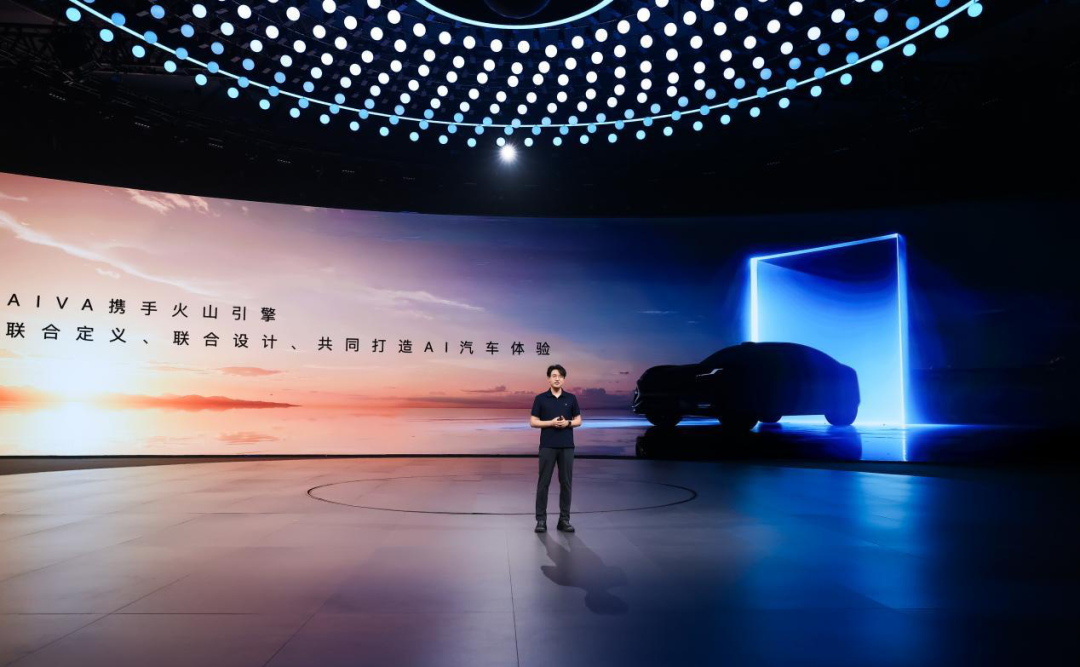
Image Source: Saido Technology
From product definition and interaction logic to Agent architecture and vehicle-cloud collaboration, ByteDance's involvement far exceeds that of a traditional supplier. In other words, if AITO is a showcase for Huawei's model, AIVA resembles a flagship project for ByteDance's AI capabilities.
For Seres, it needs a new intelligent label to reduce reliance on Huawei. For ByteDance, it requires a genuine vehicle case to prove that Doubao can not only 'enter vehicles' but also help define them.
Unlike Huawei's 'single-dominant' approach with AITO, AIVA now adopts a 'multi-party jigsaw' model. This approach spreads risk and avoids being tied to a single partner, but the challenge lies in integrating diverse suppliers' capabilities into a unified product experience.
After all, consumers don't perceive supply chain divisions. They don't care who provides the battery or the intelligent driving system, nor will they buy a car just because of its partners. What matters is whether the car drives well, is user-friendly, and offers value.
From the event's messaging, AIVA hopes to be remembered not for Seres or ByteDance but for the 'AI vehicle' label.
At the event, AIVA's president and product manager, Li Bo, repeatedly emphasized, "AI comes first, then the car." In his vision, AI shouldn't merely be a voice assistant but a perceptive, thinking, and evolving partner. AIVA aims to remember user preferences, understand their state, and even proactively handle charging, navigation, entertainment, and other services.
In short: while humans once adapted to cars, future cars will adapt to humans.
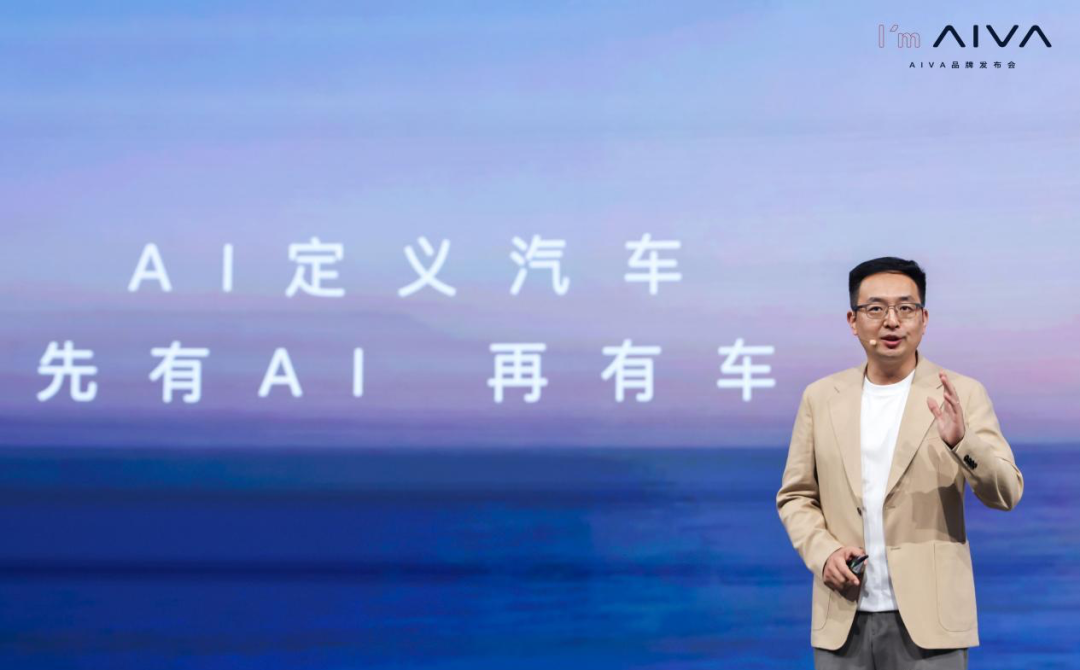
Image Source: Saido Technology
From an industry perspective, this vision isn't unfounded. Over the past few years, intelligent driving has been a core selling point for new energy vehicles. However, as driver-assistance systems become widespread, players like Huawei, XPENG, Li Auto, Momenta, and Yuanrong Qixing are advancing into end-to-end, VLA models, and world models. While technological gaps remain, consumer perception is narrowing.
In contrast, the cockpit has become the highest-frequency user touchpoint. Navigation, climate control, music, calls, scheduling, child companionship, and privacy protection are used daily. For consumers in the RMB 100,000-200,000 segment, a truly useful AI assistant may leave a stronger long-term impression than urban NOA, which might only be used a few times a year.
This explains why AIVA prioritizes Doubao. However, the commercial value of AI cockpits remains unproven.
Today, Li Auto has MindGPT, Xiaomi has its self-developed model, and brands like Mercedes-Benz, BYD, and Chery have integrated various large model capabilities. Doubao isn't the only option, and 'AI in cars' is no longer novel.
Will consumers choose a new car brand for a smarter air conditioner or more natural dialogue? The answer remains unclear.
A more pressing challenge is that AIVA operates in the fiercely competitive RMB 100,000-200,000 market, where BYD holds scale advantages, Leapmotor competes on cost-effectiveness, and Geely Galaxy leverages systemic capabilities. Compared to the high-end market, mass-market consumers are more rational, prioritizing price, space, range, distribution, and after-sales service over concepts.
For AIVA, the event's narratives are just the beginning. The real test lies in the ME7's post-launch experience, Yuanrong's driver-assistance performance in the mass market, whether Doubao can deliver perceptible differentiation, and whether offline channels can support scalable sales.
Whether AIVA becomes the next AITO remains unanswered. However, it raises a question worth pondering for the entire industry: When intelligent driving becomes standard, will future automotive competition hinge on 'who drives better' or 'who understands users better'?
-
![]()
"Shaking Hands" with WeChat's AI Ecosystem: Didi Paints a New Vision for AI
-
![]()
The Battle of Instant Retail: Does Huawei Want Meituan to Win?
-
![]()
The Success of AITO Underscores Seres' Need for Saido AIVA
-
![]()
Apple's Cook Takes Final Bow: Siri Reimagined, Gemini Steps In, But Capital Markets Remain Unconvinced
-
![]()
Apple’s Cook Bids Adieu: Siri Reinvented, Gemini Joins the Fray, But Are Capital Markets Unimpressed?
-
![]()
Breaking into the AI Computing Power and Low-Altitude Economy Sectors! Tongya Technology Heads for Hong Kong IPO: Tripling Revenue in Three Years, Third in Global Market Share, with Matrix Partners Ch
-
![]()
Will ByteDance’s Collaboration with Saido Follow Huawei’s Footsteps?
-
![]()
Revenue Surges 50-Fold: Q1 Earnings Match Annual Profit, This Year's Hottest Business Revealed