AI Large Models Compete for the Business of 'Zhang Xuefengs'
 06/12 2026
 329
329

Author: Zhu Fenglin
Editor: Liu Jingfeng
In June, a special kind of anxiety fills the air.
As the final bell of the college entrance examination rings, the battle with pens comes to a temporary halt, followed by another war without smoke—filling in college application forms.
"It's better to choose well than to perform well." This heavy statement weighs on the minds of millions of families. In the past few years, Zhang Xuefeng has become the reliance for countless ordinary people when filling out their college application forms. His views, such as "geographical location is more important than the school for liberal arts students" and "don't major in journalism," have struck a chord with students from humble backgrounds, making him an indispensable reference point.
But now, this reference point is gone. Zhang Xuefeng's departure has left a huge vacuum, with millions of examinees and parents on the other side of the screen being thrown back to square one. Faced with a deluge of college codes, complex admission regulations, and contradictory advice—parents say to play it safe, classmates say to aim high, the internet claims this major is a pit, and that city is a goldmine—no one knows who to trust.
With information pouring in from all sides, each with their own ideas and needs, no one knows whom to believe.
Just as this year's 12.9 million examinees are about to face the same dilemma, several tech giants have presented them with AI-powered college application agents.

Nearly 80% of Examinees Use AI for College Application Filing
After stepping out of the college entrance examination hall, the thoughts of many examinees and parents are no longer on the scores on the test papers but on how to fill in their college application forms next.
Rewind a decade, and college application filing meant buying two brick-sized books: the "Admission Plan" and the "Application Guide," each hundreds of pages long and filled with tiny print. Parents would use rulers to compare previous years' score lines line by line, calculators to calculate score differences, and paper and pen to record, taking half a day to confirm whether a school was within reach.
Around 2020, the first batch of internet-based college application filing tools became relatively mature. Alibaba's Quark, Baidu's Gaokao, and Tencent's "Admissions and Examinations" mini-program were launched one after another, bringing over the years (previous years') score lines online. Examinees entered their scores, and the system returned a list—this was the 2.0 era of college application filing.
In 2026, with the explosion of AI agents, the way of filling in college application forms officially entered the 3.0—Agent era. According to iiMedia Research data, the number of users of AI-powered college application tools is expected to exceed 92 million this year, with 78.4% of examinees using AI to check colleges and generate application plans, and over 60% of parents using AI recommendations as a core reference for filing. Among the 12.9 million college entrance examination examinees nationwide, almost every family is in contact with such tools.
With AI, examinees no longer need to study complex guides. They only need to select some key information, such as scores, cities, professional preferences, career goals, etc., and supplement some personalized information in natural language to obtain diversified application plans, including ambitious, stable, and safe options.
This innovation has also brought about dramatic structural changes in the college application counseling industry.
First, the entire industry is shifting from a "data business" to a "model business." In the past, the core competitiveness of college application tools lay in their accumulated databases of admission score lines over the years. They made money from information gaps by selling cards and memberships. But now, data is no longer a barrier. Large models can not only retrieve data but also engage in dialogue and understand real intentions from the conversation.
This change has also directly impacted the original business model. With tech giants like Alibaba, Tencent, and Baidu launching free AI-powered college application assistants, the traditional C-end business of selling data cards and low-level consulting has been severely squeezed. College application agencies are finding it increasingly difficult to operate, and the industry is stratifying. Low-end calculation needs are gradually being met by AI, and some local education bureaus and schools are beginning to purchase college application filing assistance systems as public services, with signs that the focus of payment is shifting towards the B-end.
At the same time, competition has entered the personalized stage of "AI college application experts." Not long ago, an open-source project called "Zhang Xuefeng.skill" appeared on GitHub, attempting to replicate his language style and decision-making logic through prompt engineering. Soon after, major tech companies began having their agents mimic expert tones in their "speech." Instead of just providing a list, they now explain the reasons for recommendations and actively inquire about preferences, simulating the interactive feel of a real consultant.
In just a decade, college application filing has evolved from a sea of paper books and web forms to an agent era where plans can be generated through natural language conversations. Tools are evolving rapidly, but the choice about the future doesn't seem to have become any easier.

Tech Giants Launch AI College Application War
This summer, Tencent, Alibaba, and Baidu have all entered the fray, pushing college entrance examination services directly into the Agent conversation era.
Tencent made the first move in this battle.
On June 5, before the college entrance examination even began, Tencent released Yuanbao Gaokao Tong, positioned as a "College Entrance Examination Consultant Agent." Its core logic lies in reconstructing interaction: instead of complex documents, it focuses on smooth dialogue. Relying on the Hunyuan large model and the official database of Zhangshang Gaokao, examinees can correct their needs at any time in the chatbox, such as "exclude medical majors," "add universities in Wuhan," "exclude Sino-foreign cooperative education," etc., and the system will re-rank the plans in real-time based on the context. The entire product design is based on one judgment: college application filing is not a static act of single submission but a dynamic, iterative decision-making process. Whoever can make the conversation experience the most natural will take the initiative in this battle for traffic.
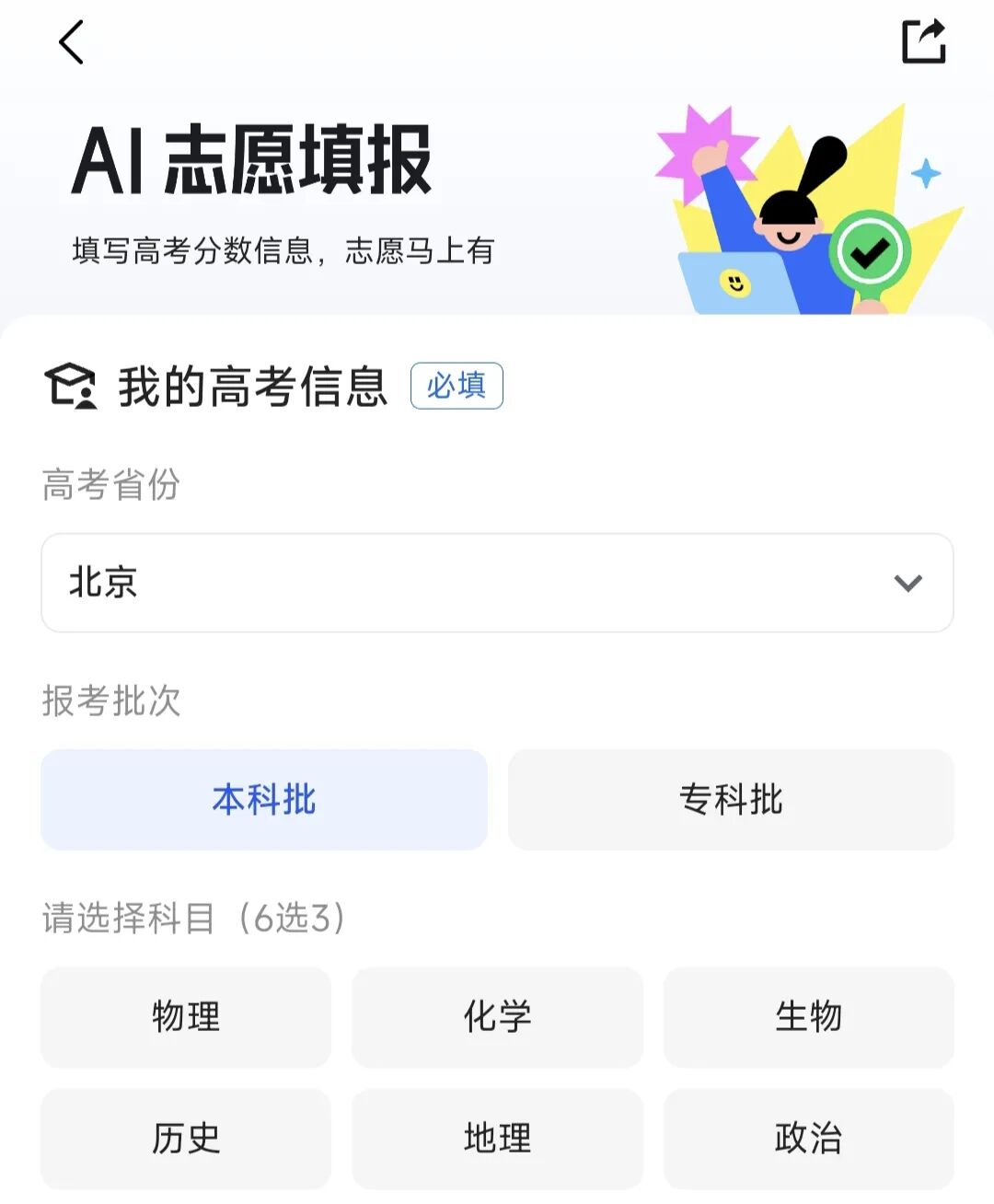
Tencent Yuanbao Gaokao Tong
Although Alibaba made its move slightly later, its layout is deeper. On June 10, Qianwen officially launched its college application agent and explicitly proposed the concept of "the first domestic full-cycle" service. Alibaba's service is not limited to the brief window after scores are released but spans the entire process of score checking, positioning, exploration, plan formulation, and admission follow-up. Its plan is built on the Qianwen college application large model, integrating eight years of accumulated college entrance examination data from Quark. The core output is a customized college application report, attempting to upgrade college application filing from "question-and-answer" to "comprehensive case delivery." Alibaba's strategic intent is clear: by leveraging this high-pressure scenario with extremely low tolerance for error, it aims to verify the reliability of agents in handling complex real-world problems, thereby establishing a cognitive moat for Qianwen as a "trustworthy assistant" in the competition among large models.
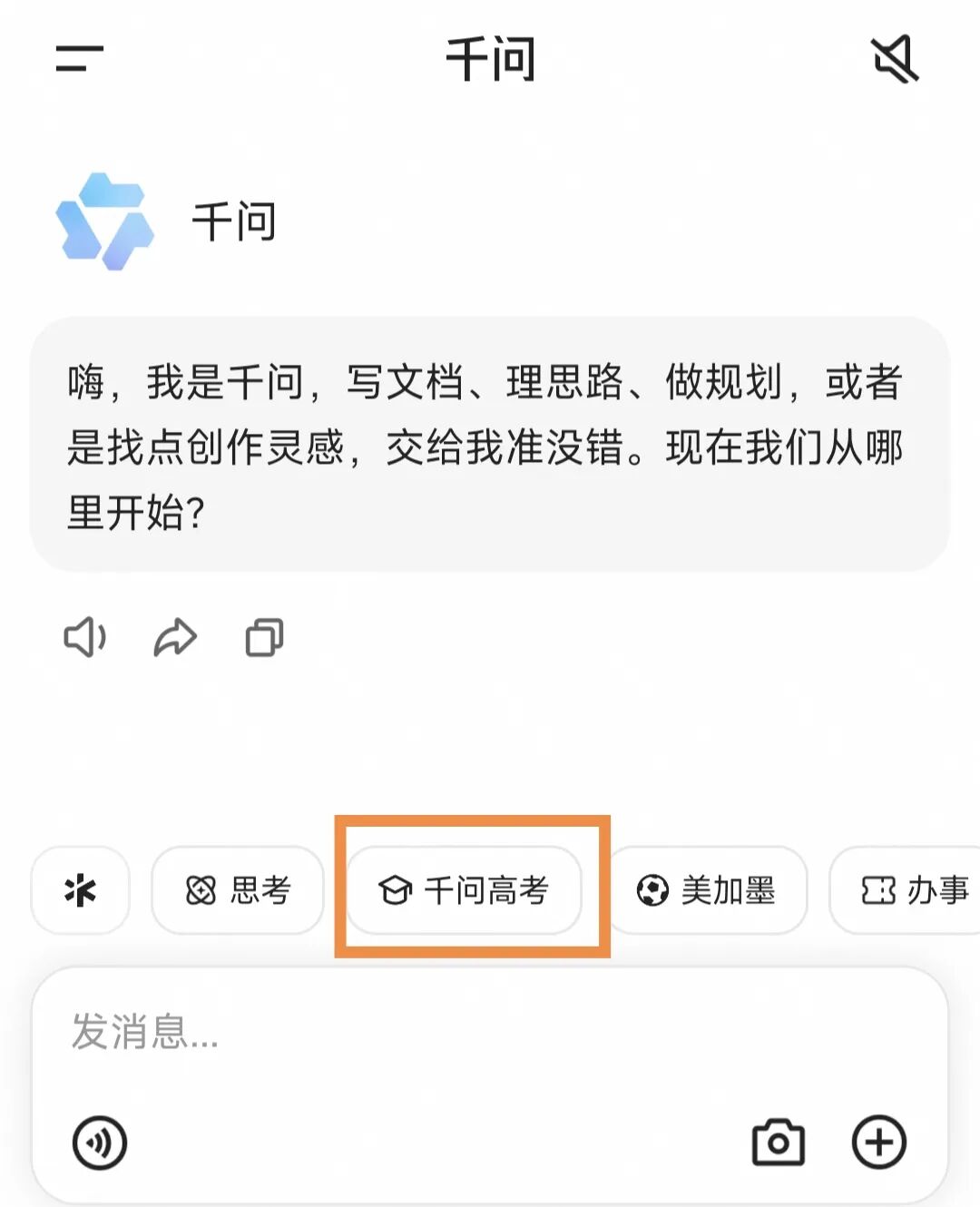
Qianwen College Entrance Examination
Baidu, on the other hand, has chosen a differentiated path. Also on June 10, Baidu upgraded its college entrance examination service system and launched an AI college application report, with its most prominent label being "dual verification." Baidu is well aware of its strengths in search access and data breadth but also soberly (soberly) recognizes the market's natural distrust of algorithmic black boxes. Therefore, it has built a closed-loop mechanism of "AI generation - rule engine initial screening - high-risk case manual review," introducing senior college application consultants to audit and certify the reports. Essentially, this is using the credit system of the traditional education consulting industry to provide risk underwriting for emerging AI technologies.
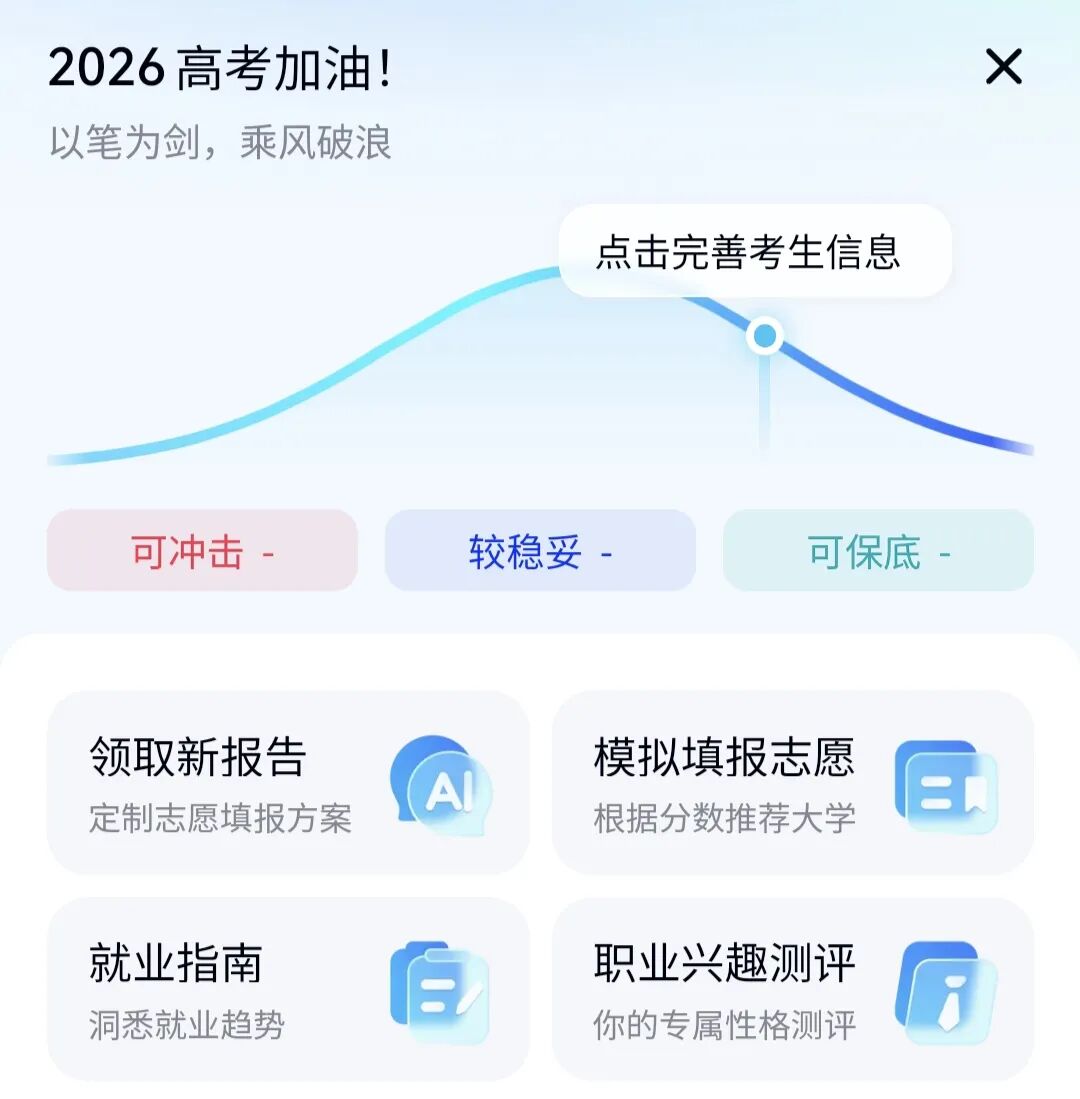
Baidu Wenxin AI College Application Assistant
Tencent wants to chat through ideas with people, Alibaba wants to help people think things through, and Baidu is striving to prove that machine results are reliable enough.
The common barrier for all three is that their services are free because what they are truly competing for is traffic—to become the irreplaceable decision-making hub in the minds of millions of families.
But really, does anyone dare to let AI fill in their college application forms?
On social media, there are more and more posts of this kind, which is enough to show that trust is a gulf between examinees and AI.
"In the past, if Zhang Xuefeng gave you bad advice, you might go block him at his company's door. Now, if AI screws you over, there's nowhere to vent your anger." It sounds harsh, but it's the truth.
This sense of powerlessness stems from a complete vacuum of responsibility. The user agreement clearly states: AI-generated content is for reference only, and the platform is not responsible for admission results. Therefore, if AI recommends a major that has stopped enrolling due to outdated data or fabricates a false admission rank due to model hallucinations, causing an examinee to slip in rankings, the consequences can only be silently borne by the examinee.
A more hidden risk lies in the homogeneity of algorithms. When millions of examinees are using the same underlying models, the system may resonate. If everyone is asking, "What good schools can I get into with 500 points?" AI's answers may be similar. This can instantly push up the admission score lines of these so-called "optimal" schools, turning what was calculated as a "safe" volunteer (choice) into a high-risk option in actual admission.
As for the details hidden in the crevices of admission brochures, such as color blindness restrictions, single-subject score thresholds, etc., AI can still identify these. But its biggest problem is defining the future based on the past. AI's logic is to recommend majors based on historical data, but it cannot predict industry turning points.
Just a few years ago, accounting and law were golden rice bowls everyone fought for, but now they are gradually fading due to automation and supply-demand reversal; IT majors still carry the halo of high salaries after graduation but now face the reality of AI replacement and "layoffs at 35." AI can see the glorious past data of these majors but cannot see their approaching ceilings.

Algorithms Don't Choose Paths for People
As tech giants propel college application filing into the Agent era, concerns about data hallucinations and responsibility vacuums arise. However, faced with an information flood, many families still choose to let AI in—not to hand over decision-making power but to first see the blind spots.
The first layer of blind spots is unfamiliarity with the rules. Many parents realize, when reading admission brochures, that they have significant gaps in understanding the admission mechanism. How to calculate "major-level differences," the diversion risks of checking "obey adjustment," specific restrictions on single-subject scores and physical exams... These ins and outs, which used to require asking around or paid consulting to understand, can now be broken down into straightforward explanations. Only by first understanding the rules can one qualification (be qualified) to examine the long list of names that appear on the screen.
The second layer of blind spots is the screening dilemma brought about by a deluge of information. It's difficult to exhaust all possibilities by manual browsing alone, but algorithms can pull up a dozen reachable universities in seconds based on scores and ranks, by the way (incidentally) marking the score line trends of recent years. This step doesn't solve "which one to choose" but first answers "which ones are worth looking at."
The third layer of blind spots consists of details that affect the quality of life in the coming years. Which campus is in the city center, which dormitory doesn't have air conditioning, what's the approximate success rate of transferring majors, whether tuition exceeds the family budget, etc. By asking questions in the chatbox, AI can piece together scattered fragments into readable text. Of course, these data sources are mixed and still need verification; they shouldn't be taken at face value.
The reason these tech giants have collectively entered the market this summer is precisely because they see the huge demand behind these three layers of blind spots, wanting to quickly capture the attention of examinees and parents within a window of less than a month. This is both a commercial attempt to seize the decision-making entry point for millions of families and a gamble to exchange computing power for trust.
Their actions have bridged the information gap caused by class differences in the past, making once-expensive consulting services accessible basic tools for everyone.
But in reality, the flattening of information has not made decision-making easier. When screening efficiency is pushed to the extreme, what remains is often even more difficult trade-offs.
The more overloaded with information, the more important it is to reclaim human agency. AI is responsible for data processing, list compilation, and risk warnings, translating vague preferences into structured alternatives, but the final decision-making power always rests with humans. Whether to take a risk and aim for a niche major at a prestigious university or to play it safe and choose a strong discipline at an ordinary college—this choice must return to an honest assessment of the examinee's tolerance for risk, career aspirations, and family realities.
AI can calculate the admission probability of each path but cannot perceive the economic and psychological pressure repeat (repeating a year) places on a family, nor can it measure how deeply a young person is obsessed with a specific discipline; it can recommend current hot majors based on historical data but cannot see the industry cycles' fluctuations in the coming years; it can present all possible paths but cannot answer which path suits this particular person.
Acknowledging the boundaries of agents makes them efficient aids; but fantasizing that they can bear the weight of life choices for humans is the beginning of all anxiety.
-
![]()
History’s Largest IPO Is Set to Debut—But Chinese Investors Are Shut Out
-
![]()
Should 44 Million Electric Vehicles Be Subject to Road Maintenance Fees If They Don’t Refuel?
-
![]()
US Stock IPO | Anthropic and OpenAI File Successively, Three Giants Aim for a Combined $4 Trillion Market Debut
-
This Smart Toilet Enterprise Holds the Key to AI Computing Power
-
![]()
Breaking News! An AI Company Valued at 5.8 Trillion USD Rushes for IPO with Annual Revenue of 170 Billion USD
-
The Underground 'Computing Battle': How HPC and Large Models Revolutionize Oil Exploration
-
![]()
New Breakthrough! Haiguang Optoelectronics Clears HKEX IPO Hurdle
-
![]()
AI Computing Power Surge Propels Dongtian’s Optoelectronic Communication Business to Soar!