Breaking News! An AI Company Valued at 5.8 Trillion USD Rushes for IPO with Annual Revenue of 170 Billion USD
 06/12 2026
 523
523
In 2026, the AI industry witnessed its most significant capital event in history.
On June 8th, OpenAI proactively announced on its official website that it had confidentially submitted a draft S-1 registration statement to the U.S. Securities and Exchange Commission.
There was no information on the issuance size, funding amount, or listing timeline. Even so, Wall Street was already abuzz.
This company, which sparked a global AI revolution with ChatGPT, is now valued at 852 billion USD (approximately 5,779.7 billion RMB). Market expectations widely suggest that its IPO valuation could soar to 1 trillion USD.
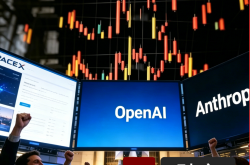
Anthropic just submitted its filing on June 1st, and SpaceX is set to go public on June 12th. Together, these three companies, with a combined valuation exceeding 3 trillion USD, are simultaneously heading toward the public markets.
01
The Secret to Profitability
When ChatGPT was launched, many believed it was merely a supplementary tool for search engines. However, in just a few years, it has become one of the most influential software products globally. According to Reuters, OpenAI currently has over 900 million weekly active users and monthly revenues reaching 2 billion USD (approximately 25 billion USD annualized, or about 170 billion RMB).
Currently, OpenAI's revenue comes from four main sources.
The first is ChatGPT subscriptions. Individual users pay a monthly membership fee. This was OpenAI's earliest revenue-generating business at scale, but it now accounts for a smaller proportion than many might imagine.  ChatGPT logo. Source: Public information
The second is the enterprise version of ChatGPT, which is also the fastest-growing segment. Numerous banks, consulting firms (Morgan Stanley, Deloitte, PwC, Accenture), and manufacturing companies have procured ChatGPT Enterprise, allowing their employees to use GPT directly for work. Revenue from enterprise clients far exceeds that from individual subscriptions, with higher profit margins as well.
The third source is API services. This is one of OpenAI's most profitable businesses, where developers call on GPT models and are charged based on Tokens. Countless AI startups today are essentially contributing revenue to OpenAI.
The fourth is the programming tool Codex. Codex is growing extremely rapidly and has even become a significant driver of OpenAI's revenue growth.
However, OpenAI's spending is also staggering. In 2026, it is expected to incur an operating loss of 14 billion USD, with cash burn reaching approximately 1.7 billion USD per month. Inference costs alone amount to 14.1 billion USD—meaning that just "running the models" consumes nearly all of its revenue.
In other words, for every 1 USD OpenAI earns, it may lose 1.22 USD.
Even more astonishing are the undisclosed commitments. According to disclosures, OpenAI has signed computing power and infrastructure commitments exceeding 1.4 trillion USD: 500 billion USD for SoftBank's Stargate project, over 300 billion USD for Oracle's data centers, 250 billion USD for Microsoft Azure services (through 2032), and approximately 138 billion USD for Amazon AWS.
These commitments mean that regardless of revenue fluctuations or market competition, these bills must be paid on schedule. In other words, OpenAI has tied itself to a rocket that cannot slow down—slowing down means defaulting, while accelerating is the only way to survive.
OpenAI needs to explain to investors: Why is a company losing 14 billion USD annually worth 1 trillion USD? Why are those 1.4 trillion USD in infrastructure commitments not risks but moats?
02
Both Giants Submit IPO Filings Simultaneously
Over the past three years, the industry has default ed (taken for granted) that OpenAI is the king. However, entering 2026, Anthropic is surpassing OpenAI in revenue. OpenAI's latest valuation stands at 852 billion USD. After its latest funding round, Anthropic reached a valuation of 965 billion USD, surpassing OpenAI.
More importantly, there is revenue. The market generally believes OpenAI's current annualized revenue is approximately 25-33 billion USD. Anthropic, on the other hand, is already nearing annualized revenues of 45-50 billion USD. 
The Claude logo under Anthropic. Source: Public information
Anthropic has few consumer-level hit products, but it dominates the more profitable enterprise market. Its product, Claude, was never positioned as a mass-market chat tool but as an enterprise productivity tool.
Claude Code is Anthropic's biggest ace. Over the past year, Claude Code has exploded in popularity among developers, with many programmers considering it the best programming model. In the enterprise market, Claude has become the model of choice for many developers, particularly in code generation, long-context processing, and enterprise security. Amazon has become a key supporter, and Google continues to invest.
According to foreign media, the primary reason for Anthropic's revenue surge is Claude Code. Programmers are precisely the group most willing to pay. A 100 USD membership fee can potentially save companies thousands of dollars in engineering costs, offering an extremely high ROI. Some analysts believe that Anthropic has achieved a network effect similar to GitHub Copilot.
Of course, like OpenAI, APIs are also a significant source of revenue for Anthropic. However, Anthropic's API revenue primarily comes from enterprise purchases rather than a large number of developers.
Because Anthropic has chosen a "safety-first" approach—emphasizing AI safety, model interpretability, and value alignment—Claude enjoys an excellent reputation in the enterprise market, particularly among financial institutions and healthcare organizations with strict AI ethics requirements.
This brings a significant advantage: Anthropic's revenue structure is more concentrated than OpenAI's, with higher average deal sizes, higher retention rates, and more stable compute utilization. This is why Wall Street increasingly favors Anthropic—enterprise procurement more closely resembles traditional SaaS businesses.
Based on currently available information, Anthropic has already proven one thing: AI can not only have hundreds of millions of users but can also become a multi-billion-dollar enterprise software business.
What makes OpenAI's IPO most anticipated, however, is that it will publicly answer another question for the first time: Is ChatGPT merely a viral product, or is it the next-generation operating system for the next two decades?
03
Can AI Achieve High Profits?
If the listings of OpenAI and Anthropic mark a watershed moment, the AI industry is likely entering its third phase.
That is, transitioning from a technology race and a commercialization race to a capital return race. After the IPOs, Wall Street will only ask three questions: How much is revenue growing? What is the gross margin? How quickly can capital expenditures be recouped?
This is the first time the AI industry will undergo scrutiny from the public markets. 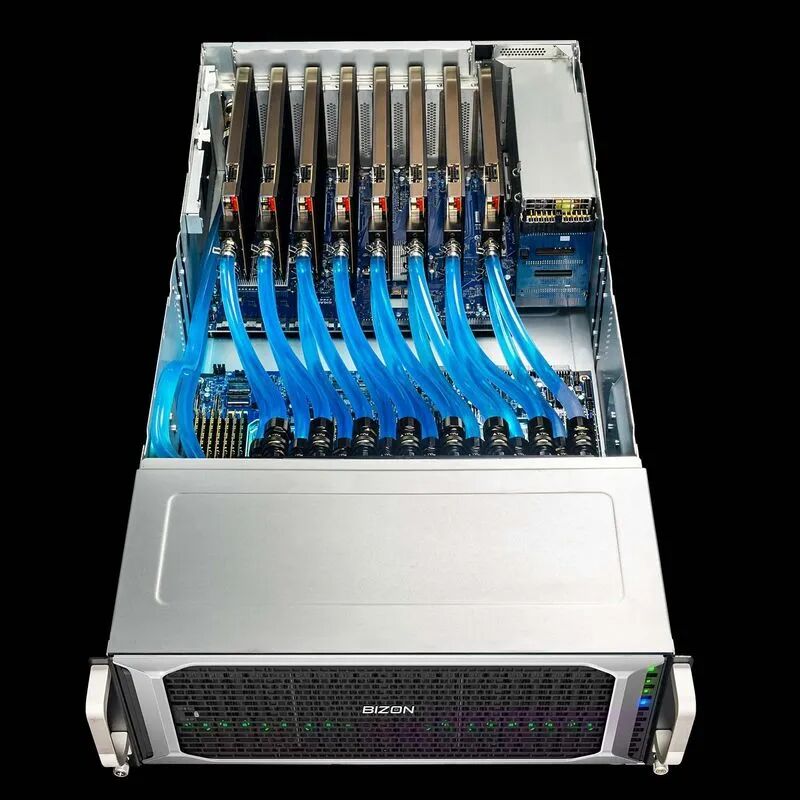 AI computing power server. Source: Public information
Fortune magazine believes that OpenAI's S-1 filing will become the most important financial document in the AI industry, as it may, for the first time, reveal the core secret of the entire large model industry: Does AI actually generate profits? Is OpenAI a high-growth software company, or is it a money-burning infrastructure monster?
No tech company in history has made capital markets focus more on costs than on revenue, as OpenAI has.
Unlike traditional SaaS companies, OpenAI consumes real computing power every time it serves a user request. The more users it has, the higher its inference costs become. In contrast, for Microsoft Office or Adobe software, adding a user incurs almost zero marginal cost. AI is entirely different. Every conversation, every code generation, and every Agent task execution requires continuous consumption of GPUs, electricity, and data center resources.
For OpenAI, how much does it cost to generate 1 USD in revenue? If this figure remains persistently high, then no matter how fast revenue grows, it will be difficult for OpenAI to become a truly high-margin tech company.
The second factor is capital expenditures.
Over the past two decades, the most successful tech companies in the U.S. capital markets—Microsoft, Google, and Meta—have essentially been "asset-light software companies."
OpenAI, however, increasingly resembles a different kind of enterprise. To maintain its leading position, it must continuously purchase GPUs, build data centers, sign long-term cloud computing contracts, and invest hundreds of billions of dollars in training next-generation models. Reuters points out that one of the key purposes of OpenAI's IPO is to gain greater financing capabilities than venture capital can provide, to support ongoing expansions in AI infrastructure investment.
In other words, OpenAI faces an unprecedented challenge: It must maintain the growth rate of an internet company while bearing capital expenditure pressures similar to those of telecom operators or energy companies.
Over the past three years, capital markets have been willing to believe that AI will change the world. In the next three years, capital markets will demand that OpenAI and Anthropic prove that this world-changing capability can translate into sustained revenue growth, healthy profit margins, and ultimately, positive cash flow.
What OpenAI's IPO truly decides is not just OpenAI's future—it determines the valuation logic of the entire AI industry.
-
![]()
History’s Largest IPO Is Set to Debut—But Chinese Investors Are Shut Out
-
![]()
Should 44 Million Electric Vehicles Be Subject to Road Maintenance Fees If They Don’t Refuel?
-
![]()
US Stock IPO | Anthropic and OpenAI File Successively, Three Giants Aim for a Combined $4 Trillion Market Debut
-
This Smart Toilet Enterprise Holds the Key to AI Computing Power
-
![]()
Breaking News! An AI Company Valued at 5.8 Trillion USD Rushes for IPO with Annual Revenue of 170 Billion USD
-
The Underground 'Computing Battle': How HPC and Large Models Revolutionize Oil Exploration
-
![]()
New Breakthrough! Haiguang Optoelectronics Clears HKEX IPO Hurdle
-
![]()
AI Computing Power Surge Propels Dongtian’s Optoelectronic Communication Business to Soar!