Agent's 'Anti-Consensus' Strategy in the Second Half: SaaS Companies Carve Out a New Ecological Niche
 06/12 2026
 491
491
By 2026, AI has swiftly transitioned into a driver of growth and revenue. Addressing challenges such as "how to effectively identify incremental customers," "how to expedite deal closures," and "how to develop products that better align with market demands" is pivotal in determining whether an AI product can gain market acceptance and be adopted by enterprises.
Within these defined needs and business frameworks, SaaS companies that have embraced AI transformation are emerging as the cornerstone support and primary lever.
Author | Pi Ye
Produced by | Chanyejia
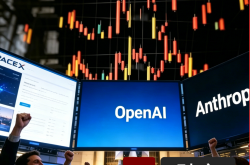
When considering which company has captured the most global attention in the first half of this year, Anthropic undoubtedly stands out. On June 2nd, this AI firm, established just five years ago, announced its official IPO filing with a staggering valuation of $965 billion, officially eclipsing OpenAI.
However, upon closer inspection of its business model, the outside world was taken aback to discover that, in addition to foundational models and coding capabilities, SaaS companies constitute another vital pillar of this AI behemoth, which boasts one of the highest valuations in human history.
In essence, Anthropic's business model revolves around integrating its AI products (including coding agents) into existing enterprise software systems while leveraging AI to achieve end-to-end business process integration. Fundamentally, Anthropic's core business model is akin to connecting multiple SaaS software solutions with AI technology to construct a new data-driven organizational model for enterprises. These solutions encompass renowned SaaS platforms such as SAP, Salesforce, and Workday.
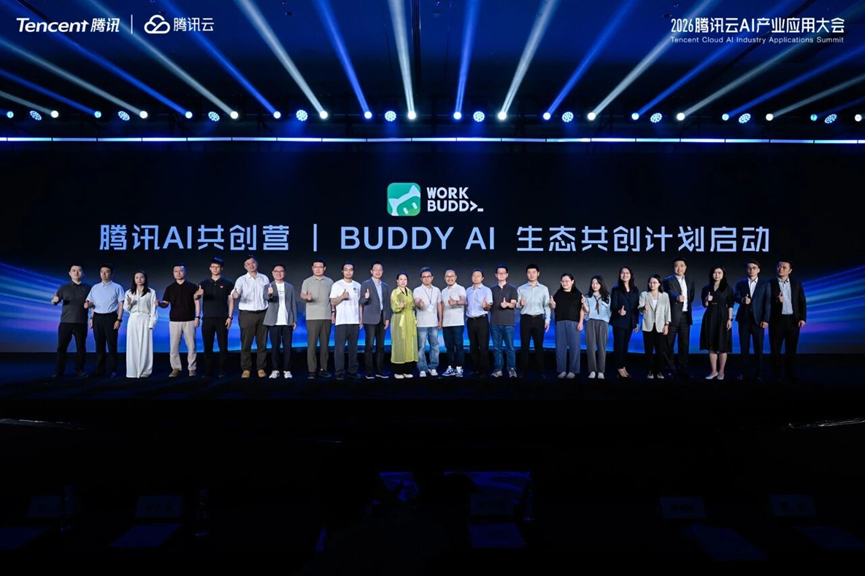
Coincidentally, at the 2026 Tencent Cloud AI Industry Application Summit, WorkBuddy, Tencent's flagship AI product, unveiled a new open policy: opening up its agent integration suite capabilities and encouraging SaaS and other ecosystem partners to integrate with WorkBuddy through connectors. During the event, several SaaS companies, including Xiaoshouyi, emerged as the inaugural batch of collaborative partners.
This initiative heralds changes at the implementation level. Enterprises can now not only leverage Tencent's front-end AI office products, such as documents and meetings, through WorkBuddy but also utilize WorkBuddy as a gateway to access and integrate their CRM customer management systems. This facilitates unified and collaborative management of office and internal production processes, enabling AI to accomplish real production tasks.
These two significant developments point to an "anti-consensus fact" that diverges from the mainstream market narrative of the past two years: SaaS companies appear to be playing a pivotal role in the new AI business landscape. Whether it's Anthropic acting as a "needle and thread" between different SaaS software solutions or WorkBuddy incorporating more SaaS software into its product ecosystem, SaaS software has become an indispensable link in the business models and product value propositions of all AI products.
What exactly is the value proposition of SaaS companies? Or, within the evolving new AI-to-B ecosystem, what position do SaaS companies that have undergone AI transformation occupy?
I. Progress of the AI Ecosystem in the B2B Market
Before delving into the new ecological niche of SaaS companies, a more fundamental question must be addressed: How far has the AI service model in the B2B market progressed three years after the advent of large AI models?
When discussing this issue, Anthropic, the AI giant that emerged from OpenAI, remains a focal point. Unlike its predecessor, which focused more on consumer-facing general intelligence business models, most of Anthropic's current valuation stems from the enterprise B2B market.
However, a deeper dive into its prospectus reveals that Anthropic's primary revenue composition in the B2B market is more centered on Agent coding, the emerging AI role of "FDE" that is currently generating buzz in the market. Data indicates that this accounted for over 30% of its revenue in the past year.
In other words, although its valuation primarily originates from the B2B market, Anthropic's entry point is more focused on the underlying R&D and project management processes of enterprises, aiding them in building and utilizing data more personalized based on Agent coding. Similar revenue compositions are also evident in the financial reports of domestic model vendors like Zhipu and Minimax—the tokens economy driven by coding is the core B2B narrative.
If Anthropic and Zhipu epitomize the B2B service models of model vendors, then companies like WorkBuddy represent another sample: AI products.
From the perspective of WorkBuddy's product offerings, it already ranks among the top domestic AI products. However, from an enterprise scenario standpoint, its products still primarily cover front-end general scenarios, such as documents, meetings, knowledge bases, and corresponding data retrieval and utilization. For core business processes within enterprises, such as CRM, ERP, and MES, executing corresponding AI tasks based on AI remains challenging.
This reflects the true state of AI. Beyond Agent coding and front-end office scenarios, in the enterprise B2B market, the processes corresponding to existing SaaS software have yet to be effectively covered by AI. For enterprises, core business questions such as "how to formulate strategies to ensure product growth in the next quarter," "how to identify more sales prospects," and "how to produce products that align with market demand and become hits" remain unanswered.
The reason is not difficult to fathom. Taking CRM as an example, in the current AI era, enterprises no longer require just a simple customer list and status recording system; they essentially need to identify and maintain genuine customer groups and manage incremental and existing operations to ensure optimal product sales performance.
In other words, enterprises need a customer management AI product that delivers results and incorporates best practices.
However, this is no small feat. To achieve such customer management and product-side results, AI products must comprehend the market dynamics, audience distribution, and product trends of the corresponding industry and even specific product categories. This not only involves processing different types of data but also requires a profound understanding and knowledge representation of different processes and contexts, necessitating service providers' comprehension of the industrial know-how of different industries and types of enterprises.
This is also the core reason why global AI leaders, including Anthropic, cannot bypass SaaS software vendors.
Fundamentally, compared to model pre-training, inference, and coding capabilities, SaaS software companies have, over the years, established a set of industrial market dynamics from the physical world. These industrial market dynamics are volatile and personalized. For different industries, enterprises, and even production processes, there are distinct operational standards and knowledge representations.
For large AI models, these market dynamics from the real world remain a black hole. So, how should SaaS software unleash its value? Or, what should a new unified and aggregated AI service ecosystem look like?
II. New SaaS Companies: The Core Infrastructure of New AI Business Models
These questions now have answers. To a certain extent, there are already distinct paths for how SaaS can integrate into the new ecosystem of the AI era, both domestically and internationally.
In foreign markets, the primary path is to incorporate SaaS software into AI process systems, which is precisely Anthropic's core business model—"Anthropic + SaaS" has become the new foundation for enterprise operations. The former is responsible for connecting different software solutions to enable data flow and build more detailed knowledge base accumulation, while also enhancing core enterprise process SaaS products with AI capabilities. On top of existing SaaS AI functionalities, deeper data processing and utilization are achieved through coding and other capabilities.
For enterprises, the value of this model lies in the fact that they do not need to completely abandon their existing software systems; they only need to incorporate Anthropic's corresponding attributes, reducing barriers while achieving AI-native upgrades.
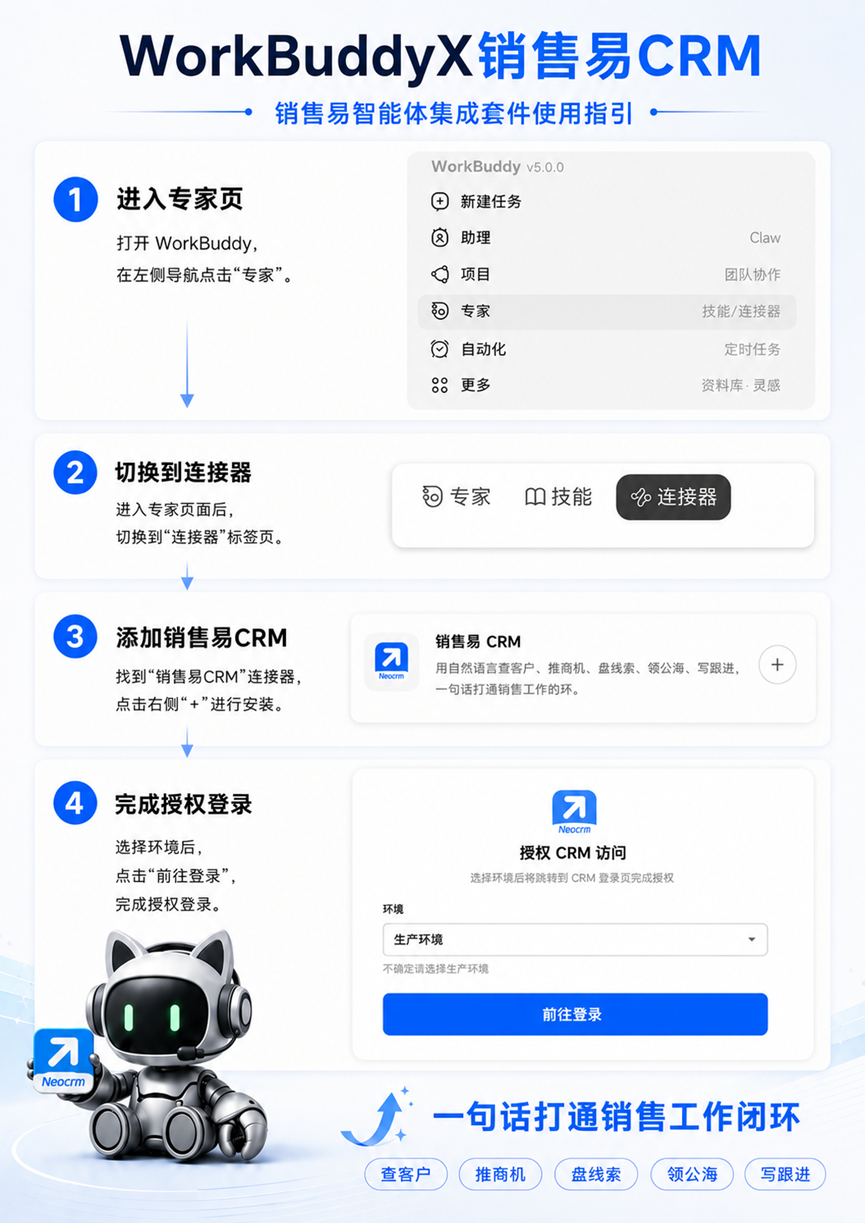
In China, the intelligent suite connector model, as exemplified by the collaboration between WorkBuddy and Xiaoshouyi, represents another path.
Taking sales scenarios as an example, the specific division of labor in their collaboration is that enterprises can issue CRM-related instructions through WorkBuddy's AI office entry point. Through the capabilities of the "connector," WorkBuddy and Xiaoshouyi CRM achieve data-level integration, enabling front-end agents to call CRM data and business capabilities.
Finally, Xiaoshouyi CRM, as the ultimate executor of sales instructions, analyzes customer data, business processes, and accumulated sales results to form a complete closed loop for sales instructions.
In other words, based on the "connector" model, while ensuring data security, WorkBuddy and Xiaoshouyi collaboratively build an AI pathway that meets genuine customer sales needs, enabling AI execution to move from office scenarios into customer management and sales scenarios.
So, from a practical implementation standpoint, is this path feasible? Or, what kind of synergistic effects can this integration bring to both parties?
The answer is affirmative. First, from the perspective of genuine demand, compared to foreign markets, domestic enterprises often lack mature software and data systems. With the collaboration between WorkBuddy and SaaS companies like Xiaoshouyi, enterprises can integrate all internal processes through a unified entry point.
Furthermore, this integration will bring about a fundamental upgrade, enabling enterprises to gradually build a production-level contextual foundation. Based on this foundation, enterprises can empower AI to truly comprehend the industry and, more importantly, their own business.
Second, for WorkBuddy, incorporating SaaS companies like Xiaoshouyi through the "connector" can further amplify the value of its AI products. A realistic assessment is that the core reason for Anthropic's massive and market-recognized revenue is not its front-end office scenarios but its ability to provide genuine AI value in core CRM and ERP processes.
WorkBuddy is following a similar path. By deeply embedding companies like Xiaoshouyi into its product ecosystem, WorkBuddy's value will extend further into core business processes. It can not only serve as a general-purpose scenario brain for enterprises but also become a genuine AI production hub by connecting with sales, customer, and product scenarios, helping enterprises achieve genuine AI results in core business scenarios.
Additionally, for Xiaoshouyi, this collaboration also holds significant value. By collaborating with WorkBuddy, Xiaoshouyi can better release its industrial know-how value. Whether through MCP calls or native CLI access, based on general-purpose AI products like WorkBuddy, Xiaoshouyi's vertical AI capabilities can seamlessly and unobtrusively enter more enterprise scenarios.
III. In the New AI-to-B Service Model, SaaS is Taking on a New Position
Over the past few years, CRM has served as a valuable lens through which to view the evolution of SaaS companies. As the first battleground for enterprises participating in market competition, the maturity of CRM has been a core indicator of an enterprise's business model's quality over the past few decades: pushing products to the right people and enterprises and outperforming the supply-demand model.
However, for many years, the value of CRM has always fallen slightly short of expectations. Most of the time, CRM products have been more of a packaged recording system rather than an "expression system" capable of providing sales strategies based on an enterprise's specific business situation.
AI is precisely addressing this issue.
The reason WorkBuddy and Xiaoshouyi can generate synergistic value is that enterprises can directly complete AI transformation across all enterprise scenarios, including core business processes, through a convenient general-purpose AI entry point.
In front-end office scenarios, AI can assist or even autonomously execute tasks through Tencent Docs and Tencent Lexiang Knowledge Base. Within core business processes, AI, based on Xiaoshouyi's sales agents, channel agents, and service agents, formulates corresponding business strategies according to an enterprise's specific business situation and customer distribution. Both parties use the enterprise's own database as a unified foundation to help it develop and execute personalized solutions based on a deep understanding of the enterprise.
This is precisely the AI-to-B model system that is feasible in the Chinese market and can bring genuine value to enterprises. If, in the past few years, people's demands were more focused on AI's trial in office or innovation scenarios, today, people's AI demands have entered core scenarios. Based on the collaboration between WorkBuddy and Xiaoshouyi, enterprises can build AI implementation paradigms for core businesses at a faster pace and with lower barriers.
In fact, if we focus on enterprise core business scenarios, we can see that this change has already occurred. As of now, Xiaoshouyi's sales agents, channel agents, and other intelligent agents have been implemented in multiple large enterprises. Along with these agents, there is also a new understanding of CRM among enterprises—with Xiaoshouyi's support, more and more enterprises are beginning to transform CRM into a genuine "revenue tool," either by integrating through agents on existing products or by directly embedding Xiaoshouyi's AI products into their own agent processes through CLI.
Through the collaborative endeavors of Xiaoshouyi and WorkBuddy, the pace of AI integration within the industry is set to experience a further surge. Concurrently, Xiaoshouyi will be deployed across a wider array of enterprise scenarios, while WorkBuddy will unlock even greater potential as a pivotal entry point for core business transformation.
It is evident that by 2026, AI is undergoing an accelerated transformation into tangible growth and revenue streams. The answers to pivotal questions such as “how to more effectively identify incremental customers,” “how to expedite deal closures,” and “how to develop products that better align with market demands” will be the deciding factors in whether an AI product gains market acceptance and earns enterprise investment.
Amidst these specific demands and evolving business models, SaaS companies like Neocrm, which have already undergone their AI evolution, are emerging as the cornerstone support and primary catalysts for progress.
Indeed, even prior to the strategic moves by Anthropic and WorkBuddy, the capital market had already cast its vote of confidence. Over the past two months, the valuations of global SaaS behemoths, including Salesforce, Workday, and ServiceNow, have witnessed a notable resurgence. The stock prices of certain leading software firms have rebounded by over 30% compared to the nadir of the “SaaS doomsday theory” era.
At a juncture where AI is being evaluated through the lens of productivity metrics, SaaS companies are charting a course through a new cycle and reclaiming their position at the forefront of innovation.
-
![]()
Should 44 Million Electric Vehicles Be Subject to Road Maintenance Fees If They Don’t Refuel?
-
![]()
US Stock IPO | Anthropic and OpenAI File Successively, Three Giants Aim for a Combined $4 Trillion Market Debut
-
This Smart Toilet Enterprise Holds the Key to AI Computing Power
-
![]()
Breaking News! An AI Company Valued at 5.8 Trillion USD Rushes for IPO with Annual Revenue of 170 Billion USD
-
The Underground 'Computing Battle': How HPC and Large Models Revolutionize Oil Exploration
-
![]()
New Breakthrough! Haiguang Optoelectronics Clears HKEX IPO Hurdle
-
![]()
AI Computing Power Surge Propels Dongtian’s Optoelectronic Communication Business to Soar!
-
![]()
Is Saido the fallback option for Seres?