Annual Revenue Soars to 24 Billion! Large-Scale AI Models Ignite Edge AI Demand, Quectel Sets Sights on AI-Powered IoT
 06/12 2026
 471
471
By Yang Jianyong
Large-scale AI models are revolutionizing industries across the globe, infusing them with innovative energy. Crucially, the seamless integration of these models with 5G and IoT technologies is paving the way for unprecedented growth in the IoT sector. IDC forecasts that global IoT market expenditures will exceed $1 trillion by 2026.
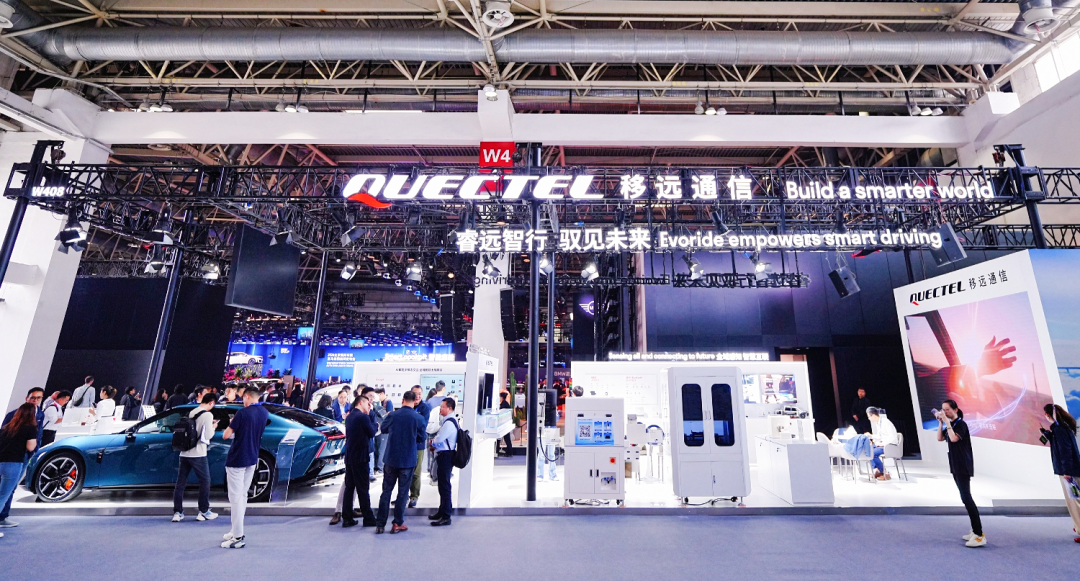
As IoT industry demand skyrockets, companies operating within this realm are experiencing robust expansion. Among them, Quectel, the world's foremost IoT module manufacturer, has surpassed the 20 billion yuan annual revenue threshold. Projections indicate that its revenue will reach 24.3 billion yuan by 2026, marking a 30.8% year-on-year surge; net profit is anticipated to hit 837 million yuan, a 42.3% increase from the previous year.
Firstly, the IoT market is witnessing a steady uptick in module demand.
The acceleration of IoT intelligence is fueling an expansion in IoT connections. Ericsson's data reveals that the global number of IoT connections stood at approximately 22.3 billion in 2025 and is projected to soar to 47.1 billion by 2031, underscoring the rapid growth in global IoT connectivity.
As a pivotal component of the IoT industry chain, communication modules are seeing a surge in demand for wireless communication modules amidst the IoT sector's sustained robust growth. According to ABI Research's earlier data, cellular module shipments are expected to reach 783 million units by 2030. Notably, 5G has emerged as a significant revenue driver for module suppliers, with its higher average selling price exerting a substantial leverage effect on revenue contributions.
Meanwhile, 5G IoT is finding widespread application in vertical industries such as public safety, transportation and logistics, smart manufacturing, and telemedicine. Quectel offers a comprehensive suite of IoT products and services, encompassing cellular modules, automotive-grade modules, smart modules (5G/4G/edge computing), and other module offerings. Its automotive modules, 5G modules, and smart modules are all experiencing steady growth.
Secondly, the convergence of large-scale AI models with 5G, IoT, and other technologies is becoming an irresistible trend.
In the era of generative AI, the utilization of large models to expedite digital transformation is driving an escalating demand for high computing power, further energizing the smart module market.
Remarkably, large-scale AI models are undergoing continuous "slimming down," with many mainstream models introducing lightweight versions. This facilitates the efficient deployment of small models in various smart terminal products, such as AI robots, AI toys, and AI glasses, propelling rapid growth in the edge AI market and subsequently fueling robust demand for computing power modules.
As a leading global module manufacturer, Quectel is actively expanding its edge AI business by deeply integrating its innovations in 5G, IoT, and other domains with AI to construct a diversified portfolio of AI solutions. This includes the launch of 5G smart cockpit modules that support the deployment of mainstream large-scale AI models at the edge.
The AI toy solution integrates capabilities from large models such as Volcano Engine and ChatGPT, providing a one-stop service encompassing "hardware + algorithms + IoT platform." In collaboration with leading brands, it has introduced multiple popular products. The AI glasses solution has assisted AR leading customers in achieving shipments in the tens of thousands of units.
Critically, amidst the intelligent trend ushered in by large-scale AI models, Quectel is once again raising 2.22 billion yuan for projects including the expansion of automotive and 5G module production, the industrialization of AI computing power modules and AI solutions, and the upgrading of its headquarters base and R&D center. This is to meet the escalating connectivity demands in IoT application areas and enhance overall competitiveness.
Among these initiatives, the automotive and 5G module expansion project is expected to augment production capacity by 33.8 million units. An additional 410 million yuan will be invested in the industrialization of AI computing power modules and AI solutions, enhancing the industrial capabilities of AI computing power modules and AI solutions, including AI toys, AI robots, and AI glasses, and constructing a comprehensive matrix of AI computing power module products covering all scenarios.
According to reports, the industrialization project for AI computing power modules and AI solutions is projected to add 26.533 million units (sets) of production capacity. With the IoT industry's development, if the fundraising investment projects can be successfully implemented, it will not only fortify Quectel's footprint in the AI IoT field but also aid in expanding its business scale and improving profitability.
Finally, large-scale model technology is disruptively reshaping the industrial landscape across various sectors. Industries are harnessing large-scale model services such as Doubao, DeepSeek, and ChatGPT to elevate their intelligence levels.
As the intelligence level of edge devices continues to ascend, demand for smart modules and AI modules is on the rise, opening up broader market opportunities for relevant module companies and promising to unlock their performance potential.
Yang Jianyong is a contributor to Forbes China, and his views are his own. He is dedicated to in-depth analysis of cutting-edge technologies such as large-scale AI models, artificial intelligence, IoT, cloud computing, and smart hardware.
-
![]()
History’s Largest IPO Is Set to Debut—But Chinese Investors Are Shut Out
-
![]()
Should 44 Million Electric Vehicles Be Subject to Road Maintenance Fees If They Don’t Refuel?
-
![]()
US Stock IPO | Anthropic and OpenAI File Successively, Three Giants Aim for a Combined $4 Trillion Market Debut
-
This Smart Toilet Enterprise Holds the Key to AI Computing Power
-
![]()
Breaking News! An AI Company Valued at 5.8 Trillion USD Rushes for IPO with Annual Revenue of 170 Billion USD
-
The Underground 'Computing Battle': How HPC and Large Models Revolutionize Oil Exploration
-
![]()
New Breakthrough! Haiguang Optoelectronics Clears HKEX IPO Hurdle
-
![]()
AI Computing Power Surge Propels Dongtian’s Optoelectronic Communication Business to Soar!