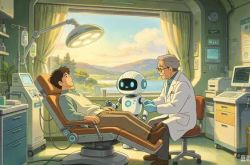
The 'AI-Induced Severed Finger' Tragedy: Highlighting the Limitations of Algorithm-Only Medical Diagnosis and Proposing Solutions for AI Medical Diagnosis Models
 06/16 2026
 335
335
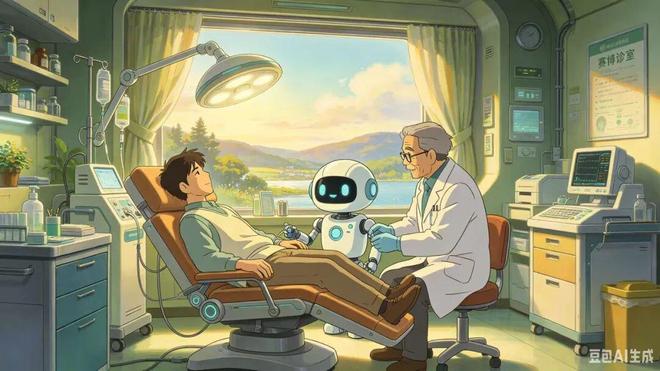
The 'AI-Induced Severed Finger' incident is a stark reminder of the limitations of relying solely on algorithms for medical diagnosis. It prompts us to consider: How can we address the issues inherent in AI medical diagnosis models?
In 1885, within a modest wooden cabin by Saranac Lake in New York, Dr. Trudeau penned a phrase at a patient's bedside that would later be revered as a guiding principle in the medical field: "To cure sometimes, to relieve often, to comfort always."
Back then, in an era dominated by stethoscopes and kerosene lamps, medicine was deeply rooted in the doctor's hands and the empathy they conveyed. A century later, we find ourselves on the cusp of the 'cyber clinic' era, where an increasing number of individuals turn to AI for medical advice when they feel unwell.
But can we truly rely on AI for medical diagnosis? A recent, distressing incident involving an 'AI-induced severed finger' has reignited this debate. In this case, an elderly person's finger was accidentally severed. Instead of immediately calling emergency services (120 in China), the family first consulted a general AI assistant. The AI advised "soaking the severed finger in saline solution for preservation." Tragically, following this advice led to tissue necrosis, rendering reattachment impossible.
In light of this incident, Ant Fortune's recently introduced 'doctor oversight' function has sparked significant discussion within the industry. In essence, users take a photo of the affected skin area, and AI initially helps identify the issue. Subsequently, a real doctor from a top-tier hospital reviews the case in the background. As a dedicated user of Ant Fortune, I believe this step is a move in the right direction. While it may seem like a small step, it addresses the most critical issue in AI healthcare development: ensuring safety from the outset.
In the early days of online healthcare, selling prescription drugs directly was strictly prohibited. The reason was straightforward: improper use of prescription drugs can be life-threatening. Without a doctor's face-to-face consultation and prescription, who would dare allow platforms to sell them indiscriminately? This posed a significant challenge for early internet healthcare.
So, how did the industry overcome this impasse?
By adopting the 'electronic prescription' model that is now widely used. After selecting medication online, a real doctor from an internet hospital reviews the order, examines the patient's medical history, and if everything is in order, issues an electronic prescription. The pharmacy then dispenses the medication.
The core logic has shifted. Technology has not replaced doctors but has become their assistant. Thus, buying prescription drugs online has become a feasible reality.
Today, AI medical diagnosis faces a similar impasse.
Even if AI models achieve 99% accuracy, the remaining 1% error, if it occurs, can be an unbearable burden for a family.
Ant Fortune's 'AI Q&A + doctor oversight' model follows the same approach as the electronic prescription solution—retaining human judgment at critical junctures. With real doctors providing a safety net, user concerns about AI can be largely alleviated.
A recent practical test involving 100 users supports this judgment: Ant Fortune's responses matched doctor diagnoses more than 90% of the time. This indicates that AI can already handle most daily health consultations.
Trudeau's maxim remains relevant in the AI era.
As medicine becomes more intelligent, we still need to be cured, helped, and comforted. Essentially, Ant Fortune's introduction of doctor collaboration not only enhances diagnostic accuracy but also compensates for the 'emotional support' often overlooked in AI medical diagnosis. A doctor's simple reassurance, "Don't panic, let me take a look," can greatly soothe anxieties.
Looking ahead, the collaboration between 'AI and doctors' may hold the key to addressing China's structural healthcare challenges.
What is the biggest pain point in China's healthcare system? Uneven resource distribution.
Everyone desires access to top doctors, but top-tier hospitals are overcrowded, with patients waiting hours for a brief consultation. The government has promoted tiered diagnosis and treatment for years, advocating "minor ailments in the community, major ailments in hospitals," but this has been hindered by insufficient primary care capabilities.
What if the 'doctor oversight' model were expanded to pediatrics and emergency care in the future?
Imagine a scenario: It's 2 AM, and a child suddenly develops a fever and diarrhea. New parents are anxious and sweating. Taking a taxi to the children's hospital might mean waiting until dawn for a number; staying home risks worsening the condition. In this situation, if they could first use a professional AI on their phone for a preliminary screening, and have a real doctor in the background quickly confirm whether it's an emergency and provide clear guidance, such as "This is just ordinary autumn diarrhea. First, administer oral rehydration salts; no need to rush to the emergency room tonight," or "The situation is critical; seek medical attention immediately." This could significantly alleviate parental panic.
For doctors, AI can help organize vast amounts of repetitive information and perform preliminary triage, allowing them to focus more on treating critical and severe cases. This also alleviates some of their pressure.
Ant Fortune's attempt points to a direction: the sense of security in AI medical diagnosis cannot rely solely on algorithmic optimization; a mechanism for human-machine collaboration is essential.
We don't need to build a top-tier hospital in every county, but through the combination of AI and doctors, we can deliver the professional services of top-tier hospital doctors to every ordinary person.
This may be the 'new frontier' that tiered diagnosis and treatment can explore in the AI era.
-
![]()
The 'AI-Induced Severed Finger' Tragedy: Highlighting the Limitations of Algorithm-Only Medical Diagnosis and Proposing Solutions for AI Medical Diagnosis Models
-
![]()
Zhou Yuan's Second Half and Zhihu's New Positioning
-
![]()
Behind DeepSeek's Financing Buzz: China's AI Giants Revalued as Strategic Assets
-
![]()
A Flurry of Small and Medium-sized Ride-hailing Platforms Go Public, AutoNavi Emerges as the Biggest Winner
-
![]()
Market Rectification Still Hinges on Xiaomi; 15-Minute Vacuum Pumping Now Mandatory Across the Air Conditioning Industry
-
![]()
The Battle for AI-Powered Payments is Ready to Ignite: Alipay and WeChat Both Draw Their Swords
-
![]()
A 3.2% Profit Margin: The Last Vestige of Dignity in the Auto Industry
-
![]()
Why Is Zhihu Unable to Launch Its Own 'Doubao' Like Zhou Yuan Envisions?