Zhou Yuan's Second Half and Zhihu's New Positioning
 06/16 2026
 561
561
What is Zhou Yuan Thinking About Regarding Zhihu's Future?
Surviving is indeed something worth mentioning for Zhihu.
Over the past three years, the entire Chinese internet content industry has undergone a dramatic shakeout. Some former competitors have collapsed, others have been acquired, and some have lost their way in transformation. Zhihu has also taken many detours—burning money on education, massive expansion, pursuing user growth, attempting to become China's Quora and then China's Reddit, only to find none of these paths were right.
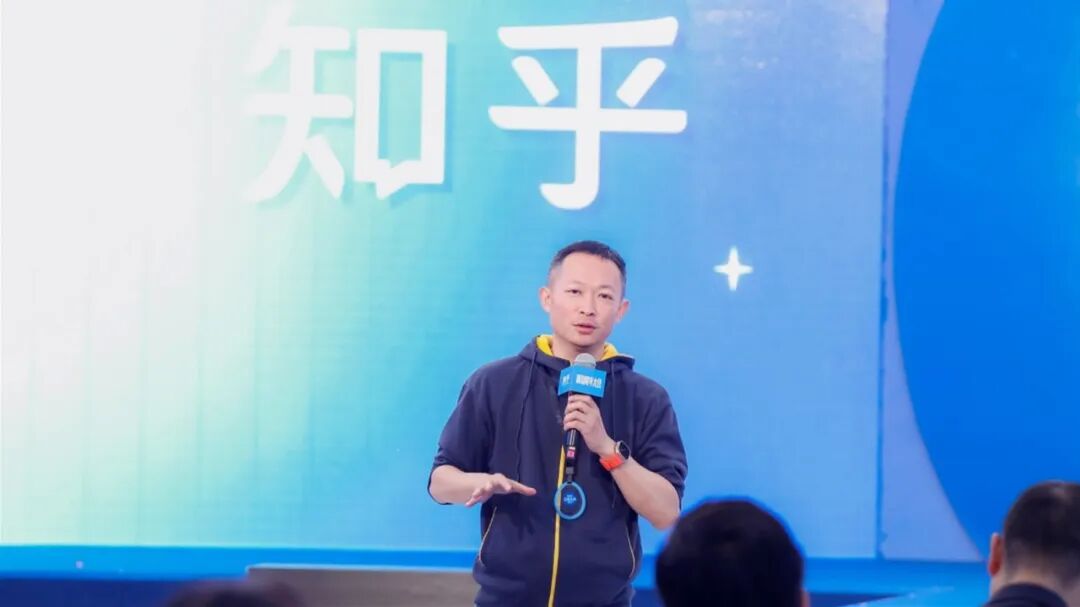
At Zhihu's New Knowledge Youth Conference this May, which coincided with its 15th anniversary, Zhou Yuan's demeanor was markedly different from a few years ago. Previously, when discussing Zhihu, he focused more on user scale, community ecology, and content diversity. That day, the two most frequently mentioned words were "profitability" and "long-term value."
This shift was already clearly reflected in the Q1 financial report released in early June: revenue was RMB 652 million, down 10.7% year-on-year, but adjusted net profit was RMB 17.16 million, up 147.2% year-on-year, and the company returned to profitability quarter-on-quarter.
Declining revenue but rising profits—this seemingly contradictory combination is the most direct manifestation of Zhihu's strategic shift over the past two years.
For many years, Zhihu, like many internet companies, pursued scale expansion: chasing user numbers, revenue, and market share. But since last year, the company's logic has fundamentally changed, shifting from pursuing scale to profitability and from growth to quality.
This is a counterintuitive business story: when a company stops pursuing scale, it finds true growth.
This is Zhou Yuan's second half, and Zhihu's new positioning.
01
Zhihu's Current State
and the Challenges It Faces
Let's first discuss Zhihu's current reality.
Many people's impression of Zhihu still lingers from a few years ago: an elite community with high-quality, substantive content and users. But when you open Zhihu now, you'll find it has become a highly complex product.
Reflected in the financials, Q1 total revenue was RMB 652 million, of which paid content and IP operations contributed RMB 402 million, accounting for over 60%; marketing services revenue was RMB 191 million, less than 30%; the remainder came from vocational education and other income.
This structure is entirely different from three years ago. Back then, advertising was Zhihu's largest revenue source, accounting for over half. Now, paid content and IP operations have become the absolute cornerstone. The growth of YanYan Stories is the clearest signal: Q1 IP licensing partnerships increased more than fivefold year-on-year, total author royalties grew 5.6 times, and short dramas adapted from IPs like *The Noble Conspiracy* and *The Wrong Marriage Brings Joy* each surpassed 2 billion views.
This is Zhihu's most successful strategic adjustment in the past two years: transforming the story content accumulated in its community into IP assets that can be repeatedly monetized. From users paying to read stories, to licensing story rights to short drama and comic teams, to using AI for comic adaptations, the entire closed loop (closed loop) has been established.
But on the flip side, Zhihu faces unavoidable challenges.
First is stagnant user growth. Monthly active paying members in Q1 were 13.1 million, down year-on-year, the primary reason for the 4.4% decline in paid content revenue. The entire Chinese internet's traffic dividend has long peaked, with graphic and text (graphic) content's attention continuously being siphoned by short videos. Zhihu can no longer rely on organic growth to rapidly expand its user base as it did in its early years.
Then there's the fundamental disruption caused by AI. Nowadays, when people encounter a problem, their first instinct is to ask a large language model rather than search Zhihu for answers. AI-generated answers, while not always accurate, are fast and convenient. Zhihu's core Q&A scenario is being directly replaced by AI. This isn't competition from a single product but a dimensionality reduction attack on the entire product format.
There's also the issue of balancing the content ecosystem. Long-time users complain that Zhihu has fewer substantive posts and more marketing accounts, with AI-generated content flooding the platform. New users find Zhihu's barrier to entry too high and unfriendly. Balancing veteran users' experience with new user growth, content quality with commercialization—this is an extremely difficult tightrope to walk.
A more pressing issue is revenue contraction. Q1 revenue declined 10.7% year-on-year, with advertising revenue dropping over 20% and paid content revenue also slightly declining. While cost-cutting and efficiency improvements have achieved profitability, revenue-side pressure is real. There's a limit to cost-cutting—marketing expenses can be slashed, R&D investment reduced—but in the long run, new growth drivers are needed to take over.
This is Zhihu's current predicament: it has found a way to profitability and IP monetization but hasn't yet identified the engine for its next growth phase. It has defended its core business in the AI era but hasn't yet found its new positioning for this era.
02
The Logic Behind the Changes
and the Challenges Zhou Yuan Must Address
Why has Zhihu become what it is today?
It's not that Zhou Yuan suddenly had an epiphany; the entire industry's environment has changed.
The Chinese internet's content community has long shifted from incremental competition to stock game (stock competition). According to Analysys, by 2025, revenue growth in the entire content community industry will have slowed to 5.2%, with all companies transitioning from "scale expansion" to "profitability first." Cost-cutting and efficiency improvements aren't just Zhihu's choice but the industry's consensus.
A more direct impact (impact) comes from AI. After the emergence of generative AI, all content and Q&A companies have asked themselves: what is our core value? If AI can generate answers to all questions, why would users still come to Zhihu?
Zhou Yuan's answer at the New Knowledge Youth Conference was: AI creates wonders every minute, but the era of AI still needs new knowledge. New knowledge comes from real people, and every real person possesses irreplaceable value.
This isn't just rhetoric; it's the underlying logic of Zhihu's entire strategy. Since AI can generate answers, Zhihu will no longer focus on answers. Instead, it will build a community of real people, share authentic experiences, foster warm discussions, and create content that AI cannot generate.
This is also why Zhihu places such importance on YanYan Stories. Stories carry human emotions and experiences—things AI struggles to write authentically. A story written by a real person contains emotions, details, and sensations that AI cannot replicate. By transforming these stories into IPs and adapting them into short dramas or comics, Zhihu creates an impenetrable moat.
But Zhou Yuan still faces many challenges.
The first is balancing the content ecosystem. Commercialization inevitably requires introducing more commercial content and monetization methods. However, excessive commercialization harms veteran users' experience and dilutes the community's atmosphere. Finding the right balance is the ultimate dilemma for all content communities, Zhihu included.
The second is responding to AI's disruption. The current approach is "human community," but whether this positioning can truly take hold, be perceived by users, and create sufficient differentiation remains to be seen. After all, users judge products by experience, not positioning.
The third is implementing new businesses. AI comics, short drama adaptations, and data monetization are all in their early stages, contributing limited revenue. While YanYan Stories' royalty income is growing rapidly, its overall scale remains small. Whether it can truly become a second growth engine and fill the gap left by declining advertising and membership revenue is uncertain.
The fourth is balancing growth and profitability. Profitability has been achieved through cost-cutting, but if growth continues to stagnate without new drivers, the company's vitality will wane, and capital markets will lose interest. Finding healthy growth while maintaining profitability is Zhou Yuan's most critical task ahead.
These challenges have no standard answers or shortcuts; they can only be addressed through trial and error.
03
What Truly Matters in Zhihu's Second Half
Looking at Zhihu's second half from today's vantage point, several questions are unavoidable.
The first is whether the value of a human community can become Zhihu's moat.
The entire industry is now focused on AI and generative content, but Zhihu is taking the opposite approach, emphasizing real people, authenticity, and human value. This direction is correct because, in the AI era, real human experiences, emotions, and discussions become increasingly scarce and valuable.
But this is easier said than done. Building a human community requires better creator incentives to encourage real people to share, improved content moderation to filter out low-quality AI-generated content, and a community atmosphere where users want to engage in discussions rather than arguments.
These are slow, long-term efforts that won't yield immediate results. But if done thoroughly, they will become core competencies that cannot be replicated.
The second question is how large IP full-link operations can become.
The model emerging from YanYan Stories has opened significant imagination for Zhihu. The community has accumulated vast amounts of stories, content, and IPs, previously monetized only through membership fees, leaving much value untapped. Now, through licensing, short drama adaptations, and AI comics, a single IP can be repeatedly monetized, drastically raising the business model (business model)'s ceiling.
The question now is whether this model can scale. Currently, only a few IPs have become hits. Establishing a stable system for IP incubation, selection, and monetization, consistently producing hits, and improving the efficiency of this chain will determine how large this business can grow.
The third question is what role Zhihu should play in the AI era.
Zhou Yuan previously proposed copyright protection for AI comics and stated in the financial report that Zhihu will steadily advance AI-related commercialization explorations. Unlike many companies diving into large model development or technological competition, Zhihu treats AI as a tool to enhance IP adaptation efficiency, community operations, and creator support.
This is a smart choice. The large model war has largely concluded, and late entrants have little chance. However, all AI companies need high-quality real data and premium content IPs—exactly what Zhihu possesses. Acting as a "water provider" in the AI era, supplying content and data to the AI industry, may suit Zhihu better than competing in AI development itself.
The final question is how to adhere to long-termism.
Now that Zhihu has achieved profitability and holds sufficient cash, it no longer needs to burn money for survival. The greatest risk now is sacrificing long-term value for short-term profits or abandoning long-term investments for short-term financial results.
Zhou Yuan has consistently emphasized long-termism internally, which is especially rare in today's environment. Many companies become conservative after achieving profitability, but truly sustainable companies dare to invest in the future and do what is right for the long term even when profitable.
After 15 years, Zhihu has experienced peaks and valleys, hype and bubbles. At this stage, it no longer needs to prove its user scale or growth speed. What it must prove is whether it can become a consistently profitable and valuable company.
This is Zhou Yuan's second half and Zhihu's coming-of-age.
From pursuing scale to profitability, from growth to quality, from being a Q&A platform for everyone to becoming a unique human community and IP operations platform. This path won't be easy, but if successful, it will be Zhihu's unparalleled journey.
— END —
-
![]()
Proposed to Raise 955 Million Yuan through Private Placement! Huicheng Vacuum Boosts Localization of Ultra-Precision Optical Coating Equipment
-
![]()
Cash Flow Soars 13-Fold! What Major Strategic Move is Wuhan Five Square Optoelectronics Planning?
-
![]()
Leaked Design of vivo X500: Reverts to Circular Camera Module in Top-Left Corner, Pays Homage to Classic X90 Aesthetic
-
![]()
DeepSeek Shows Signs of Foraying into Code Agents, Launches WeChat Official Account Focused on Harness
-
![]()
Auto Companies Deny Claims That ‘Cooperation with Huawei Is Non-Essential’, as Huawei Transforms into a ‘Public Platform’
-
![]()
Starship to Independently 'Return to the Launch Tower': SpaceX's Ambitions Extend Beyond Rocket Building to Dominating Space Transportation
-
![]()
Starship Set to Independently 'Return to the Launch Tower': SpaceX is Revolutionizing Space Transportation, Not Just Building Rockets
-
![]()
Anthropic and OpenAI Face Off Against Deepseek