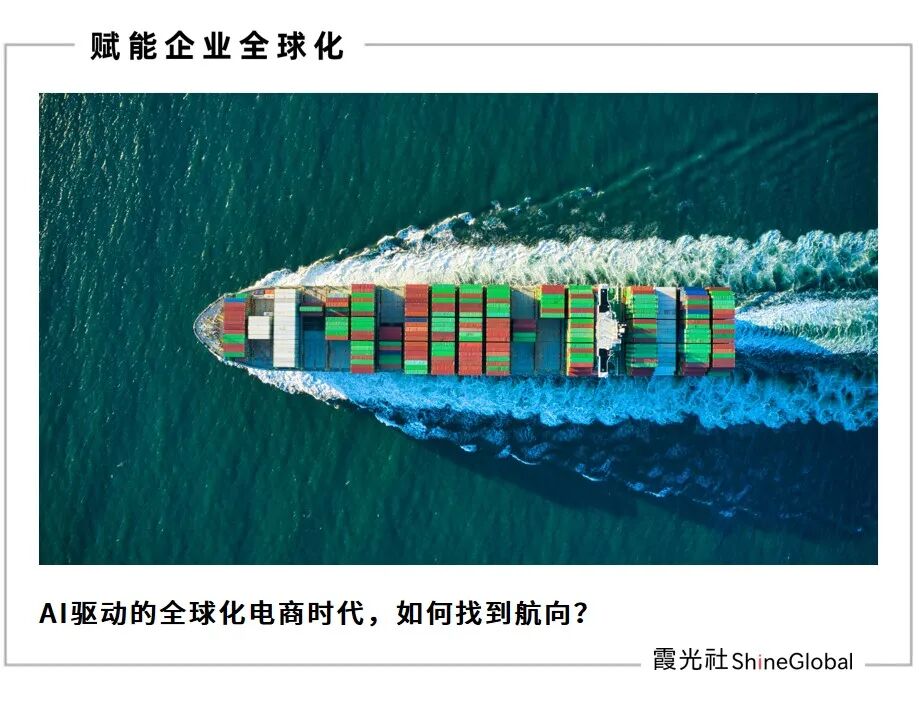
AI Rewrites the Logic of Going Global: Cross-border E-commerce Reaches a New Turning Point
 06/17 2026
 536
536
Author | Yang Zi
Editor | Li Xiaotian
Cross-border e-commerce is undoubtedly one of the fastest fields for AI implementation.
On one hand, e-commerce scenarios involve high-frequency and highly digitized workflows. In business processes such as user insights, product selection, listing creation, and advertising, every step of cross-border e-commerce leaves data online. The higher the digital density, the faster AI can learn and execute, making e-commerce the easiest scenario for AI implementation.
On the other hand, from a demand perspective, cross-border e-commerce inherently faces challenges such as multilingualism, time zone differences, and the elusive nature of overseas consumer psychology—all scenarios where generative AI (large language models, AI translation, visual generation) excels.
AI feedback in cross-border e-commerce scenarios is nearly real-time. Unlike traditional industries, where deploying AI may take months or even years to show results, in cross-border e-commerce, optimizing a listing or adjusting an ad can result in visible changes in click-through and conversion rates within 24 hours. This instant feedback compels the entire industry to accelerate its adoption.

Since the beginning of 2026, many cross-border e-commerce practitioners have felt rapid changes in their work. Amy, a North American toy seller, told Xiaguang Society that previously, working in cross-border e-commerce meant dealing with anxiety over time zone differences in the middle of the night, translation errors in dozens of SKU listings, uncontrollable spikes in advertising costs, and elusive market trends hidden in massive user reviews. "With AI tools, AI can assist in analyzing competitors across multiple markets, automatically generate ad copy tailored to local cultural contexts, and lock (lock in) restocking strategies for the coming week," Amy said. With AI's support, she can gain a holistic perspective, make better business decisions, and reach broader markets.
This rapid iteration and penetration have made AI no longer just a high-tech add-on but a new infrastructure for cross-border expansion. In the past year alone, Amazon third-party sellers have used generative AI to create over 12 million sellable product listings[1]. McKinsey data also indicates that early adopters who systematically deploy AI for dynamic pricing and full-chain reconstruction have achieved a 5%-10% increase in net profit margins. Even on the consumer side, traffic conversion rates from AI-driven channels are 31% higher than traditional channels, with user retention times on sites extended by 32% and bounce rates reduced by 27%.[2]
On June 12, Amazon Global Selling released the '2026 China Export Cross-border E-commerce Development Trends White Paper' (hereinafter referred to as the 'White Paper'), directly stating that over 82% of Amazon Chinese sellers now use general-purpose AI tools or e-commerce-specific AI tools; more than 16% of Chinese sellers have advanced from using single-point AI tools to deploying AI workflows or using agents to automatically execute end-to-end tasks.
This marks the eighth year Amazon Global Selling has released this annual white paper series. This year's white paper, themed 'AI Reshapes the New Paradigm of Going Global,' proposes that the structural opportunity of 'AI-driven globalization of cross-border e-commerce' has arrived. Based on the white paper's analysis, this article will explore how sellers can more efficiently build AI competitiveness under the new AI-driven global e-commerce paradigm.

How AI Rewrites the Growth Logic of Cross-border E-commerce
The white paper analyzes that cross-border e-commerce will embrace structural AI opportunities from both consumer and supply-side perspectives.
On the consumer side, AI will rewrite shopping decisions. Overseas consumers' habits of 'browsing stores' and 'searching' during online shopping are shifting. Increasingly, consumers rely less on rigid keyword searches and more on describing their needs in natural language, allowing AI to directly match and recommend products with one-click precision. This shift is altering consumer shopping decisions.
Corresponding to these changes in consumer-side decision-making is a comprehensive reconstruction of supply-side productivity.
AI is evolving from initially serving as efficiency tools for single tasks like listing translation and thumbnail optimization to becoming a decision-making engine driving core processes such as product selection, pricing, inventory, and advertising.
In this market-driven landscape, traditional operational experience alone is no longer sufficient. As the white paper states, sellers previously competed on 'who operates better,' but today, the competition has shifted to 'who uses AI better.' Facing new challenges, sellers who systematically deploy AI early are establishing first-mover advantages in data accumulation and operational models, with efficiency and profitability divergence already underway.

Based on supply-side and demand-side changes, sellers previously expanded 'one site at a time'—registering accounts, selecting products for single sites, manually creating listings, handling single-site logistics, optimizing single-site operations, and gradually expanding to independent operations across sites. This was a linear, step-by-step process. Now, AI empowers the entire global expansion chain, from AI assistants helping open stores to AI-driven opportunity detectors providing global sales insights, AI creating multilingual listings and localizing content, combined with Amazon's Global Smart Hub Warehouse (GWD) to achieve 'one-time warehousing, one-time listing, global fulfillment,' along with AI-powered advertising, customer service, and operational optimization. These innovations enable sellers to build a global business layout from day one, relying on AI-driven 'next-gen cross-border chains' to establish AI competitiveness and achieve 'global sales from day one' more efficiently. This constitutes the specific path for 'AI-driven globalization of cross-border e-commerce.'
Meanwhile, sellers' roles are also evolving. As AI integrates into more operational aspects, sellers no longer focus solely on daily tasks like copywriting, inventory, and advertising but can allocate more energy to market judgment, product strategy, and global layout, transitioning from single-point operations to more systematic business decisions. AI breaks down cross-border barriers such as language, compliance, and operations, acting as an accelerator for enterprise or seller globalization; it collaborates with sellers in planning business strategies and serves as a decision-making partner. Simultaneously, it enables small and medium-sized sellers to acquire operational capabilities and global visions previously only available to large sellers, acting as a capability breakthrough tool for sellers.
Thus, a promising new world for cross-border e-commerce unfolds.

Examples of AI-Driven Changes in Cross-border E-commerce
Through analyzing extensive seller practices, the white paper summarizes five major AI application trends in the cross-border e-commerce industry.
Trend 1: From single-point tools to intelligent agent collaboration, AI drives operational automation.
Amazon surveys show that over 98% of surveyed Chinese sellers already use AI tools when operating their Amazon stores. Deploying AI workflows or intelligent agents is not merely about stacking tools but achieving comprehensive, exponential changes. Take cross-border beauty brand MelodySusie as an example: by integrating AI agents with Amazon Advertising API, it built a full-chain automated advertising agent system that independently handles everything from strategy formulation to execution optimization, covering five autonomous capability modules: intelligent cold start, scenario-based delivery, closed-loop optimization, risk control cutoff, and special campaigns for major promotions. AI autonomously completes over 90% of operational tasks.
The result is significant revenue growth, with ACOS (Advertising Cost of Sales) at just one-third of industry levels and conversion rates increasing by nearly 40%. Sellers who lead in multi-agent collaboration and establish data moats may be redefining cross-border productivity.
Trend 2: From data insights to actionable recommendations, AI upgrades intelligent decision-making.
For most sellers, 'whether to invest in new categories' is a typical strategic decision with high risks. AI assistance provides every decision with more robust data support and faster validation paths.
For instance, TOPDON, deeply rooted in the automotive intelligent diagnostics field, collaborated with Amazon to integrate its self-developed big data platform with Amazon Seller Assistant, establishing an AI decision-making partner system covering opportunity discovery, assessment, rapid validation, and iterative closed loops. AI ensures every decision has stronger data support and faster validation paths. Using AI-quantified opportunity matrices, single-decision response times shifted from 'days' to 'minutes,' achieving near-real-time market insights and feedback.
The results after launching new products were remarkable: sales exceeded 10,000 units within three months, securing the #1 Best Seller spot in Amazon's thermal imager category.
Beyond advertising decisions, AI assists sellers in transforming complex operational decisions like pricing, product selection, and restocking—previously highly dependent on personal experience or difficult-to-interpret data—into quantifiable, verifiable scientific decisions.
Amazon Seller Assistant fulfills this role by analyzing data, predicting trends, and providing recommendations across inventory and logistics optimization, account health management, compliance analysis, potential new product insights, and advertising and marketing optimization. After obtaining seller approval, it executes decisions while sellers retain full control, helping them start, manage, and grow their businesses 24/7 like true assistants.
In 2025, Amazon Seller Assistant had over 230,000 monthly users, with sellers adopting its recommendations at a rate exceeding 90%[3].
Trend 3: From product selection competition to category definition, AI drives product innovation.
Product selection is one of the most critical factors determining cross-border success.
Traditionally, sellers selected products based on what sold well. AI empowerment is opening another avenue for product innovation: identifying unmet needs and defining and pioneering new categories.
Where does category innovation come from? It can be divided into three paths:
First, AI identifies unmet needs in mature categories.
Ergonomic chair brand LiberNovo used AI-driven Amazon Opportunity Explorer scans to discover rising demand for 'dynamic lumbar support + active spine support' search terms but found no high-end products offering both bionic backrests and electric adaptive adjustments.
LiberNovo then used AI comment analysis tools to extract user reviews, pinpointing three core needs: lower back pain from prolonged sitting, inability to maintain adaptive posture, and frequent manual adjustments. Based on these AI insights, LiberNovo created a differentiated feature combination of 'bionic backrest + electric adaptive adjustment + active spine support.' LiberNovo Omni officially launched on Amazon in Q4 2025, priced at $800+, entering the traditional high-end market as a tech-innovation brand and quickly ranking among the top three in the high-price segment.
Second, AI integrates into products, redefining category capabilities.
For example, in the highly commoditized fitness equipment category, traditional products often provide only basic exercise functions, leading consumers to 'buy and forget.'
Global home fitness tech brand Merach developed the industry's first fitness AI assistant, MIA, integrating training data from over 4,000 athletes to establish a database of tens of millions of exercise samples. Based on user exercise data, it generates personalized plans (e.g., training schedules, nutritional advice, recovery guidance), while its intelligent resistance adjustment system monitors heart rate and power output in real time, automatically adjusting equipment resistance. This transforms products from 'fitness tools' to 'smart coaches,' significantly increasing average user training duration.
Meanwhile, Merach leveraged Amazon's Discover Unmet Demand model to further identify unmet exercise needs, combining niche market trends and competitive landscapes to capture opportunities precisely. AI-empowered R&D has resulted in 23 patents. AI not only participates in functional innovation but also enters demand judgment and R&D decision-making.
Third, AI spawns entirely new consumer categories.
Exoskeleton tech brand dnsys boostsuit used AI to create a new consumer-grade smart knee exoskeleton. Fusing motion sensing, behavioral learning, and predictive algorithms, it achieves real-time recognition and millisecond-level response to user movements and terrain changes, truly upgrading from passive functional assistance to intelligent collaboration. Leveraging AI's motion sensing and predictive capabilities, it applies to daily life, hiking, skiing, cycling, and other scenarios, bringing consumer-grade exoskeletons from industrial/medical fields to mass consumption. Currently, dnsys boostsuit has won three 2026 CES Innovation Awards and raised over $4.12 million through crowdfunding, breaking category records.
Trend 4: From localized optimization to full-chain efficiency leaps, AI unlocks growth potential.
In the cross-border e-commerce value chain, AI initially applied to listings and advertising but now extends to key areas like product selection, content, consumer insights, marketing, compliance, and customer service, forming a cross- link (cross-process) efficiency system.
For example, gaming peripheral brand GameSir faced typical conflicts between scaling and resource investment during multi-site expansion. By implementing AI across multiple lines, GameSir reconstructed its multi-site operational model, doubling its site coverage while reducing costs by 40%. More importantly, full-chain AI empowerment leveled operational capabilities and efficiency gaps, creating opportunities for explosive growth among small and medium-sized enterprises and small teams;
Similarly, the underwear brand Ubras has also improved efficiency by utilizing Amazon's AI tools. With only two people managing its Amazon channel, the team has achieved the operational scale of a traditional 10-person team with the help of AI tools, enabling rapid brand cold starts and business growth.
Xingzhi Technology is a typical representative of a 'one-person company.' The company has fully shifted to an AI-driven model, upgrading AI from an efficiency tool to the core system for product innovation and business decision-making, and has developed a replicable AI product development workflow. For Xingzhi Technology, the core value of AI lies in enabling a one-person startup to possess operational capabilities close to those of a complete brand team.
Trend 5: From passive compliance to proactive risk control, AI reshapes security boundaries.
Whether sellers can operate steadily and compliantly determines the sustainability of cross-border e-commerce business growth. In this context, AI is transforming compliance risk control from 'post-event remediation' to 'proactive prevention': 24/7 automated monitoring, early risk prediction, and automatic generation of response plans provide greater assurance for global operations.
Guangzhou Lvyuan Technology Co., Ltd. (LVYUAN), which specializes in clean energy, once faced issues such as errors in manually organized customs clearance documents leading to customs holds, delayed responses to logistics anomalies, and inaccurate manual configuration of shipping fee templates, all of which affected product profit margins. To address these issues, Lvyuan Technology built an AI system that deeply integrates with Amazon's logistics system, creating an automated closed loop covering customs clearance, anomaly monitoring, and shipping fee compliance.
At the customs clearance end, the system captures shipping data from the ERP, connects to multinational regulatory databases to automatically generate commercial invoices and packing lists, and directly integrates with Amazon's logistics shipping process. On the monitoring end, the AI system automatically inspects logistics trajectories across sites, detects anomaly-related keywords, automatically matches appeal templates, and submits them to Amazon's ticket system. On the shipping fee end, it weekly captures Amazon's latest rate tables, automatically calculates and batch updates shipping fee templates based on product weight and volume. After optimization by the AI automated closed-loop system, logistics achieved a zero-customs-hold status.
It is evident that these trends are not occurring in isolation but are interconnected and mutually reinforcing, all pointing in one direction: AI is accelerating its evolution into one of the core competitive advantages for sellers.
From operational automation and intelligent decision-making to product innovation, efficiency leaps, and proactive risk control, these five trends intertwine to create a new efficiency divide in global trade. The era of relying solely on manpower and physical effort is over; the future will be a comprehensive competition of data, intelligent tools, and systematic operational capabilities.

AI Advancement Map: 'Two Paths × Three Stages' to Find New Directions for Sellers Going Global
Looking at the variables brought by technology, AI is never an isolated efficiency patch but seamlessly connects the entire global expansion link (chain).
Faced with the rapid iteration brought by AI, Amazon has tailored a clear 'Two Paths × Three Stages' advancement map for Chinese sellers in its newly released White Paper. Whether it's large brands in transition or lightweight startup teams, they can all find their own course on this map.
One is the AI progressive path. Traditional cross-border sellers with mature business systems often prefer small-step iterations. This path is suitable for traditional sellers to introduce AI into their existing business systems for gradual upgrades. Simply put, there is no need to start over; instead, it's like changing tires on a moving car. AI can be modularly introduced into existing business processes, achieving gradual cost reduction, efficiency improvement, and organizational upgrades through single-point interventions.
The other is the AI-native path. For the new generation of cross-border entrepreneurs or tech brands, they can build their businesses with AI as the underlying capability from day one, resulting in lighter organizations and faster responses, making it easier to form high-efficiency operational models in the early stages. From their inception, such teams build their global businesses with AI as the underlying DNA. For startups without historical accumulations, they are typically more agile with extremely flat organizational structures, embodying the ultimate efficiency of small teams or one-person companies from the very beginning.

At the specific execution level, every cross-border practitioner is undergoing a transformation of identity. The White Paper defines this transformation in three stages:
Stage 1: AI as a tool, used for tasks such as polishing copywriting, translation, and following commands. For example, sellers integrate general-purpose AI or e-commerce-specific AI tools into their business processes, completing this step.
Stage 2: AI as an assistant, where AI begins to integrate into workflows, assisting in operations by handling complex product selection research, data attribution, and anomaly alerts, becoming an indispensable 'co-pilot.'
Stage 3: AI as the operator, where multiple AI agents can collaborate across business domains, proactively discovering insights and recommending decisions. As demonstrated by MelodySusie mentioned earlier, sellers begin to let AI agents automatically execute multi-task operations end-to-end, with sellers making strategic decisions.
For the new generation of cross-border e-commerce practitioners, AI is reshaping the development path of export cross-border e-commerce with unprecedented depth and breadth. Amazon Global Selling proposes the AI-driven 'next-generation cross-border chain' in the White Paper, aiming to connect 'building AI capabilities from today' with 'marketing globally from day one,' assisting Chinese sellers in finding their own direction earlier in the new journey of AI-driven cross-border e-commerce globalization. AI has changed the way the world connects, making global business for cross-border practitioners closer, more convenient, and faster. The map has been drawn, and the coordinates are right beneath your feet. True 'launch-and-sell-globally' starts now.
Endnotes:
【1】Data from the 2026 China Export Cross-Border E-Commerce Development Trends White Paper
【2】Data from Adobe Analytics Global Retail Tracking Report
【3】Amazon data, April 2026
-
![]()
In-depth | Survival Transformation of 38 Million Freight Drivers: How Platformization Defines the Next Decade?
-
![]()
Why Have ‘Computing Power Rental’ Companies Emerged as the Biggest Winners in the AI Era Amid Soaring Chip Prices?
-
![]()
DeepSeek's Financing Details Revealed! How Liang Wenfeng Secured Control
-
![]()
Valued at 210 Billion Yuan, Generating 42 Billion Yuan in Annual Revenue, Xiaohongshu May Proceed with IPO
-
![]()
Three Straight Months of Growth in Heavy Truck Sales: Both New and Veteran Players Are on the Same Wavelength!
-
![]()
AI Rewrites the Logic of Going Global: Cross-border E-commerce Reaches a New Turning Point
-
![]()
DeepSeek Secures Over 50 Billion Yuan in Initial Funding Round: Tencent and CATL Among Investors
-
![]()
Trillionaire Musk