In-depth | Survival Transformation of 38 Million Freight Drivers: How Platformization Defines the Next Decade?
 06/17 2026
 642
642
Wanlian Yida, an industrial internet platform originating from logistics informatization, reconstructs the logic of transport capacity organization through a dual closed-loop layout of "cargo control + vehicle control," driving individual drivers to transition from solo transport workers to standardized investors in transport capacity assets.
Author | Zheng Qingchun
A heavy-duty truck costing nearly 500,000 yuan represents the entire life savings of tens of millions of freight drivers, as well as a risk lever hanging over their heads. With down payments in the tens of thousands, monthly installments in the ten-thousand-yuan range, combined with rising fuel costs, toll fees, and maintenance expenses, every empty trip and round of low-price bidding further compresses already thin profit margins.
As the road freight market becomes increasingly fragmented, vicious price wars have become the norm, leaving 38 million truck drivers trapped in a low-profit dilemma. Some even face survival challenges where "accepting an order means a loss, and an empty trip means debt."
Wanlian Yida, an industrial internet platform originating from logistics informatization, reconstructs the logic of transport capacity organization through a dual closed-loop layout of "cargo control + vehicle control," driving individual drivers to transition from solo transport workers to standardized investors in transport capacity assets. It attempts to break the decade-long cycle of low-price competition and open a new era of asset operations in the freight industry.
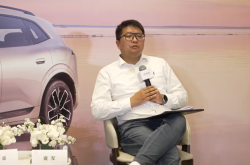
On June 10, Feng Bo, Chairman of Beijing Wanlian Yida Xingtu Automobile Trading Co., Ltd., stated in an exclusive interview with the Industrial Alliance Society that Wanlian Yida plans to control up to one million vehicles in the next three to five years. This is both a response to industry fragmentation and a proactive layout (layout) for the next decade, where "vehicles are operable assets."
In his view, the elimination of inferior players, industry reshaping, the intensive integration of scattered transport capacity, specialized operations, and asset upgrades will become the core themes of the road freight industry in the coming years. Leading platforms with cargo control, vehicle control, and full-link service capabilities will dominate the new round of structural transformation in the industry.

Exhaustion of the "Fragmented" Transport Capacity Dividend
China boasts the world's largest road freight market by volume. According to data from the National Bureau of Statistics' "2025 National Economic and Social Development Statistical Bulletin," the total volume of operational freight reached 59.7 billion tons in 2025, representing a steady year-on-year growth of 3.2%. The market foundation continues to expand, and industrial demand remains resilient.
In stark contrast to the steady growth in freight volume, industry freight rates continue to face downward pressure. Data from the China Federation of Logistics & Purchasing and Lin'an Logistics Group shows that the China Road Logistics Freight Rate Index stood at 105.2 points in December 2025, down 0.22% month-on-month and 0.70% year-on-year. In June of the same year, the general cargo complete vehicle (full truckload) freight rate index was 103.2 points, down 0.34% month-on-month and 2.03% year-on-year. Freight rates on multiple core trunk routes and popular transportation corridors continue to hit new lows, breaching the industry's widely recognized break-even threshold and intensifying the trend of low-price competition.
The heavy-asset nature of heavy-duty truck transport capacity, combined with the declining freight rate system, has left millions of individual drivers trapped in operational losses. According to industry public information, the current total cost of a mainstream domestic tractor-trailer combination is approximately 500,000 yuan. Since most individual operators have limited personal funds, full payment purchases are rare, and financing options are more common. A typical down payment is around 30%, with the remaining balance repaid in 24 to 36 monthly installments, imposing fixed repayment obligations. To maintain operational liquidity, freight drivers generally maintain high-intensity work schedules, often starting in the early morning and finishing late at night, with year-round operation becoming the industry norm.
Data shows that over 60% of truck drivers earn less than 8,000 yuan per month, with many routes generating income barely covering fuel costs, toll fees, and vehicle depreciation, leaving little to no profit margin. When accounting for the labor value of the drivers themselves, the actual operating income for most individual drivers is negative.
"The largest hidden cost in the freight industry is the long-term neglect of the labor value of drivers themselves," said Feng Bo, Chairman of Beijing Wanlian Yida Xingtu Automobile Trading Co., Ltd. Individual drivers typically adopt a "marginal cost pricing" approach in freight rate decisions, considering only fuel expenses as variable marginal costs while ignoring fixed costs such as depreciation, labor, and insurance. As a result, they still choose to accept low-priced orders. This passive survival behavior ultimately triggers freight rate collapses across all routes and the entire industry, continuously driving down market benchmark freight rates.
The collapse of trunk route freight rates has become a widespread industry phenomenon. According to public data from "China Logistics & Purchasing" magazine, the freight rate for the core long-haul route from Shanghai to Urumqi, which previously stabilized at 18,000 to 20,000 yuan per trip, has now fallen to 9,500 to 12,000 yuan, nearly halving. For the mainstream 6.8-meter high-barrier route from Shenyang to Guangzhou, the platform's reference freight rate is 8,000 yuan, while the rigid costs of fuel and toll fees for a single trip reach 7,000 yuan. After deducting basic energy costs, the net profit per trip, excluding labor and vehicle wear and tear, is only in the thousands of yuan, with profit margins severely compressed.
While the industry commonly attributes declining freight rates to driver competition, industry analysts point out that the real-time price comparison mechanisms and low-price priority order allocation rules of digital platforms further amplify the competitive bidding effects among individual operators, accelerating the continuous decline in market-wide freight rates from a rule-based perspective.
The multi-tier logistics subcontracting system further dilutes the core income of terminal drivers. Industrial goods pass through multiple layers of logistics intermediaries after leaving the production facility, with each layer adding markup, leaving the individual drivers responsible for final delivery earning only the thinnest and most marginal profits in the entire supply chain. This multi-layer subcontracting ecosystem results in significant loss of freight revenue during circulation, with the labor value of individual transport capacity being continuously squeezed and depleted over time.
After years of fragmented development, individual drivers, as the smallest operational units in the market, have reached the growth ceiling in terms of operational efficiency and profitability. Under the individual owner-operator model, vehicle capacity, working hours, and annual trip frequency all have rigid upper limits, while comprehensive operational costs such as fuel, tolls, maintenance, depreciation, and credit continue to rise. The structural contradiction between stagnant revenue and rising costs continues to intensify.
In a fragmented market landscape, individual drivers are forced to play three core roles: asset holders bearing huge investments, frontline laborers engaged in high-intensity work, and self-employed operators responsible for customer acquisition and pricing. These three functions and risks are highly concentrated in the individual, making them extremely vulnerable to operational losses triggered by any fluctuations in cargo availability, vehicle breakdowns, cash flow disruptions, or freight rate declines.
At this critical juncture of industry transformation, Wanlian Yida's professional vehicle operation service system, through standardized, intensive, and platform-based professional operation models, reconstructs heavy-duty trucks from heavy assets with uncontrollable risks and unstable returns into quantifiable, predictable, delegable, and stable-yield standardized operational assets. It provides a new solution for millions of drivers to overcome traditional individual operational challenges and reshape profitability logic.

A New Paradigm for Freight Platforms: The Dual Pursuit of Cargo and Vehicle Control
With over two decades of experience in the logistics industry, Feng Bo joined Wanlian Yida during its startup phase in 2018. Unlike most platforms focused on simple supply-demand matching, Wanlian Yida prioritized compliance qualification layout (layout), using its network freight license as the foundation to bring all transaction links into a standardized and compliant system.
In 2021, Wanlian Yida successfully obtained network freight qualification certification from Tianjin Dongjiang Port, becoming one of the first compliant licensed network freight service providers in China. That same year, it launched its self-developed "Wanliantong" SaaS system, achieving the "Five Flows Integration" of order information flow, physical cargo flow, fund settlement flow, financial and tax invoice flow, and underlying data flow, establishing a digital, traceable, and fully closed-loop smart logistics transaction infrastructure. In August 2024, after authoritative evaluation by the China Federation of Logistics & Purchasing, Wanlian Yida was rated as a 5A-level network freight platform, securing the highest industry qualification in China's network freight sector and joining the ranks of the nation's top compliant logistics platforms.
Against the industry's reliance on dual commission and traffic monetization for profit, Wanlian Yida continuously reconstructs its platform value logic. In March 2026, its new matching platform "Yidabao" officially launched, disrupting traditional industry profit models with a "zero membership fee for shippers, zero commission for drivers" dual-free approach. It abandoned the platform's dual arbitrage business model, returning to the industrial essence of logistics supply-demand matching. With its ultimate (extreme) inclusive model and efficient matching capabilities, Yidabao surpassed 40,000 daily orders within just one month of launch, rapidly achieving significant market penetration.
While efficient supply-demand matching serves as the platform's traffic entry point, the true core of its business model lies in the vehicle operation services officially launched in April 2026. Centered on the value propositions of "saving money, reducing worry, and minimizing effort," these services target logistics companies, fleets, and freight drivers, featuring three major product matrices—Fleet Alliance, Driver Joint Transport, and Driver Joint Operation—along with various vehicle operation management services. That same month, Wanlian Yida signed a strategic cooperation agreement with Dongfeng Commercial Vehicles for the procurement of 10,000 commercial vehicles, setting a new record for the largest single order in China's commercial vehicle market in 2026.
A month later, Wanlian Yida and Huaxing Logistics jointly signed a strategic cooperation agreement in Xiamen for the joint construction of a 200-unit electric tractor fleet, completing the delivery of the first batch of new energy vehicles and officially launching the driver joint operation model.
Currently, Wanlian Yida has established an online-to-offline service network covering 31 provinces across China, with over 2,000 subsidiaries. Its logistics service segment serves over 30,000 shippers and integrates over 4 million units of transport capacity, forming a complete "people + vehicles + cargo" logistics service closed loop (closed loop).
The implementation of the vehicle operation service system essentially represents a structural reconstruction of traditional freight operation logic. For a long time, domestic individual drivers have remained in a vulnerable position with mismatched risks, serving simultaneously as heavy asset holders, frontline laborers, and market operators. Costs, risks, and pressures are highly concentrated, lacking professional division of labor and risk hedging mechanisms. Through platform-based and intensive operations, Wanlian Yida completely separates the multiple roles of drivers: allowing them to refocus on transportation execution while transferring complex operational tasks such as cargo scheduling, vehicle management, risk control, post-vehicle maintenance, and settlement operations to a professional platform system.
The vehicle operation services are implemented through three major product matrices: Fleet Alliance, which provides vehicle procurement and operational support for logistics companies; Driver Joint Transport, which facilitates joint vehicle purchases for individual drivers and small fleets, with Wanlian Yida contributing a 5% down payment to lower entry barriers; and Driver Joint Operation, a deep partnership model where joint operation drivers form cooperative relationships with the platform, which provides priority cargo allocation rights, group procurement discounts, and one-stop post-vehicle services, allowing drivers to focus on transportation execution.
The strategic cooperation with Dongfeng Commercial Vehicles follows the same logic. Through strategic partnerships, both parties acquire diversified vehicle models with comprehensive competitiveness and match vehicles with cargo sources using the platform's resources of over 30,000 shippers. They establish systemized risk prevention and control and national joint operation services, equipped with 7×24-hour dedicated customer service, and achieve "one-site signing, nationwide access" through the service network.
In Feng Bo's view, the asset landscape of China's freight industry is undergoing a fundamental reversal. According to survey data from the Ministry of Transport, China's freight market is highly fragmented, with scarce large-scale fleets. The vast majority of transport entities operate fewer than 10 vehicles, presenting a long-term pattern of "small, scattered, disordered, and weak" operations. However, with industry consolidation accelerating, the wave of intensive integration has already begun. Data from the CFLP Platform and Transport Capacity Branch shows that in 2025, industry regulatory upgrades and market consolidation accelerated, with over 30% of network freight platforms ceasing operations and surviving platforms experiencing an average revenue decline of 30% to 40%.

Drivers: Transitioning from Transporters to Investors in Transport Capacity Assets
Feng Bo summarizes the platform's core strategy as a dual closed-loop logic of "cargo control in one hand, vehicle control in the other." Cargo control relies on the platform's accumulation of massive demand for bulk commodity logistics to create a stable cargo source foundation. Vehicle control involves integrating the market's highly fragmented individual transport capacity into a scalable asset pool that can be uniformly dispatched, intelligently optimized, and efficiently utilized through professional vehicle operation services.
This means that Wanlian Yida's core industrial transformation logic is to drive freight drivers to transition from passive vehicle operators to stable and value-appreciating investors in transport capacity assets.
This identity shift reshapes the industry's underlying economic model. Under the traditional model, drivers are "operational cost centers" continuously consuming costs and passively bearing risks. In the platform's new system, drivers become value nodes within the industrial ecosystem. Practitioners no longer need to handle complex operational tasks such as driving performance, cargo sourcing, annual inspections, maintenance, and settlement negotiations, nor must they accept low-priced cargo out of anxiety over empty return trips. Heavy-duty trucks are no longer mere labor tools and sources of debt pressure but standardized asset units that rely on the platform's intelligent dispatching and intensive operations to continuously improve turnover efficiency and generate stable returns.
The key to the sustained implementation and scalable replication of this model lies in whether cargo volume can match the expansion pace of transport capacity scale. This creates clear generational differences among industry participants.
Examining the other three types of industry players: OEM-affiliated financial leasing companies, represented by FAW Jiefang Finance and Sinotruk Finance, essentially provide brand- matching (supporting) financial services and struggle to develop full-domain transport capacity operation capabilities. Third-party financial leasing enterprises, exemplified by Lionbridge, focus primarily on capital matching, extending from commercial vehicle financing into contract logistics and covering segments such as express delivery and less-than-truckload transportation. Leading traffic platforms like Manbang Group, while their vehicle leasing and sales business logic resembles binding transport capacity with cargo sources, their focus remains on the 4.2-meter light truck urban delivery sector and has yet to venture into high-threshold, high-complexity core scenarios such as heavy-duty truck long-haul trunk routes and bulk freight.
Ultimately, the success of any business model hinges on the real earnings of practitioners. Whether industrial transformation delivers inclusive value depends on whether drivers' profit margins can genuinely improve.
Taking Wanlian Yida as an example, the services provided to joint operation drivers can be quantified across several specific dimensions:
Priority Cargo Allocation: Joint operation drivers gain 30-minute early access to cargo listings and first refusal rights. Shippers are willing to pay more stable rates for reliable service, providing drivers with more predictable freight income.
Improved Utilization Rates: The industry average for vehicle effective utilization rates hovers around 50% to 60%, with significant time spent on cargo sourcing and waiting. Feng Bo explains that Wanlian Yida's AI-based circular route planning and intelligent matching can pre-plan the next cargo assignment, boosting utilization rates by 10 to 15 percentage points. "Achieving 70%-85% utilization allows drivers to earn more."
He further pointed out that the current vehicle logistics operation model has long relied on manual experience and faced challenges such as inefficiency, high empty driving rates, and difficulty in global optimization. The 'AI+Logistics' solution launched by Wanlian Yida has built an intelligent decision-making system centered on five-dimensional data of 'vehicle-cargo-site-route-time.' It achieves full-chain intelligence from precise cargo matching, fulfillment risk prediction to dynamic transportation route optimization, providing a technological foundation for improving operational efficiency.
Centralized procurement discounts: After-sales services such as tires, insurance, and maintenance are procured uniformly through the platform. Taking a tractor that runs 150,000 kilometers a year as an example, replacing all 22 tires on the vehicle and saving 5% to 10% per tire through centralized procurement can result in annual savings of ten to twenty thousand yuan.
Based on the comprehensive efficiency enhancement and cost reduction system, Feng Bo provided clear revenue calculations: The significant improvement in operational efficiency, combined with the high-value mileage increment brought about by priority cargo allocation, can result in monthly income increases of 3,000 to 4,000 yuan for affiliated drivers, with an annual comprehensive income increase of 20%-30% stably. This completely reverses the traditional self-employed drivers' operational dilemma of spending more than they earn, achieving a qualitative leap in profitability.
From a long-term industry perspective, behind the efficiency innovation lies a structural iteration of the entire industry. With the accelerated implementation of trends towards freight intensification, intelligence, and automation, the overall transportation efficiency of the industry continues to improve, and the rigid demand for traditional human drivers in the market will steadily decline. The size of the industry's workforce may gradually be optimized. In the future, the professional attributes of freight drivers may be completely reshaped, evolving from high-intensity technical labor jobs to safety operation and maintenance managers for intelligent vehicle fleets.
Before the advent of autonomous driving, Feng Bo's advice to freight practitioners is: 'Treat the vehicle as an asset investment and entrust it to a professional platform for operation.'
Looking back at the new cycle of industry development, the road freight sector in the next decade may bid farewell to low-dimensional price competition and extensive scale races, stepping into a high-quality development stage prioritizing efficiency, asset appreciation, and ecological win-win outcomes. The profound restructuring of the industrial structure will no longer come at the expense of individual practitioners' interests but will allow every driver who Following the trend (conforms to the trend) and embraces change to share in the era's dividends of industrial upgrading. A new development landscape for road freight is gradually unfolding.
(Information reference sources: National Bureau of Statistics, China Federation of Logistics & Purchasing. The third-party data and company public information cited in this article are as of June 2026.)
THE END
-
![]()
Proposed to Raise 955 Million Yuan through Private Placement! Huicheng Vacuum Boosts Localization of Ultra-Precision Optical Coating Equipment
-
![]()
Cash Flow Soars 13-Fold! What Major Strategic Move is Wuhan Five Square Optoelectronics Planning?
-
![]()
Leaked Design of vivo X500: Reverts to Circular Camera Module in Top-Left Corner, Pays Homage to Classic X90 Aesthetic
-
![]()
DeepSeek Shows Signs of Foraying into Code Agents, Launches WeChat Official Account Focused on Harness
-
![]()
Auto Companies Deny Claims That ‘Cooperation with Huawei Is Non-Essential’, as Huawei Transforms into a ‘Public Platform’
-
![]()
Starship to Independently 'Return to the Launch Tower': SpaceX's Ambitions Extend Beyond Rocket Building to Dominating Space Transportation
-
![]()
Starship Set to Independently 'Return to the Launch Tower': SpaceX is Revolutionizing Space Transportation, Not Just Building Rockets
-
![]()
Anthropic and OpenAI Face Off Against Deepseek