Three Straight Months of Growth in Heavy Truck Sales: Both New and Veteran Players Are on the Same Wavelength!
 06/17 2026
 349
349
In freight transportation circles, aside from discussions about freight rates, the topic of vehicle replacements has been dominating conversations lately. From the onset of spring to the present, the heavy truck market has been on fire. The unveiling of May's sales figures has only added fuel to the flames, with sales climbing for three consecutive months and longstanding rankings undergoing a shakeup. Data reveals that in the first five months, a total of 544,300 heavy trucks were sold domestically, marking a substantial 23% year-on-year increase. Not only has the market witnessed three straight months of sales growth, but the prospect of "surpassing one million units for the year" now seems highly plausible. However, both new entrants and seasoned veterans in the industry are adjusting their strategies.
Let's first take a look at the overall market landscape. Monthly sales in May reached 109,500 units, up 23% year-on-year, firmly sustaining the high level of over 100,000 units. The concentrated release of replacement demand during the traditional peak season, coupled with the accelerated phase-out of old National V emission standard models, has provided a steady boost to market growth. The export market has also maintained positive year-on-year growth, cushioning some of the volatility in domestic demand.
However, beneath the surface excitement, the market structure is undergoing subtle changes. The once-thriving gas-powered heavy trucks have experienced a noticeable cooling in demand in May, primarily due to rising LNG prices, which have significantly narrowed or even reversed the price gap between oil and gas, rapidly eroding their economic edge. In stark contrast, new energy heavy trucks, benefiting from their operational cost advantages and subsidies for updating old freight trucks, have nearly doubled their sales year-on-year, emerging as the industry's strongest growth engine.
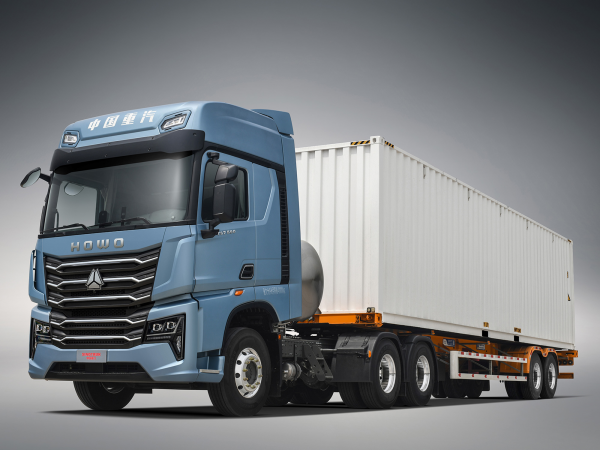
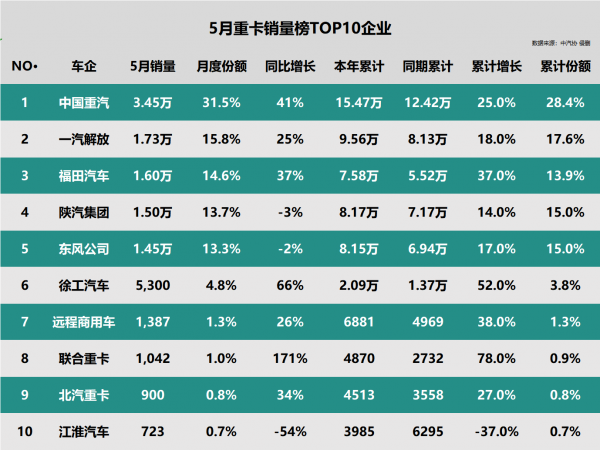
Now, let's delve into the rankings of major automakers. CNHTC remains the undisputed leader, with cumulative sales of 154,700 units in the first five months, capturing a 28.4% market share and being the sole enterprise to surpass 150,000 units. In May alone, it sold 34,500 units, with its market share surging to 31.5%, up 41% year-on-year, further widening its lead. CNHTC's stability stems from its "all-around capabilities." From mainline tractor trucks to engineering dump trucks, and from the domestic market to overseas exports, it boasts virtually no significant weaknesses. Its comprehensive product lineup enables it to consistently meet every wave of demand.
FAW Jiefang, ranked second, had cumulative sales of 95,600 units in the first five months, capturing a 17.6% market share. Its monthly sales in May grew by 25% year-on-year, demonstrating steady progress. As a long-established player in the industry, Jiefang's confidence is derived from decades of user reputation. In the northern mainline logistics market, Jiefang's image of being robust, reliable, and easy to maintain has long been ingrained in people's minds. Its vast user base serves as its most stable competitive advantage.
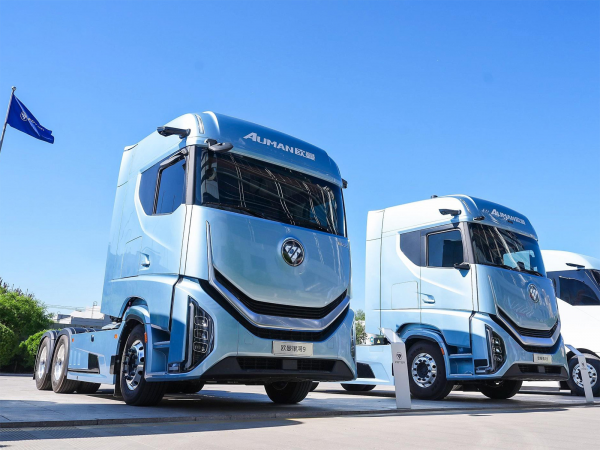
The biggest surprise in May was Foton's leap into the top three for the month. It sold 16,000 units in May, propelling it into the top three for the month, and had cumulative sales of 75,800 units in the first five months, up 37% year-on-year, ranking fifth in cumulative sales. In fact, Foton's breakthrough was hinted at early on. Its Auman series made an early strategic move in automatic transmission heavy trucks and continuously enhanced driving comfort, precisely aligning with the preferences of young truck drivers. Nowadays, purchasing a truck is no longer solely about "being able to haul goods"; ease of driving, reduced effort, and comfort are also essential considerations.
Shaanxi Automobile Group and Dongfeng Motor Corporation are engaged in a tight battle in the cumulative sales rankings. In the first five months, Shaanxi Automobile sold a cumulative of 81,700 units, while Dongfeng sold 81,500 units, with a mere 200-unit difference and both capturing a 15% market share, ranking third and fourth in cumulative sales, respectively. However, in May, both experienced slight year-on-year declines, ranking fourth and fifth for the month. The temporary decline in demand for engineering vehicles and the cooling enthusiasm for gas-powered vehicles have impacted both to varying degrees. Shaanxi Automobile has built its foundation on engineering vehicles and has deep roots in the northwest infrastructure market, while Dongfeng has clear advantages in the gas-powered vehicle segment and the southern market. The one who can first regain growth momentum will solidify its position.
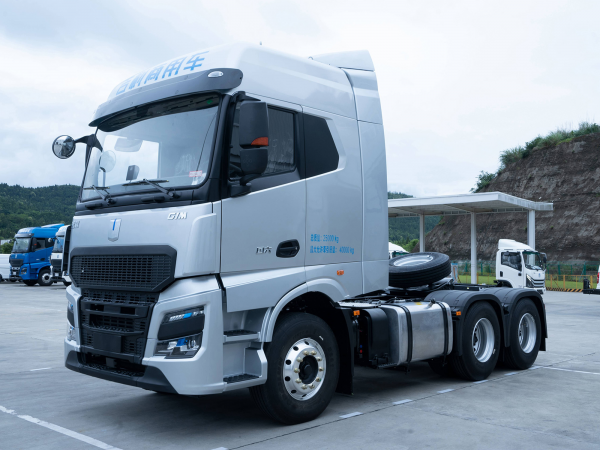
In the lower half of the rankings, new energy has emerged as the absolute keyword. XCMG Automobile remains firmly in sixth place, with cumulative sales of 20,900 units, up 52% year-on-year, with new energy heavy trucks being the core growth driver. Geely Remote ranks seventh, continuously deepening its efforts in battery swap and methanol-hydrogen technology routes. United Heavy Truck has shown strong momentum after being empowered by Chery, with cumulative sales soaring 78% year-on-year, while Beiqi Heavy Truck has also demonstrated steady growth.
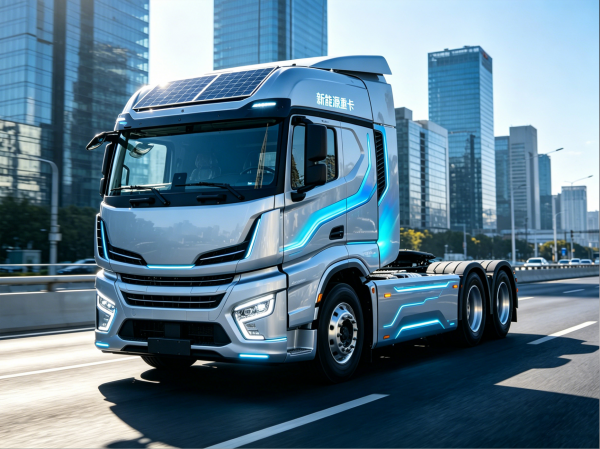
Commercial Vehicle Commune believes that the growth logic of the future heavy truck market will continue to evolve. On the one hand, the pace of new energy adoption will only quicken. Driven by policy subsidies and cost advantages, electric heavy trucks will gradually expand from closed scenarios such as ports and construction sites to more diverse transportation scenarios. On the other hand, fluctuations in oil and gas prices will continuously test automakers' product布局 (strategic deployment) capabilities. Relying solely on a single segment can easily leave one vulnerable to market fluctuations. The goal of surpassing one million units for the year is within reach, but the competition in the second half will only intensify compared to the first.
In Conclusion
Commercial Vehicle Commune believes that, ultimately, heavy trucks are essentially production tools, and users will always make their choices based on practical considerations: whoever can help drivers reduce costs and make driving more comfortable will win users and the market. From diesel to gas to new energy, the competitive landscape has been constantly shifting, and the market is always evolving, but the core logic remains unchanged: only automakers that innovate alongside user demand can stay in the game. The first five months are just the halftime whistle; the best is yet to come.
-
![]()
In-depth | Survival Transformation of 38 Million Freight Drivers: How Platformization Defines the Next Decade?
-
![]()
Why Have ‘Computing Power Rental’ Companies Emerged as the Biggest Winners in the AI Era Amid Soaring Chip Prices?
-
![]()
DeepSeek's Financing Details Revealed! How Liang Wenfeng Secured Control
-
![]()
Valued at 210 Billion Yuan, Generating 42 Billion Yuan in Annual Revenue, Xiaohongshu May Proceed with IPO
-
![]()
Three Straight Months of Growth in Heavy Truck Sales: Both New and Veteran Players Are on the Same Wavelength!
-
![]()
AI Rewrites the Logic of Going Global: Cross-border E-commerce Reaches a New Turning Point
-
![]()
DeepSeek Secures Over 50 Billion Yuan in Initial Funding Round: Tencent and CATL Among Investors
-
![]()
Trillionaire Musk