He Xiaopeng: Ant Group's 'AI Visionary'
 06/23 2026
 465
465
On June 10, He Xiaopeng issued an internal memo to all Xpeng employees, announcing that in addition to retaining his role as Group CEO, he would also personally assume the position of CEO for the robotics division.
The rationale behind this move is that Xpeng's humanoid robot, IRON, is on the verge of mass production, necessitating his direct oversight. This additional responsibility underscores his commitment—the IRON project is slated for mass production by the end of 2026, with a monthly output target exceeding a thousand units by year-end, initially deployed in retail stores and campuses for guided tours and shopping assistance. In his own words, mass-producing advanced humanoid robots is "a hundred times more challenging than conducting scientific research."
And now, he has embraced a new role: Independent Director of Ant Group.
For someone who has set 2026 as the milestone for "physical AI to fully materialize," choosing this moment to serve as an independent director for another company raises intriguing questions: What are his objectives?
Why He Xiaopeng?
On June 22, Ant Group completed its board refresh, appointing three prominent figures simultaneously: Bai Chongen, Dean of Tsinghua University's School of Economics and Management; Zeng Shunfu, former CEO of Deloitte China; and He Xiaopeng. Post-refresh, the board maintains nine members, with independent directors constituting a majority.
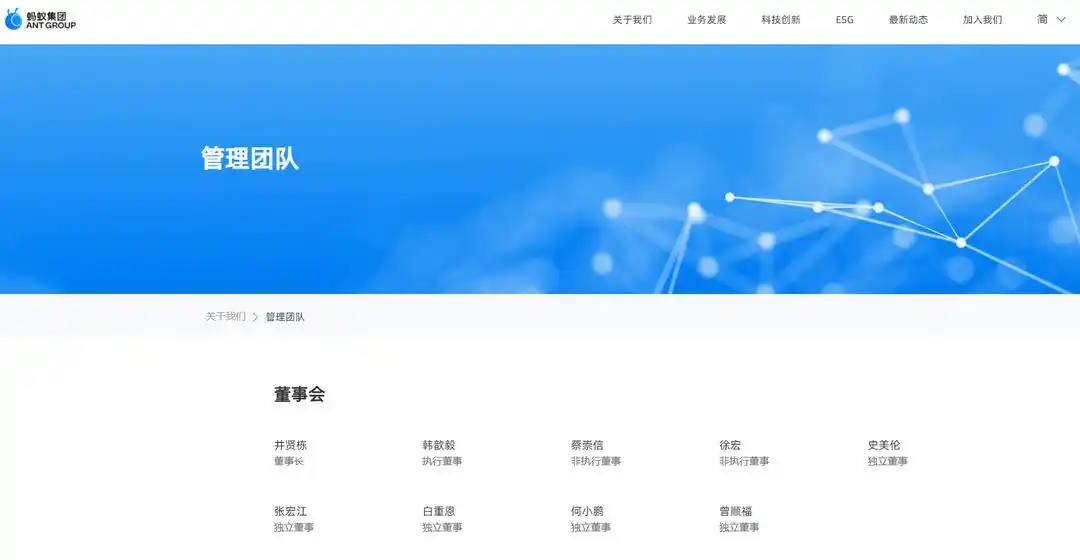
Initial external reactions predominantly focused on He Xiaopeng's past associations—he founded UC, sold it to Alibaba, and served as President of Alibaba's Mobile Business Group and Chairman of Alibaba Games before dedicating himself full-time to car manufacturing in 2017. Given Ant Group's roots within the Alibaba ecosystem, appointing an Alibaba veteran as an independent director seems a natural fit.
While this is logical, I believe it's not the primary reason.
The independent director role Ant Group offers He Xiaopeng is not about financial gain—the stipend is negligible for him—nor is it about his financial acumen, as his expertise lies in car manufacturing and robotics, unrelated to payments, credit, or wealth management. Ant Group's official statement provides the answer: the three new independent directors are there to offer board-level advice on Ant's "AI strategy," emphasizing "cutting-edge technology" and "industry frontlines," with no mention of finance.
To understand Ant Group's insistence on him, we must first examine Ant's AI endeavors over the past year.
Ant's AI strategy is dual-pronged, internally referred to as "digital intelligence" plus "physical intelligence."
Firstly, digital intelligence, centered around large models. Ant's model family, known as Bailing, had released 18 models by early 2026, ranging from 10 billion to 1 trillion parameters, all open-source.
Several figures warrant closer examination.
The flagship Ling-1T, with 1 trillion parameters, activates only about 50 billion for each response—this is the Mixture of Experts (MoE) approach, enabling large models without exorbitant single-use costs, making inference affordable. Its entire training process utilized FP8, a lower-precision numerical format, saving memory and accelerating computation, traditionally at the expense of accuracy. Ant's results show an error margin of only 0.1%, virtually unchanged. Currently, few players globally can fully open-source trillion-parameter models; Ant is among them—alongside Ling-1T, its inference model Ring-1T-preview, and Moonshot AI's K2.
However, the crux of this line is not about scaling parameters; it's the March 2025 paper titled "Every FLOP Counts." It discusses training a 300-billion-parameter large model on low-config or even domestic GPUs, reducing costs by 20% while achieving performance comparable to models trained on high-end cards.
In simpler terms: Ant is challenging the notion that "training large models requires burning through NVIDIA's high-end cards."
This addresses the compute shortage anxiety faced by many last year, representing two sides of the same battlefield. While others scramble for cards, Ant seeks ways to use fewer. Unlike DeepSeek's route of switching to Huawei's Ascend chips, it's unclear whether this resulted from Alibaba Cloud's own compute shortages.
Now, onto physical intelligence, which focuses on robotics. This line emerged in 2025 but has advanced rapidly.
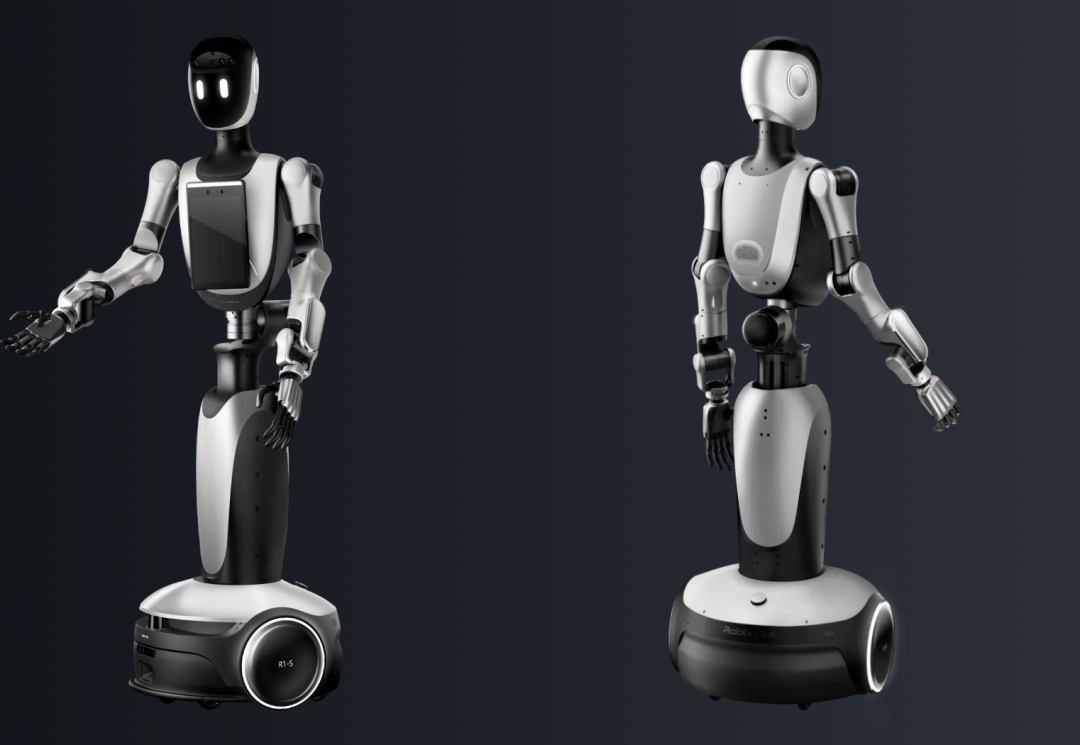
Ant's embodied AI entity is Lingbo Technology, unveiled in March 2025 in Shanghai's Pudong, led by CEO Zhu Xing, positioned to develop service-oriented robots. Its first humanoid robot, R1, demonstrated guiding tours at the 2025 Foreign Affairs Conference, sorting medications in pharmacies, and even cooking four dishes on-site.
What truly impressed the industry came in late January 2026. Lingbo released four embodied models within a week, forming a complete capability chain: Depth for 3D space perception, VLA for understanding visuals and instructions to output actions, World Model for simulating a physical environment for robot rehearsals, and VA, which integrates the latter two into an embodied world model.
The VLA-route embodied intelligence model stands out through its data—trained on 20,000 hours of real robot operation data, whereas NVIDIA's GR00T N1 relies more on simulation. Real-world data offers steadier generalization, ensuring the model remains effective when switching robots or tasks.
The World Model-route embodied intelligence, in simpler terms, provides robots with a simulated environment for repeated trial-and-error, eliminating the need for real-robot crashes each time. It can continuously generate near-ten-minute visuals, with objects remaining in place and shapes unchanged even after the camera looks away for a minute—a persistent challenge in video generation. After its open-sourcing, Google DeepMind's previously closed-source counterpart, Genie 3, quickly announced plans to follow suit.
To elaborate, these are the primary technical routes for intelligent driving. As we know, new-force automakers like NIO, Xpeng, and others are betting on embodied intelligence partly due to future market potential and partly because embodied intelligence shares significant technical overlaps with intelligent driving, making reuse cost-effective. This is why Ant Group brought He Xiaopeng on as an independent director.
While these two lines appear distinct, they share a common foundation. Technically, many basic capabilities from digital intelligence are directly reused in embodied model training; strategically, both adopt full open-sourcing, cost reduction, and infrastructure-building approaches—digital intelligence reduces training costs, while physical intelligence cuts costs for repeated data collection and retraining during robot deployment. Ant likely doesn't aim to profit from model sales but instead seeks to become an indispensable foundation for as many users as possible.
This mindset aligns with Ant's historical approach of using Alipay to turn financial services into inclusive infrastructure, directly packaging and selling finished products.
Looking back at He Xiaopeng and Xpeng,
Xpeng's second-generation VLA, released in November last year, is officially described as a "physical world large model," driving cars, humanoid robots, and flying cars simultaneously with a single model. This aligns with Ant Lingbo's VLA and World Model routes, offering two solutions to the same problem: enabling a model to understand and operate within the physical world.
Thus, Ant Group didn't invite He Xiaopeng to teach them robotics. Instead, it's because he's personally addressing the challenge of "how to transform physical AI from a model into a mass-producible, functional machine" at Xpeng, reaching the eve of mass production.
The Moment of Narrative Shift
Why reveal this strategy so covertly until now, only to prominently display it through a high-profile independent director appointment?
Because Ant's embodied intelligence business needs visibility.
Connecting the dots from the past year clarifies the picture. The board refresh increased independent director representation to a majority, aligning governance with "scrutiny-ready" standards; in March 2026, Ant acquired over 50% of Hong Kong-based brokerage Bright Smart Securities for HK$2.8 billion, securing a brokerage license; earlier, in May 2025, rumors surfaced that Ant planned to separately list its Singapore-registered overseas business, Ant International, in Hong Kong.
Acquiring a brokerage, restructuring the board, and rumors of an overseas listing all point to the same goal: Ant is preparing to re-enter capital markets with a brand-new image.
Five years ago, when Ant Group rushed toward its IPO, it told a fintech story, only to be halted on the eve of listing, followed by restructuring into a financial holding company, a CN¥7.123 billion fine, and Jack Ma relinquishing control. The capital markets have already heard—and paid for—that story.
This time, Ant aims to tell a different tale: it's not just a financial company but an AI company—with one hand in digital intelligence and the other in physical intelligence, both boasting tangible achievements, open-source models, and users. Ant Health Manager's user base has surpassed 100 million, Alipay's "AI Pay" has completed 300 million intelligent agent payments, and R&D investment reached a record CN¥35 billion in 2025. These are all compelling materials for the capital markets.
He Xiaopeng serves as the endorser for the "physical intelligence" segment of this new narrative. For a company claiming "our robots are real," having a board member who has truly brought robots to the brink of mass production adds credibility.
However, a reality check is necessary.
Independent directors have clear limitations. They don't engage in daily operations and can't manage Lingbo's products, pricing, or hiring; they offer board-level strategic judgment and a credible name but can't directly inject business resources. More subtly, since Xpeng itself is an embodied intelligence player, with IRON and Lingbo's R1 as direct competitors in service scenarios like guided tours and shopping assistance, He Xiaopeng would likely recuse himself from any Ant Group transactions involving embodied intelligence due to his stake in Xpeng.
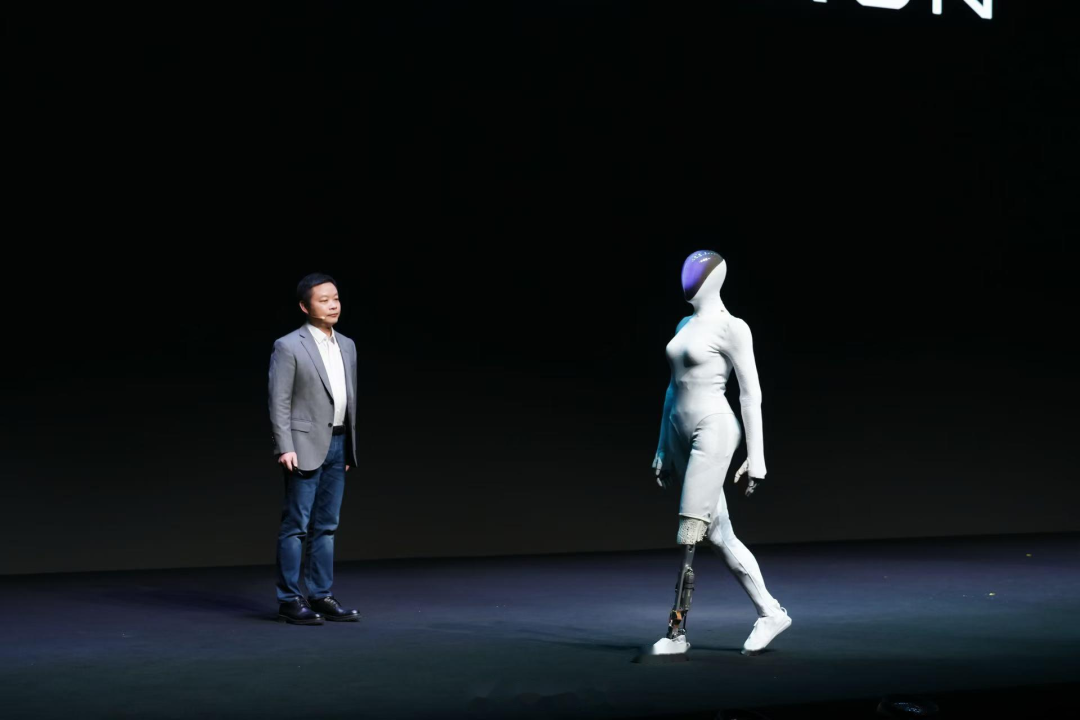
His industry identity is both why Ant values him and why he can't deeply engage with Ant's business in this area.
Ant's AI blueprint now appears comprehensive. The digital intelligence line showcases real investment, open-source achievements, and commercial data; the physical intelligence line makes noise with four model releases in a week.
Yet Zhu Xing, CEO of Lingbo, judges that embodied intelligence hasn't even reached a "ChatGPT moment," let alone a "DeepSeek moment." The true hurdle for the robotics business lies not in who joins the board but in whether these open-source models can transform into truly mass-producible, functional, and profitable machines, crossing the industry's "impressive prototype, stalled mass production" valley of death.
The endorsement is secured, but the story might just be beginning.
-
![]()
Geely's Three Strategic Cards for Future Layout Unveiled at Hong Kong Auto Show
-
![]()
GAC Toyota’s Sales Boom: Forging Vehicles with Enduring Value for the Long Haul
-
![]()
Insider Insights on Brazil’s Internet Landscape: No Chinese Firm Has Made Significant Profits in 25 Years
-
![]()
【OFweek Weike Cup】HG Genuine Optics Nominated for 2026 Excellent Optical Component Supplier in the Optical Industry
-
![]()
European Sales of Chinese Vehicles Surge 1.5-Fold in a Year! EU Takes Action: Additional Tariffs on China’s Plug-in Hybrid Vehicles
-
![]()
Soaring 19-Fold, Market Value Hits Trillions: Is Zhipu a Legend or a Speculative Bubble?
-
![]()
【Electric Equipment】The first standard for shore power facilities of electric ships is introduced and will be officially implemented on August 1
-
![]()
【Intelligentization】Joint Development of Right-Hand Drive Robotaxi: Geely Yuancheng, WeRide, and Kwoon Chung Bus Sign Agreement