Insider Insights on Brazil’s Internet Landscape: No Chinese Firm Has Made Significant Profits in 25 Years
 06/23 2026
 451
451

Author|Yang Zi
Editor|Li Xiaotian
In 1941, fleeing Nazi persecution in Europe, Zweig settled in Brazil. Faced with this vibrant continent far removed from war, he was struck by its diverse and inclusive cultural environment and its "civilization without hatred." He chose to spend the remainder of his life there, leaving behind a timeless masterpiece—Brasil: País do Futuro (Brazil: Country of the Future).
In his book, Zweig highlighted Brazil's model of harmonious coexistence among different races and predicted that this nation of boundless wealth would play a pivotal role in the future world. This has made "Country of the Future" one of Brazil's enduring labels.
From a macroeconomic perspective, Brazil, Latin America's largest economy with a population exceeding 200 million, a per capita GDP of over $10,000, and the highest online consumption penetration rate in Latin America, is considered one of the last high-growth regions globally. However, despite possessing all the material foundations needed for humanity's future—water, food, clean energy, minerals, and space—Brazil continues to move at a notably slow pace, humorously so.
Indeed, the phrase "Country of the Future" has taken on an additional layer of meaning, as a popular saying jokes: "Brazil is the country of the future, and always will be." The subtext here is that Brazil always seems to be on the verge of "taking off" but struggles to achieve true transformation. For Brazil, the "future" is never absent, yet never truly arrives.
In recent years, with geopolitical shifts and the wave of Chinese companies going global, this "land of the future" has once again drawn attention. Economic and trade exchanges between China and Brazil have become increasingly frequent and close.
In 2025, China implemented 52 major investment projects in Brazil, with cumulative actual investment reaching approximately 43.92 billion RMB, a 45% increase from the previous year (data from the Brazil-China Business Council's report on Chinese investment). In terms of share distribution, Brazil accounted for 10.9% of China's total global overseas direct investment that year, surpassing the United States (6.8%) and reclaiming its position as China's top destination for global overseas investment.
On May 11, Brazil granted visa-free entry to Chinese citizens. The following day, a new policy exempting cross-border parcels under $50 from federal import tariffs took effect. At São Paulo's airport, the faces of Chinese businesspeople became more visible. Wave after wave of Chinese companies embarked on over 30-hour flights to explore this "last blue ocean." However, behind this seemingly hot emerging market, what hidden challenges and pitfalls lie?
This time, we spoke with Yan Di (affectionately known as "Lao Yan"), a 25-year veteran of Brazil's internet scene. A Portuguese language graduate from a domestic university, he has served as Huawei Brazil's marketing director, Baidu Brazil's CEO, and Ant Financial and Alibaba's AliExpress country manager for Brazil. He is now the founder and CEO of ABLELIVE, Brazil's largest live-streaming institution.
Regarding the various rumors and imaginations surrounding the Brazilian market, we gained a more concrete and realistic perspective from Lao Yan's rational and objective responses.
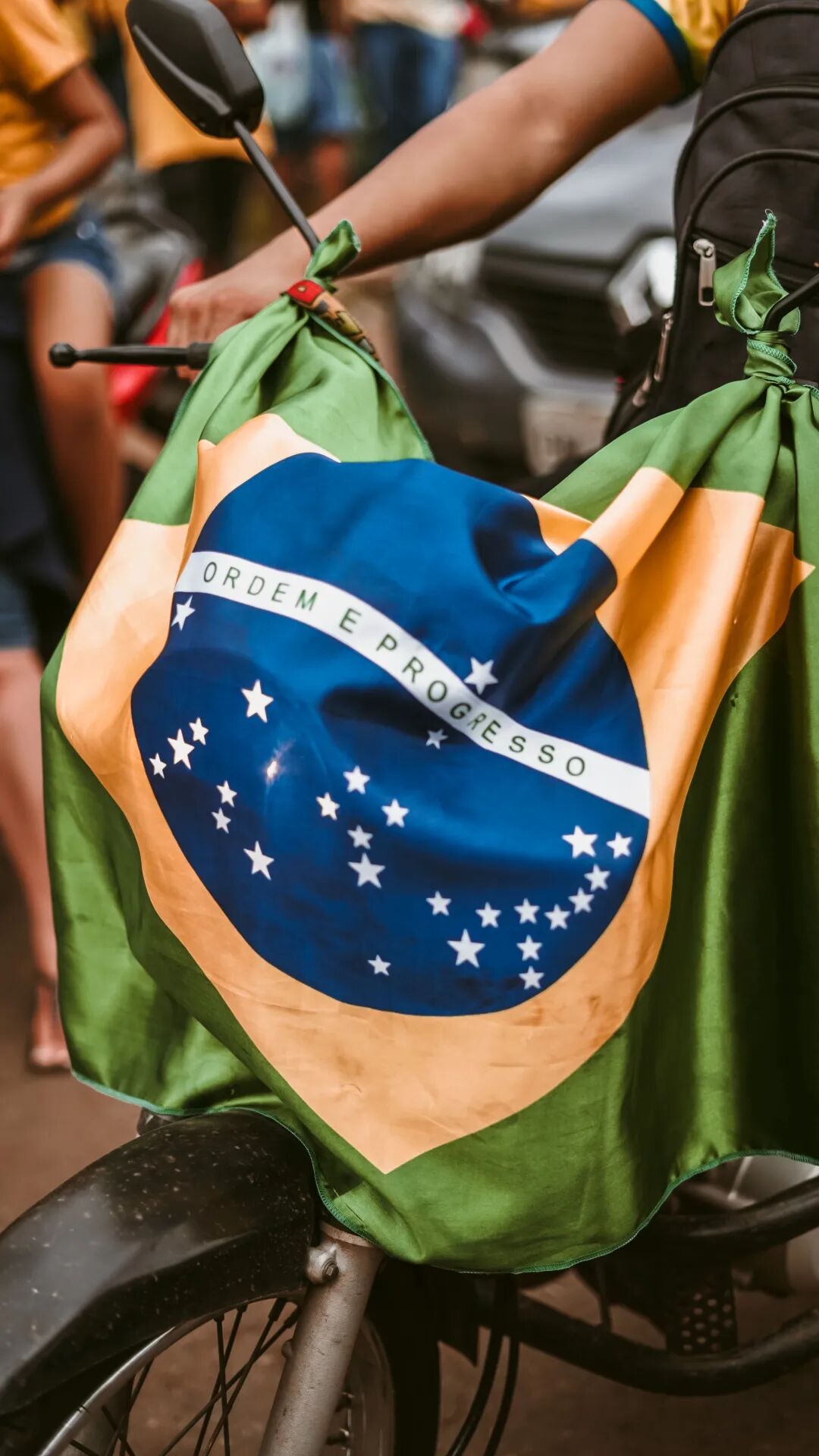
Street Riders in Brazil

No Chinese Company Has Achieved
True Scale Profits in Brazil in 25 Years
Xiaguang Society: In recent years, Chinese companies have accelerated their pace into emerging markets. Many cross-border e-commerce sellers and brands feel that Europe, the U.S., and Southeast Asia are too competitive, so they view Brazil and other Latin American countries as new growth points, effectively filling gaps in local light industrial demand. What are your thoughts on this?
Brazil's Lao Yan: The basic direction is correct. China is a manufacturing powerhouse, while Brazil's light industry is extremely weak. However, the problem lies in merchants' poor data-driven product selection capabilities, leading to a flood of generic domestic products. In the end, everyone is just earning revenue without any gross profit.
São Paulo state alone accounts for 20% of Brazil's GDP, a higher share than China's top-tier cities (Beijing, Shanghai, Guangzhou, and Shenzhen) combined. When I was AliExpress's country manager, I visited 100 top Chinese merchants in São Paulo. Many of these merchants came from family-run offline businesses and lacked online data analysis and product selection skills. They imported numerous containers annually but were trapped in red ocean price wars, failing to earn substantial profits. Globally, I believe the truly profitable cross-border e-commerce markets remain in Europe, the U.S., Japan, and South Korea. In Southeast Asia and Latin America, most players only earn revenue without scale profits.
Xiaguang Society: Why does this dilemma of "earning revenue but not profit" exist? Is it a strategic issue?
Lao Yan: This brings us to the decision-making process of Chinese companies going global. Often, large corporations go global for the sake of it. Having succeeded domestically through scale and traffic, they target countries with large populations on a whim without truly studying ROI or understanding how much money they need to burn or how to achieve profitability.
The fundamental logical error is that decisions are made by those far from the frontlines. In large corporations, once top executives designate a country as a strategic market, the "strategic planning department" (SPD) merely endorses this decision. All PPTs and data frameworks are designed to prove to superiors that "you are right, and we must enter this market," while contradictory data is ignored.
Top management mistakenly views Brazil as an "emerging market like Vietnam and Indonesia." Under this false premise, middle management has no choice but to help fulfill top executives' dreams and meet KPIs. I consider this arrogance and blindness.
Xiaguang Society: Isn't Brazil an "emerging market"?
Lao Yan: Brazil is actually a "declining developed emerging market." The "Latin American trap" refers to Brazil's post-peak decline. Unlike Mexico (which experienced a resurgence due to re-export trade amid U.S.-China tensions), Brazil is a typical declining developing market with an overall economic downturn, weakening consumer purchasing power, currency devaluation, and rising hidden costs. This can trap newly arrived Chinese companies in a quagmire.
In the past 25 years, I have scarcely seen any Chinese company achieve true scale profits in Brazil (excluding cases where companies operated at a loss for 20 years before earning money through tax avoidance or speculative gains from infrastructure acquisitions amid currency fluctuations). If no Chinese company can make money, the issue lies with the environment, not the companies.
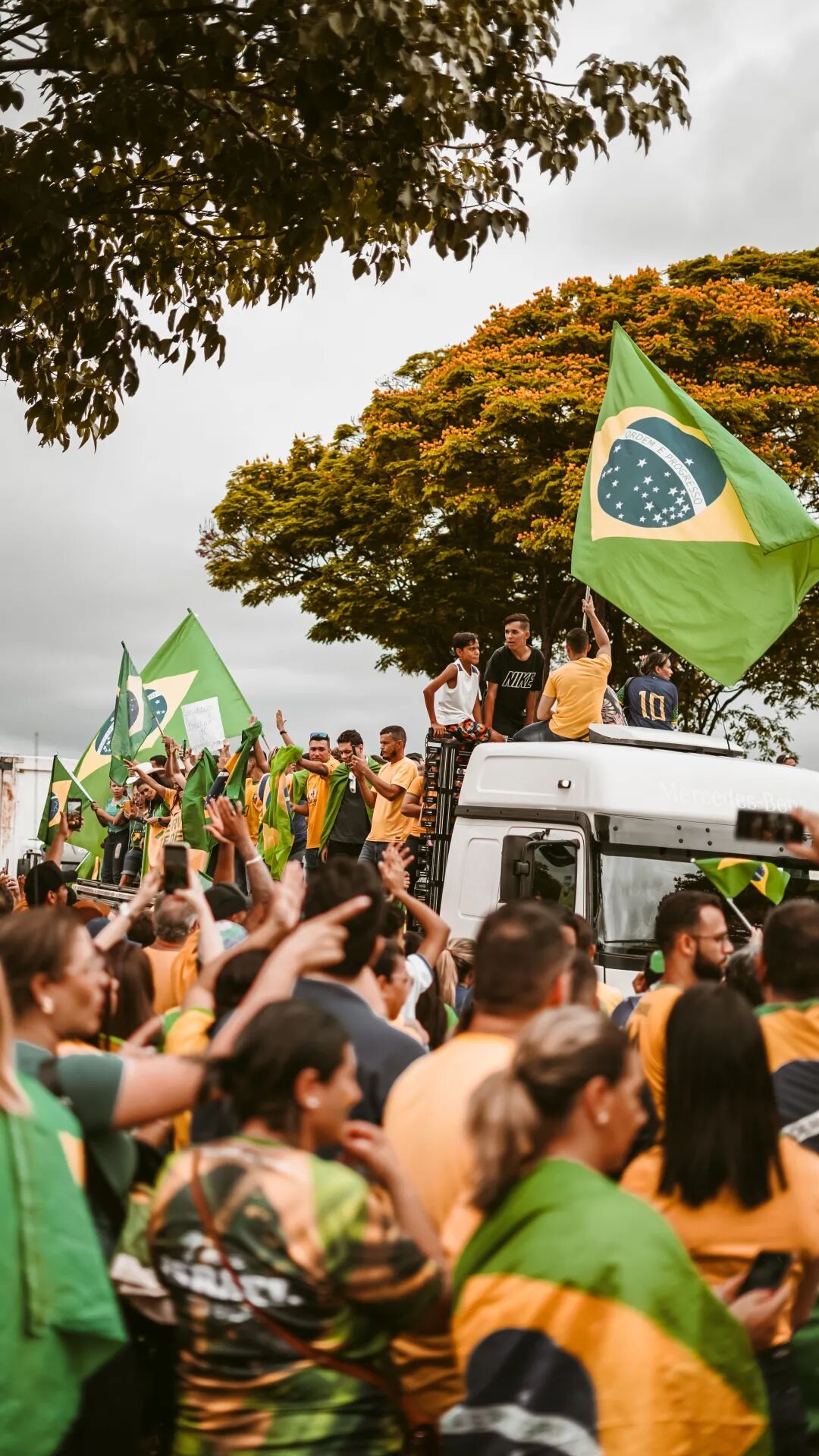

Low Purchasing Power, Tax Hell,
Cost Quagmires, and Frustrating Workforce Quality
Xiaguang Society: You describe Brazil as a "declining developed emerging market," yet macroeconomic data appears attractive. How do you view Brazil's economy in detail?
Lao Yan: Brazil reached its peak in attracting foreign investment during the 1960s and 1970s, experiencing an economic miracle akin to China's. However, it has since faced all-around decline, which continues to deepen. To evaluate the country, I summarize several critical flaws:
Low Purchasing Power: Less than 1% of Brazil's wealthy elite do not consume locally. Many of my Brazilian friends fly to Miami for daily life, leaving local online shoppers as extremely price-sensitive low-income earners. Data comparisons are stark: China's average e-commerce order value is around 200 Brazilian reais (BRL), while Brazil's is only 88 BRL, less than half of China's. Globally, the average revenue per user (ARPU) for Android games is $61. Brazil ranks second in downloads but has an ARPU of just $8, less than 1/7 of the global average. Brazil has massive active user bases (MAU/DAU) but lacks monetization capabilities.
Inefficient Bureaucracy and Tax Hell: The World Bank's Ease of Doing Business ranking places Brazil at 124th, behind Papua New Guinea and Senegal. Obtaining a business license takes nine days in China but over 17 days in Brazil.
Most alarmingly, Brazil imposes three levels of taxation (federal, state, and municipal), totaling 92 taxes. If companies comply fully, they would go bankrupt immediately. Thus, local businesses survive primarily through tax evasion. An item with an FOB price of $100 can cost $400 for Brazilian consumers after adding complex tariffs, logistics, and retail margins. An electric vehicle selling for $2,000-$3,000 in China costs over $12,000 in Brazil, becoming a luxury good. Running a business in Brazil requires 1,500 hours annually for tax compliance (compared to just over 100 hours in China). You spend all your time hiring accountants to navigate taxes.
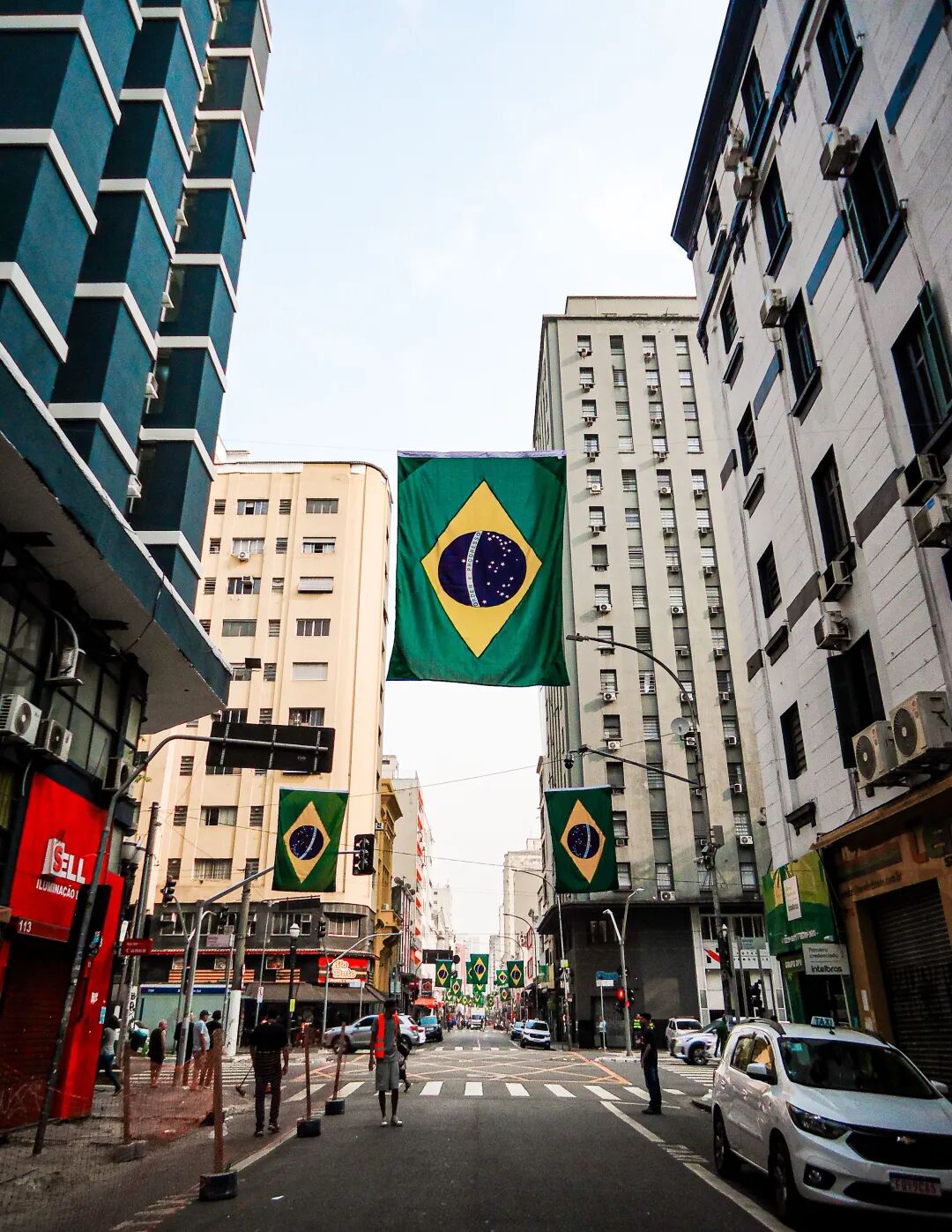
Brazilian Streets
Extremely Weak Infrastructure: Brazil spans 8.6 million square kilometers, just 1 million less than China, yet has zero high-speed rail and limited operational railway mileage. Rio de Janeiro, similar in size to Shanghai, has only 58 kilometers of subway tracks (Shanghai has nearly 900 kilometers) and added just 10 kilometers in the past decade. Without infrastructure, how can logistics efficiency and cost reduction be achieved?
Runaway Inflation, Interest Rates, and Currency Fluctuations: Brazil's 2024 CPI inflation was approximately 4.4%, about 20 times China's rate. Financially, Brazil's base annual interest rate is 14.5%. Credit card default rates compound annually at nearly 130%, while check default rates can reach 300%—rates that would be criminal in China but are legal in Brazil. This has left 70 million Brazilians (out of 200 million) with debt records. The Brazilian real depreciated by approximately 133% against the U.S. dollar between May 2006 (2.17 BRL/USD) and May 2026 (5.06 BRL/USD). Many Chinese companies find local profits wiped out by unfavorable exchange rates when repatriating capital.
Poor Education Quality: Brazil uses the Latin alphabet and has no illiteracy on paper, but 9 million Brazilians are absolutely illiterate. Among those aged 15-64 with basic communication skills, 30% are "functionally illiterate"—they can read words but don't understand their meaning. Resumes claiming "Advanced English" often reveal individuals unable to hold a conversation.
Security Risks Worse Than War Zones: Many know Brazil is chaotic, but the reality is horrifying. In 2024, Brazil recorded 38,722 homicides, while major global battlefields like Gaza and Lebanon saw 26,000 war-related deaths that year. Brazil's daily violent crime fatalities far exceed those in active war zones. Chinese businesspeople in Brazil all drive bulletproof cars.

Tearing Off the "Passionate" Mask
Xiaguang Society: This completely subverts our perception of Brazil. However, in our stereotype, Brazilians are passionate, simple, optimistic, and live freely. Even on Reddit, they are the most interactive when interviewed.
Lao Yan: As a Portuguese language graduate, I know that Brazilian Portuguese is the only language where "vanity" (Vaidade) is used as a compliment. In Brazil, calling a woman "vaidosa" (vain) pleases her, as it implies wealth and taste.
Brazil is among the world's top countries for plastic surgery (over 2.1 million procedures annually). Brazilian women spend more on cosmetics than China's 700 million women combined. The "natural" curves and blonde hair seen on São Paulo streets are often silicone implants and dye jobs. This extreme pursuit of appearance stems from deep-seated vanity.
Xiaguang Society: But their smiles on social media seem genuine.
Lao Yan: Their smiles are masks. Behind them, they cry. They struggle with debt, fear for their safety when leaving home, and face social issues. I know many Brazilians who grew up being sexually abused by family members—shocking revelations.
In this environment, trust is scarce, and jealousy is rampant. Surveys show that over 50% of people in China, India, and Indonesia believe most can be trusted, but only 15% of Brazilians trust others, with 85% viewing everyone around them as untrustworthy.
They worship the U.S., believing it is superior. 76% of Brazilian youth dream of leaving the country and never returning.
There is rarely a culture of gratitude in Brazilian companies. I often tell HR personnel and supervisors in Chinese companies not to engage in the superficial gestures like giving gifts during the Mid-Autumn Festival or Mother's Day, as practiced in China—it's useless. Many people will smile at you while employed but sue you without hesitation once they leave. They don't sue you because the company did something wrong; it's purely because they are now unemployed and want to make some extra money by suing their former employer. They are too familiar with the local labor-friendly laws.

Statue of Christ the Redeemer

How Chinese Internet Companies Compete in Brazil
Xiaguang Society: You've worked at Baidu and AliExpress Brazil before. What do you think is wrong with the logic of Chinese Internet giants doing business overseas?
Lao Yan: I summarize the overseas
Air Force Model: A strategy characterized by a minimal asset footprint, remote operations, and heavy reliance on traffic generation. During the initial phase of Chinese Internet companies venturing abroad, they opted not to deploy personnel overseas, depending entirely on organic and paid traffic. The objective was to explore the market at minimal cost, yet this approach often left them unable to deliver even fundamental services.
Marine Corps Model: This involves dispatching a select group of senior executives to establish a compact team of around a dozen members. Progress is contingent on success; if the venture fails, the team retreats. This method remains fundamentally opportunistic. However, the question arises: Can a small team of a dozen individuals truly thrive in a vast and intricate market like Brazil?
Army Model: This approach disregards initial losses, focusing instead on evaluating whether the market's potential over the next decade justifies the investment. If affirmative, the company commits fully, deploying hundreds or even thousands of personnel to forge ahead in Brazil. The companies that have achieved genuine success in Brazil have all adhered to the Army model. Some have incurred losses in Brazil for two decades; others, despite numerous complaints, maintain a workforce of 1,200 in local factories; still others, within three years of entering Brazil, have expanded their local teams to over 3,000, disrupting local industry giants and claiming the top spot in user numbers.

Brazilian Football Confederation (CBF)

Why is the trend of Chinese companies going overseas irreversible?
Xiaguang Society: Given your belief that the Brazilian market is fraught with risks and that scaling profits in B2C, e-commerce, and the Internet is arduous, why do you still assert that 'the trend of Chinese companies going overseas is irreversible'?
Lao Yan: Because it represents an inevitable trend for China to revert to its foundational values based on production factors. Modern society comprises five key production factors: labor, land, capital, knowledge, and organization. Over the past 40 years, China has experienced two waves of dividends: the first (1980-2000) stemmed from the liberation of suppressed labor; the second (2000-2020) derived from the dividends of land and real estate. With these two waves having reached their zenith, China must now inevitably export the remaining three factors: knowledge (i.e., technology), organization (i.e., efficiency), and capital.
China has already assumed a leading position in numerous vertical industrial technologies (electric vehicles, batteries, photovoltaics, lasers, etc.) and must export them. Even more formidable is the export of organizational efficiency. Within our organizations, there exists intense internal competition characterized by the 996 work culture, a uniform cadre of young executives under 35, tightly-knit structures, and astonishing efficiency. Once this rigorous organizational capability is exported abroad, it will deliver a crushing blow to the more laid-back foreign enterprises. Furthermore, Chinese companies often leave no room for their competitors when going overseas, eschewing a 'live and let live' philosophy in favor of overwhelming competition.
Has anyone read the book 'Learning from Japan: A Survival Guide for the Era of Decline'? One point in the book left a profound impression on me: it states that when a country experiences a real estate bubble burst and internal competition reaches its peak, it will inevitably export its domestic labor, knowledge, organization, and capital abroad. Moreover, the real moneymakers may not be the overseas brands (due to high costs and thin margins); historically, it has been the local partners who adopt the correct methodologies, scale capital, and understand the local business environment who have reaped substantial profits.
The same principle applies to Chinese companies going overseas. The future trend will inevitably shift from early resource acquisition (timber, soybeans, iron ore, etc.) to ascending the value chain to manufacturing (telecommunications, home appliances, etc.), then to services (tool software, games, e-commerce, short videos, live streaming, short dramas, finance, O2O, and even future B2B service blue oceans like steel trading platforms, agricultural trading platforms, and textile trading platforms, which remain entirely untapped in Brazil).
-
![]()
Proposed to Raise 955 Million Yuan through Private Placement! Huicheng Vacuum Boosts Localization of Ultra-Precision Optical Coating Equipment
-
![]()
Cash Flow Soars 13-Fold! What Major Strategic Move is Wuhan Five Square Optoelectronics Planning?
-
![]()
Leaked Design of vivo X500: Reverts to Circular Camera Module in Top-Left Corner, Pays Homage to Classic X90 Aesthetic
-
![]()
DeepSeek Shows Signs of Foraying into Code Agents, Launches WeChat Official Account Focused on Harness
-
![]()
Auto Companies Deny Claims That ‘Cooperation with Huawei Is Non-Essential’, as Huawei Transforms into a ‘Public Platform’
-
![]()
Starship to Independently 'Return to the Launch Tower': SpaceX's Ambitions Extend Beyond Rocket Building to Dominating Space Transportation
-
![]()
Starship Set to Independently 'Return to the Launch Tower': SpaceX is Revolutionizing Space Transportation, Not Just Building Rockets
-
![]()
Anthropic and OpenAI Face Off Against Deepseek