In-Depth Insights from the Chain Expo: AI Moves Beyond Hype, China’s Industrial Digital Intelligence Advances into the ‘Critical Implementation Phase’
 06/24 2026
 372
372
Each year, the Chain Expo serves as a barometer, reflecting the evolution of global supply chains with unerring accuracy.
Unlike previous years, which focused on scale and technological showcases, this year's Fourth Chain Expo presents an exceptionally pragmatic, even somewhat 'stringent,' industrial conclusion: The era of AI concept dividends has ended, and the industry has officially transitioned from a 'technology demonstration phase' to a 'value realization phase.' 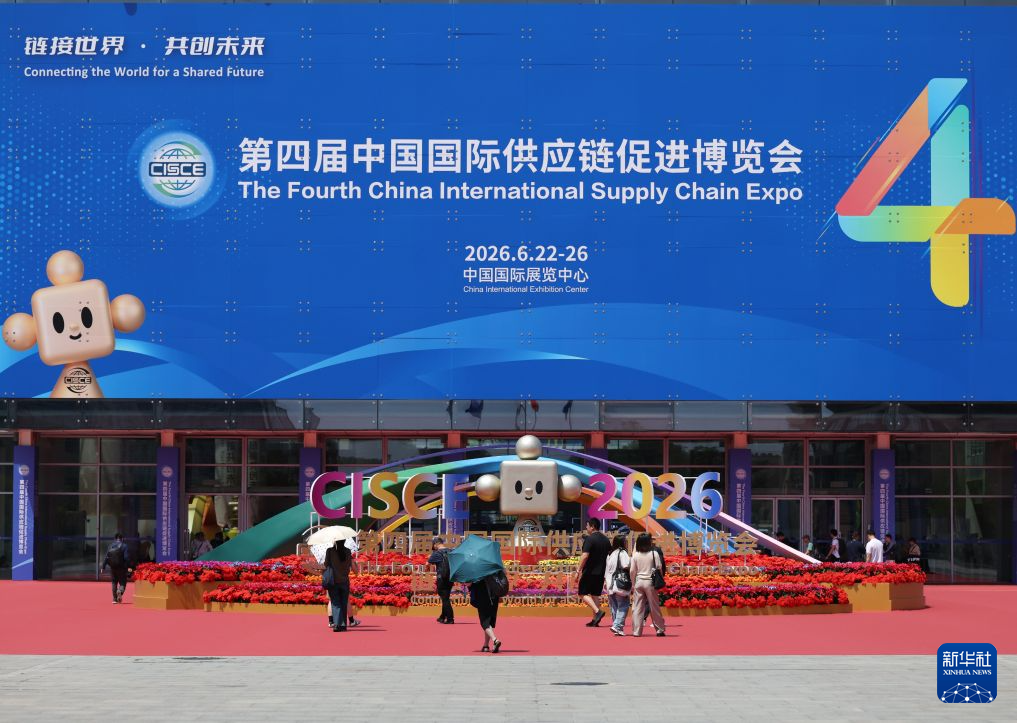
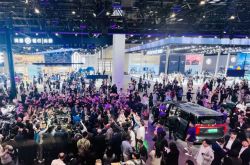
This year's expo brought together 676 exhibiting companies from 85 countries and regions. The most notable highlight was not the dazzling array of cutting-edge technologies but the structural upgrade from the 'Digital Technology Chain' to the 'Digital Intelligence Technology Chain.'
This single-word evolution signifies more than just a linguistic refinement; it represents a fundamental restructuring of the underlying logic of domestic industrial upgrading. Digitalization focuses on 'process efficiency,' while digital intelligence targets 'industrial efficiency.' Digitalization is about catching up on infrastructure, while digital intelligence is about restructuring productivity.
Today, AI is no longer just a marketing tool for the internet industry; it is the underlying operating system that measures the core competitiveness of supply chains and determines the survival limits of enterprises.
01 Why is Digitalization Becoming Increasingly 'Ineffective?'
Over the past decade, domestic enterprises have undergone a vigorous round of digital transformation.
Implementing ERP systems, building data platforms, connecting devices, and enabling online collaboration—most enterprises have completed foundational digital layouts. However, many companies have encountered a common issue: Despite having systems in place, data stored, and processes standardized, the cost-reducing and efficiency-enhancing effects are diminishing. 
This is the inherent bottleneck of traditional digitalization.
The core logic of traditional digitalization is 'online, standardized, and documented.' It addresses fundamental issues such as industrial disorder, information asymmetry, and non-standardized processes, essentially optimizing and upgrading traditional industrial models rather than disrupting and reconstructing them.
More bluntly: Digitalization can only record the status quo, accumulate data, and solidify processes but cannot predict risks, optimize decisions, coordinate upstream and downstream activities, or dynamically adapt to market changes.
In a stable market and supply chain environment, this model was sufficient to support enterprise development. However, in today's context of rapid demand fluctuations, fragile supply chains, and intensifying industry competition, digitalization that only 'observes' but cannot 'act' is no longer suitable for industrial competition.
This is also the core purpose of the Chain Expo's upgrade to the 'Digital Intelligence Technology Chain': The industry no longer needs mere data accumulation but data productivity.
The core of digital intelligence is to leverage AI to break down data barriers, transform static data into dynamic decision-making capabilities, and achieve autonomous optimization across production, supply chains, markets, and services, enabling industrial chains to shift from 'passive execution' to 'active iteration.'
02 Industry Shedding Hype: AI Competition Shifts from 'Technological Involution' to 'Implementation Barriers'
In the past two years, the AI industry has been mired in severe involution.
The industry competed on model parameter sizes, peak computing power, and technological sophistication. Many companies engaged in mass research and development and blind iteration, neglecting the most critical issue: Technology detached from real-world scenarios holds no commercial value.
This speculative fervor has cooled significantly at this year's Chain Expo. 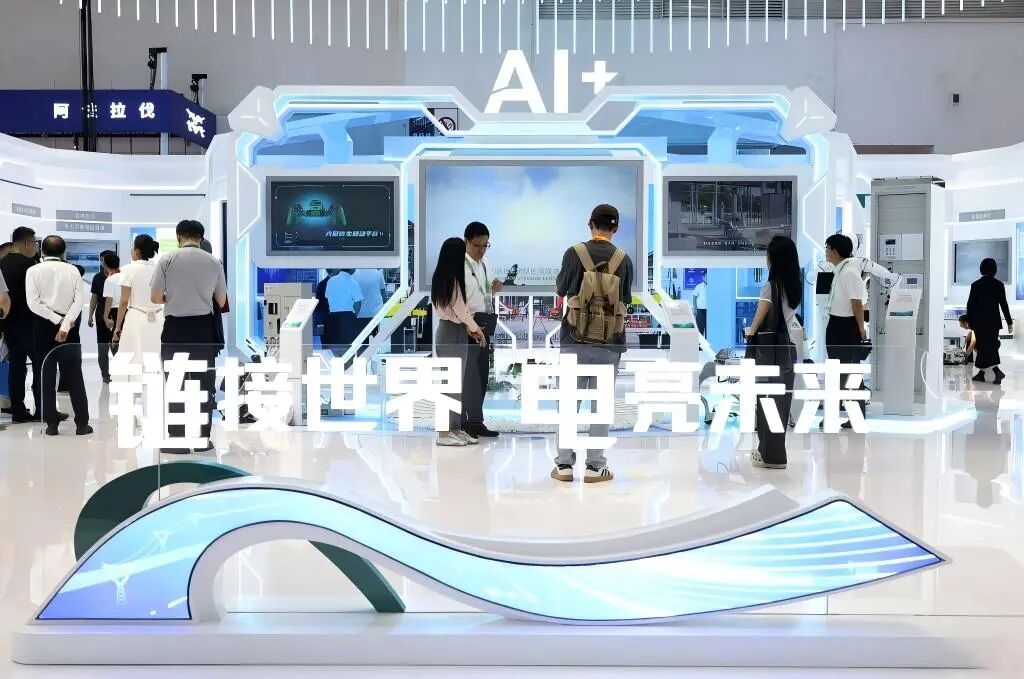
The newly established AI Zone, featuring leading Chinese and foreign companies such as NVIDIA, Intel, Qualcomm, Alibaba, and iFLYTEK, had no parameter comparisons or conceptual hype. Instead, all exhibitors shared a unified core logic: AI's true value lies in solving real industrial pain points and creating quantifiable commercial value.
NVIDIA's exhibition layout is highly indicative of industry trends. Collaborating with over 110 domestic ecosystem partners, NVIDIA showcased a five-layer industrial system spanning energy infrastructure, chip computing power, large models, and industry applications.
This move sends a critical signal: Foreign tech giants have moved beyond 'simple hardware technology export' shallow cooperation models and are now deeply rooting themselves in China's domestic supply chains, adapting to domestic industrial scenarios, and co-building localized implementation ecosystems. The global competition in AI is no longer about technological prowess but about ecosystem adaptation and scenario implementation.
The transformation of domestic enterprises better reflects the industry's pragmatic changes.
iFLYTEK no longer focuses on showcasing foundational technologies but instead highlights mature implemented products across education, office, and industrial sectors, along with industrial AI robots, presenting a complete 'research-validation-scalability' closed loop. The core logic is clear: AI technology is mature, and the current priority is scenario penetration and value reuse.
Changes on the industrial side are even more critical. Innovative companies like MiniMax and Silicon Flow have completely shifted industry focus from 'computing power competition and large model training' to 'inference efficiency, implementation capability, and mass production speed.'
MiniMax's in-vehicle intelligent agent solution has achieved mass production implementation in automotive companies, adapting to real driving scenarios; industrial AI and edge AI are becoming increasingly practical and widespread. This signifies that AI is officially moving out of pilot demonstration 'showrooms' and into 'commercial properties' across industries.
03 Digital Intelligence Reconstructs Supply Chains: Reshaping the Fundamental Rules of Industrial Competition
The shift from 'digital' to 'digital intelligence' and from 'technological showcase' to 'implementation' represents a fundamental restructuring of global supply chain competition rules. 
In the past, industrial competition focused on production capacity, cost advantages, and channel resources—an extensive competition based on scale. Future industrial competition will focus on data governance, intelligent decision-making, ecological collaboration, and supply chain resilience—a refined competition based on digital intelligence capabilities.
This is also the core change emphasized by experts: AI has evolved from a 'technological variable' to an 'underlying industrial operating system.'
It is fundamentally reconstructing the real economy and supply chain systems across three dimensions.
First, reconstructing production: From 'experience-based production' to 'intelligent production.'
Traditional manufacturing relies on human experience and fixed processes, with low fault tolerance and delayed adjustments. After digital intelligence transformation, AI can predict production risks through data analysis, optimize production parameters, replace repetitive manual labor, and enable flexible production, intelligent quality inspection, and dynamic production adjustment, truly achieving cost reduction, quality improvement, and efficiency enhancement.
Second, reconstructing the supply chain: From 'passive response' to 'proactive prediction.'
The biggest pain points of traditional supply chains are supply-demand mismatches, delayed linkages, and weak risk resistance. After AI integrates upstream and downstream data, it can provide real-time insights into market fluctuations, predict supply-demand changes, optimize inventory turnover, and enable intelligent full-chain collaboration, significantly enhancing supply chain resilience.
Third, reconstructing the value chain: From 'process value' to 'data value.'
In the digital era, data was a byproduct; in the digital intelligence era, data is the core production material. Enterprises' core assets are no longer just equipment, production capacity, and channels but also data governance and intelligent application capabilities.
From an industry-wide perspective, digital intelligence is no longer just about upgrading individual enterprises but about the survival of the fittest across the entire industrial chain.
In the future, enterprises without digital intelligence capabilities will not only miss development opportunities but also gradually detach from mainstream industrial chains and be eliminated by intelligent, efficient new industrial ecosystems.
04 Conclusion: AI's Deep Integration with the Real Economy is the Ultimate Answer for Industrial Futures
The value of this year's Chain Expo lies not in showcasing new technologies but in anchoring a clear direction for the industry's future.
The speculative capital, technological involution, and conceptual hype in the AI industry are receding. Truly viable AI is technology rooted in the real economy, adapted to real-world scenarios, and capable of creating value.
The shift from 'digital connectivity' to 'digital intelligence empowerment' reflects a true snapshot of China's new quality productivity implementation and the core confidence behind the country's industrial transition from catching up to leading in certain areas.
In the second half of industrial upgrading, there are no shortcuts. Abandoning gimmicks, focusing on real-world scenarios, and ensuring practical implementation are the core paths for all enterprises to navigate cycles and seize discourse power in industrial chains.
The deep waters of AI empowering the real economy have arrived.
Interactive Topic
What do you believe is the biggest challenge for AI implementation in today's industry: Insufficient technology, difficulty in scenario adaptation, or high costs? Welcome to share your in-depth thoughts in the comments section.
-
![]()
Can the ‘New Energy Vehicles to the Countryside’ Campaign Revive the Sluggish Auto Market?
-
![]()
The Covert Battle for AI Ride-Hailing Entry Points Among Didi, Qianwen, and Doubao
-
![]()
Momenta Lays Out Its Books: A Strong Report, and a Pricier Story
-
![]()
US New Car Manufacturer Faces Major Crisis: Layoffs Hit 18%, COO Position Eliminated, with Each Vehicle Sold Incurring a Loss of $1.83 Million
-
![]()
Say Goodbye to Wasteful Spending! Innovative Policies to Boost Auto Consumption
-
![]()
With 370 Million Vehicles on the Road, the Auto Industry Reevaluates Its Post-Sale Business Strategy
-
Doubao Learns to Hail Taxis, but Profitability Remains Elusive
-
Fuji Intelligence Clears BSE Listing Hurdle: A Dual-Track Leap for the Precision Manufacturing 'Little Giant' | A-Share Financing Brief