Say Goodbye to Wasteful Spending! Innovative Policies to Boost Auto Consumption
 06/24 2026
 430
430
Lead-in
Introduction
The automotive industry will be shaped by both government intervention and market forces!
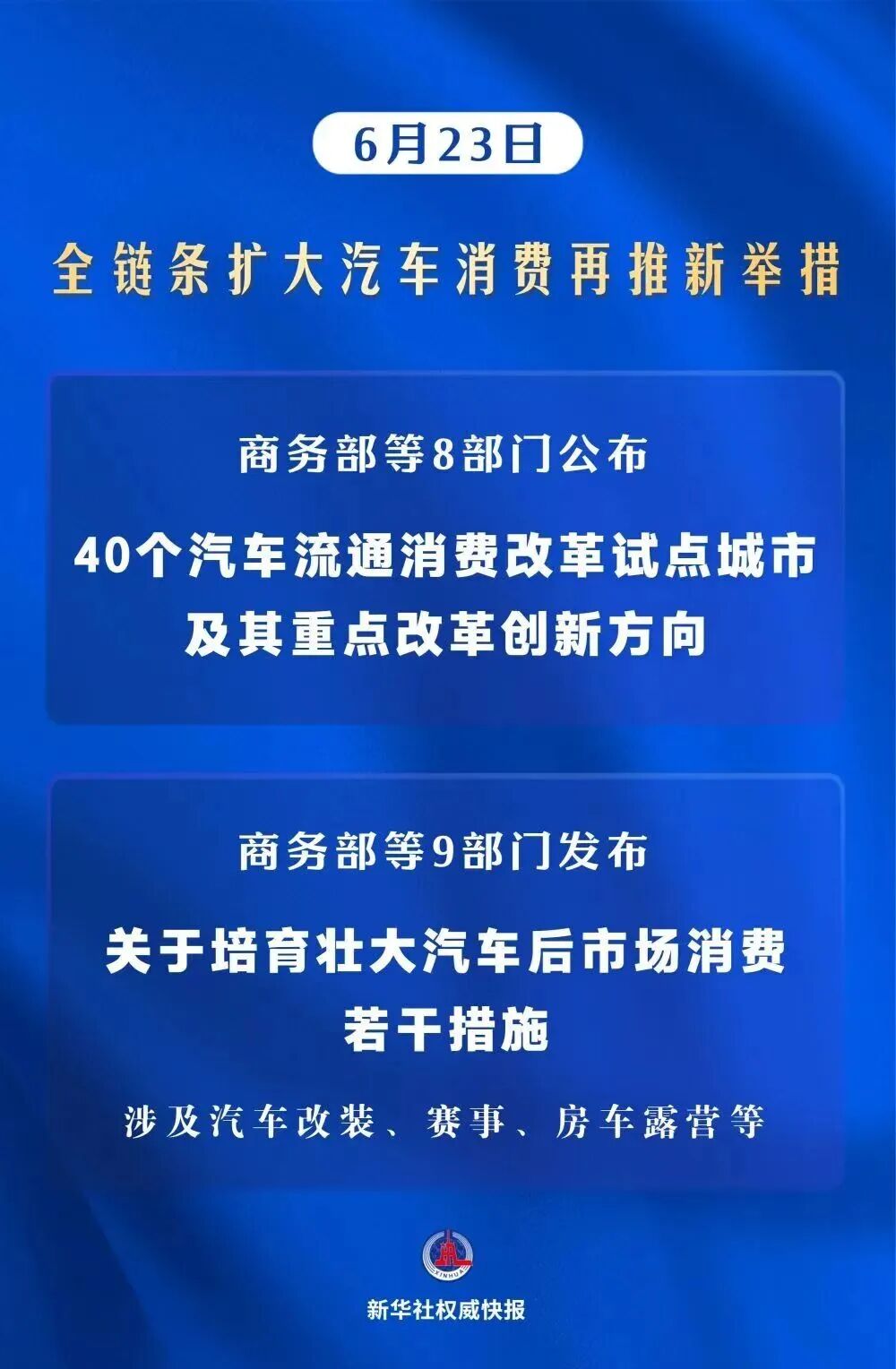
At 3:00 PM on June 23, Vice Minister of Commerce Sheng Qiuping, along with officials from the Ministry of Industry and Information Technology, the Ministry of Culture and Tourism, and representatives from Hangzhou and Chengdu, held a press conference on the theme of "Expanding Auto Consumption Across the Entire Industry Chain." Prior to this event, two significant notices quickly gained widespread attention, signaling a strong commitment to reform.
First, the "Notice from Nine Departments, Including the Ministry of Commerce, on Measures to Foster and Strengthen Auto Aftermarket Consumption" outlined 17 initiatives across six key areas: vehicle modification, RV camping, classic cars, maintenance insurance, auto racing, and car rental. These measures aim to remove unreasonable restrictions in the aftermarket and address long-standing institutional gaps.
Second, the "Notice from Eight Department Offices, Including the Ministry of Commerce, on Announcing Pilot Cities for Auto Circulation and Consumption Reform" identified 40 pilot cities and regions. Each location will leverage its unique resources to develop specialized sectors. For instance, Guangzhou, Shenzhen, and Hangzhou will focus on optimizing purchase restrictions and driving environments; Qingdao and Lanzhou will prioritize RV camping development; while Baoding and Chengdu aim to establish iconic auto racing events.
The press conference, hosted by the State Council Information Office, provided a comprehensive interpretation of the background and core ideas behind these two documents. It also highlighted a pivotal shift in China's auto consumption policies—moving from short-term incentives for new car sales to in-depth cultivation of the entire vehicle lifecycle.
Faced with a domestic vehicle fleet of 370 million and sluggish demand, policymakers have launched a comprehensive strategy covering the entire lifecycle of "purchase, use, modification, maintenance, and replacement." As Sheng Qiuping summarized at the conference, the reform adheres to three core principles: unified deployment with pilot innovations, revitalizing existing stock while optimizing new growth, and balancing regulation with market liberalization.
First, unified deployment and pilot innovations. The state introduces nationwide policies to address gaps in systems, standards, and product supply for aftermarket sectors such as modifications, racing, and camping. Simultaneously, 40 pilot cities are selected to explore localized reforms in areas like new car transactions, used car circulation, and scrap vehicle recycling.
Second, revitalizing existing stock and optimizing new growth. For existing stock, the policy activates resources from automakers, racing tracks, and cultural creativity parks to create integrated consumption scenarios. For example, Shanghai and Tianjin leverage their international racing facilities to host renowned domestic and international auto events. For new growth, cities optimize purchase restrictions to stimulate demand while utilizing bonded policies to develop bonded modifications and classic car exhibitions.
Third, balancing regulation with market liberalization. Policies shift automotive management from purchase controls to usage controls, moderately relaxing restrictions on used car circulation, RV camping, and pickup truck access. The state introduces graded management rules for modifications to ensure safety while delegating reform authority to pilot cities, such as simplifying land approvals for RV campsites to unleash market vitality.
It's important to note that this "full-chain expansion of auto consumption" goes far beyond simple cash subsidies for car purchases—it represents a grand strategic move.
01 A Grand Strategy: 17 Measures to Activate the Aftermarket
To understand this policy package, we must first revisit the limitations of past single-subsidy approaches. Traditionally, stimulating auto consumption has been synonymous with local car purchase subsidies and automaker price cuts. Early consumption policies focused narrowly on new car sales, but their long-term effectiveness has been mixed.
The benefits are clear: subsidies directly lower purchase thresholds, prompting on-the-fence consumers to buy, temporarily boosting retail sales, helping automakers clear inventories, and stabilizing short-term manufacturing revenues. Early initiatives like new energy subsidies and rural car promotion programs even built China's new energy industry chain from scratch.
However, relying solely on subsidies for new cars has exposed deep-seated issues over time. Data from the China Passenger Car Association and the China Automobile Dealers Association confirm structural flaws in this model:
First, short-term subsidies deplete medium- to long-term purchasing power. After the phase-out of purchase tax incentives and local subsidies, sales plummeted. In Q1 2026, when purchase tax benefits tightened, sales of new energy vehicles priced below RMB 80,000 crashed by 47.8% year-on-year.
Second, subsidies fuel endless price wars, squeezing automaker profits. Persistent price cuts to boost sales compressed industry margins, with the domestic auto sector's profit margin hitting just 3.4% from January to April 2026—a decade-low.
Third, focusing solely on new cars "fractures" the full circulation chain, trapping the used car industry in losses. Recent average discounts exceeding 14% on new cars have eroded used car residual values, with mainstream family fuel vehicles' three-year retention rate dropping to 46.07%—down over 25 percentage points from five years ago. Over 70% of used car dealers now operate at a loss, struggling with both acquisition and sales.
With intensifying domestic market competition, the industry urgently needs corrective measures. Against this backdrop, the full-chain policy covering six areas with 17 supporting measures is being rapidly implemented under macroeconomic guidance.
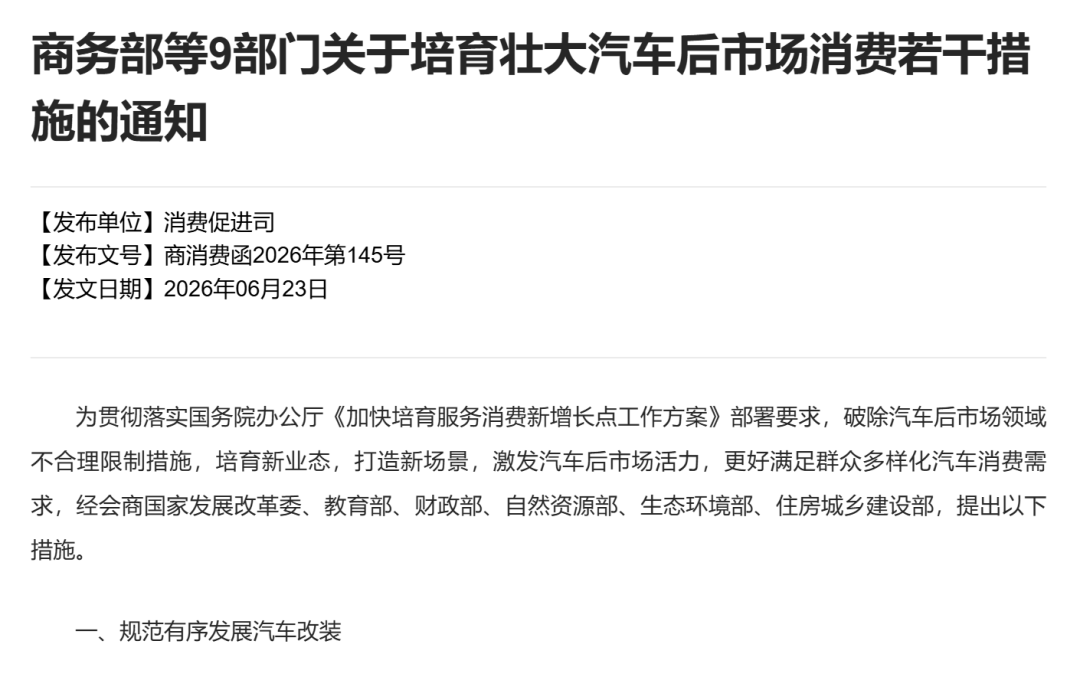
The core focus of these 17 measures is fostering and strengthening the auto aftermarket.
Sheng Qiuping noted that the aftermarket, derived from vehicle usage, represents a trillion-yuan blue ocean. Global aftermarket scale has surpassed USD 1 trillion, with the Asia-Pacific region poised to become the world's largest market this year. With over 50% of domestic passenger vehicles now over seven years old, the industry has entered a high-growth phase for aftermarket services.
In essence, the auto aftermarket is the second growth curve for automotive consumption in the era of stock vehicles. These 17 measures clear obstacles and set directions for this new growth sector. Let's examine the six aftermarket areas:
The modification market, exceeding RMB 100 billion in scale, has long suffered from inconsistent standards, widespread counterfeit parts, shortage of skilled technicians, and insurance claim difficulties post-modification. Policies introduce graded management, unified national standards, and regulated supply of modification parts to systematically address these issues.
RV camping continues to surge in popularity, but restrictions like RV access bans, scarce urban parking, cumbersome campsite approvals, poor infrastructure, and homogeneous vehicle models hinder growth. Policies streamline campsite approvals, add dedicated RV parking, improve utility services along routes, and support industry clusters in developing smart, aging-friendly RV products to revitalize the travel consumption market.
China boasts a large collector base for classic cars, but the lack of unified certification standards has restricted their road use and trading, leading to rampant informal circulation. New regulations establish a unified vehicle certification mechanism based on national standards, pilot open circulation, exhibitions, and limited road access, while developing complete vehicle restoration, parts replication, vehicle auctions, and auto cultural tourism to unleash full-chain consumption potential.
The new energy vehicle maintenance sector faces challenges like automaker monopolies on technology and parts, inadequate third-party repair capabilities, high maintenance costs, and poorly adapted insurance products. Policies mandate automakers to share repair technologies and parts, promote chain maintenance and repair-over-replacement models, innovate battery-separation insurance products, and balance the interests of automakers, repair shops, and vehicle owners to reduce daily maintenance costs.
China's auto racing industry suffers from a lack of high-end professional events, insufficient mass-participation activities, and a severe shortage of local new energy racing IPs, drivers, and technicians. Policies establish a multi-tiered racing system, cultivate domestic new energy racing brands, simplify event approvals, integrate cultural tourism resources to create racing tourism routes, and improve talent development in educational institutions.
The car rental industry faces issues like deceptive pricing, deposit disputes, limited vehicle choices, and fragmented upstream-downstream chains. Policies encourage rental firms to brand, chain, and scale up, promote one-way rentals and lease-to-buy services, offer dedicated rental insurance, integrate vehicle procurement and used car export chains, and provide interest subsidies to meet diverse commuting and tourism needs.
In summary, these 17 measures balance regulatory oversight with market liberalization. They address long-standing industry issues and infrastructure gaps while expanding consumption scenarios and unlocking new industrial growth, comprehensively clearing obstacles for consumers, automakers, and automotive businesses to create enabling conditions.
02 40-City Pilots: Tailored Reforms to Revitalize Auto Consumption
As China's largest consumer durable, the automotive sector drives dozens of industries including manufacturing, parts, used cars, and cultural tourism, serving as a core pillar for stabilizing domestic demand. The diminishing returns of past new car subsidy models contrast with the full-chain approach's ability to simultaneously activate new car sales, used car stock, and aftermarket services, extending the automotive consumption cycle and creating sustained domestic demand.
However, effective policy implementation requires experimental groundwork to confront real industry challenges. The state has selected 40 pilot cities to deploy differentiated reforms based on local resources, avoiding one-size-fits-all solutions.
Reforms to lift purchase restrictions and optimize urban driving environments prioritize Hangzhou, Guangzhou, Shenzhen, and other cities with strict purchase limits. These cities face saturated vehicle ownership and pent-up demand constrained by quotas. Pilot measures like relaxed purchase quotas and improved parking facilities will directly test the policy's ability to unlock consumption potential.
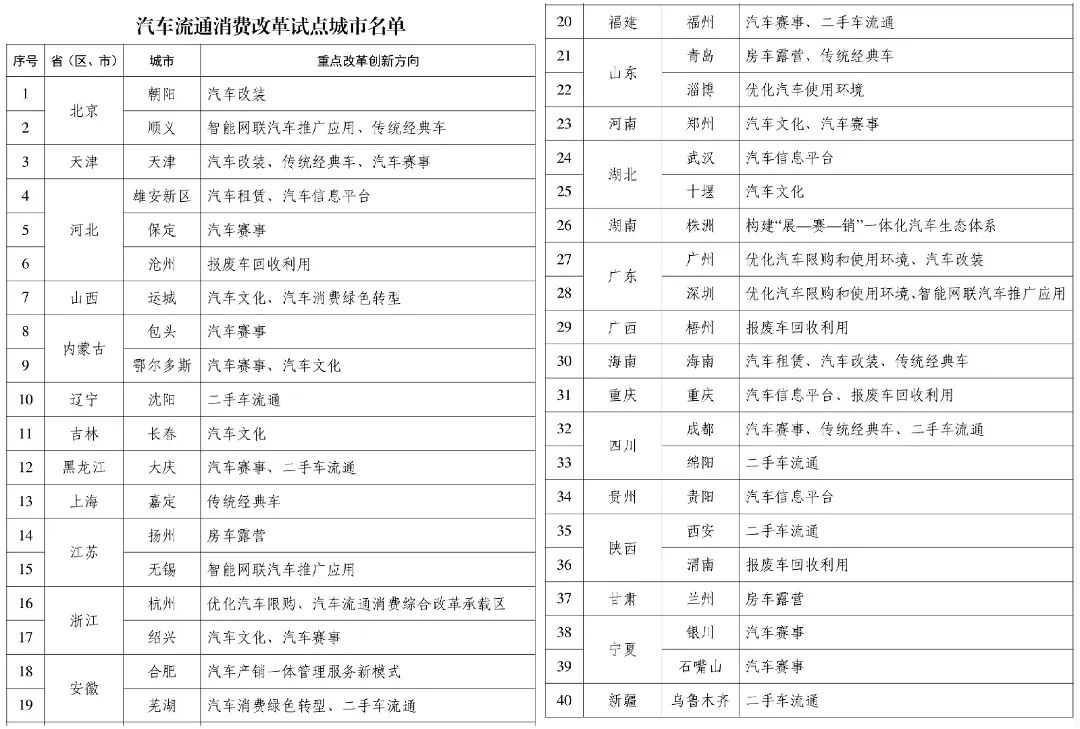
Circular economy pilots for used car trading and scrap vehicle recycling focus on regional transportation hubs and auto manufacturing cities. Shenyang, Xi'an, and Urumqi, located on cross-provincial trade routes with frequent used car transactions, are ideal for dismantling barriers to used car relocation and cross-province ownership transfers. Cities like Wuhu, Chengdu, and Mianyang, with strong auto manufacturing bases and high replacement demand, can pilot trade-in and used car export innovations.
Specialized automotive consumption sectors like modifications and classic cars will first explore reforms in cities with dual industrial and cultural advantages. Tianjin, with professional racing venues, auto import/export ports, and complete parts supply chains, can integrate modifications, racing, and classic car businesses. Hainan, leveraging its free trade port bonded policies, can pilot cross-border modifications and bonded classic car exhibitions to create distinctive auto trade models.
Auto racing and RV camping will deploy differentially based on city resources. Baoding, Ordos, and Yinchuan, with natural off-road venues, will develop mass-participation auto sports. Shaoxing, Zhengzhou, and Zhuzhou, with large populations and strong commercial-tourism integration, will create "racing + exhibitions + tourism" consumption routes. Yangzhou, Qingdao, and Lanzhou, with superior natural landscapes and self-drive routes, will tackle RV campsite approval bottlenecks and infrastructure gaps through targeted reforms.
Overall, these pilots leverage local manufacturing to activate vehicle stock circulation while tapping cultural tourism and free trade policies to unlock new consumption scenarios. The 40 cities will address bottlenecks across auto production, trading, usage, and recycling, aggregating local innovations into a nationwide reform blueprint that balances development and safety.
This layout doesn't isolate the automotive sector but fosters cross-industry collaboration across manufacturing, cultural tourism, and commerce. It's not a short-term market stimulus but a long-term strategic deployment targeting every link in the automotive industry chain.
For ordinary consumers, this reform may lack the immediate impact of large one-time subsidies but will genuinely reduce lifecycle costs for buying, maintaining, enjoying, and replacing vehicles, transforming automotive consumption from a "one-time transaction" into a holistic lifestyle experience.
Crucially, this policy doesn't simply replace past car purchase subsidies but builds on existing incentives like trade-ins, rural car promotion, and purchase tax benefits. It represents a historic shift in automotive consumption governance: from short-term sales boosts through price cuts to long-term cultivation by addressing gaps, building systems, nurturing ecosystems, and shaping culture.
This represents a monumental strategic initiative by China within the automotive sector. Rather than solely focusing on the ebbs and flows of new car production and sales, the policy forges ahead by tapping into six key aftermarket domains—vehicle modifications, motorsports, automotive camping, classic car preservation, car rentals, and vehicle maintenance. Its aim is to seamlessly integrate automotive manufacturing, distribution, utilization, cultural tourism, and recycling into a cohesive framework. This approach directly tackles the industry's most pressing vulnerability: the underdeveloped automotive service system and cultural ecosystem.
Looking ahead, China's automotive industry is poised to excel not only in "robust manufacturing and high-volume sales" but also in cultivating a consumption ecosystem that is standardized, well-regulated, and globally competitive, alongside fostering a vibrant, homegrown automotive culture. Such a transformation is expected to unleash a trillion-yuan potential in domestic demand, offering steadfast support for stabilizing consumption, driving industrial restructuring, and cementing China's status as a global automotive powerhouse.
Editor-in-Charge: Du Yuxin Editor: He Zhengrong
THE END
-
![]()
Huawei Follows Suit: Has the Era of Guaranteed Coverage for Intelligent Driving Accidents Arrived?
-
![]()
Over the Past Three Years, Air Conditioner Powder Spraying Has Become a Widespread Issue Among Over a Dozen Automakers and Numerous Models! Is Cost-Cutting the Culprit?
-
![]()
Suzhou Crafts 29-gram AI Glasses
-
![]()
Love and Deep Space: From Setbacks to Success—How Otome Games Sustain a Billion-Dollar Market?
-
![]()
From January to May, 10,823 New Energy Sanitation Vehicles Were Sold, with Yingfeng Environment, Yutong, and Foton Securing the Top Three Positions
-
![]()
Can the ‘New Energy Vehicles to the Countryside’ Campaign Revive the Sluggish Auto Market?
-
![]()
The Covert Battle for AI Ride-Hailing Entry Points Among Didi, Qianwen, and Doubao
-
![]()
Momenta Lays Out Its Books: A Strong Report, and a Pricier Story