Can the ‘New Energy Vehicles to the Countryside’ Campaign Revive the Sluggish Auto Market?
 06/24 2026
 472
472
Introduction
A Boost for the Auto Market
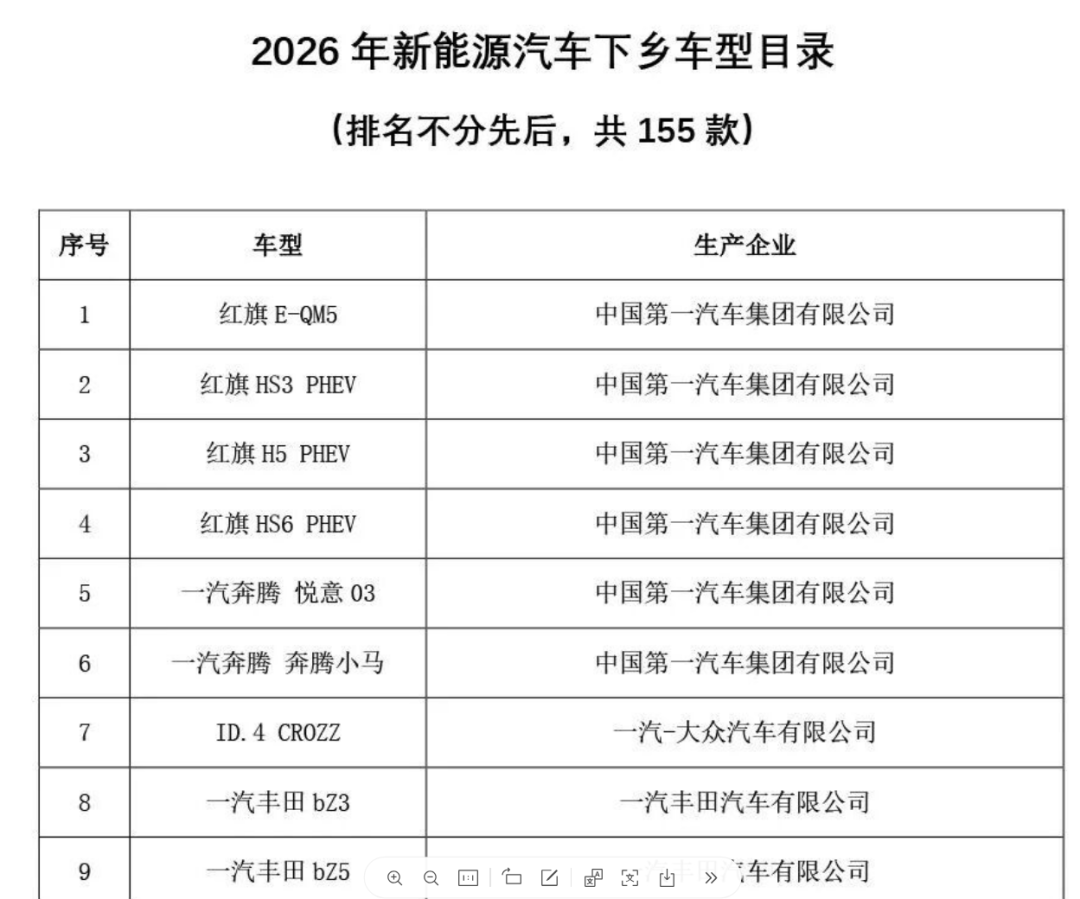
The 2026 policy wave promoting new energy vehicles (NEVs) in rural areas has ignited fervent debate across the industry since its rollout. Five government departments jointly issued a document, offering unlimited quotas for direct subsidies and a comprehensive suite of incentives. From Wuling’s compact commuter models to the Xiaomi SU7 and BYD Han, a diverse range of vehicles has been included, with a more expansive lineup than in previous years.
Some hail this as a vital stimulus for the auto market, unlocking the vast potential of lower-tier (rural) markets. Others criticize it as a desperate attempt to offload inventory onto rural consumers after urban markets reached saturation, highlighting numerous practical hurdles. So, is this policy a genuine boon or a misguided endeavor?
Let’s begin with the positives. This policy carries substantial merit. In prior years, the “Cars to the Countryside” initiative either required consumers to vie for limited subsidy quotas or confined them to purchasing low-cost, low-performance vehicles. This year, the program has transitioned to an inclusive model, where all eligible consumers can participate, alleviating many previous concerns.
Subsidies are now layered with additional perks. Special rural subsidies are tiered by vehicle price: RMB 8,000 for cars under RMB 100,000, RMB 12,000 for those priced between RMB 100,000 and RMB 200,000, and up to RMB 20,000 for vehicles exceeding RMB 200,000. An extra RMB 2,000 is available for models with a range over 400 kilometers. When combined with trade-in subsidies (12% for scrapping old vehicles, 8% for replacements), exemption from purchase taxes, and local subsidies worth several thousand yuan, a RMB 150,000 family car can save nearly RMB 40,000. Entry-level models see their final prices reduced by 20%, making them highly attractive to rural households.
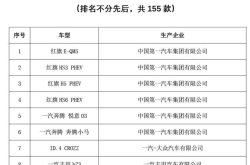
Critically, this initiative is no longer limited to budget vehicles. Among the 155 eligible models, options span from micro commuter cars to mid-size SUVs and family sedans. Even new energy micro-trucks and small pickups are included, addressing both daily commuting and commercial transportation needs, thus aligning with rural consumers’ practical demands.
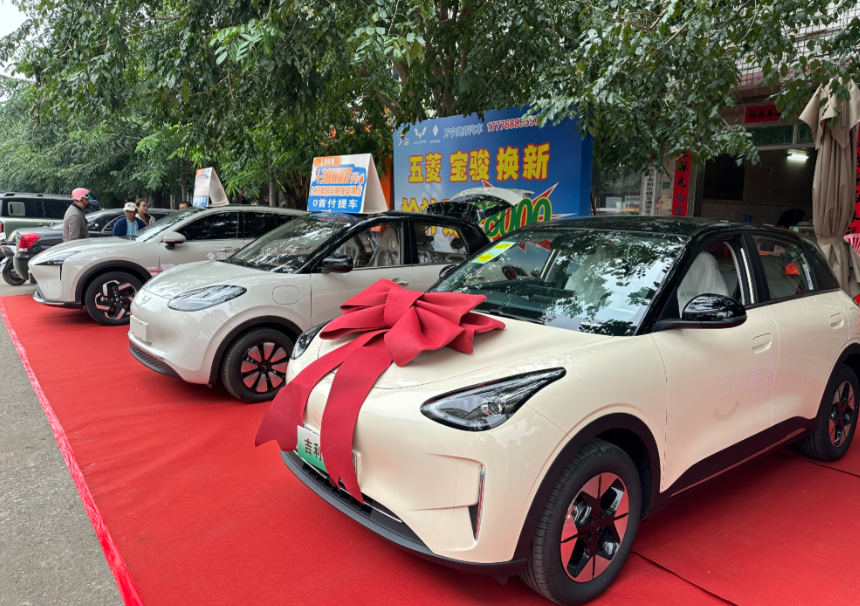
From a broader market perspective, this strategy is astute. In first- and second-tier cities, NEV penetration has already surpassed 50%, with growth nearing its peak. In contrast, county and rural areas boast penetration rates below 20%, with a vast fleet of aging internal combustion engine vehicles and three-wheelers ripe for replacement—a clear blue ocean for expansion.
This policy can help automakers absorb excess production capacity, ease fierce price wars in urban markets, and spur the development of charging infrastructure and after-sales networks in rural regions. The entire supply chain stands to benefit, with short-term sales boosts and long-term market cultivation making it a seemingly win-win proposition.
However, policy incentives alone are insufficient, as real-world challenges persist. The most urgent issue is the lag in infrastructure and after-sales services. While home charging piles offer convenience, what about long-distance travel?
Many townships have only a few fast-charging stations, and remote areas lack even a reliable power grid. Imagine the predicament of a battery running out mid-journey during winter visits or errands.
After-sales services pose another major hurdle. Many counties lack proper NEV maintenance facilities, forcing owners to travel dozens or even hundreds of kilometers to urban centers for repairs. Battery replacements and electric control system fixes are both costly and time-consuming, driving up ownership costs beyond what rural users, accustomed to roadside repair shops, might anticipate.
Another often-overlooked issue is insurance premiums and residual values.
NEV insurance costs are already notably higher than those for internal combustion engine vehicles. In rural areas, where accident rates and repair costs are elevated, annual premiums can exceed those of traditional vehicles by several thousand yuan, potentially negating fuel savings over several years. Additionally, NEVs depreciate rapidly, and the rural used car market remains sluggish. Selling a three- to five-year-old NEV may prove challenging, unlike internal combustion engine vehicles, which can be readily sold to local used car dealers.
More concerning is the risk of unscrupulous automakers flooding the market with low-priced, subpar products to claim subsidies. These vehicles may seem affordable but suffer from inflated range claims and compromised safety features, ultimately tarnishing the reputation of NEVs.
In conclusion, the 2026 initiative to promote NEVs in rural areas offers more advantages than drawbacks. The direction is sound, and the efforts are commendable, providing tangible benefits for rural electrification and market stimulation. However, expecting immediate sales surges is unrealistic, as gaps in infrastructure, after-sales services, and consumer awareness cannot be bridged overnight.
For ordinary consumers, households with yards for charging piles and high daily commuting needs may find it worthwhile to purchase under this policy. However, those frequently traveling long distances or residing in areas with poor local support should avoid following the trend blindly. For this policy to succeed, subsequent complementary measures must keep pace, ensuring it benefits consumers rather than merely serving as a tool for automakers to clear inventory.
-
![]()
Huawei Follows Suit: Has the Era of Guaranteed Coverage for Intelligent Driving Accidents Arrived?
-
![]()
Over the Past Three Years, Air Conditioner Powder Spraying Has Become a Widespread Issue Among Over a Dozen Automakers and Numerous Models! Is Cost-Cutting the Culprit?
-
![]()
Suzhou Crafts 29-gram AI Glasses
-
![]()
Love and Deep Space: From Setbacks to Success—How Otome Games Sustain a Billion-Dollar Market?
-
![]()
From January to May, 10,823 New Energy Sanitation Vehicles Were Sold, with Yingfeng Environment, Yutong, and Foton Securing the Top Three Positions
-
![]()
Can the ‘New Energy Vehicles to the Countryside’ Campaign Revive the Sluggish Auto Market?
-
![]()
The Covert Battle for AI Ride-Hailing Entry Points Among Didi, Qianwen, and Doubao
-
![]()
Momenta Lays Out Its Books: A Strong Report, and a Pricier Story