US New Car Manufacturer Faces Major Crisis: Layoffs Hit 18%, COO Position Eliminated, with Each Vehicle Sold Incurring a Loss of $1.83 Million
 06/24 2026
 491
491
New CEO Initiates Layoffs to Demonstrate Resolve
Author: Wang Lei
Editor: Qin Zhangyong
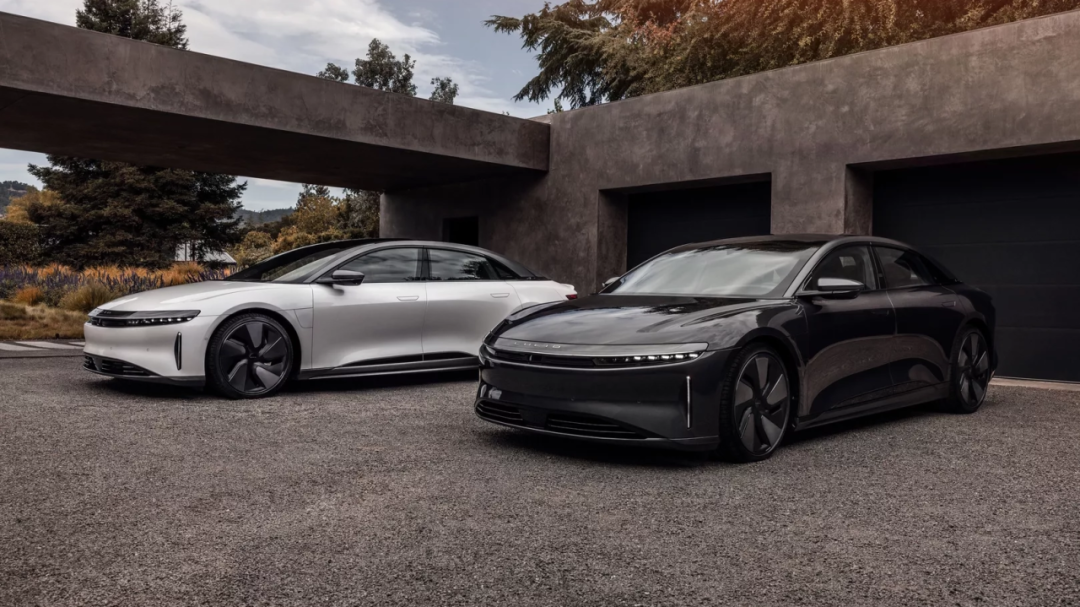
Remember Lucid, the upstart automaker once dubbed the "Tesla Killer" by American netizens? The company is now facing significant challenges.
Not long ago, Lucid formally appointed Silvio Napoli as its new CEO, filling a one-year leadership vacuum following founder Peter Rawlinson's resignation in early 2025.
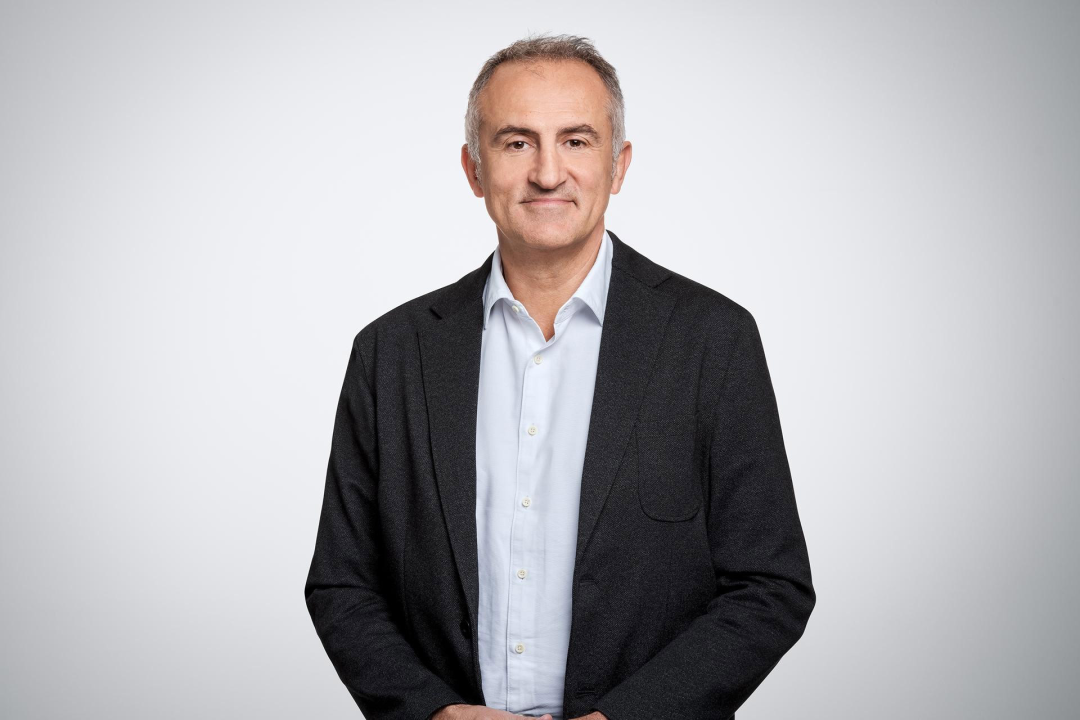
Lucid employees initially hoped that Napoli, the architect of Schindler's rise to a global elevator manufacturing giant, could similarly rescue Lucid from its predicament.
However, Napoli's debut move proved far more drastic than anticipated.
Yesterday, Lucid officially announced an 18% workforce reduction, affecting approximately 1,500 employees. According to Lucid, this round of layoffs forms part of Napoli's strategy to "simplify the company's structure, strengthen execution, and enhance Lucid's future competitiveness."
The underlying message: These layoffs were directly orchestrated by the new CEO. Just 20 days after assuming office, Napoli slashed nearly one-fifth of the workforce—proving that experience indeed matters...
01 Restructuring Amid Turmoil
In fact, this marks Lucid's second major round of layoffs this year.
Four months earlier, Lucid announced plans to cut approximately 12% of its U.S. full-time workforce, citing the need to improve efficiency and accelerate profitability.
Based on Lucid's reported total workforce of around 9,000 employees by the end of 2025, this earlier round affected roughly 1,000 positions and was reflected in the Q1 financial report. The company stated that while the layoffs would incur approximately $40 million in short-term expenses, they could save up to $500 million annually over the coming years.
However, the February layoffs targeted only non-production roles in the U.S., sparing hourly factory workers.
This latest round proves far more aggressive, with broader scope. It encompasses not only full-time administrative staff but also contracted engineers and hourly production workers.
Even core management positions were not spared.
After founder Peter Rawlinson stepped down as CEO in February 2025, Lucid's then-COO Marc Winterhoff served as interim CEO—a role he unexpectedly maintained for a full year.
With Napoli's formal appointment on June 1, Winterhoff was initially set to resume his COO duties. Both Napoli and Lucid had previously confirmed Winterhoff's continued role as COO.
However, according to Lucid's official SEC filing, the company has eliminated the COO position to streamline management reporting lines. All business unit heads will now report directly to CEO Napoli.
This implies former COO Marc Winterhoff will depart the company, though he will receive severance and financial support while retaining his company vehicle.
Additionally, the filing revealed that the restructuring will incur $32 million in one-time severance expenses but permanently reduce annual operating costs by $158 million.
Beyond workforce reductions, Lucid has halted second-shift production at its Casa Grande, Arizona factory, directly scaling back its existing manufacturing operations. The company plans to complete this restructuring by Q3 this year.
Combined with February's layoffs, Lucid has now cut nearly 2,500 positions in 2026.
However, the executive exodus predates these layoffs. Over the past year, Lucid's core leadership team has undergone continuous "restructuring."
The former CEO's abrupt resignation triggered a wave of executive departures. Long-serving Senior Vice President and Chief Engineer Eric Bach was fired, followed by the exits or retirements of Engineering VP James Hawkins and Quality VP Jerry Ford.
Earlier, Lucid's Investor Relations head, Operations SVP, European Managing Director, Software Quality VP, and Marketing VP had all departed.
Notably, fired Chief Engineer Eric Bach even sued Lucid, alleging wrongful termination, discrimination, and retaliation, claiming he was targeted due to his German background.
Clearly, despite securing a new CEO, Lucid remains mired in internal chaos. Its aspirations to become a true "Tesla Killer" now seem unattainable.
02 Can Robotaxi Save the Day?
Indeed, the situation remains dire.
According to a Lucid spokesperson, the aggressive layoffs stem from weakening demand for high-end electric vehicles and severe inventory backlogs, necessitating production cuts aligned with actual sales volumes.
"These difficult decisions aim to align production with current market demand, reduce excess inventory, and navigate the prolonged industry downturn. This company-wide streamlining will simplify decision-making, cut redundant spending, and drive Lucid toward positive gross margins and stable cash flow as quickly as possible."
In simpler terms: Lucid is selling fewer cars.
According to its Q1 financial report, Lucid produced 5,500 vehicles (+149% YoY) but delivered only 3,093 units—a 42% QoQ and 0.5% YoY decline.
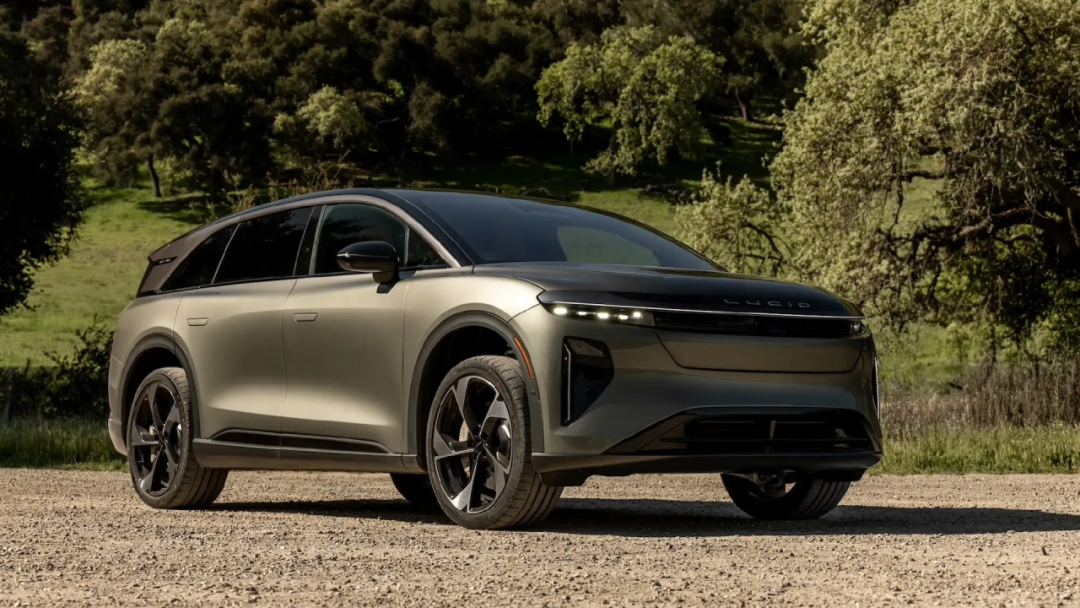
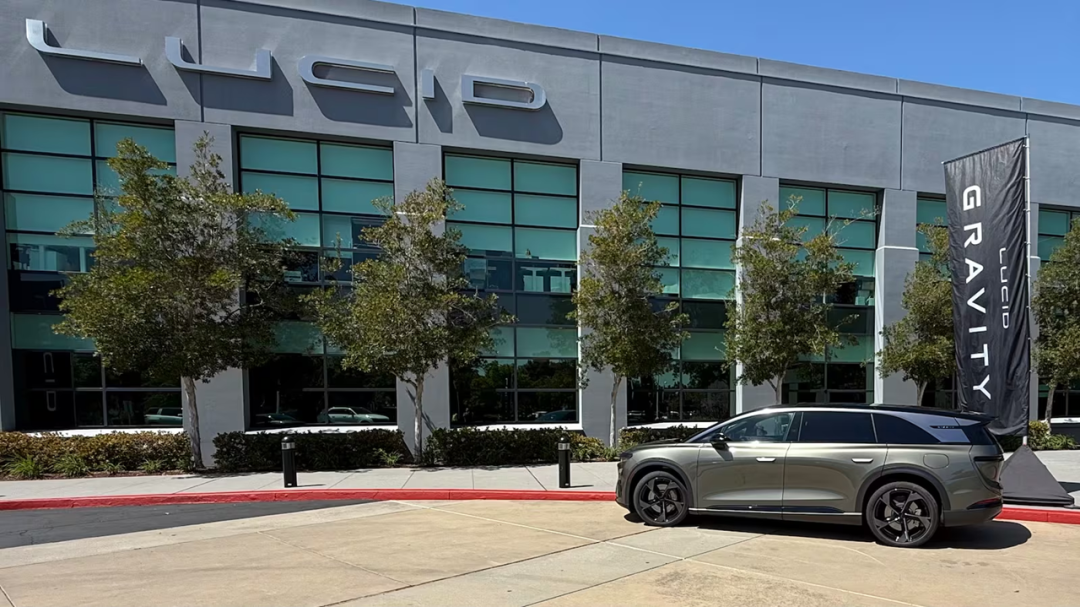
Lucid attributed the sales decline to supplier component issues, specifically a quality defect in the Gravity SUV's second-row seats that halted deliveries for 29 days.
However, even viewing the full 2025 picture, Lucid produced just 18,378 vehicles and delivered 15,841 units—a scale dwarfed by Chinese EV startups' monthly sales, leaving the company far from breaking even.
In 2025, Lucid's net loss exceeded $2.7 billion. Benchmark data shows a staggering -97.91% gross margin, equating to roughly $1.83 million in net loss per vehicle sold.
The situation worsened in 2026. Q1 net losses ballooned to $1 billion (vs. $366 million YoY), despite revenue rising 20% to $280 million—well below the industry average expectation of $440 million.
Lucid withdrew its 2026 production forecast of 25,000–27,000 units after the Q1 report.
This recalls Elon Musk's assessment of Lucid: "Unless it undergoes major operational changes, bankruptcy appears inevitable. Costs must be slashed dramatically; otherwise, it will spiral into the abyss and ultimately collapse."
Given current circumstances, Musk's blunt warning rings true.
Yet Lucid has countermeasures. The company pins its hopes on two products: the newly launched Gravity SUV and a $50,000 mid-size EV slated for later this year.
The $50,000 model represents Lucid's "Model 3 moment," aiming to achieve volume sales that dilute costs through economies of scale.
Lucid is also betting heavily on Robotaxi services, announcing partnerships with Uber and autonomous driving startup Nuro to launch a Robotaxi version of the Gravity SUV this year.
Uber invested $300 million in Lucid to retrofit production lines and integrate Nuro's self-driving technology. Under the agreement, the three parties will deploy over 20,000 robotaxis across the U.S. within six years.
While Lucid may avoid abrupt collapse like some American peers, its window of opportunity is rapidly closing.
-
![]()
Huawei Follows Suit: Has the Era of Guaranteed Coverage for Intelligent Driving Accidents Arrived?
-
![]()
Over the Past Three Years, Air Conditioner Powder Spraying Has Become a Widespread Issue Among Over a Dozen Automakers and Numerous Models! Is Cost-Cutting the Culprit?
-
![]()
Suzhou Crafts 29-gram AI Glasses
-
![]()
Love and Deep Space: From Setbacks to Success—How Otome Games Sustain a Billion-Dollar Market?
-
![]()
From January to May, 10,823 New Energy Sanitation Vehicles Were Sold, with Yingfeng Environment, Yutong, and Foton Securing the Top Three Positions
-
![]()
Can the ‘New Energy Vehicles to the Countryside’ Campaign Revive the Sluggish Auto Market?
-
![]()
The Covert Battle for AI Ride-Hailing Entry Points Among Didi, Qianwen, and Doubao
-
![]()
Momenta Lays Out Its Books: A Strong Report, and a Pricier Story