MBBF 2026 on the Bund in Shanghai: Deciphering Mobile AI's Future Trajectory
 06/29 2026
 424
424
'The waves surge, the currents ebb, yet the vast river flows on ceaselessly...' The lyrics of 'Shanghai Bund' encapsulate the city's vibrant spirit, forever at the vanguard of progress, unyielding amidst the tide of intelligence.
The year 2026 heralds the dawn of the 15th Five-Year Plan era and a pivotal juncture for the comprehensive rollout of the smart economy. AI Agents are set to steer the course of development for the next half-decade. Across the nation, the appetite for intelligent applications and the token economy is burgeoning, with Shanghai spearheading the smart economy revolution and setting the benchmark for Mobile AI applications. During the recent 2026 MWC Shanghai, we traversed the city's streets, witnessing the flourishing Mobile AI application ecosystem everywhere we went.

From the surface to the core, it's evident that Shanghai's pioneering role in the Mobile AI age is underpinned by years of leveraging policy advantages, industrial prowess, and the synergy of government-enterprise collaboration. This has fostered the deep integration of mobile communications and AI, nurturing a city brimming with AI elements. The fusion of these industries has ignited a wave of Mobile AI innovation.
We strolled through Shanghai's streets and alleys, seeking to understand why the surging wave of intelligence is converging towards Mobile AI.

In summer, tourists from near and far revel in Shanghai's laid-back and uniquely 'chill' lifestyle. Behind this tranquility lies the subtle integration of Mobile AI into the city's fabric, revolutionizing convenient living.
Over the past year or two, the application scenarios of large models have progressively expanded to mobile phones, automobiles, and home environments, giving rise to a plethora of smart terminals. Even small pendants on backpacks can now transform into intelligent companions, accurately interpreting our language and emotions through large models, offering emotional support without the need for awkward phone conversations.
The rise of Mobile AI has also ushered in new multimodal interaction paradigms for wearable devices. Today, when we visit exhibitions, we're accustomed to pulling out our phones for information and photos. In the future, we might simply don a pair of AI glasses that continuously perceive the real world, providing immersive guided tours and interpreting exhibition details anytime, anywhere. What once was a brief walkthrough lasting just a dozen minutes has now, thanks to the Mobile AI application ecosystem, evolved into an hour-long in-depth exploration, enabling even non-experts to appreciate art. This is the essence of Shanghai's 'chill' cultural life.
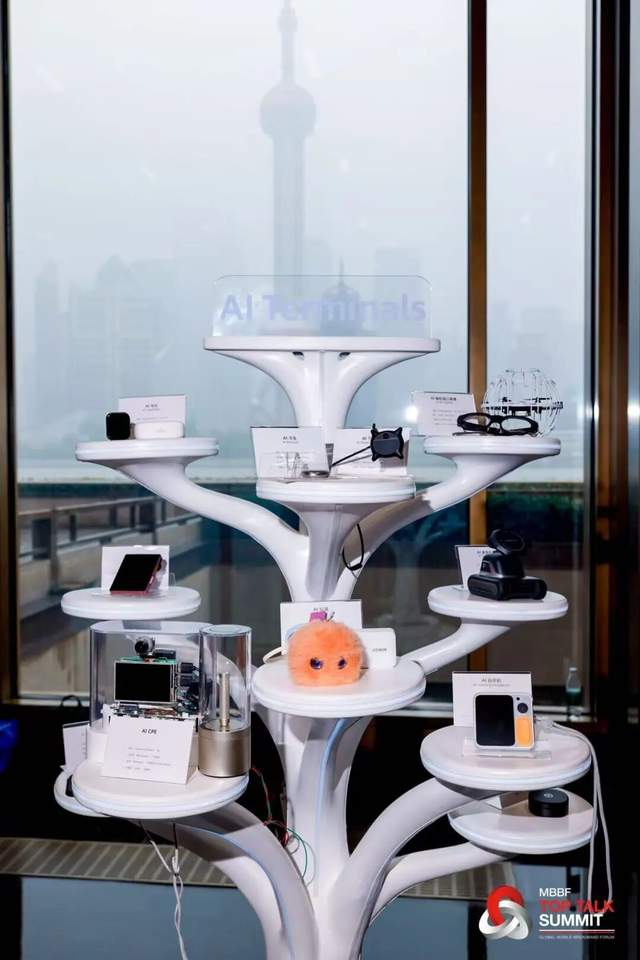
At the recently concluded 2026 Global Mobile Broadband Elite Forum · Shanghai Guest Channel, digital blogger He Tongxue articulated the public's aspirations for the Mobile AI era, stating that future AI assistants are expected to proactively intervene in our lives. For instance, upon receiving a message about a 2 PM business trip, the AI assistant would proactively book the tickets. Such visions are becoming a reality on the streets of Shanghai.
Today, as we wander through Shanghai's bustling commercial districts and pedestrian streets, AI smart assistants on mobile phones can be activated at any time to assist tourists with their inquiries... These Mobile AI applications are no longer just passively downloading content from the network but require continuous uploading of massive multimodal data. This necessitates that operators must construct a widely covered large uplink 5G-A network to ensure seamless operation of various Mobile AI terminals anytime, anywhere, supporting the large-scale commercial deployment of intelligent agents.
No AI, no 'chill'. Currently, the Mobile AI and city integration index is supplanting infrastructure rankings as a global city benchmark. From this vantage point, Shanghai, from its modern opening-up to the Mobile AI era, is once again at the forefront.

If Mobile AI applications on the consumer side (C-end) are reshaping the lifestyles of ordinary people, then in the business sector (B-end) across various industries, AI transformation is thoroughly reconstructing the operational logic of modern enterprises.
As a benchmark enterprise in the logistics and supply chain industry, SF Express has emerged as a prime example of Mobile AI vertical industry implementation, leveraging AI Agents, unmanned intelligent equipment, and global network scheduling capabilities. Unmanned delivery vehicles are now ubiquitous nationwide, achieving full-scenario unmanned scheduling, autonomous path planning, and unmanned delivery. The entire system relies on AI Agents for full-link intelligent upgrades. In complex scenarios such as extreme weather or sudden road condition changes, AI Agents can automatically generate alternative delivery routes and synchronize them in real-time with drivers through mobile networks, reducing delay rates and addressing the pain points of traditional logistics scheduling lag and inefficiency.
Smart logistics stations, unmanned delivery vehicles, drones, and other new infrastructure also impose higher demands on network bandwidth, latency, and throughput capabilities. Shanghai's mature digital infrastructure provides a solid foundation for logistics intelligence operations.
Traditional industries like logistics necessitate upgrades, while emerging industries such as embodied intelligent robots have relied on communication infrastructure from the outset.
Chang Lin, CEO of RoboSense, shared at the forum that the mature implementation of 5G-A technology has propelled embodied intelligence from individual intelligence to ubiquitous intelligence, achieving a leapfrog breakthrough from laboratories to production and daily life. Currently, relying on the mobile 5G-A network, RoboSense has gradually achieved large-scale commercialization of multi-scenario intelligent robots.
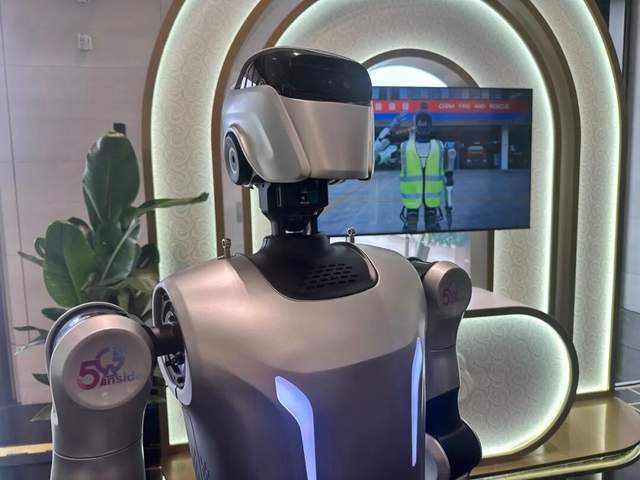
In the field of public emergency response, embodied intelligent robots equipped with 5G-A modules can collect high-definition video and thermal imaging data from fire scenes in real-time on the front lines of fire rescue and transmit them losslessly to the cloud AI brain. They can autonomously complete fire source localization in complex and dangerous fire environments, reducing the risks of manual rescue. This is the value of technology empowering life.
Whether in traditional or emerging industries, Mobile AI is supporting the transformation and upgrading of various industries in Shanghai, accelerating the vigorous growth of B-end productivity.

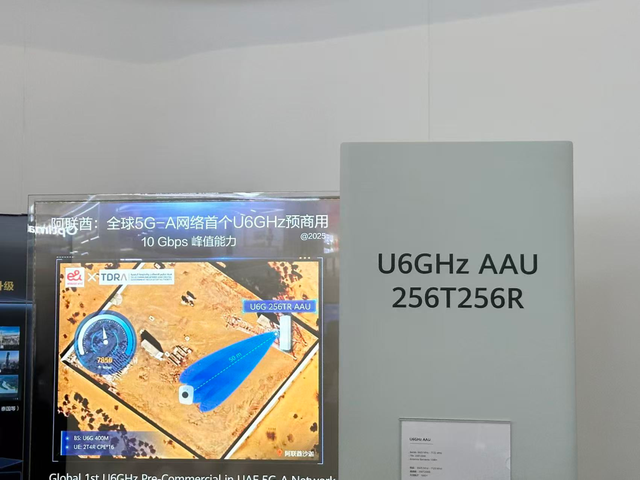
As we transition from the streets and offices to home scenarios, AI terminals must remain intelligent, and home networks must stay connected. Currently, U6G, as a crucial spectral support for network construction, has become a key foundation for driving the advanced development of Mobile AI. After harnessing the ultra-large bandwidth of 700MHz, the full capabilities of 5G-A can be unleashed in the short term, supporting downlink speeds of 10Gbps, gigabit uplink, ultra-low latency, and wide-area integrated sensing, enabling high-traffic new services such as AI multimodal interaction and immersive video.
In Shanghai, we've witnessed the value of U6G as the core spectral foundation in the Mobile AI era. For example, in smart villas, remote holographic video conferencing requires real-time bidirectional transmission of three-dimensional human images. Relying on U6GHz, remote personnel can engage in immersive face-to-face office work, especially suitable for an international city like Shanghai with extensive global business.
Home robots entering households have transformed from science fiction to reality. Previously, real-time conversations with home companion robots could suffer from screen stuttering (frame stuttering) and transmission delays due to insufficient uplink bandwidth. Relying on large uplink capabilities, stable multi-channel video transmission can be achieved, ensuring precise and uninterrupted operation of household robots.
Playing 3D games with friends at home or conducting high-definition live streams with a sense of real presence are all new home lifestyles in the Mobile AI era.
These applications, as Professor Zhang Ping, a doctoral supervisor and director of a national key laboratory at Beijing University of Posts and Telecommunications, stated at the 2026 Global Mobile Broadband Elite Forum, prove that U6GHz is a pragmatic frequency band.
Actively expanding new spectra such as U6GHz and building large-bandwidth networks have become a unified development consensus in the global communications industry, promoting large uplink applications such as Agent intelligent agents and robots to reach thousands of households.

Observing the comprehensive transformations in Shanghai's C-end livelihood, B-end industries, and H-end (home) environments, we can clearly sense that the pulse of the times is beating towards intelligence.
Intelligent agents are comprehensively reconstructing the connection methods between humans and terminals, humans and cities, and humans and industries, driving the accelerated prosperity of Mobile AI applications. Shanghai has also provided a clear practical path for a city to seize smart economy opportunities and accelerate the large-scale development of the Mobile AI industry.
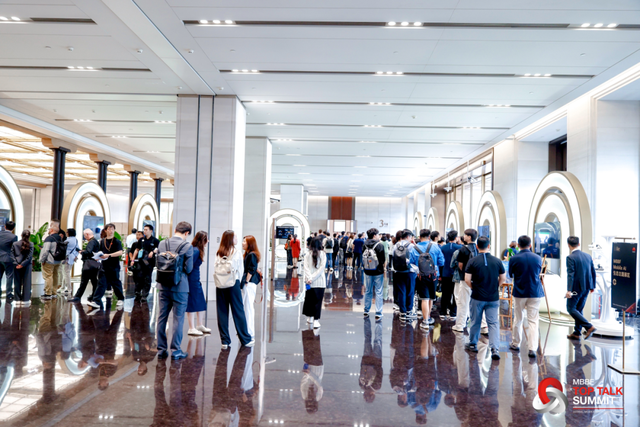
The prerequisite for developing the smart economy is the availability of network elements. Unlike the downlink-dominated network models in the 4G and 5G eras, the popularization of AI intelligent agents, multimodal interactions, and embodied intelligence has propelled mobile communication networks from a unilateral downlink to a new stage where both uplink and downlink are equally important. Therefore, network upgrades are imperative and serve as the fundamental guarantee for smart experiences on the C, B, and H ends.
Walking through the city, smart terminals such as AI glasses continuously upload high-definition images, voice, and other multimodal data to cloud large models. Without large uplink capabilities, AI would experience stuttering and errors. When robots work in factories, insufficient uplink bandwidth and high latency can interrupt the real-time transmission of instructions, leading to abnormal robot operations, which is unacceptable in serious production scenarios. Without large uplink and low-latency home networks, service robots and smart terminals would find it difficult to gain widespread popularity in households.
As Wang Tao, Deputy Chairman and Rotating Chairman of Huawei, said, the vigorous development of smart terminals and intelligent agent applications has brought significant challenges and opportunities for the growth of the mobile communication industry. It requires the coordinated advancement of three development paths: industry, technology, and commerce, to adapt to the new development logic of the intelligent agent era.

In terms of network capabilities, the three major operators in Shanghai have upgraded their network capabilities by integrating AI with mobile communications, based on high-quality basic networks, without the need for significant additional investments, to meet the new network demands of the intelligent agent era.
In terms of AI services, Shanghai has taken the lead in exploring new models and scenarios for mobile services, with the Mobile AI ecosystem integrating into various aspects of urban life.
In terms of business operations, a series of sustainably growing new business values have emerged. For example, Shanghai Telecom has introduced a tiered 5G-A exclusive package system to specifically meet the willingness of some users to pay for high-quality smart experiences.
With a high-quality network foundation, the Mobile AI ecosystem is thriving, and the value of the smart economy is taking off. This is a global pioneer model for the smart era.
Not limited to Shanghai, the willingness to pay for experiences, intelligence, and guaranteed services is a common demand nationwide and globally, activating unprecedented incremental space and industrial opportunities. With the large-scale development of the Mobile AI industry, the wave of intelligence will eventually spread from the banks of the Huangpu River to every corner of most cities.

-
![]()
China’s Auto Industry: Embracing a New Era of ‘Technology for Market’
-
'Computing Power Leather' Surges 77% in 9 Days, NIO Supplier Also Chases the 'Light'
-
![]()
Storage and Computing Power Becoming Scarcer: Google Initiates Exploration of Using Old Smartphones to Build AI Servers
-
![]()
Storage Computing Power Grows Scarcer: Google Explores Using Old Smartphones for AI Servers
-
![]()
Huawei Imposes a $0.5 Patent Fee Per Device: Is It Time for Huawei to Reap Global Patent Royalties?
-
![]()
Geely Invests 1.8 Billion Yuan Post-Acquisition: The Launch of Flyme Auto 3.0 Sparks Questions on Meizu’s Enduring Influence
-
![]()
MBBF 2026 on the Bund in Shanghai: Deciphering Mobile AI's Future Trajectory
-
![]()
Commercialization of ASIC: The Turning Point Has Arrived