Storage and Computing Power Becoming Scarcer: Google Initiates Exploration of Using Old Smartphones to Build AI Servers
 06/29 2026
 443
443
Could discarded smartphones be the new “hard currency”?
Recently, with Google's support, the University of California, San Diego (UCSD) has embarked on a project to construct a distributed computing platform using 2,000 decommissioned Pixel smartphones. Their goal is to harness the collective computing power of these used devices to form a large-scale cloud server, emphasizing low-carbon and environmentally sustainable practices.
Upon hearing this news, the immediate reaction for many is: Have chips and computing power become so scarce? At the same time, curiosity arises: How can old smartphones be repurposed into server equipment?
Unearthing Treasures from Second-Hand Phones: Chips and Storage as Valuable Resources
According to a report by foreign media outlet The Register, Jennifer Switzer, a former Ph.D. student at UCSD, collaborated with Google to transform 2,000 Pixel Fold smartphones, provided by Google, into distributed servers. The research team initially attempted to test a large number of second-hand phones simultaneously but soon realized that clustering too many batteries posed a fire hazard for the data center.
Switzer's solution involved modifying the second-hand phones by removing their batteries and casings, as well as disassembling components such as cameras and communication modules. Essentially, the core of building servers from second-hand phones lies in the motherboard and its onboard processor, storage, and other key components. In addition to simplifying the hardware, the native Android system was uninstalled from these phones, replaced with a more hardware-efficient Linux system.
These phones are then grouped into computing clusters of 25-50 units each, with multiple clusters forming the final large-scale server. How do these numerous phones connect and communicate with each other? The native cellular networks and WiFi capabilities of the phones are insufficient for this purpose, as connecting thousands of devices would overwhelm network signals. Researchers resolved the connectivity issue by using PCB boards equipped with wired network ports and provided a unified power supply to ensure stable operation and connection of multiple devices.
At this point, many might wonder: Can compact, TDP-limited smartphone SoCs handle the tasks of a cloud server? After all, in most people's imaginations, servers are massive machines housed in large data center rooms.
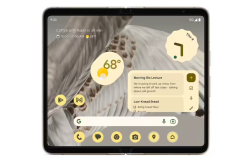
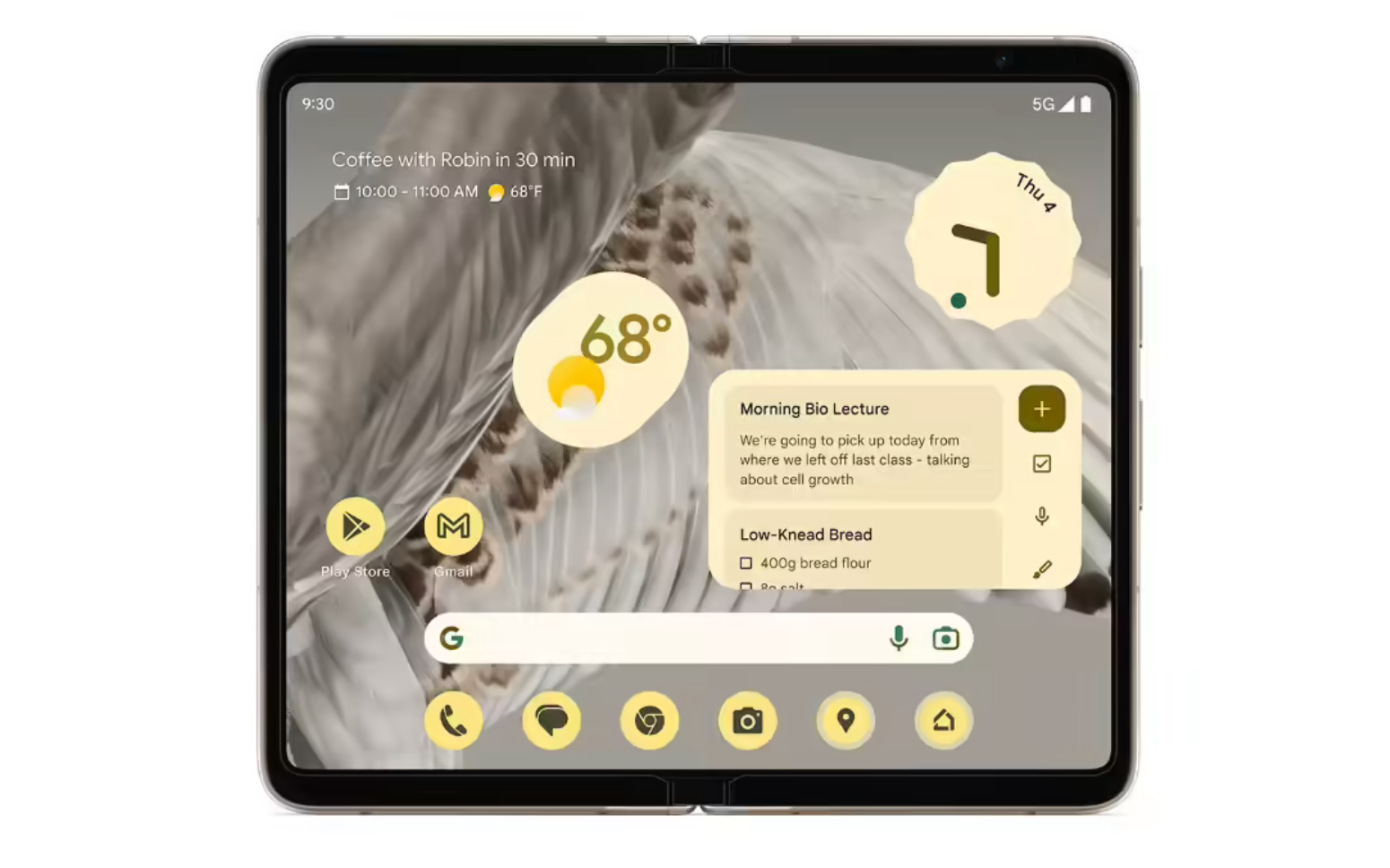
In reality, smartphone computing power is not as weak as commonly perceived. Google's Pixel Fold, released in 2023, had a mediocre market performance and several drawbacks: it was expensive, had wide bezels, and noticeable creases. The chip used in this phone is Google's self-developed Tensor G2, with overall performance roughly between the Snapdragon 888 and Snapdragon 8 Gen1, making it relatively outdated for 2023.
(Image source: Google)
However, the smartphone industry has become so competitive in recent years that chip evolution has accelerated rapidly. The "inferior" chips that ordinary users disdain are highly sought after in the server field. Compared to mobile platforms like smartphones, servers are less sensitive to chip energy consumption and heat dissipation. When the Pixel Fold's motherboard is stripped of its casing and connected to a power supply, issues of energy consumption and heat are effectively resolved.
Moreover, the Tensor G2 chip includes a Cortex-X1 super core and multiple A78 cores, outperforming many entry-level VPSs offered by cloud service providers. More critically, Google's chip also integrates 12GB of memory, and the motherboard comes with 256GB or 512GB of flash storage, directly saving significant costs in storage.
At the same time, the Tensor G2 was designed with AI applications in mind and integrates a TPU for edge computing, making it suitable for running small local models.
Of course, using a single Pixel Fold to build a server is still unrealistic, but when 2,000 phones are combined, the aggregated computing power becomes impressive. According to information disclosed by the researchers, even a cluster of 20 phones can now support the workload of 75 students submitting assignments online.
Can Second-Hand Smartphones Alleviate AI-Induced Computing Power Anxiety?
Frankly speaking, expecting clusters built from second-hand smartphones to train large models with hundreds of billions of parameters is nothing short of a fantasy. However, if we shift our focus from centralized cloud supercomputing centers to decentralized edge computing, a vast new landscape emerges.
In Leitech's view, these micro cloud factories composed of decommissioned smartphones are not a downgrade in computing power but rather highly aligned with the two core demands of future AI development: low power consumption and distributed low-latency computing.
First, they alleviate the increasingly severe issue of high energy consumption in AI. While the explosion of AI large models has undoubtedly brought about a leap in productivity, it has also led to a terrifying surge in energy consumption. Traditional centralized data centers require massive amounts of electricity for cooling and power supply to maintain the operation of their vast computing clusters.
Smartphone SoC chips, on the other hand, have always prioritized energy efficiency as a core metric from their inception. Chips like the Tensor G2, which come with built-in TPU computing power, have far lower pure computing power consumption than traditional x86 server processors after stripping away power-hungry components like screens and basebands. Combining thousands of such devices not only results in extremely low carbon emissions and environmental friendliness but also breaks down the enormous demand for computing power into smaller, more manageable parts.
(Image source: Google)
Second, they align well with the physical distribution characteristics of edge computing. With the evolution of various AI agents and the increasing complexity of end-side application scenarios, future AI computing will no longer involve uploading all data to physically distant cloud data centers. Instead, it will favor immediate processing at the edge, closer to the user.
The compact size and flexible deployment of clusters formed from decommissioned smartphones eliminate the need for the stringent physical space requirements of traditional data centers. They can be deployed in micro-nodes within communities, campuses, or within enterprise interiors. This proximity significantly reduces network latency in data transmission, making it ideal for AI inference, local model scheduling, or automated workflows that require real-time responses.
Finally, this is also an attempt to address concerns over computing power costs and supply chain anxiety. Currently, storage and chip supply chain prices fluctuate frequently, keeping hardware costs high. Meanwhile, mountains of waste smartphones accumulate globally, not only wasting resources but also causing electronic waste pollution.
Disassembling and repurposing decommissioned smartphones as components of edge computing effectively transforms former electronic waste into low-carbon cloud computing power nodes. This undoubtedly provides a lower-cost, more sustainable solution to alleviate global AI computing power anxiety.
However, while the prospects of this micro cloud factory model are enticing, its shortcomings are also quite apparent.
On the one hand, the reliability and lifespan of smartphone SoCs and storage are inferior to those of traditional server-side components. The flash storage and chips on smartphones are designed for daily use by ordinary consumers, not for the 7×24-hour high-intensity operation required by enterprise-grade products. Since smartphone storage chips and processors are directly packaged onto the motherboard, a failure in any component essentially renders the entire node useless.
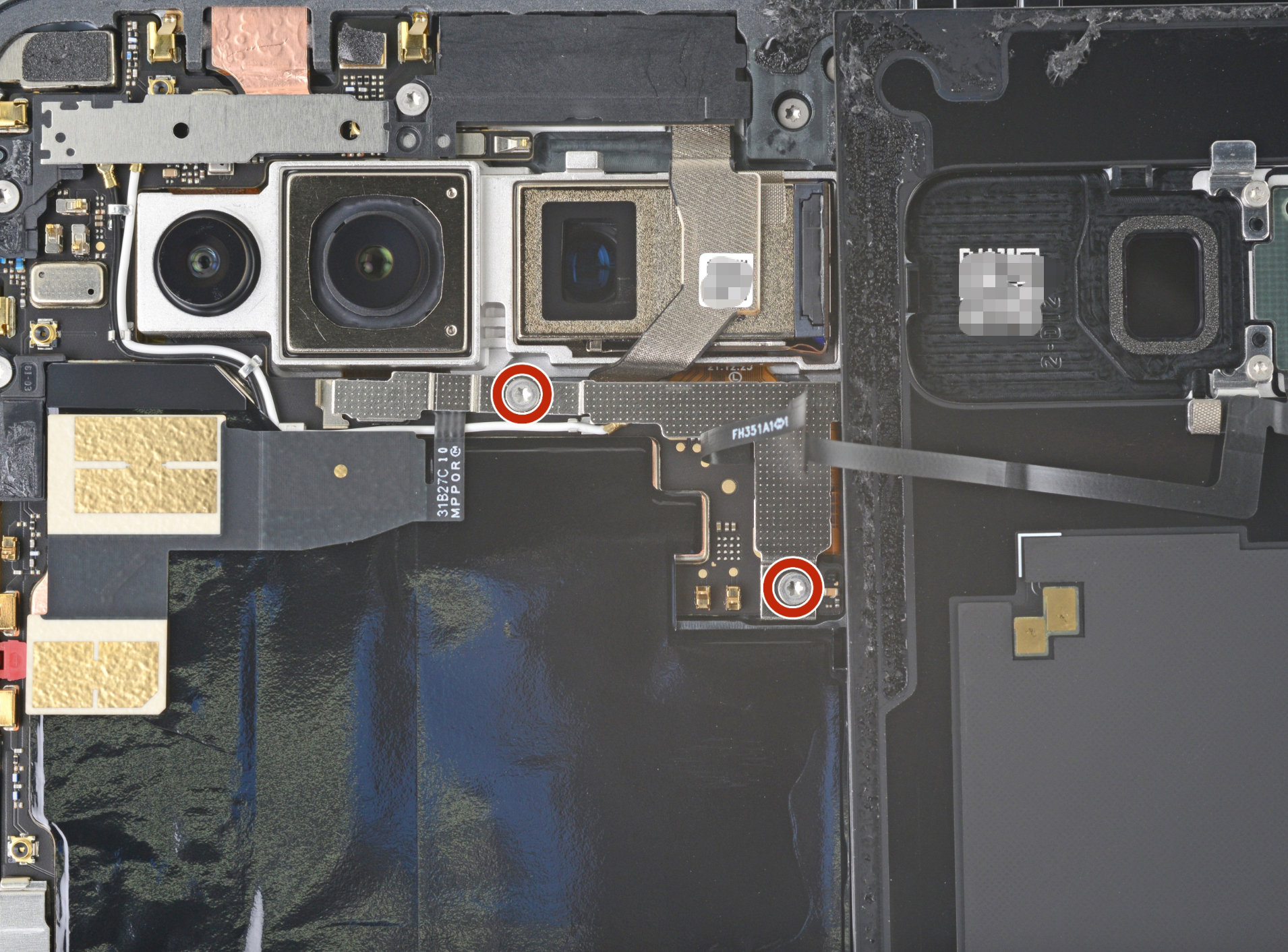
(Pixel Fold motherboard, image source: iFixit)
On the other hand, computing clusters formed from old smartphones face maintenance challenges. Maintaining 2,000 exposed, pieced-together smartphone motherboards is not the same as maintaining a few standard rack-mounted servers. The vast number of micro-nodes means that hardware failure rates will be amplified infinitely. Frequent system crashes would require operators to expend significant effort on physical inspections and motherboard replacements.
In fact, the idea of using clusters of old smartphones to build servers existed even before the AI era, but it was abandoned due to an unfavorable cost-benefit ratio. Today, this solution is being revisited for the reasons we mentioned at the outset: storage and chip costs are skyrocketing, and computing power has become scarce. Building servers using conventional methods is now much more expensive than before.
At the same time, due to intense competition in the smartphone industry over the past few years, a vast number of outdated models have been phased out, providing a relatively inexpensive source of materials. The secondary use of these waste models is akin to mining gold from electronic waste.
In Conclusion
Google's collaboration with the University of California, San Diego, is less of a computing power revolution and more of a geek experiment to address current computing power anxiety.
Amid soaring storage prices and an insatiable demand for AI computing power, people have become accustomed to focusing on top-tier GPUs costing tens of thousands of dollars, overlooking the vast amount of idle mobile computing power. While constrained by factors such as flash storage lifespan, this micro cloud factory assembled from second-hand smartphones will never replace the conventional forces of traditional data centers. Nevertheless, it provides a highly imaginative and practical case study for edge computing.
Perhaps in the near future, not only second-hand smartphones but also used tablets, PCs, game consoles, NAS devices, and any other equipment with computing power will be repurposed, leading to a reconstruction of the relevant second-hand industry chain.
Google AI AI Server Computing Power Storage
Source: Leitech
Images in this article are from: 123RF Royalty-Free Image Library Source: Leitech
-
![]()
China’s Auto Industry: Embracing a New Era of ‘Technology for Market’
-
'Computing Power Leather' Surges 77% in 9 Days, NIO Supplier Also Chases the 'Light'
-
![]()
Storage and Computing Power Becoming Scarcer: Google Initiates Exploration of Using Old Smartphones to Build AI Servers
-
![]()
Storage Computing Power Grows Scarcer: Google Explores Using Old Smartphones for AI Servers
-
![]()
Huawei Imposes a $0.5 Patent Fee Per Device: Is It Time for Huawei to Reap Global Patent Royalties?
-
![]()
Geely Invests 1.8 Billion Yuan Post-Acquisition: The Launch of Flyme Auto 3.0 Sparks Questions on Meizu’s Enduring Influence
-
![]()
MBBF 2026 on the Bund in Shanghai: Deciphering Mobile AI's Future Trajectory
-
![]()
Commercialization of ASIC: The Turning Point Has Arrived