How Electronic Fabric Became the Critical Chokepoint for AI’s Trillion-Dollar Computing Infrastructure
 06/29 2026
 528
528
In early June 2026, electronic fabric completed its fifth round of price hikes for the year, with the average price of standard specifications surging to RMB 7.4/meter—double the 2025 third-quarter low. Since September 2025, monthly price adjustments have become routine, with prices jumping RMB 0.5/meter monthly from February to May, and accelerating to RMB 0.7/meter in June.
Once an obscure industrial material, electronic fabric now commands global attention in the AI era, with its price doubling within 12 months.
01. From Industrial Foundation to AI Lifeblood
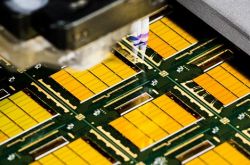
Electronic fabric, formally known as Electronic Glass Fiber Fabric, is woven from ultra-fine electronic-grade glass fiber yarns. It serves as the foundational material in the electronics supply chain: electronic yarn → electronic fabric → copper-clad laminate (CCL) → printed circuit board (PCB) → end-user devices.
This material performs three critical functions in electronics: 1) insulation to prevent circuit shorts, 2) structural support for copper foils, and 3) dimensional stability against temperature-induced deformation.
Classified by thickness and performance, electronic fabric comes in two primary categories: standard thick fabric (e.g., 7628 for conventional PCBs) and thin/ultra-thin high-end variants (e.g., 2116, 1080, 106 for advanced PCBs). The AI era has further diversified this category with specialized types like low dielectric (Low-Dk), low thermal expansion (Low-CTE), and quartz fabrics.
If PCBs represent the "nervous system" of electronic devices, electronic fabric constitutes the "skeletal framework"—invisible yet indispensable. This foundational role grants electronic fabric strategic importance in the AI revolution.
02. AI Servers Rewrite Fabric Consumption Patterns
The current price surge stems from structural demand shifts driven by AI computing requirements. AI servers consume 3-5x more electronic fabric than traditional servers due to their dramatically increased PCB complexity.
Prismark data reveals traditional server PCBs typically contain 8-14 layers, while AI server PCBs range from 20-40 layers, with some premium models reaching 78 layers. The global AI server PCB market is projected to grow 70% YoY in 2026.
Material upgrades present another layer of demand. High-end AI servers now require M8/M9-grade copper-clad laminates, imposing stringent requirements on electronic fabric: high-speed signal transmission demands low dielectric properties to minimize signal loss, while multi-layer PCB stacking requires low thermal expansion coefficients to prevent temperature-induced warping. Next-gen AI chips like NVIDIA's Rubin architecture and Google's V8 all utilize M8-grade materials, with PCB hybrid stacking incorporating high-frequency M4/M6 layers in power sections—driving substantial demand for thin Low-Dk fabrics.
Huatai Securities estimates GPU-driven demand for low dielectric electronic fabric reached 68.57 million meters in 2025, doubling to 140 million meters in 2026. AI server hybrid stacking processes already accounted for 3.8-7.7% of thin/high-grade fabric demand in 2025, with this share expected to rise further in 2026.
Beyond AI servers, energy storage, automotive PCBs, and high-speed optical modules are creating additional demand. Guojin Securities projects global energy storage installations will reach 438 GWh in 2026 (+62% YoY), boosting high-performance embedded PCB demand. Electric vehicles now require RMB 1,500-2,000 worth of PCBs per unit—double that of traditional vehicles. With Japanese, Korean, and Taiwanese CCL manufacturers reducing production, overseas orders are rapidly shifting to mainland China.
The global electronic fabric market's growth is directly tied to PCB industry expansion. The PCB market grew from USD 85.152 billion in 2025 to an expected USD 123.348 billion by 2030 (7.7% CAGR). Due to rising per-unit consumption, electronic fabric demand is projected to grow nearly 10% CAGR during this period.
03. Triple Supply Constraints: Looms, Yarns, and AI Competition
Exploding demand collides with three critical supply bottlenecks:
1. Loom Capacity: The Ultimate Bottleneck
High-end air-jet looms—the core production equipment—are dominated by Japanese manufacturers like Toyota. The JAT910 model's delivery cycle extends 18-24 months, with Toyota producing just 120-200 units monthly and no plans to expand capacity. Domestic looms still lag in tension control and high-speed stability, making short-term substitution difficult.
Institutional projections indicate loom supply gaps of 6.1% in 2026 and 10.6% in 2027. Even under optimistic scenarios, the market will maintain tight supply-demand balance. Other estimates suggest AI electronic fabric demand will reach 440 million meters in 2027 against a 400 million meter supply ceiling—creating a 40 million meter shortfall.
2. Electronic Yarn Shortages: Upstream Pressure
Electronic yarn, the raw material for fabric production, faces its own supply crunch. Guojin Securities data shows G75 electronic yarn prices surged 61% since Q4 2025, reaching RMB 14,525/ton in June 2026 (up from RMB 9,000/ton in Q3 2025). While yarn price increases lag slightly behind fabric, the persistent raw silk inventory shortage suggests similar supply constraints.
From January to May 2026, two new electronic yarn pool kiln lines added 135,000 tons/year capacity, but long baking cycles limited effective supply growth. Global net new electronic yarn capacity increased just 6.6% YoY in 2025 (98,000 tons), then slowed to 3.2% YoY in 2026 (59,000 tons).
3. Production Line Reallocation: Ordinary Fabric Contracts
AI specialty fabrics' significantly higher margins are prompting manufacturers to shift capacity from conventional products. Taiyao Technology, for instance, plans to phase out some E-glass traditional fabrics to focus on low dielectric high-end products.
More critically, thin fabric production requires enduring high-density, low-speed operations that substantially reduce per-loom output. High-margin AI fabrics prioritize loom allocation, causing passive contraction in ordinary fabric supply. This explains why ordinary fabric demand continues growing while supply declines.
The cumulative effect of these constraints has compressed industry-wide inventory from 1-1.5 months to just 7-10 days. Conventional fabric orders are booked through Q3 2026, while high-end specialty fabric orders extend to 2027.
04. Volume and Price Surge Boosts Corporate Performance
This electronic fabric boom transcends typical cyclical recovery:
• Price Impact: 7628 fabric surged 78% from RMB 4.15/meter (Q3 2025) to RMB 7.4/meter (June 2026). Premium varieties saw even steeper increases: 2116 fabric rose from RMB 4.4/meter to RMB 9.3/meter, while 1080 fabric jumped from RMB 4.5/meter to RMB 9.7/meter. Leading manufacturers now price products around RMB 8/meter after recent adjustments.
• Profit Impact: In Q1 2026, the glass fiber industry reported RMB 16.05 billion in operating revenue (+20% YoY) and RMB 2.15 billion in net profit (+72% YoY).
• CAPEX Impact: Domestic leaders are aggressively expanding capacity. China Jushi plans RMB 4.431 billion for a 50,000-ton electronic yarn and 320 million-meter fabric line. Its Huai'an facility—the world's largest single electronic glass fiber line with 100,000-ton yarn and 390 million-meter fabric capacity—commenced operations in March 2026. Other projects include International Composite Materials' 85,000-ton Changshou yarn line and China Jushi's additional 100,000-ton yarn capacity.
However, even these ambitious expansions require 18-24 month construction cycles, meaning short-term supply-demand imbalances will persist.
05. Persistent Structural Gap
TF Securities notes that the fifth annual price hike reflects AI-driven demand outpacing supply. The core driver remains structural demand growth, while electronic yarn's long expansion cycle and high-end fabric capacity ramp-up delays prolong the imbalance.
China Merchants Securities highlights that AI fabric demand growth, combined with limited high-end supply releases, creates an enduring structural gap. The key bottleneck remains the 18-24 month delivery cycle for high-end looms, which cannot be quickly resolved. The institution predicts ordinary 7628 fabric prices will reach RMB 7.5-8.0/meter in 2026, with high-end products remaining scarce.
Citigroup's latest report observes that AI server PCB demand is shifting from quantity growth to material upgrades, revealing that true supply bottlenecks now reside upstream in copper-clad laminates and electronic fabrics rather than PCB manufacturing itself.
This electronic fabric frenzy has triggered extreme capital market reactions. As of mid-June 2026, shares of the four major listed fabric manufacturers—China Jushi (+193%), Sinoma Science & Technology (+108%), Honghe Technology (+584%), and International Composite Materials (+453%)—have surged year-to-date. International Composite Materials' stock has skyrocketed nearly 1,200% from its low, with market capitalization increasing by hundreds of billions.
As the AI era unfolds, this formerly overlooked hundred-billion-yuan industry is undergoing profound revaluation—a process that may be far from complete.
- End -
-
![]()
Can Chinese Automakers Pose Such Fierce Competition? Mercedes-Benz Cancels Year-End Bonuses for 90,000 Staff, Volkswagen to Lay Off 100,000 Employees...
-
![]()
Anhui and Zhejiang Vie for the Crown in New Energy Vehicle Dominance: Who Will Prevail?
-
![]()
Tmall 618 Rankings Unveil Trends Transforming the Home Appliance Industry
-
![]()
This Week in Home Appliances: Overseas Boom! Midea, TCL, Dreame Break Through; Casarte, Fotile, Gree, Hisense, Ronshen Lay Foundations
-
![]()
Aiming to Be the Alphard of the Electric Era! After D99's Launch, Leapmotor Will Release All-New Technologies to Pave the Way for a High-End Brand | Mirrormedia Pro
-
![]()
Over 5,200 Orders Placed on First Day: Can the Qijing GT7, Priced from 209,900 Yuan, Compete with the Z7 and SU7? | Mingjing Pro
-
![]()
AI Predicting the World Cup? It’s Time to Stop Insulting AI
-
![]()
iPhone 18 Pro Memory Costs Soar Threefold! Apple Seeks Trump Administration Approval for CXMT Memory Chips