Over 5,200 Orders Placed on First Day: Can the Qijing GT7, Priced from 209,900 Yuan, Compete with the Z7 and SU7? | Mingjing Pro
 06/29 2026
 459
459
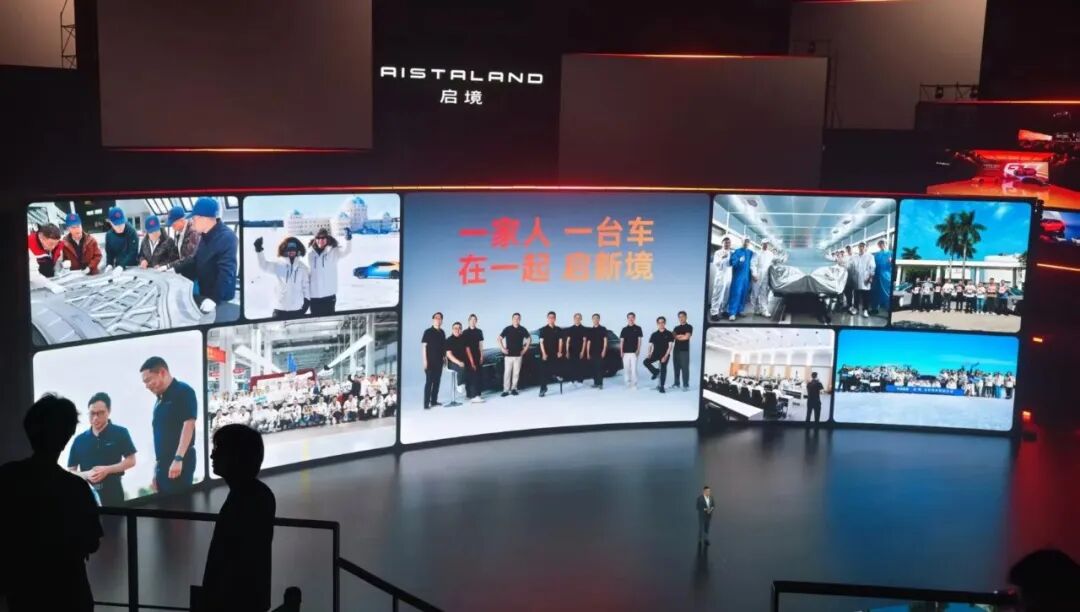
"I remember when the project first started, we all sat together, but we couldn't even align on basic terminology. Discussions about parameters, feel, experience, and algorithms were completely off. It was hard to hold meetings because everyone was still adapting. Later, without realizing when, a tacit understanding gradually formed." At the June 26 launch event for the Qijing GT7, Qijing CEO Liu Jiaming recalled the collaboration between Qijing and Huawei's Qiankun team.
At the beginning of the event, Qijing showcased a short video featuring interviews with the heads of various GT7 departments to highlight the collaboration details between Qijing and Huawei's Qiankun team across different GT7 sectors, emphasizing the depth of their partnership. The reason for introducing this at the start was that the creation of the Qijing brand was not merely about Huawei supplying technology but about a deeply integrated HI Plus model between the two parties.
From an organizational perspective, Huawei's Qiankun dispatched a team of hundreds of engineers to be stationed permanently in Guangzhou, working alongside GAC's R&D team from the product definition and body-in-white design stages. Qijing also introduced Huawei's IPD (Integrated Product Development) and IPMS (Integrated Product Marketing Services) processes to align technical standards, R&D rhythms, and quality control systems.
"From 'us,' from 'you,' to 'we'—it took about half a year. Along the way, two teams, thousands of people, countless days and nights—we've come this far side by side." Liu Jiaming repeatedly emphasized the integration of the two teams. "Qijing and Qiankun are not two separate entities walking the same path but one family building a single car," Liu said.
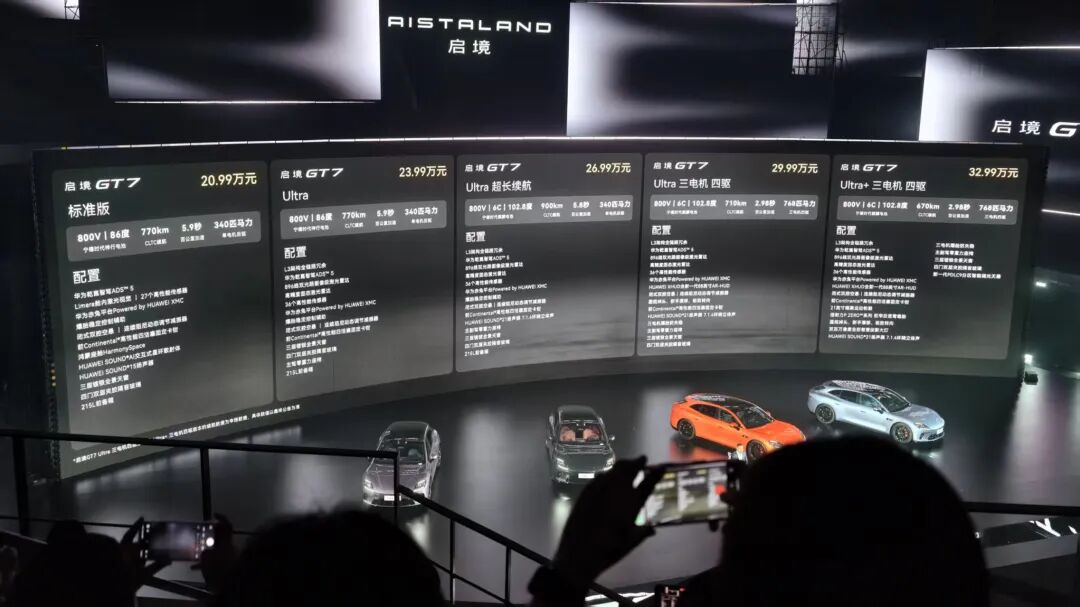
That evening, the GT7 was officially launched with five configurations: Standard, Ultra, Ultra Extended Range, Ultra Triple-Motor All-Wheel Drive, and Ultra+ Triple-Motor All-Wheel Drive, priced at 209,900, 239,900, 269,900, 299,900, and 329,900 yuan, respectively. Except for the entry-level Standard model, the others feature L3 architecture with full-link redundancy and offer a limited-time subsidy of 5,000 yuan.
01 The Car with the Highest 'Huawei Content'
As the first product of the collaboration between GAC and Huawei's Qiankun, the Qijing GT7 can be considered the model with the highest "Huawei content" to date. At the event, Jin Yuzhi, Senior Vice President of Huawei and CEO of Yinwang, declared, "All of Huawei's automotive intelligence-related solutions that can be applied have been included!" According to reports, the GT7 fully integrates Huawei's Qiankun Intelligent Driving, Huawei Hongmeng Cockpit, Huawei Chitú Platform, Huawei Intelligent Automotive Lighting, Huawei Intelligent Vehicle Cloud, and Huawei Jingqi Communication—six major automotive intelligence solutions.
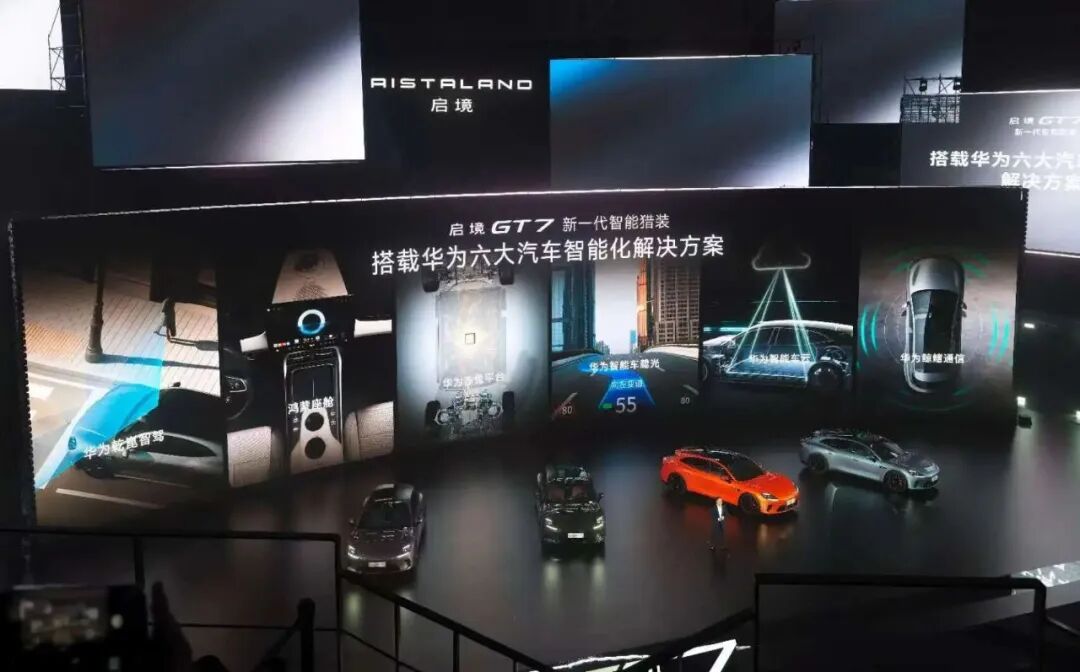
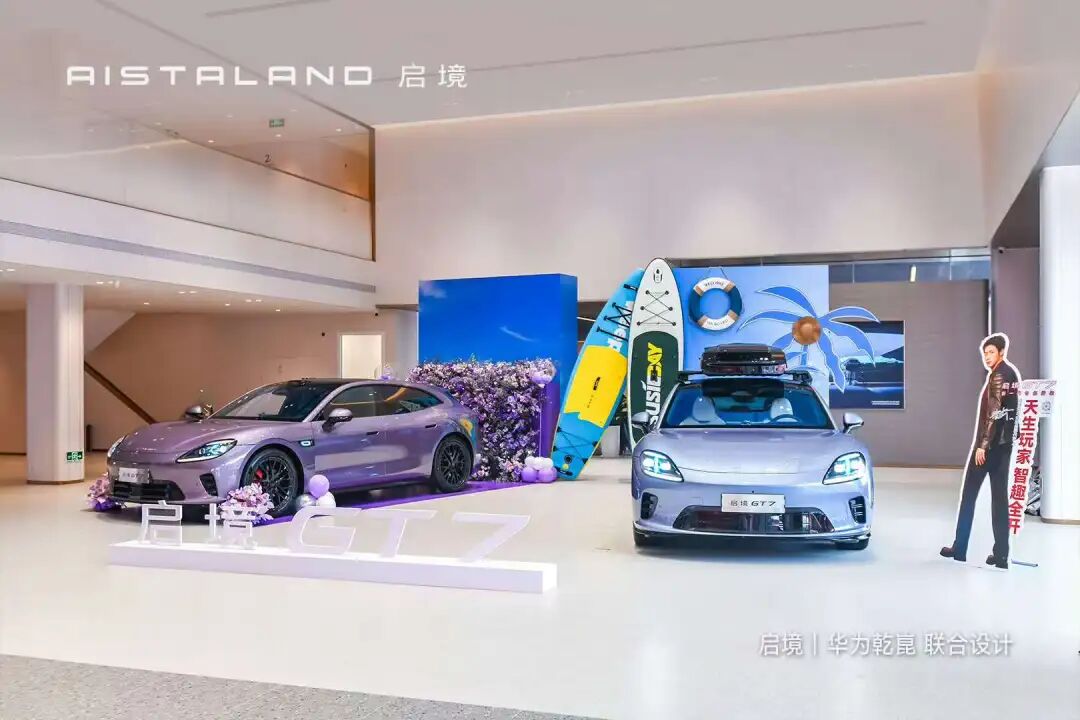
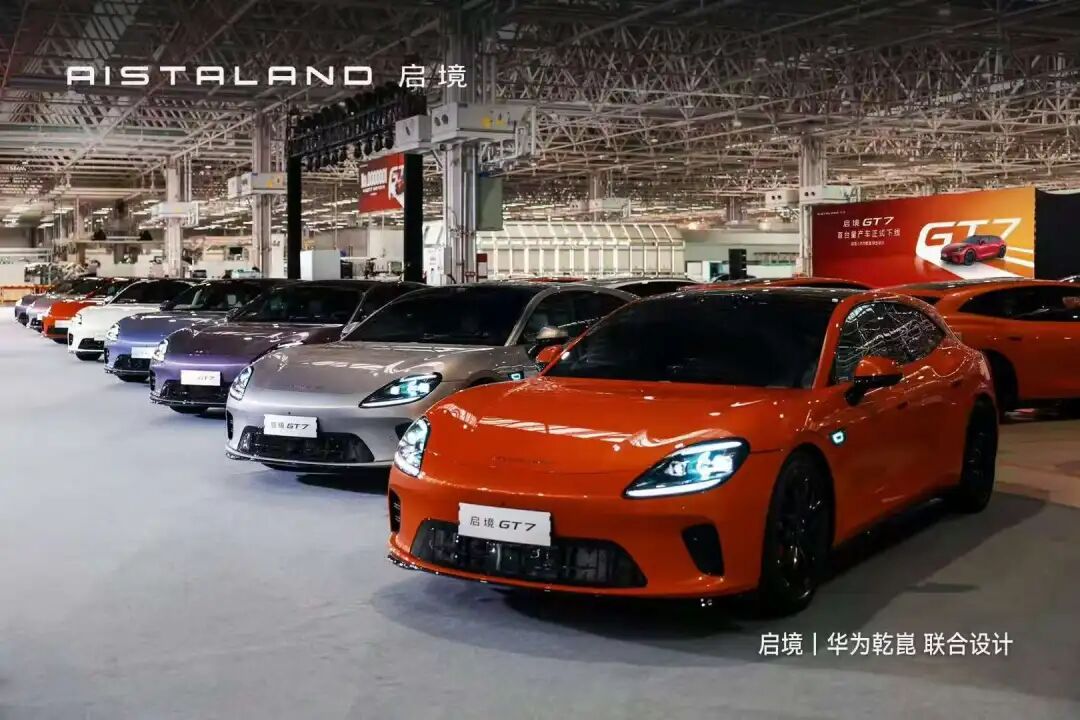
From a product standpoint, the Qijing GT7 is positioned as a mid-to-large smart shooting brake coupe. The new car is nearly 5 meters long, featuring a shooting brake design that balances coupe aesthetics with practical trunk space. The headlights are equipped with HUAWEI XPIXEL dual-megapixel full-color smart projection lamps, while the rear features the industry's first diffuse reflection waterfall-style taillights. The Qijing GT7's core selling points are intelligence and handling.
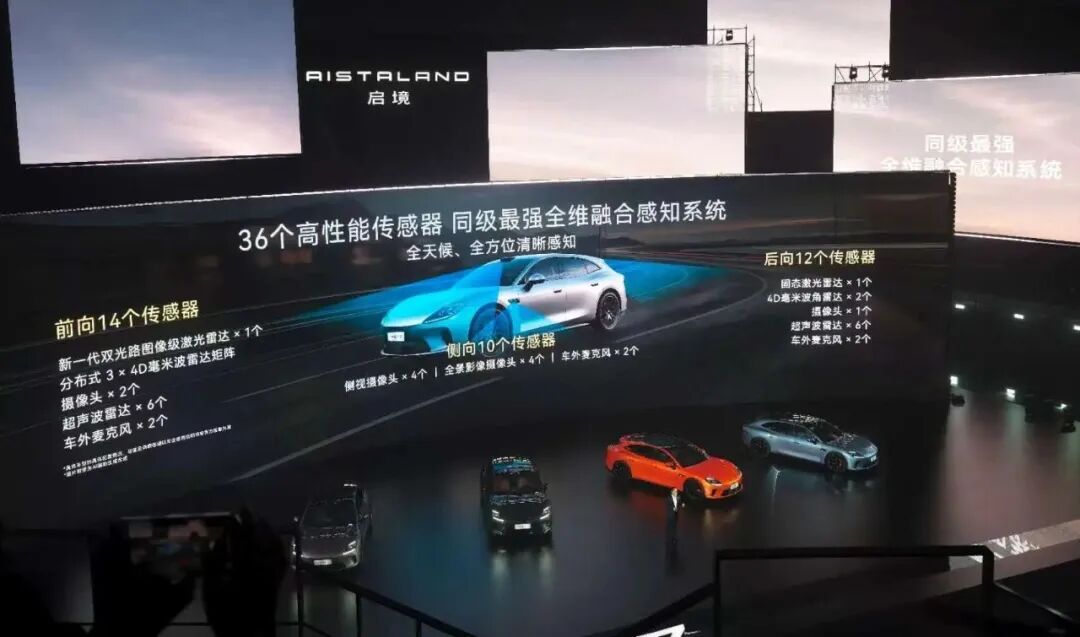
In terms of intelligence, the Qijing GT7 debuts several features. First, in intelligent driving, the GT7 Ultra and above versions are equipped with 36 high-performance sensors, including 14 forward-facing sensors like a new-generation dual-optical-path image-grade LiDAR and distributed 4D millimeter-wave radar matrix, 12 rear-facing sensors including solid-state LiDAR and 4D millimeter-wave corner radar, and 10 lateral sensors forming a perception network for all-around, all-weather, and full-dimensional fusion perception. Jin Yuzhi stated that the Ultra version is pre-fitted with an L3-level full-link redundancy architecture, fully prepared for the advent of autonomous driving.
At the software level, the Qijing GT7 is among the first to feature Huawei's Qiankun Intelligent Driving ADS™ 5. Built on the new WEWA 2.0 architecture, it enhances cloud-based decision-making intensity and learning efficiency by 10x, reduces collision risk by another 50% at the vehicle end, and offers proactive courtesy in narrow road meetings, smooth avoidance of irregular obstacles, and a balance of commuting efficiency and driving etiquette, providing a more human-like and safer assisted driving experience. It also debuts the RCA Roaming Cruise function, allowing NCA to be activated at will without navigation, covering diverse scenarios like country roads, parks, and underground garages. The all-dimensional collision avoidance system CAS 5.0 now includes additional functions like active speed reduction in sharp bends and driver incapacity assistance.
The Qijing GT7 Standard model also debuts with ADS 5 Pro, supporting 24 full-dimensional active safety capabilities and all-scenario intelligent assisted driving. Jin Yuzhi claimed that ADS 5 Pro is fully supported in highway, urban, and park scenarios, offering an experience superior to competitors' flagship versions. Additionally, in the cockpit, the GT7 debuts the next-generation Hongmeng Cockpit HarmonySpcae, featuring seven Agents for encyclopedia, news, vehicle control, entertainment, podcasts, navigation, and food ordering, enabling full-link integration of in-car ecosystems and intelligent interactions.
In terms of power and handling, the Qijing GT7 is built on an 800V high-voltage platform, offering two powertrain layouts: single-motor rear-wheel drive and triple-motor all-wheel drive. The single-motor version delivers 250kW, while the triple-motor version produces 565kW, accelerating from 0 to 100 km/h in 2.98 seconds. For chassis configuration, the GT7 debuts Huawei's Chitú Platform, featuring a six-in-one fully integrated architecture, standard dual-chamber closed air suspension, custom high-strength steel butterfly beam, four-piston fixed calipers, and continuously variable damping shock absorbers, offering 14 driving modes and 216 personalized combinations. Additionally, the GT7 comes with two battery options: 86kWh and 102.8kWh. The single-motor versions offer CLTC ranges of 770km and 900km, respectively, while the triple-motor versions both use the 102.8kWh battery, with range data pending.
02 Competes with Z7T, but SU7 is the Bigger Rival
As Qijing's first model, the brand has chosen the shooting brake coupe market. After models like the Zeekr 001, NIO ET5T, Xiangjie S9T, Haibao 06 DM-i Travel Edition, Zeekr 007GT, and Tengshi Z9GT, shooting brake coupes are no longer niche, with the Zeekr 001 once exceeding 10,000 monthly sales. This year marks the "breakout year" for shooting brake coupes, with several new models launched, including the Avatr 06T and Shangjie Z7T. More models, such as the Lynk & Co 07 GT, Fangchengbao S GT, and Exeed ES7 GT, are set to launch in the second half of the year.
This means the Qijing GT7 faces significant competitive pressure. From a pricing, positioning, and market enthusiasm perspective, the GT7 competes with the Huawei-enabled Shangjie Z7T in the shooting brake coupe market. Both models feature Huawei's intelligent cockpit and driving solutions and are priced in the 200,000-300,000 yuan range. However, the GT7's bigger rival is actually the Xiaomi SU7. Although one is a shooting brake coupe and the other a traditional fastback coupe, their price ranges heavily overlap, and the SU7, as a rare phenomenal hit in the new energy sedan market in recent years, has a market influence covering the entire 200,000-300,000 yuan sedan segment, making it an unavoidable competitor for all sedans in this price range. In April and May, the SU7 secured TOP 3 sales in the overall market for two consecutive months and led the mid-to-large sedan segment by a wide margin.
Compared to the SU7, the Qijing GT7 has some advantages. For example, while both have the same wheelbase, the GT7 is 53mm longer, and its shooting brake design provides greater cargo space than the SU7. The GT7 also comes standard with closed dual-chamber air suspension across all variants (absent in the SU7 Standard model) and offers a triple-motor version, catering to users with stronger performance demands. Most crucially, the GT7's biggest advantage is being the first to launch with ADS 5, which is ready for use upon delivery.
Of course, the GT7's shortcomings are also evident. As the first model from a new brand, Qijing faces challenges like low brand recognition, an underdeveloped dealership network, and a lack of user reputation. Additionally, the shooting brake category's audience base remains smaller than traditional three-box sedans, limiting its sales potential.
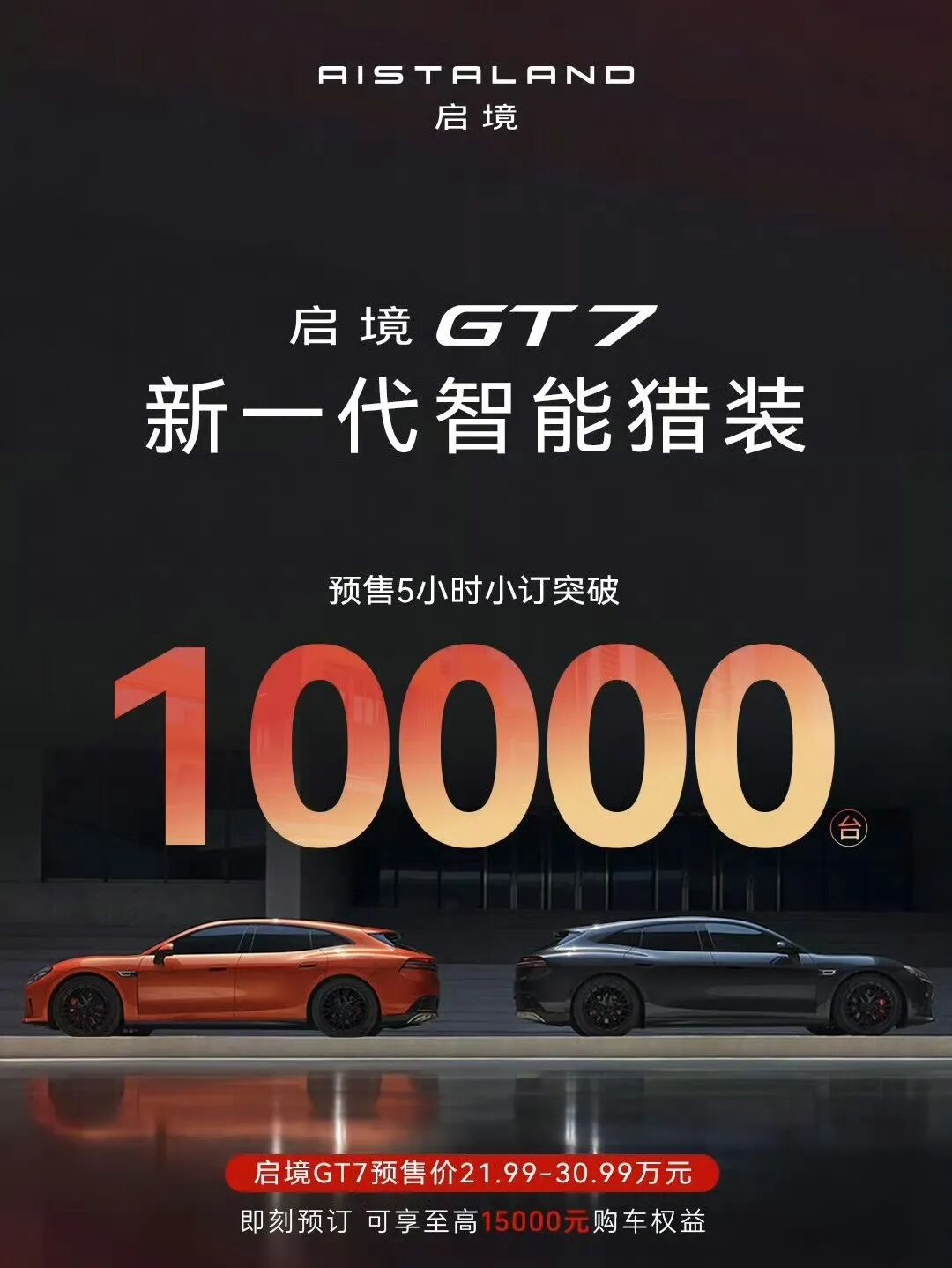
However, judging by its initial performance, the GT7 secured over 5,200 orders within 24 hours of its launch. During the pre-sale phase, it received over 10,000 orders in just 5 hours. As a debut model for a new brand, these orders are quite impressive. According to Qijing, over 60% of GT7 small-deposit customers are from the post-90s and post-00s generations, with 53% of users highly concerned about intelligence. "The small-deposit data this month proves we chose the right segment—we've made it,"
03 Leveraging Huawei for a Second Surge Upward
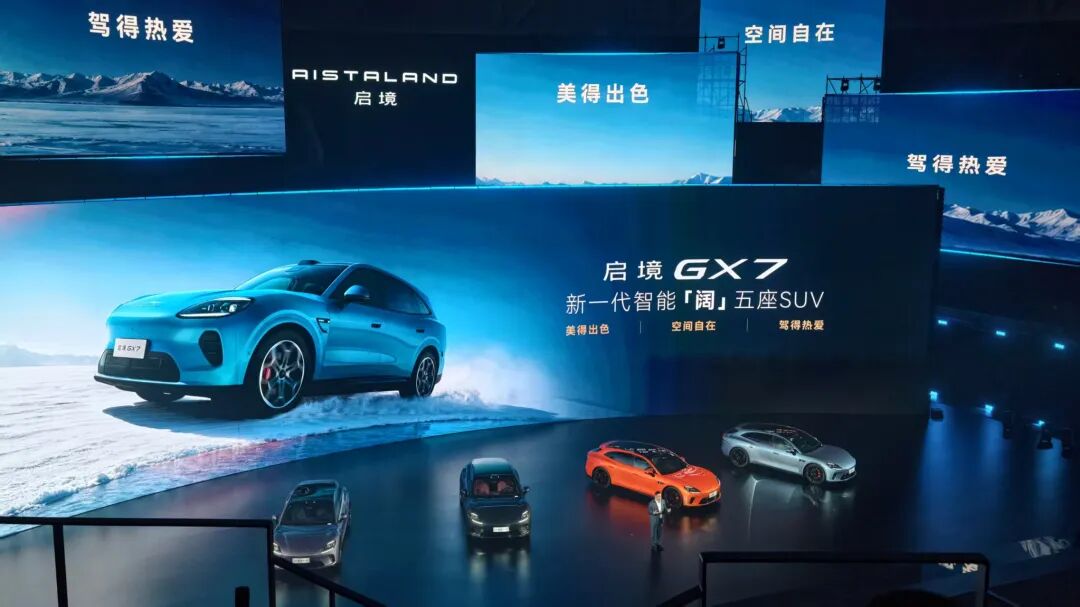
At the GT7 launch event, Qijing's second model, the GX, was also unveiled. This large five-seater SUV has a 3,070mm wheelbase and will launch later this year. Together, the GT7 and GX will form a dual-model matrix, with the GT7 targeting the smart shooting brake market and the GX entering the mainstream SUV market, the latter expected to sell in higher volumes based on its positioning.
At the service channel level, by the end of June, Qijing had opened over 300 stores in more than 90 cities nationwide. According to reports, the stores adopt a dual-format collaborative model of "Huawei Qiankun Intelligent Driving Authorized Experience Center + Qijing Authorized User Center." The experience centers, located in core urban commercial districts, focus on immersive displays and experiences of Huawei's Qiankun intelligent technologies, while the user centers provide one-stop full-lifecycle services, including sales, delivery, after-sales, and community operations. More importantly, all stores fully adopt Huawei's service standards, processes, and terminal management norms to ensure unified and controllable service quality nationwide.
By leveraging Huawei, Qijing will also shoulder GAC's responsibility for a second surge upward in new energy vehicles. Before Qijing, GAC had launched the premium sub-brand Hyper Haobo under Aion, starting with the million-yuan Hyper SSR supercar to establish its image, followed by entries into the mainstream market with the Hyper GT sedan and Hyper HT SUV. In early 2025, Hyper became an independent brand alongside Aion and Trumpchi, later entering the extended-range market with the Hyper HL, but it has remained lukewarm. At the end of last year, GAC reformed its independent brands, establishing the Hyper Aion BU.
After Hyper's failed premium push, GAC promptly adjusted its strategy, abandoning the solo premium push and instead re-collaborating deeply with Huawei. By leveraging Huawei's intelligent automotive solutions and product definition capabilities in intelligent cockpits and driving, GAC aims to enter the mainstream premium market priced between 200,000 and 300,000 yuan.
Among traditional major automakers like Dongfeng, Changan, Chery, SAIC, and JAC, all have deep collaborations with Huawei. While the "Huawei content" gold standard is declining, in this Huawei-dominated landscape, going premium without Huawei seems difficult. For GAC, Qijing carries a dual mission. Besides breaking through the brand ceiling and filling the premium void left by Hyper's failure, its more critical significance lies in driving internal systemic reform, upgrading GAC's R&D and marketing efficiency through Huawei's processes and philosophies.
-
![]()
The Suffering Endured in E-commerce, Walmart Doesn't Want to Repeat in AI
-
![]()
What Does the Doubling of New Energy Vehicle Exports Mean?
-
![]()
Ghosn: 'Only I Can Save Nissan'
-
![]()
Volkswagen Lays Off 100,000 Employees, The Elephant Sits Down
-
![]()
Expanding Production Capacity! Yutong Optics Acquires Approximately 1.5 Hectares of Industrial Land in Chang'an, Dongguan
-
![]()
Why Is Nokia Making a Comeback in the AI Era?
-
![]()
618 Battle Report | China's Online Learning Tablet Market Sees Significant Decline in Volume and Value; Zuoyebang, Xueersi, iFLYTEK, and Xiaoyuan Account for Nearly 90% of Sales
-
![]()
AI Revolutionizes Automotive PR: The Renaissance of In-Depth Graphic Content!