This Week in Home Appliances: Overseas Boom! Midea, TCL, Dreame Break Through; Casarte, Fotile, Gree, Hisense, Ronshen Lay Foundations
 06/29 2026
 551
551

In June, eat oryza and grape; in July, cook malva and beans! This week, the home appliance industry is characterized by the rise of overseas independent brands, the implementation of cutting-edge technologies, and concentrated efforts from high-end brands. Meanwhile, industry differentiation and risk events are emerging simultaneously.
The overseas market continues to be the core driver of growth. Data shows that by 2025, Chinese home appliances will account for 20.8% of the Southeast Asian market, significantly surpassing Japanese brands in air conditioning; high temperatures in Europe have driven strong demand for air conditioners, with Midea's tool-free mobile split air conditioners selling out. TCL aims to replicate its success in five overseas markets, while Dreame adheres to a global high-end strategy. Chinese brands are shifting from merely exporting products to establishing localized full-industry-chain layouts, with differentiated product offerings opening up incremental overseas market space.
Industrial policies and cutting-edge technologies are advancing in tandem. The MIIT has initiated the formulation of industry standards for humanoid robots in home appliance manufacturing, setting technical benchmarks for their application in smart manufacturing. The circular economy has become an industry imperative, with the standardized recycling of used home appliances expected to exceed 200 million units this year, supported by a digital tracing system to improve recycling infrastructure. Hisense is investing in industrial lasers, while Ronshen refrigerators are leveraging the World Cup for global marketing, as leading companies expand their second growth curves.
High-end and niche market segments are delivering concentrated results. Casarte celebrates its 20th anniversary with the launch of an AI-powered whole-house smart system, embarking on a new journey. Midea's dishwashers have topped domestic sales for seven consecutive years, Gree has collaborated with Tsinghua University's Academy of Arts & Design to create diversified refrigerator innovations, and Fotile founder Mao Zhongqun has published a new book, *Culture of the Heart*, solidifying the brand's cultural foundation. In recent years, domestic high-end home appliances have achieved multiple upgrades in technology, scenarios, branding, and culture.
The home appliance industry is clearly differentiation (polarized): Samsung has deactivated its domestic home appliance official accounts and exited the mainland Chinese market across all categories; Breo's controlling shareholder's shares have been frozen, with sustained losses and a sharp decline in stock price. On one hand, leading brands are steadily breaking through with globalization, technology, and high-end positioning; on the other, weaker brands are contracting, and SMEs are under pressure, intensifying the Matthew effect in the industry. The home appliance circle believes that self-developed technology, global operations, and green recycling will be the core drivers for companies to navigate through cycles.
Chinese Home Appliances Capture Over 20% Market Share in Southeast Asia
Media reports indicate that in the major Southeast Asian home appliance markets (refrigerators, washing machines, dishwashers, etc.), Chinese brands accounted for a 20.8% share in 2025, up 3.8 percentage points from 2020. In addition to price advantages, 24-hour repair services are also popular among consumers.
In the air conditioning sector, Chinese brands' market share expanded from 16.1% to 26.6%, while Japanese companies' share declined from 43.7% to 37.2%. In Malaysia, Chinese TVs captured a 36.1% share, doubling from 15.1% five years ago... Particularly in Indonesia, Chinese companies saw significant share growth, reaching 34.5% in the air conditioning market in 2025, up 18.8 percentage points, surpassing all other countries. Daikin Industries and Mitsubishi Electric combined held a 27.9% share, down 6 percentage points. Korean brands accounted for 23.6%, shrinking by 8 percentage points.
Standardized Recycling of Used Home Appliances to Exceed 200 Million Units This Year
Liu Cheng, a researcher at the National Academy of Economic Strategy, Chinese Academy of Social Sciences, recently pointed out that faced with the dual challenges of tightening resource constraints and carbon emission pressures both domestically and internationally, the circular economy is no longer an optional path for industrial development but a necessary question for green transformation and resource security. By 2025, the market size for recycling and processing abandoned (waste) electrical and electronic equipment in China is expected to surpass RMB 150 billion, with industry forecasts predicting that the total volume of standardized recycling of used home appliances nationwide will exceed 200 million units this year.
Digitalization and intelligence are reshaping the industrial ecosystem of the circular economy. The widespread application of new business models and technologies, such as "Internet + Recycling," AI recognition, and big data tracing, is driving the standardization and intensification of circular economy-related industries. Currently, a unified regulatory system has been established nationwide, with legitimate dismantling enterprises assigning unique tracing barcodes to each device, enabling "one item, one code, and full traceability."
MIIT Sets Standards for Humanoid Robots in Home Appliance Manufacturing
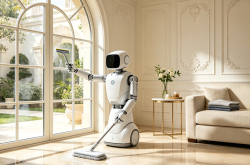
Recently, the MIIT publicly solicited opinions on multiple industry standard revision projects. The proposed standards include technical requirements for humanoid robots in scenarios such as substations and home appliance manufacturing. In home appliance manufacturing, several domestic smart home appliance companies are already using humanoid robots for operational tasks in smart factories, making it particularly important to establish assessment standards for the effectiveness of humanoid robots in this industry.
The proposed *Technical Requirements for Humanoid Robots in Home Appliance Manufacturing Scenarios* outlines an assessment indicator system for the operational effectiveness of humanoid robots in home appliance manufacturing scenarios and describes assessment methods. This will provide clear technological development directions for manufacturers and help users more effectively evaluate and optimize the performance of humanoid robots, serving as a reference for their application in other fields. Additionally, standards such as *Service Specifications for Humanoid Robots and Embodied AI After-Sales Service* and *General Technical Requirements for Humanoid Robot Interconnection Systems* are also being developed.
Extreme Heat in Europe Drives Air Conditioner Sales
Several regions in Europe have experienced prolonged extreme heatwaves, breaking temperature records and issuing heat warnings. A research report by Century Securities points out that the current overall penetration rate of air conditioners in the European market is relatively low, and this sudden extreme heat will effectively activate local latent consumer demand, driving a rapid recovery in air conditioner sales and potentially accelerating restocking in offline channels.
Among them, leading air conditioner companies with a global presence and a high proportion of overseas business are poised to benefit. Relevant listed companies include Hisense Home Appliances, which primarily produces and sells white goods such as central air conditioners, household air conditioners, and refrigerators. Through sports marketing, localized operations, and M&A strategies, the company has achieved dual breakthroughs in scale and brand recognition across multiple regions, including Europe, the Americas, and the Middle East and Africa. Sifang Optoelectronics (Four Faith Photonics) provides various sensor solutions for air conditioners, air purifiers, fresh air systems, and integrated air conditioners, including particulate matter sensors, CO2 sensors, formaldehyde sensors, VOC sensors, and integrated solutions based on multiple gas sensors.
Midea's PortaSplit Mobile Air Conditioner Sells Out in Europe
Europe has experienced two rounds of extreme heatwaves, with heatwaves covering multiple Western and Southern European countries, including France, Spain, the UK, Italy, and Portugal, resulting in significantly higher temperatures than usual and breaking several meteorological records. Midea's PortaSplit mobile split air conditioner, custom-designed for European housing installation restrictions and high-temperature demands, has sold out.
Launched first in Germany, this mobile air conditioner sold out for two consecutive summers shortly after its debut, with some secondary market prices reaching twice the original price during certain periods. It quickly expanded to multiple European markets, including France, Italy, the Netherlands, Hungary, and Nordic and Baltic regions, with many areas experiencing "shortages." The PortaSplit features a tool-free installation design, with the outdoor unit secured via a window bracket, allowing users to assemble and disassemble it themselves without damaging building structures or incurring additional installation costs. It retains the structural advantage of split air conditioners with an "external compressor," significantly reducing indoor noise and offering superior cooling performance and energy efficiency compared to ordinary mobile air conditioners. Additionally, it incorporates an air-source heat pump function, serving as an alternative to electric heating in winter, and is marketed as the first "DIY heat pump" for year-round use.
Casarte: From 20 Years of High-End Leadership to AI-Powered Lifestyle Innovation
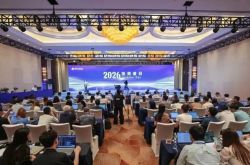
The 11th Casarte Thought Leadership Summit and 20th Anniversary Brand Celebration was held in Chongqing, themed "Technological Evolution for Love (AI) and Long-Term Success," coinciding with the brand's 20th anniversary and carrying profound era significance and industry value. The event reviewed Casarte's achievements over the past 20 years and unveiled the Maestro series equipped with an upgraded AI Eye 2.0. Actress Zhu Zhu, a Casarte brand ambassador, immersively experienced scenarios such as the living room, kitchen, and balcony. In the future, Casarte will continue to focus on users, building a smart living experience that integrates "people, vehicles, homes, and communities."
Since its establishment in 2006, Casarte has embarked on a 20-year journey. Against the backdrop of price competition driven by the "Home Appliances to the Countryside" policy and long-term monopolization of the high-end market by foreign companies, Casarte chose a challenging yet correct path: reinventing high-end home appliances. It invented new categories, set new standards, and led new trends.
Gree Electric Appliances Collaborates with Tsinghua Academy of Arts & Design on Refrigerator Design
The exhibition of course outcomes from the "Brand Strategy and Product Design" program jointly offered by Gree Electric Appliances and the Department of Industrial Design, Academy of Arts & Design, Tsinghua University, has officially launched. The exhibition showcases innovative design solutions for "Gree refrigerators" by instructor Zhu, covering product structure, appearance, functional innovation, technical visualization devices, and interactive videos.
Among them, the "Zero-Motion ICEBOX" ice bar targets Gen Z living room entertainment, featuring a 360° pop-up hatch and frosted glass appearance for an immersive experience. The "Pearl Pet Fresh Home" caters to high-quality pet-owning households, integrating automatic feeding, dry food storage, and fresh food sealing functions for hassle-free pet care. The "Smart Storage" dual-zone refrigerator for urban couples and spouses embodies the concept of "united yet distinct, shared yet personalized," creating a high-end storage space that balances individuality and emotional connection. Meanwhile, a shared refrigerator system serves university dormitories, utilizing identity binding and backend management to establish a short-cycle, high-turnover public cold chain infrastructure.
Yu Hao: Dreame Adheres to Global High-End Strategy
Yu Hao, founder of Dreame, stated at the Summer Davos Forum in Dalian that Dreame will never be a brand that proactively lowers prices or disrupts the pricing system, adhering instead to a high-end strategy.
In recent years, Dreame has focused on three key areas to achieve a relatively complete commercial closed loop (closed loop): first, technology reuse, establishing a three-tier R&D framework; second, unswerving (unwaveringly) promoting globalization, with overseas market revenue accounting for 80% of total revenue; third, maintaining a high-end strategy, enabling full-channel integration of online and offline development.
Li Dongsheng: Aims to Replicate Five TCLs Overseas
At the 17th Annual Meeting of the New Champions of the World Economic Forum, TCL founder and chairman Li Dongsheng revealed plans to "replicate five TCLs overseas," dividing overseas operations into five regional centers: North America, Latin America, Europe, Asia-Pacific, and the Middle East and Africa. Each region will build a complete ecosystem covering R&D, manufacturing, supply chain, brand marketing, and user service, shifting from product exports to capability and capital exports while establishing localized and regional supply chain and manufacturing systems.
In terms of AI applications, TCL pioneered the concept of "AI for Practicality" and has implemented it in core scenarios such as R&D, production, and supply chain management, generating over RMB 2.5 billion in comprehensive benefits through AI applications in the past three years. The company now employs approximately 500 "silicon-based employees" and has deployed over 10,000 intelligent agents.
Fotile's Mao Zhongqun Publishes New Book *Culture of the Heart*
Mao Zhongqun, founder of Fotile Group, is set to release his new book, *Culture of the Heart*, which integrates his 30 years of management practice. In the book's preface, Mao reveals that in 1994, as he was about to graduate from Shanghai Jiao Tong University with a postgraduate degree, his father hoped he would return to help run the family business. Mao resolute (decisively) gave up other opportunities, including studying abroad, and chose to return to his hometown of Cixi to start a business, ultimately venturing into the kitchen appliance sector with range hoods and establishing Fotile Group.
From creating China's first high-end brand in the home appliance industry to introducing traditional Chinese culture into Fotile, Mao eventually proposed a 16-character guideline: "Learn from Chinese philosophy, optimize with Western techniques, integrate East and West, and govern with philosophy." Mao emphasizes that the heart is the soil, culture is the root, and business is the fruit. The "Fotile Cultural System" has been renamed the "Culture of the Heart," asserting that only by starting from the heart and using culture as the foundation can one achieve sustainable development.
Midea Dishwashers Top China's Market for Seven Consecutive Years
At the 2026 Second China Dishwasher Industry Penetration Doubling Plan Promotion Summit hosted by Aowei Cloud, Midea dishwashers received certification for ranking first in cumulative sales in the Chinese dishwasher market for seven consecutive years, thanks to their leading market performance across all channels. As an imported product, dishwashers have a penetration rate of less than 5% in China, compared to over 60-70% in European and American markets.
Since launching its first domestically produced dishwasher in 1997, Midea has been deep cultivation (deeply committed to) the dishwasher sector for 29 years, driving technological innovation and industry standard upgrades through independent innovation. From pioneering hot-air drying technology in 2017 to address water residue on dishes, to leading the development of star-rated disinfection standards in 2020 and obtaining first-level quick-drying certification in 2022, Midea holds 3,137 invention patents and has led the formulation of 61 industry-related standards. Through continuous technological innovation, it creates dishwashers better suited to Chinese households, leading industry trends.
Haier Fresh Air Air Conditioner Solves "Heat, Humidity, and Stuffiness" in One Go
Recently, Haier Air Conditioners hosted a "Big Things in Chongqing" event, where Haier Group vice president and Haier Air Conditioners general manager Guan Jiangyong invited actor Huang Xiaoming, host Yang Lele, and state banquet chef Lin Shuwei to experience how a Haier fresh air air conditioner addresses summer discomforts like "heat, humidity, and stuffiness" in a local hotpot setting.
Behind this event lies Haier Air Conditioners' long-standing product philosophy: not just providing a cooling device but creating air conditioners that truly understand users, scenarios, and lifestyles based on the actual needs of different regions and households.
Ronshen Refrigerator "Freshens Up" the World Cup
After the final round of Group G matches at the 2026 FIFA World Cup in the USA, Canada, and Mexico, Belgium defeated New Zealand 5-1 to top the group and advance to the knockout stage. Throughout the match, the Chinese advertisement "Ronshen Refrigerator, Freshens Up the Field" frequently appeared on perimeter boards during the broadcast. Thousands of miles away in Qingdao, World Cup mini-fan "A Meatball" attended Ronshen's offline viewing event alongside hundreds of fans, culminating in a goal-filled celebration that heightened the emotional connection between the brand and fans.
From its debut at the 2018 FIFA World Cup in Russia to the 2022 tournament in Qatar and this year's event in the USA, Canada, and Mexico, Ronshen refrigerators have completed a "hat-trick" of World Cup sponsorships over a decade. The evolution of its perimeter board slogans holds deeper meaning—from "Ronshen, Ronshen, Quality Guaranteed" a decade ago to today's "Freshens Up the Field," reflecting not only the unpredictability and comebacks on the pitch but also a fundamental shift in product logic: from passive "preservation" to active "freshening."",
Samsung Electronics Cancels Official Account After Ceasing Sales of All Home Appliances
The official WeChat public account of Samsung Electronics recently announced that the account has been voluntarily cancelled and will no longer be used. In May this year, Samsung Electronics declared that it would cease selling all home appliances, including televisions, air conditioners, and refrigerators, in the Chinese mainland market. Previously, the official WeChat public account of Samsung Electronics had been publishing promotional articles about Samsung's home appliances.
Samsung stated that for users who have already purchased Samsung home appliances, the company will continue to provide standardized after-sales service in strict accordance with relevant laws and regulations, including the Consumer Rights and Interests Protection Law and national three-guarantee regulations, to ensure that users' legitimate rights and interests are not affected.
The Shares of breo's Actual Controller Ma Xuejun Were Frozen
breo announced that 595,900 shares held by its actual controller, Ma Xuejun, have been judicially frozen due to a contractual dispute. The announcement emphasized that this would not have a significant adverse impact on the company's control or production and operations. This marks the third major regulatory action taken against breo and its actual controller within just 10 days. breo achieved a total revenue of 195 million yuan in the first quarter of 2026, a year-on-year decrease of 0.79%. The net profit attributable to the parent company was -11.6368 million yuan, with losses expanding by 535.01% year-on-year. As of the market close on June 26, breo's stock price stood at 15.97 yuan, with a total market capitalization of only 1.373 billion yuan, having fallen by approximately 90% from its peak during the listing period.
Previously, Ma Xuejun and seven others received an 'Advance Notice of Administrative Penalty' from the China Securities Regulatory Commission (CSRC) for suspected manipulation of breo's stock. Over a period of 13 months from September 2023 to October 2024, Ma Xuejun's group manipulated stock prices through various means. The CSRC proposed confiscating illegal gains of 10.1183 million yuan and imposing a fine triple that amount, totaling over 40.47 million yuan in fines and confiscations. Ma Xuejun personally bears a fine of 11.8419 million yuan and faces severe measures, including a five-year ban from the securities market and a five-year prohibition on trading.
Disclaimer: All original articles from the Home Appliance Circle are strictly prohibited from being reprinted without authorization.
-
![]()
The Unstoppable Rise of 'Optical Progress and Copper Decline': Sunny Optical’s Strategic Vision for the Next Decade
-
![]()
AI + Going Global in the Second Half: No Intermission for Robot Vacuum Cleaners
-
![]()
The Suffering Endured in E-commerce, Walmart Doesn't Want to Repeat in AI
-
![]()
What Does the Doubling of New Energy Vehicle Exports Mean?
-
![]()
Ghosn: 'Only I Can Save Nissan'
-
![]()
Volkswagen Lays Off 100,000 Employees, The Elephant Sits Down
-
![]()
Expanding Production Capacity! Yutong Optics Acquires Approximately 1.5 Hectares of Industrial Land in Chang'an, Dongguan
-
![]()
Why Is Nokia Making a Comeback in the AI Era?