AI Tutoring: A Crack in the Intense Competition of East Asia
 06/29 2026
 443
443
Author | Li Xiaotian
June seems destined to be a month inextricably linked with exams, academic advancement, and farewells. The recently concluded college entrance examination, the largest unified academic advancement exam globally, although an annual selection process, marks the first true encounter with the AI era. From AI topics in the exam's essay section to evaluations of mainstream AI Agents answering college entrance exam questions, and more recently, AI large models assisting in the detailed task of "choosing a college," AI has indeed penetrated every aspect of this year's college entrance examination.
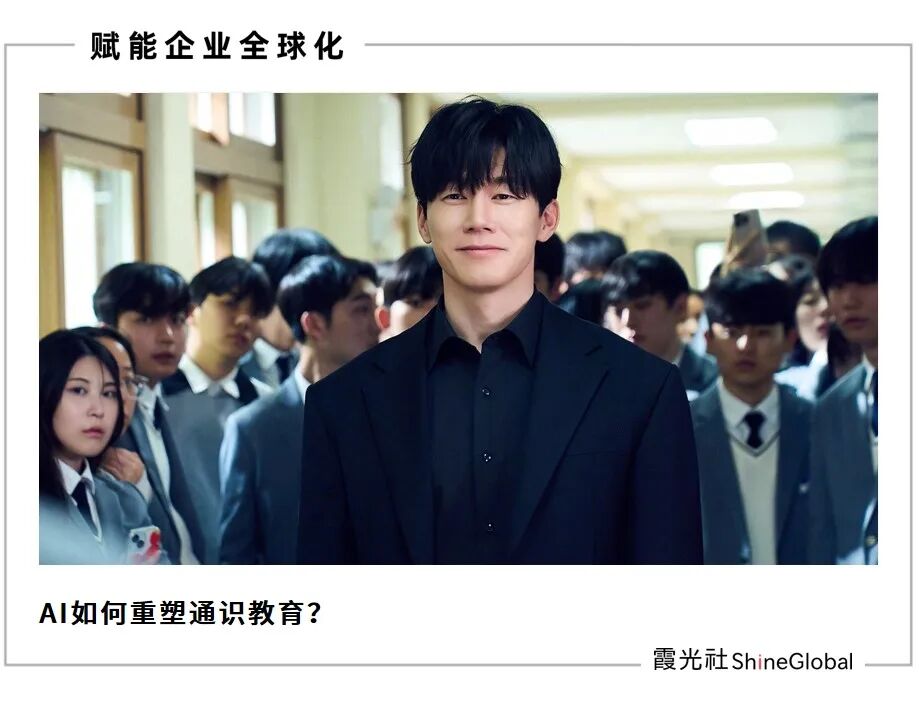
However, the college entrance examination, or education in general, in China and even East Asia, is an ancient and heavy topic. Before cultivating "healthy and well-rounded individuals," education has always been closely tied to complex societal issues such as securing a livelihood, breaking through barriers, and upward social mobility. The recent popularity of the Korean drama "The Iron Fisted Teacher" once again highlights some of the deep-rooted problems in East Asian education: educational resources are increasingly allocated based on background and social class, and in this surreal era, school education is finding it increasingly difficult to safeguard students' physical and mental health.
When society shows cracks and fissures, television dramas tend to build utopias to comfort viewers, much like the fearless "Educational Authority" in "The Iron Fisted Teacher." In the real world, however, entrepreneurs are accustomed to using the power of technology and products to gradually build the world they envision.
In this episode of Xiaguang FM, we speak with such an entrepreneur—Wang Hebei. After eight years in the educational training industry in Shanghai, as the AI era approached, he chose to pursue further studies at Nanyang Technological University in Singapore. Now, he has developed his own AI Agent home tutoring system, Teacher Xiaoqi, focusing on AI agent research and development and the implementation of K12 full-scenario smart learning solutions.
Here are the core topics we discussed. You're also welcome to listen to more fascinating stories on Xiaoyuzhou FM.
The Speakers—
Host: Li Xiaotian
Guest: Wang Hebei, a serial entrepreneur who worked in the educational training industry in Shanghai for eight years and is now developing an AI Agent home tutoring system, Teacher Xiaoqi, in Singapore, which is about to be launched in the market.
AI's Core Reconstruction of Education: It Can Replace Basic Teaching but Not Human Creativity
• Breaking Industry Stereotypes: The notion that "AI cannot replace teachers" is unfounded. Education is essentially intelligence inspiring intelligence. Current AI capabilities in basic teaching surpass those of most ordinary teachers, efficiently handling standardized tasks such as answering questions, tutoring, and explaining knowledge points.
• Fundamental Learning Skills Must Remain: Traditional training in memorization, basic logic, and mathematical reasoning must be retained as the foundation for humans to discern the authenticity of AI-generated answers, avoid being misled by AI, and establish independent judgment.
• Irreplaceable Human Core Abilities: Imagination, empathy, creativity, and independent critical thinking. AI is merely an efficient tool for execution, aiding in implementation but incapable of autonomously generating high-level thinking and value judgments.
AI Brings Educational Equity: A Decade-Long Window of Fairness, Followed by a Potential New Digital Divide
• Breaking Class Resource Barriers: Traditional high-quality private tutoring and personalized coaching are expensive and accessible only to a few high-income families. AI democratizes access to premium educational resources at a very low threshold, significantly narrowing the educational information gap between urban and rural areas and different social strata, and alleviating the intense competition in East Asian education.
• Short-Term Fairness Dividend Period: Currently, inclusive AI technology is widely available, allowing students from ordinary families and sink markets (lower-tier cities or rural areas) to benefit equally. This represents a golden decade for ordinary people to achieve educational success.
• Long-Term Risk of New Division: In the future, high-end AI agents and top-tier models may become paid and restricted, turning wealth disparities into "intelligent resource gaps" and creating a new educational digital divide.
The Deep-Seated Dilemmas of East Asian Education: The Exam System Builds Foundations but Suppresses Individual Growth
• The Dual Nature of Chinese Education: The system of rote learning and exam-taking cultivates solid foundational skills and logical thinking. However, the long-term habit of "delayed gratification" often causes individual interests and self-worth to be sacrificed for academic advancement, easily leading to spiritual emptiness and loss of self in youth.
• No Perfect Global Education Model: Domestic exam-oriented rote learning, Singapore's foundational education with diverse development, France's humanistic freedom, and America's happy education each have their trade-offs, catering to different societal development needs. There is no absolute best solution.
• The Core Direction of Future Education: Abandoning a single evaluation system and embracing the philosophy of "letting flowers be flowers and trees be trees," prioritizing the fulfillment of individual personalities, respecting children's nature and diverse talents, and achieving diversification growth (diversified development).
Differences in Entrepreneurial and Educational Markets Between China and Singapore: Singapore is More Suitable for AI Education Startups
• Domestic Entrepreneurial Environment: Capital is aggressive, and the competition is extremely fierce. Investments heavily favor candidates from prestigious universities, big companies, and those with impressive backgrounds. Entrepreneurship involves multi-dimensional competition, making it difficult for startups to gain a foothold.
• Singapore's Entrepreneurial Environment: Capital is pragmatic and conservative, focusing on solving real problems. Information flows efficiently, the elite circle is open and inclusive, policies are transparent, and the threshold for campus pilots is low. Ordinary people can access resources and opportunities through effort, making it suitable for AI education startups to thrive.
Guidelines for All Parties in the AI Era: Universal Cognitive Upgrade, Rejecting Mental Laziness
• Parents: Actively embrace AI tools but clearly understand their limitations. Do not completely let go or blindly rely on them; use AI to assist in family education.
• Students: Use AI as a supplementary tool, resolutely avoid mental laziness, continuously strengthen foundational skills and independent thinking abilities, and learn to discern and optimize AI-generated content.
• Educators: Must continuously learn about AI, maintain curiosity and the ability to iterate. Educators who are complacent and reject new things will fail to guide students to adapt to the AI era and will eventually be eliminated by the industry.
-
![]()
Can Chinese Automakers Pose Such Fierce Competition? Mercedes-Benz Cancels Year-End Bonuses for 90,000 Staff, Volkswagen to Lay Off 100,000 Employees...
-
![]()
Anhui and Zhejiang Vie for the Crown in New Energy Vehicle Dominance: Who Will Prevail?
-
![]()
Tmall 618 Rankings Unveil Trends Transforming the Home Appliance Industry
-
![]()
This Week in Home Appliances: Overseas Boom! Midea, TCL, Dreame Break Through; Casarte, Fotile, Gree, Hisense, Ronshen Lay Foundations
-
![]()
Aiming to Be the Alphard of the Electric Era! After D99's Launch, Leapmotor Will Release All-New Technologies to Pave the Way for a High-End Brand | Mirrormedia Pro
-
![]()
Over 5,200 Orders Placed on First Day: Can the Qijing GT7, Priced from 209,900 Yuan, Compete with the Z7 and SU7? | Mingjing Pro
-
![]()
AI Predicting the World Cup? It’s Time to Stop Insulting AI
-
![]()
iPhone 18 Pro Memory Costs Soar Threefold! Apple Seeks Trump Administration Approval for CXMT Memory Chips