Free is Still Available, But Only Enough for Chatting—AI is Learning to Ask You for Money
 07/01 2026
 413
413
▲All images in this article are from the internet. Please contact us for removal if there is any infringement.
The cost of 'free' is becoming tangible in the tens of billions.

This article was first published in Shadow Memo by Mo Yingsheng
When 345 million people 'free-ride' on tens of millions in daily computing costs, the price of 'free' is manifesting in the hundreds of billions.
In the waning days of June, the AI circle resembles the 'eve of paid services' from the video site era.
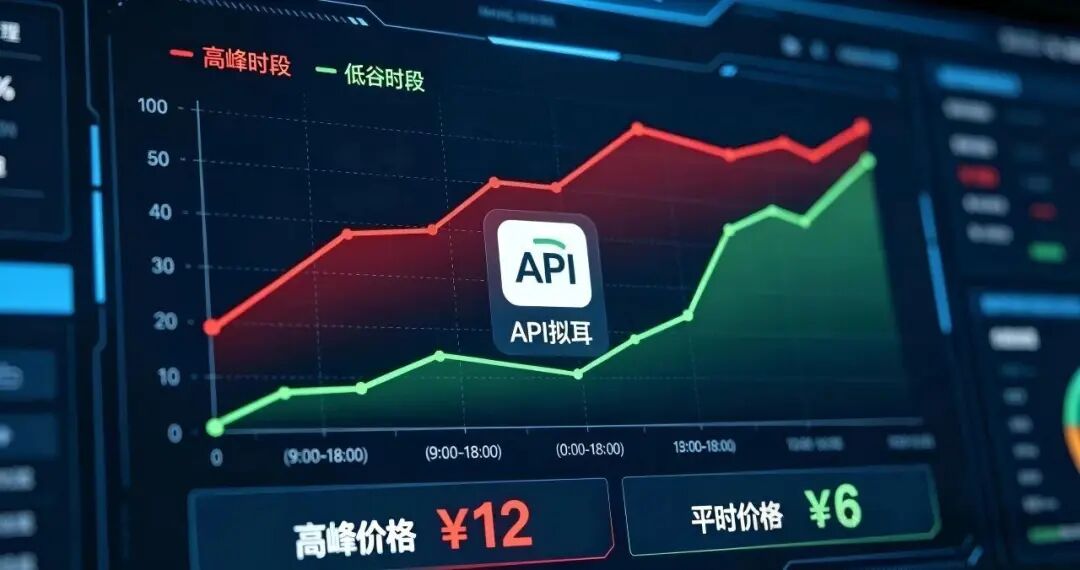
First, DeepSeek announced that the official V4 version would launch in mid-July, with API call prices doubling during peak hours.
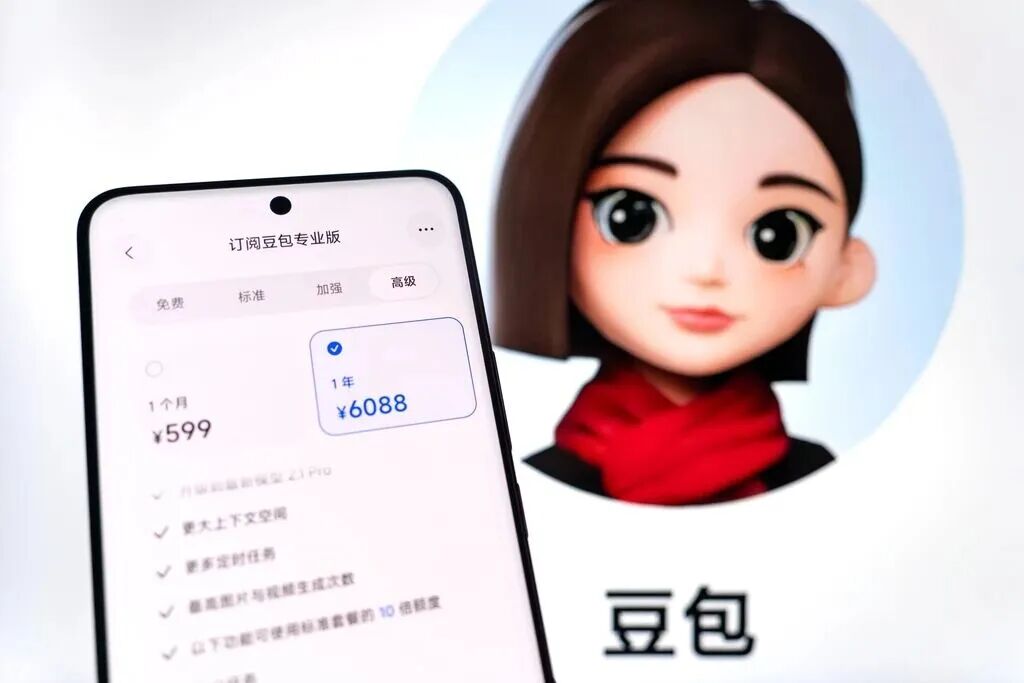
Immediately after, ByteDance's Doubao introduced three-tier paid subscriptions: Standard at 68 RMB/month, Enhanced at 200 RMB/month, and Professional at 500 RMB/month.
Looking back, Zhipu AI has raised API prices three times this year, with increases exceeding 30% across all models. Tencent Cloud, Alibaba Cloud, and Baidu Intelligent Cloud have also raised prices for AI computing and related services.
An undeniable fact is emerging: The days of free AI are numbered.

From 'Free Frenzy' to 'Collective Charging' in Just Two Years
In 2024, the domestic large model market was a 'sea of free.' Wenxin Yiyan was free, Doubao was free, Kimi was free, Tongyi Qianwen was free, DeepSeek was free...
Major vendors, like ride-hailing apps subsidizing users in their heyday, used zero barriers to attract waves of users. The logic was clear: Capture the market first, then monetize—a classic script from the internet era.
But AI is not the internet.
By 2026, the script flipped. On May 4, Doubao quietly updated its paid subscription plan on the App Store, with three tiers shattering two years of 'free frenzy.' On June 24, the Doubao Professional version officially launched.
Almost simultaneously, Baidu announced the merger of multiple Wenxin Yiyan websites under a unified pricing strategy—remaining free. The industry's divergence was clear.
But 'continue free' players are dwindling. Kimi now offers membership tiers from 49 RMB to 199 RMB/month; Zhipu Qingyan's membership is priced between 30 RMB and 60 RMB; MiniMax has also launched a paid membership system.
While DeepSeek hasn't directly launched consumer subscriptions, its API's peak-valley pricing mechanism essentially 'raises prices indirectly' for high-frequency users.
Even OpenAI is buckling. In Q1 2026, OpenAI burned ~3.7 billion USD in cash, averaging over 1.2 billion USD in monthly spending.
Full-year 2025 revenue was ~13 billion USD, but total costs and expenses hit 34 billion USD, resulting in a net loss of 39 billion USD.
More users, bigger losses. This counterintuitive formula is becoming the AI industry's collective nightmare.
Why Can't AI Be 'Free + Ads' Like WeChat or Douyin?
The answer lies in cost structure.
Traditional internet products are about replication: One codebase, one server setup, serving 100 million or 1 billion users with marginal costs approaching zero.
WeChat, with over 1 billion daily active users, has negligible per-user operational costs.
But large models are about computation. Every user query, image generation, or video render requires real GPU cycles.
A cost breakdown shows hardware depreciation accounts for 58% of Doubao's per-inference cost, with power consumption at 29%. Nearly 90% of costs per conversation are real resource consumption, not infinitely reusable infrastructure.
These numbers make the 'burn rate' tangible:
As of March 2026, Doubao's large model averaged 120 trillion daily token calls—1,000x its initial launch volume in May 2024.
At ~2–4 RMB per million tokens in input costs, ByteDance burns 200–500 million RMB daily in GPU farms, with annual computing expenses conservatively exceeding 30 billion RMB.
Yet Doubao's daily revenue is under 1 million RMB.
This isn't about ByteDance wanting to charge—it's about the computing bills becoming untenable.
ByteDance paid a heavy price. Its 2025 net profit fell over 70% YoY, driven by surging AI chip procurement and model R&D in H2.
Its 2026 capital expenditure plan exceeds 200 billion RMB. Third-party estimates put Doubao's monthly net loss at 210–270 million RMB.
In 2025, domestic consumer-facing general large model apps collectively lost over 18 billion RMB.

Chip and Storage Shortages Force AI to Charge
Behind soaring computing bills lies rampant hardware price hikes.
First, chips. NVIDIA H100's one-year lease price jumped nearly 40%. In China, Tencent Cloud, Alibaba Cloud, and Baidu Intelligent Cloud collectively raised prices, with AI computing products up 5–30%.
Huatai Securities reports storage now accounts for ~50% of AI chip costs. NVIDIA's B200 manufacturing cost is ~6,400 USD, with HBM making up ~45%.
Then storage. Bernstein estimates traditional DRAM prices surged ~4.5x from Q3 2025 to Q2 2026.
Storage prices doubled in Q1 2026. Industry insiders describe the supply-demand imbalance as 'a once-in-a-century' crisis.
Why such extreme hikes? AI firms rely on these chips to train and run large language models. As model parameters scale and KV Cache balloons, AI chips need larger HBM capacities. But capacity expansion is constrained by semiconductor fab construction costs running into billions of USD.
The six tech giants' combined 2025 capital expenditures exceeded 350 billion USD, with 2026 projections topping 800 billion USD.
Experts attribute the hikes to AI-driven demand. Four factors drive prices: 'Reverse' hardware cost surges, demand shifting from training to inference, business models pivoting from 'market capture' to 'profitability,' and strategic scarcity of computing resources.
Industry-wide price hikes are inevitable as firms transition from 'burning cash for scale' to 'commercial sustainability.'
The era of cheap computing is ending.
Three Unavoidable Reasons for AI's Paid Models
First, costs wildly outpace revenue.
Large models have permanently positive marginal costs. More users = more calls = exponentially higher computing bills.
OpenAI's 39 billion USD annual loss and Doubao's daily tens of millions in costs vs. sub-1 million RMB revenue prove a harsh truth: Purely free AI is commercially unviable.
This isn't a flawed business model—it's a cost structure that doesn't allow it.
Second, upstream costs keep climbing.
AI chip and storage price hikes directly raise large model operational costs. When upstream hardware is in a seller's market, downstream API and subscription prices can't stay low indefinitely.
This isn't vendor greed—it's cost-side pressure.
Finally, capital market patience is wearing thin.
The 'burn cash for market share' logic falters in a capital winter. When investors demand 'When will you profit?', firms must present monetization plans.
DeepSeek recently closed a ~51 billion RMB Series A round at a ~400 billion RMB valuation, but even this can't sustain endless free subsidies.

Paid vs. Free: Who Uses What?
The question remains: Will free models persist?
Answer: Yes, but only for basic features.
This isn't speculation—it's already happening.
Doubao's strategy is emblematic: Free users still get new models, features, and experience upgrades. Existing functions remain free.
For most daily life scenarios, Doubao's current features suffice. But for stronger performance (Doubao 2.1 Pro), dedicated priority computing, 24/7 instant responses, and 100,000-word document parsing—sorry, pay up.
Kimi follows suit. Free users get 1 deep research, 3 OK Computer, and 3 PPT generation uses monthly.
Paid users unlock higher Agent usage quotas and 4x faster Agent generation.
Zhipu AI's GLM Coding Plan adopts a similar Lite/Pro/Max tier structure.
Industry analysts expect domestic mainstream general large models to roll out tiered paid services within 1–2 years, forming a unified 'basic free + advanced productivity paid' paradigm.
In other words, free won't vanish—but what it can do will shrink.
Want to chat, search, or write simple copy? Free works.
Need data analysis, professional design, code development, or batch file processing? Pay up. AI vendors are clearly separating 'entertainment' (free) from 'productivity' (paid).
This raises an unavoidable question: Will users actually pay for AI?
A small-scale survey by the Beijing News AI Institute found 20 of 25 respondents refused to pay. After Doubao launched paid tests in May, monthly active users dropped from 345 million to 330 million—a 6+ million loss in one month.
On the surface, payment willingness looks bleak.
But data needs stratification. Tencent Research's 'Netizens' AI Consumption Survey' shows 9.8% of AI users pay overall, but daily active users have an 18.5% payment rate—20x higher than monthly active users (0.9%).
Monthly payments cluster in the 30–100 RMB range (44.7%).
This shows payment willingness tightly correlates with usage frequency—heavy users drive revenue.
Critically, an Epoch AI/Ipsos survey found only 38% of free AI tool users in the workplace use AI for work; this rises to 58% for self-paying subscribers and 76% for company-paid users.
Paying doesn't hinder usage—it deepens it.

Three Reasons Users Pay
1. Efficiency Premium: When AI evolves from 'chat toy' to 'productivity tool,' users clearly perceive efficiency gains.
Is a model that reliably handles enterprise-grade development tasks or parses 100,000-word documents without errors worth 68 RMB/month? For heavy users, yes.
2. Experience Upgrade: Free versions suffer from peak-hour queues, slow responses, and truncated long texts; paid versions offer dedicated priority computing and instant 24/7 responses.
In time-is-money workplaces, this experience gap compels some to pay.
3. Corporate Buyers: When AI becomes workflow-embedded productivity infrastructure, individuals aren't the payers—companies are.
This explains why Anthropic's Claude Code hit 1 billion USD in annualized revenue in six months. Enterprise clients' payment capacity and willingness dwarf individual users.
With computing bills in the hundreds of billions, chip/storage prices climbing, and capital markets rejecting 'growth-at-all-costs' narratives, charging is the only path forward.
But there's no need for pessimism.
Free won't disappear—it will retreat to its rightful place: Universal basic services.
The truly high-value capabilities—the ones that write code, analyze data, or tackle complex tasks—will be priced like Office or Photoshop.
This marks industry maturity. When technology shifts from 'novelty' to 'utility,' from 'toy' to 'tool,' paid models become inevitable.
As one commentator put it: 'The era of free AI is over. But the era of good AI might just begin.'
All we can do is cherish the remaining 'free-ride' days before the gates close.
And ask: When payment day comes, how much will you pay for AI?
I know you're reading 
-
Meituan Triumphs with Domestic Computing Power: Running a Trillion-Parameter Model, Exploration Initiated in 2023
-
![]()
Embodied Intelligence and Mobile Robots: Why the Intensified Focus on Factories This Year
-
"Chip" Radiance Persists: Is the Semiconductor Sector Still a Magnet for Investors?
-
![]()
Robots Embark on 200-Hour Factory Trials: Is AI Truly Ready for Industrial Deployment?
-
![]()
Another Bionic Robot Company Secures $7 Million in Funding
-
![]()
UBTECH U1 Launch: Pre-sale Excitement Creates Unrealistic Hopes, Resulting in Disappointment at the Event
-
![]()
Accounting Manipulations Inflate Profits! 2 Billion Yuan Cumulative Loss Over Six Years—How Long Can the AI Narrative Sustain?
-
![]()
Food and Beverage Companies Rush to AI: Is It a Trend or a Pitfall?