Food and Beverage Companies Rush to AI: Is It a Trend or a Pitfall?
 07/01 2026
 575
575
Are the aggressive cross-industry moves by listed food and beverage companies into AI and semiconductor-related sectors driven by trend-chasing speculation or a practical pursuit of growth opportunities?
Monosodium glutamate powerhouse Lotus Holdings has launched its own computing power leasing platform; concentrated fruit juice leader Andly plans to gain control of a hardware company; and Jinzi Ham continues to invest in the chip sector, all indicating a demand for diversified operations and new growth engines.
However, consumer goods companies venturing into the tech sector face inherent weaknesses: a general lack of core technological expertise in semiconductors and AI, insufficient specialized technical talent, and limited access to upstream and downstream supply chain resources. This makes it challenging for new ventures to generate effective synergies with their existing main businesses.
While AI and semiconductors are high-growth sectors, direct entry by companies like Lotus Holdings and Andly imposes dual operational pressures. On one hand, large-scale investments tie up working capital and require sustained follow-up funding for new ventures. On the other hand, diversification away from core operations places extreme demands on cross-industry management capabilities and the profitability of new businesses, posing potential risks of resource diversion and negative impacts on existing main businesses.

Collective Cross-Industry Expansion
As the AI sector continues to gain momentum, listed companies in the food and beverage industry are increasing their presence through three main strategies: taking minority equity stakes, executing large-scale acquisitions, and engaging in in-depth operations through self-built industrial chains.
Bycoen (300146.SZ) exemplifies a cautious, minority stakeholder approach.
The company recently announced plans to invest RMB 50 million in Yuanli (Beijing) Semiconductor Technology Co., Ltd., acquiring a 0.97% stake.
According to public records, Yuanli Semiconductor, established just three years ago, focuses on developing modular AI inference chips using Chiplet technology, offering cost-effective computing solutions for edge-based large models.
In contrast, Andly and SDIC Zhonglu have made substantial commitments to AI.
In mid-June, Andly revealed plans to spend RMB 600-800 million to acquire control of Ningbo Yongqiang Technology, formally entering the semiconductor materials sector.
Prior to this, another concentrated fruit juice leader, SDIC Zhonglu, invested RMB 6 billion to acquire full ownership of China Electronics Engineering Design Institute, focusing on designing and constructing semiconductor facilities and computing centers.
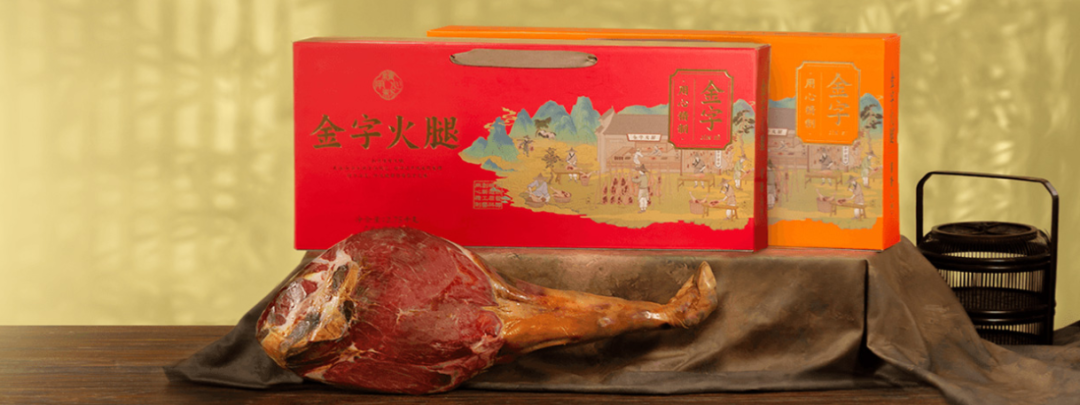
Beyond these, Jinzi Ham and Lotus Holdings have ventured into the computing power sector through in-depth operations.
In October of the previous year, Jinzi Ham, through its subsidiary Fujian Jinzi Semiconductor, invested in Zhongsheng Micro, acquiring a 9.0909% stake and indirectly entering the R&D and design of core electrical chips for high-speed optical modules.
Among food and beverage companies, Lotus Holdings (600186.SH) was an early entrant into the computing power field, entering the computing leasing sector in 2023. In May of this year, it further increased its stake in Shanghai Jieyue Xingchen Intelligent Technology Co., Ltd. by no more than RMB 300 million—a leading domestic AI large model enterprise. Additionally, its subsidiary Lotus Tech acquired control of Shenzhen Newphase New Materials in April, entering the ABF substrate adhesive film niche and expanding its business scope from computing leasing to semiconductor materials and large model development, gradually establishing a comprehensive computing industry chain.
Most of these investment projects are still in the implementation or advancement stages and have yet to yield significant short-term benefits. However, fueled by the AI computing power and semiconductor concept rallies, along with market speculation about second-growth curves, the stock prices of related companies have surged in the short term. Since June of this year, Jinzi Ham, Lotus Holdings, and Andly have all seen their stock prices rise by over 40%.
Drivers of Transformation
Listed food and beverage companies, traditionally unrelated to AI, are now flocking to the sector primarily because growth in their core businesses has plateaued, necessitating transformation to find new growth drivers.
Lotus Holdings has long depended on monosodium glutamate products. After restructuring in 2019 and the entry of Guohou Capital, the company overhauled its operational strategy, gradually reducing dependence on monosodium glutamate and actively exploring and investing in computing-related new businesses.
By 2025, the company's computing service revenue reached RMB 122 million, up 50.62% year-on-year. However, this business contributed only 3.53% to total revenue, offering limited performance impact.
Andly's foray into AI hardware also stems from growth bottlenecks in its traditional business. The company has stated that despite its global leadership in concentrated fruit juice, the mature fruit processing industry has hit a growth ceiling, necessitating a second-growth curve.
Over the past three years, Andly's (605198.SH) revenue has contracted, rebounded, and then declined again, with its gross margin dropping from 32.99% in 2023 to 24.26% in 2025.
Jinzi Ham's rationale for entering the AI computing power sector mirrors Andly's. In recent years, the cured meat industry has faced overcapacity and slowing consumer demand, limiting growth prospects. After a change in actual controller to Zheng Qingsheng, the company has increased its AI sector investments, signaling a clear business transformation.
Multiple Risks
While the AI sector offers vast growth potential, food and beverage companies entering this space face significant operational risks. Take Andly as an example: with 30 years in concentrated fruit juice but no technical or talent reserves in integrated circuits or electronic interconnect materials, its cross-industry move represents a high-risk venture.
Following the acquisition, most of the company's available funds will be tied up, while the target, Ningbo Yongqiang Technology, is still ramping up production and requires sustained investment, making short-term profitability unlikely.
SDIC Zhongru (600962.SH), backed by state-owned resources and synergies from its parent company SDIC Group, faces relatively manageable integration challenges. However, the semiconductor engineering business is vast, and prolonged resource allocation risks marginalizing its traditional concentrated fruit juice operations.
Jinzi Ham (002515.SZ) has openly acknowledged significant shortcomings in its cross-industry布局 (retained as "layout" for context): the company lacks industry experience and technical resources, and its previous cross-industry attempts have yielded subpar results.
Its current investment target, Zhongsheng Micro, remains unprofitable, and the acquisition premium is high, raising the possibility of future goodwill impairment.
Bycoen has adopted the most conservative investment strategy, explicitly framing this investment as a window to understand cutting-edge technologies and positioning it as a purely strategic financial investment.
Lotus Holdings, which has independently ramped up investments in computing power and large models, faces substantial performance pressures. Its capital increase target, Shanghai Jieyue Xingchen, is currently operating at a loss; while its computing service revenue surpassed RMB 100 million last year, net losses neared RMB 30 million. Coupled with the early termination of several large contracts, overall implementation has fallen short of expectations.
Thus, food and beverage companies crossing into AI and semiconductor industries currently face long-term commitments to high capital costs and operational uncertainties.
-
【In-depth】Current Market Status and Key Enterprise Analysis of Confocal Fluorescence Microscopes in 2026
-
![]()
Avita Releases Updated Prospectus: Projecting Over 120,000 Vehicle Sales and Over 60% YoY Revenue Growth by 2025
-
![]()
Navigating the Electric Wave: Mercedes-Benz Embraces the Three-Pointed Star, Audi Sheds the Four Rings
-
![]()
BYD Delegates Power, Geely Centralizes It: Which Transformation is Better Suited for the Future?
-
![]()
National Standard for Agent Interconnection Released: Why Might the Physical World Still Be Unreachable Despite Unified Interfaces?
-
![]()
Mobile Imaging: As Capabilities Grow, So Do the 'Add-Ons'—Why?
-
![]()
The imaging capabilities of smartphones are continuously improving, but why are there more and more 'add-ons' for shooting?
-
![]()
Alibaba's AI 'Crucible': Navigating Overseas Blockades, Organizational Upheaval, and the Lag in Commercialization