Big Company HR Departments Are Overwhelmed: Young Job Seekers Harness Agents, AI-Assisted Interviews Spark Controversy
 07/01 2026
 543
543
HR professionals are now conducting interviews with the aid of AI, and simultaneously, you, the interviewee, might also find yourself facing an AI interviewer.
If you've been scrolling through Douyin lately, you've likely stumbled upon a particular type of video: the interviewee, donning wireless earphones, sits before a computer screen displaying a video interview window alongside an AI chat interface (or an AI app on their phone placed strategically in front of the screen).
For every query posed by the interviewer, the AI swiftly transcribes, analyzes, and crafts a response in real-time, which the interviewee then articulates, smoothly and seamlessly.
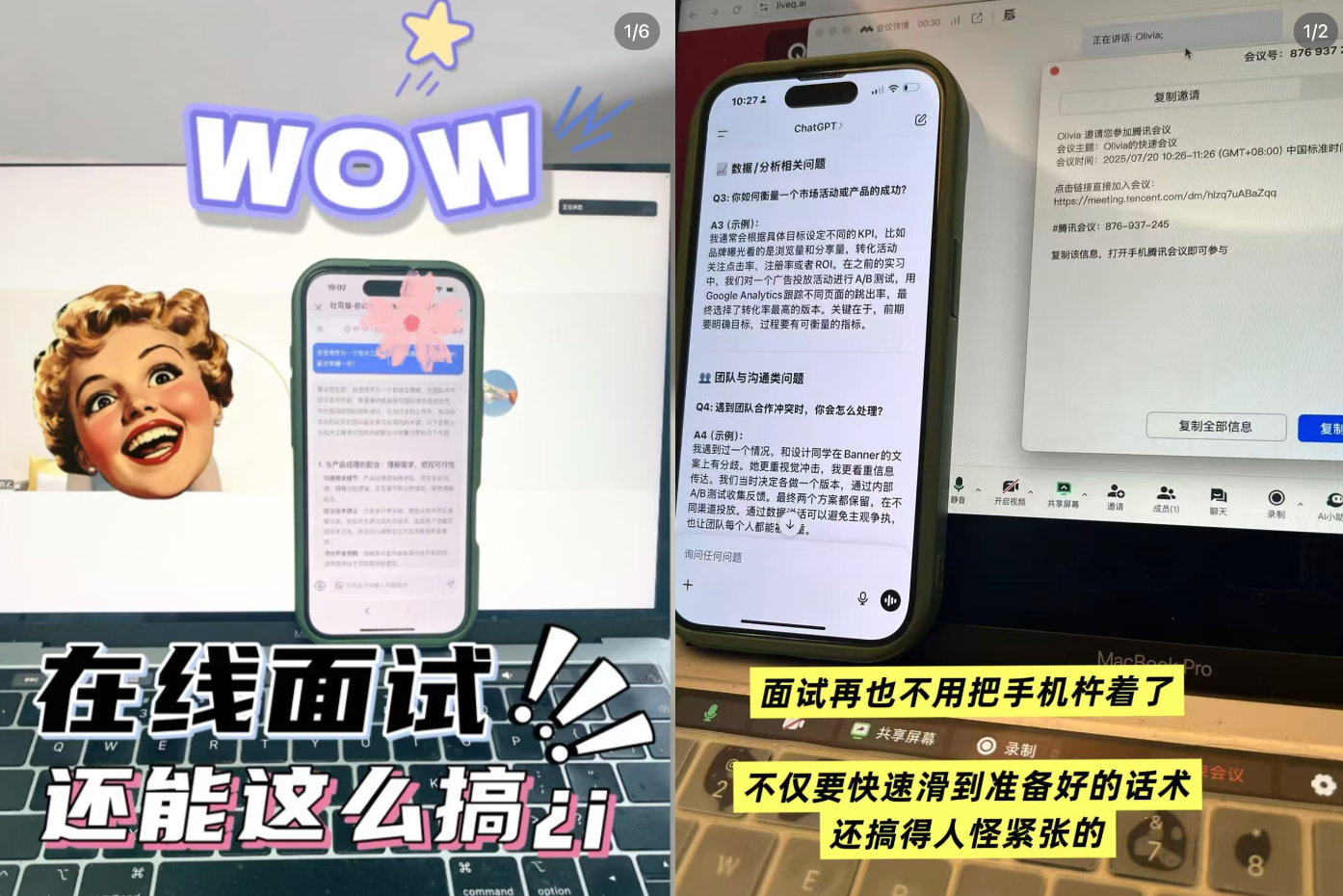
Image Source: Xiaohongshu
With AI's assistance, phone interviews have essentially become a formality... This trend is not confined to China; it's happening globally, with even more astonishing outcomes: After being laid off, Santiago Fernández leveraged Claude Code to establish an AI-driven job-hunting pipeline named career-ops, which sifted through over 740 job listings, generated over 100 tailored resumes, and ultimately landed him an offer as the Director of Applied AI.
The phenomenon of AI-assisted job hunting is sweeping through the workplace in an unprecedented manner.
Traditionally, interviewers would assess a candidate's capabilities based on their resume and on-the-spot performance. Candidates needed to think on their feet, mobilize their knowledge, and manage their micro-expressions—a test of comprehensive qualities, at least in theory.
However, the introduction of AI has disrupted this balance.
Current AI interview assistance tools have formed a comprehensive technological ecosystem: First, real-time speech recognition instantly transcribes every word spoken by the interviewer into text. Then, through semantic understanding and intent analysis, the AI discerns the true purpose behind the interviewer's questions—whether it's probing technical depth, conducting a stress test, or laying a trap.
Next, knowledge retrieval and answer generation come into play. Based on your resume, job description, and an industry knowledge base, the AI constructs a structurally sound and precisely worded response. Finally, this response is rephrased in a conversational tone, complete with transitional phrases like "Well, I'd like to approach this question from three angles," tailored specifically for you.
The entire process, from the interviewer's question to the answer appearing on your screen, takes a mere two to five seconds. As long as you maintain a natural demeanor and avoid fidgeting, you can ace the interview.
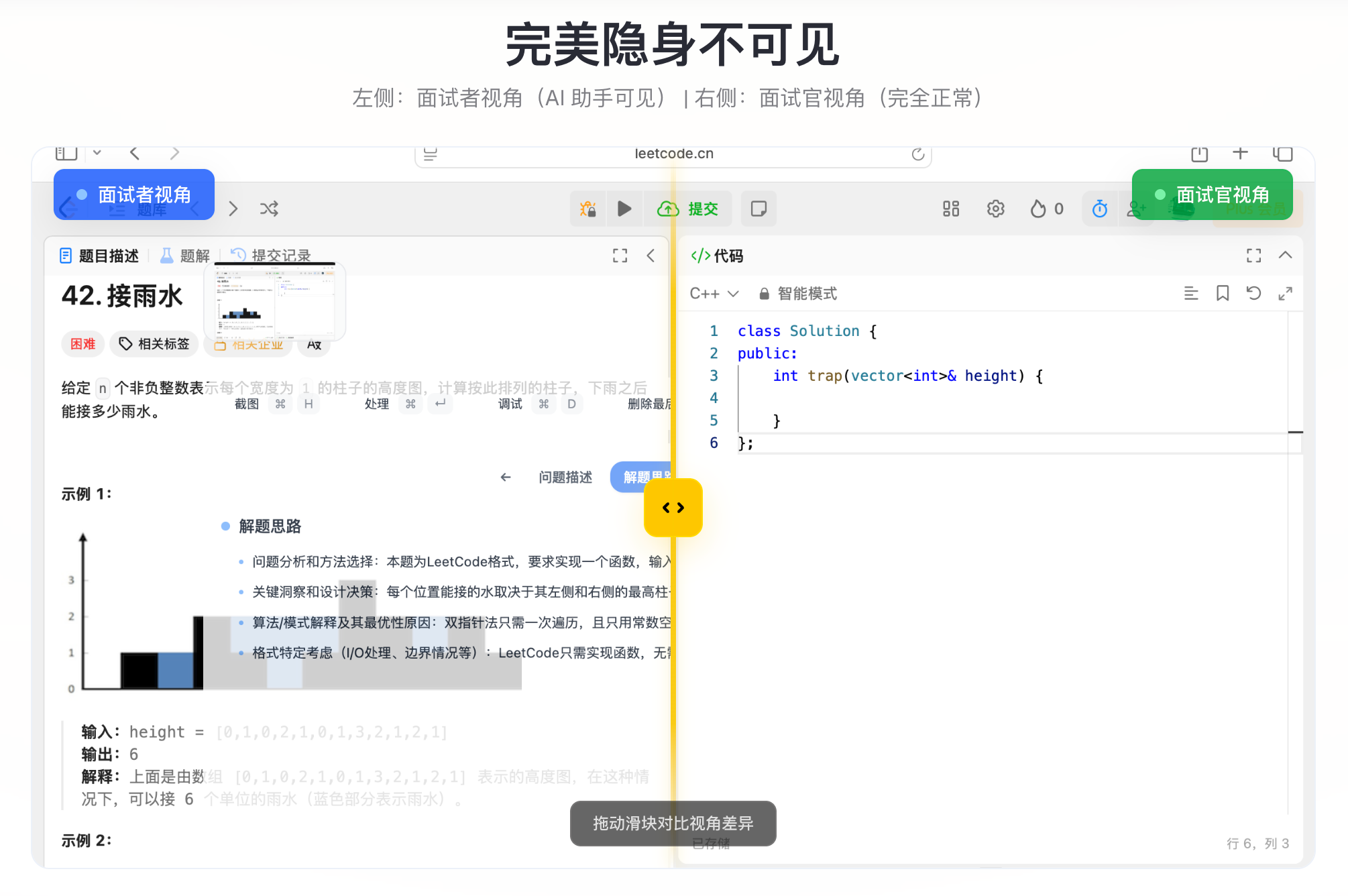
Image Source: gankinterview.cn
Undoubtedly, the quality of AI-generated responses far surpasses spontaneous human answers. Humans tend to get nervous, forget their lines, provide irrelevant answers, or expose knowledge gaps under pressure.
AI, on the other hand, consistently follows a clear "total-subdivision-total" structure, supports its points with specific data and cases, and concludes with a thought-provoking question for the interviewer, showcasing what is purported to be depth of thought.
There was once a widely circulated interview tip that advised: When the interviewer asks, "Do you have any questions for us?" at the end, you must pose a high-quality question—it's a bonus point. Now, AI can automatically generate three high-quality questions from different dimensions based on the entire conversation context, and you simply select one to read.
The skills candidates once spent countless hours honing have become obsolete in the face of AI, transforming the competition with another candidate into a battle against the entire internet knowledge base.
For HR professionals, the challenge has become even more daunting. When all candidates' answers exhibit remarkable consistency and high quality, the evaluation of "excellence" loses its significance. It's akin to an exam where everyone has access to the standard answers—the scores themselves no longer serve as a reliable criterion.
Some HR professionals have vented their frustrations on Xiaohongshu: "I've encountered numerous candidates during interviews who are suspected of using AI assistance. It's easy to get blacklisted, and it renders subsequent interviews pointless." ByteDance interviewers have also echoed similar sentiments on the platform, lamenting the prevalence of AI cheating.
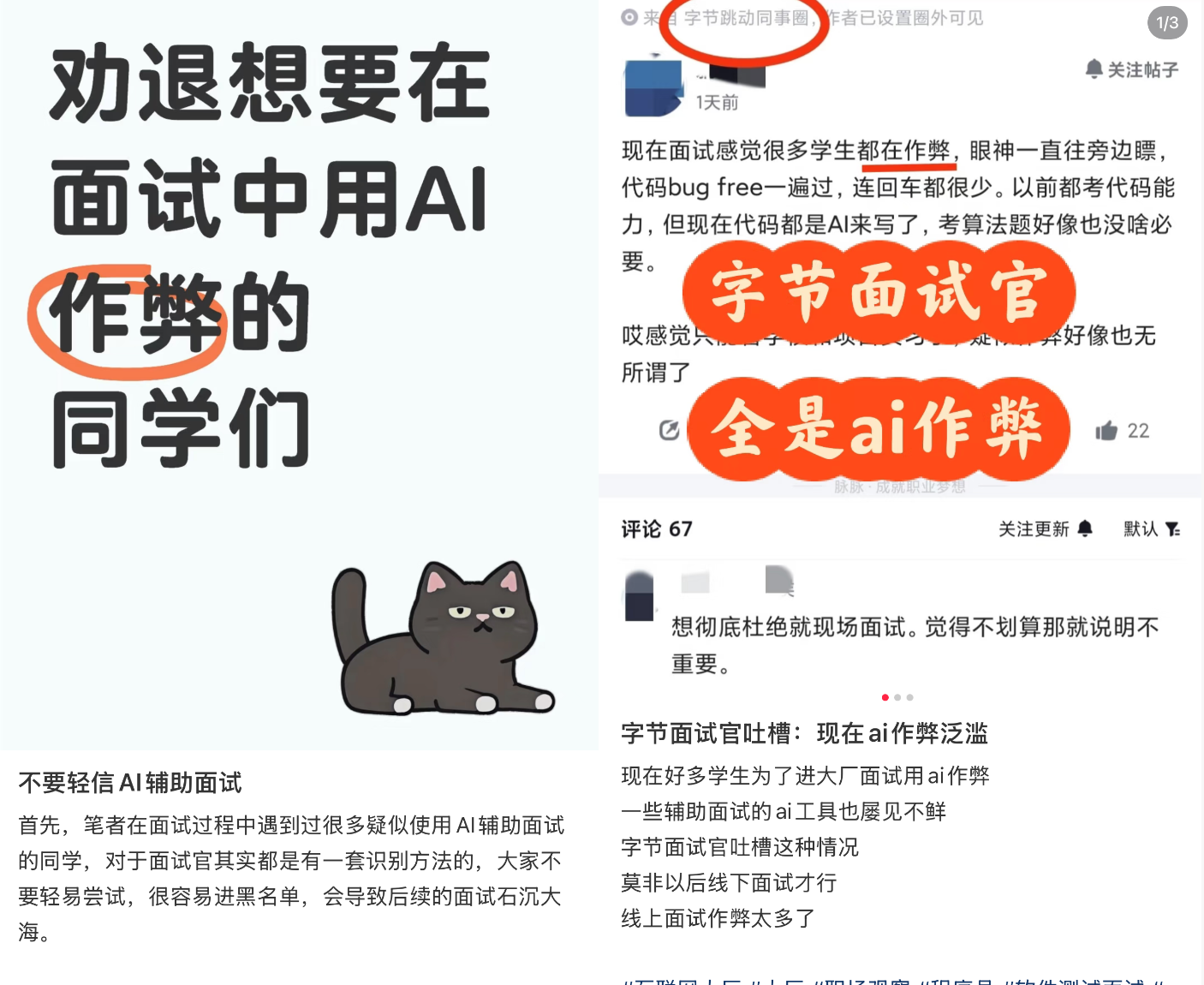
Image Source: Xiaohongshu
However, when candidates are not proficient in using AI, amusing flaws can emerge, such as reflections outside the frame revealing the chatbox on a second screen, or their gaze clearly reading rather than contemplating when answering questions. When the interviewer suddenly poses an unscripted question, the candidate may freeze... As long as you're not embarrassed, the embarrassment is someone else's.
While candidates are arming themselves with AI, companies are also leveraging AI to screen candidates, and they started earlier and on a larger scale.
Amazon is arguably the company that has made the most significant strides in using AI to revolutionize recruitment globally. As early as 2018, it was forced to abandon an internal AI resume screening tool after it was discovered to systematically discriminate against female candidates (the algorithm had "learned" from historical data that males were preferred). This dark chapter remains a classic cautionary tale to this day.
After a period of inactivity, in April of this year, Amazon unveiled Amazon Connect Talent, an AI recruitment agent capable of conducting structured voice interviews autonomously around the clock and directly scoring candidates.
Google and ByteDance have taken a different approach. Based on the actual processes of the 2024-2025 recruitment season, both companies have fully integrated AI into the screening process: initial resume screening is automatically scored by ATS (Applicant Tracking System) based on JD keywords, online written tests are entirely graded by the system, while eye-tracking, screen monitoring, and abnormal behavior recognition are conducted through the front camera.
Google candidates are required to complete two algorithmic questions within 90 minutes, with zero human intervention throughout the process. However, the critical final interview round is still dominated by human interviewers, forming a "hybrid model" where AI efficiently screens candidates and humans make high-quality decisions.
Companies like Meituan, Tencent, Baidu, and Geely Automobile generally opt for China's domestic Niuke AI Interview System as the standard for technical positions and campus recruitment. This system is powered by a vertical large model trained on over 30 million real interview and exam data points, supporting simultaneous online interviews for over 100,000 people.
Thus, an incredibly surreal scenario has emerged: companies use AI to interview, and candidates use AI to answer—two AIs are engaged in a proxy war at both ends of the video call, while the real conversation partners, HR and the candidate, have become human interfaces for their respective AI tools.
Logically, companies have transformed recruitment into an algorithmic game, and candidates using algorithms to play the game makes perfect sense. However, since candidates can use AI to cheat, companies can naturally use AI to detect cheating, and the intensity of this arms race is escalating at a visible pace.
For instance, in Google and ByteDance's online written test systems, algorithms track candidates' gaze trajectories—in other words, while you think you're outsmarting AI, every micro-expression, gaze shift, and abnormal pause is also being scrutinized and judged by another AI.
Where there's demand, there's supply. AI interview assistance has evolved from a niche tool for tech enthusiasts into a complete gray industry chain.
Searching for related keywords on Taobao and Xianyu, you'll find everything from "interview script generators" for a few dozen yuan to "one-on-one remote interview assistance services" for several hundred yuan.
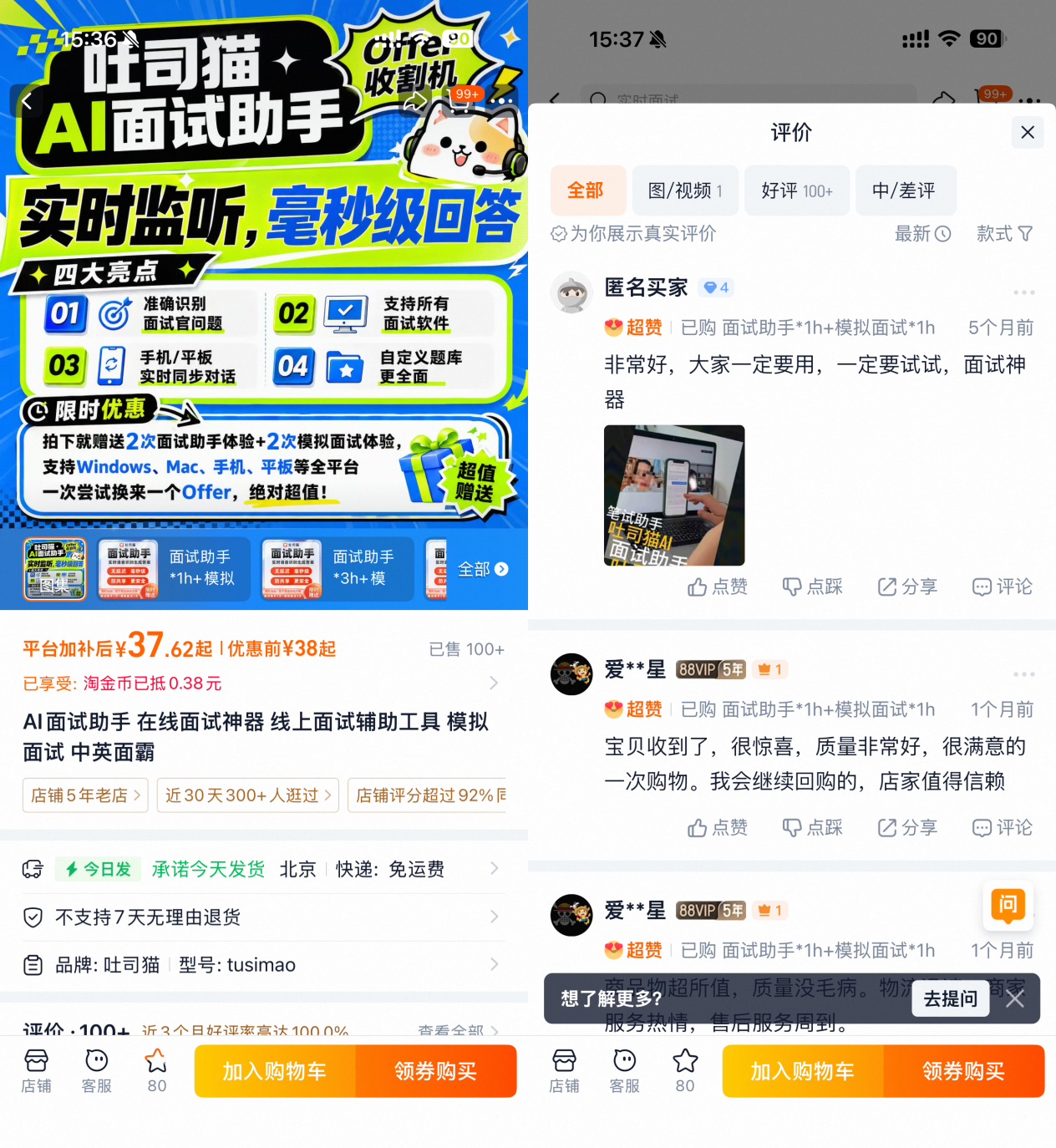
Image Source: Taobao
Some more "hardcore" service providers have even developed screen-sharing solutions that bypass detection by mainstream video software like Tencent Meeting, Feishu, and DingTalk. In the frame seen by the interviewer, your eyes always appear to be looking at the camera, while in reality, your gaze is rapidly scanning AI-generated answers on another screen.
When a cheating solution offers a smoother user experience than many SaaS products, and the anti-cheating system's precision rivals financial risk control, you can gauge the magnitude of this market.
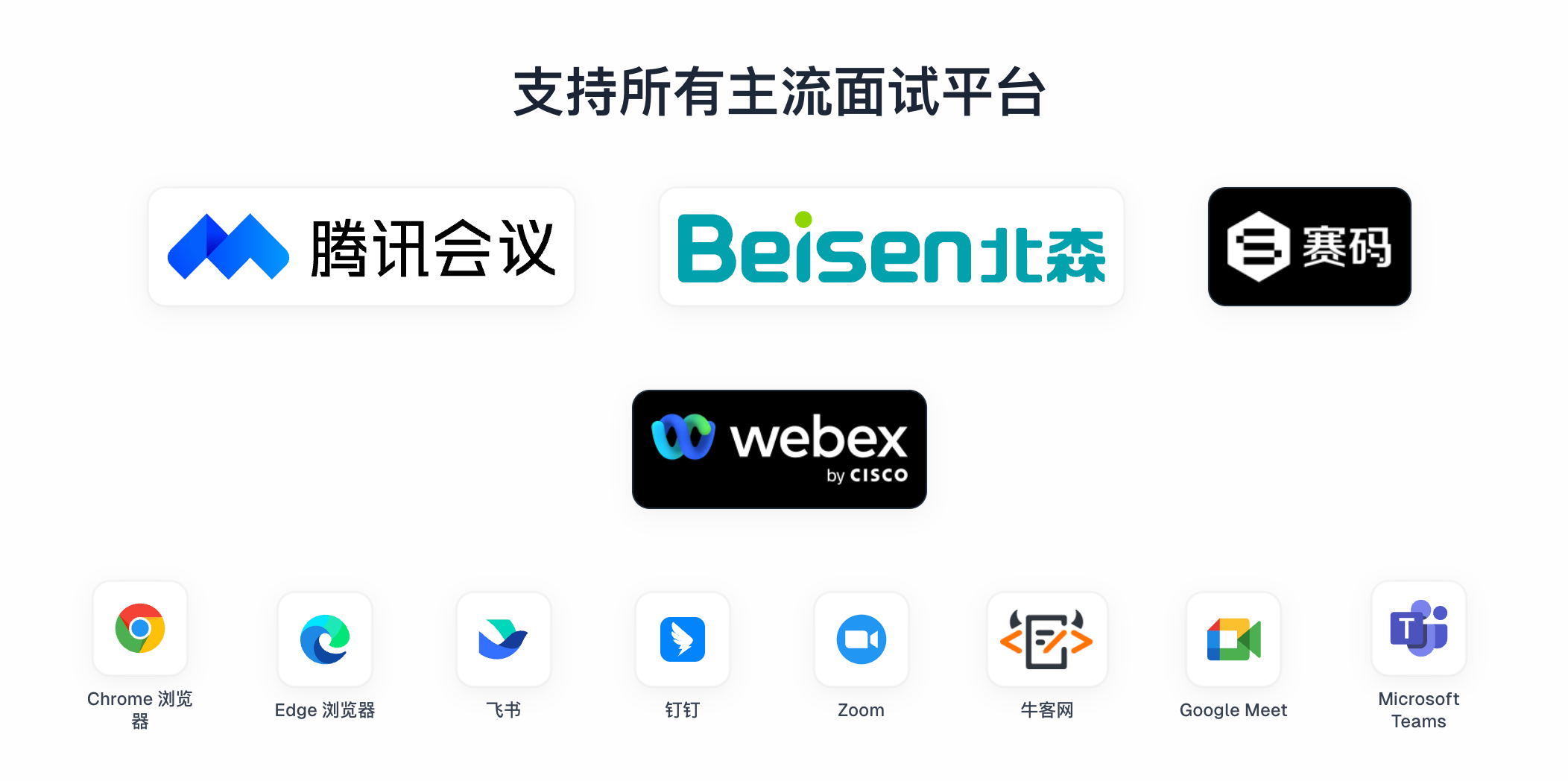
Image Source: gankinterview.cn
But the cost of this AI race is ultimately borne by job seekers who don't know how, don't want to, or simply can't use AI.
An honest candidate who spends three days researching the company, reviewing project experiences, and practicing common questions finds that their preparation is no match for an AI assistant's single prompt. Their sincerity is rendered worthless in the face of algorithms.
When AI interview cheating becomes the "default operation," those who refuse to use AI become the outliers. It's like an exam where half the students cheat and the other half struggle—ultimately, it's not the least capable who are eliminated, but those with an information gap.
AI can help you pass the interview, but not the probation period.
In real work scenarios, there are no teleprompters. You won't wear invisible earphones during meetings, waiting for AI to dictate responses to your boss's questions. You won't pause for "generation time" when facing unexpected accidents. You won't glance down at another screen for scripts while dining with clients.
Of course, conversely, when a cheating method becomes so widespread that everyone can use it, the problem lies with the game rules themselves. Companies will eventually realize this, and interview formats will change accordingly. Besides listening to what you say, they'll also need to observe what you do—actual case analyses, on-the-spot data analyses, real collaborative tasks. AI can't assist you with these.
That's fine. By then, those who prepare diligently and truly possess the skills will be more easily recognized.
AI Interviews, ByteDance, AI Job Hunting, AI, AI Recruitment
Source: Leikeji
All images in this article come from: 123RF Royalty-Free Image Library. Source: Leikeji
-
![]()
The imaging capabilities of smartphones are continuously improving, but why are there more and more 'add-ons' for shooting?
-
![]()
Alibaba's AI 'Crucible': Navigating Overseas Blockades, Organizational Upheaval, and the Lag in Commercialization
-
![]()
Global Electric Vehicles Enter the '23 Million Unit Era': China Maintains Edge, Emerging Markets as New Growth Pole
-
Meituan Triumphs with Domestic Computing Power: Running a Trillion-Parameter Model, Exploration Initiated in 2023
-
![]()
Embodied Intelligence and Mobile Robots: Why the Intensified Focus on Factories This Year
-
"Chip" Radiance Persists: Is the Semiconductor Sector Still a Magnet for Investors?
-
![]()
Robots Embark on 200-Hour Factory Trials: Is AI Truly Ready for Industrial Deployment?
-
![]()
Another Bionic Robot Company Secures $7 Million in Funding